Tuesday, February 4, 2020

Top 25 Films of the 2010s

Let's start with some data. I saw approximately 820 movies released in 2010 through 2019. Out of that group, I rated 179 high enough to be eligible for a list like this. The strongest overall year was 2012 and the weakest was 2017. I'm excluding 2019 from both of those judgments since I've had the least amount of time to evaluate it. All of that data came from imdb.com, by the way. I love that website. Someday it might be fun to write about what the imdb metrics reveal about movie watching habits, but I might be the only one interested in that.

So why do this? Isn't this just the highest ranked movies off the yearly lists? Well, not quite. Many of those movies are here but looking at a decade is different. The end of year lists don't allow for the passage of time to highlight which movies are enduring and which ones may not have had the staying power that makes a classic. Each of the lists would look different if I were to rank the films again. Not only that, but there are plenty of movies I simply don't see in time despite my best efforts. There are six movies in the top 25 that didn't appear on the top 10 lists because I didn't get to see them until after it was done.

As far as the returning champions go, this isn't just a copy and paste job from the other lists. That would be too easy, right? I felt it was more appropriate to examine the movies in relation to the decade, both in terms of movie trends and the real world events around them. I hope that's enough of an introduction. I'm a little nervous about this, so let's get started. There are lots of movies to talk about.

25. Advantageous
Science-Fiction/Drama, 2015
Directed by Jennifer Phang

If there's a movie on the list I wish had gotten more attention, this is it. Advantageous never got much of a release and the few critics that saw it mostly brushed it aside with little consideration. It's a small and quiet science-fiction film set in a not-too-distant future, focused on primarily human concerns with the futuristic technology mostly in the background (until the ending, at least).

Gwen (Jacqueline Kim) is a cosmetics saleswoman struggling to secure a future for her teen daughter, Jules. Despite having a genius-level intellect and perfect grades, getting her into college and ultimately to a good job is still considered a long shot. If that sounds hyperbolic, I'm not sure you've paid enough attention to this past decade as crowds of top-level students with top-level degrees bitterly competed for miserable bottom of the ladder corporate jobs as a means to pay back their gigantic student debt. In the face of this uphill battle, Gwen prepares to make a heartbreaking sacrifice that could bring in the money the family needs. The movie elegantly holds up a mirror to the audience and asks us how we can possibly survive as a society that throws away the future of its youth for the sake of short-term profit.

When I'm lying awake in bed at night wondering how in God's name our family could afford higher education for my kids, this movie often returns to my thoughts. Jennifer Phang has been working in television in the years since this movie came out, but I hope one day she is able to make another film.

24. White God
Drama/Adventure, 2014
Directed by Kornel Mundruczó

Disney has largely given up on creativity in terms of their homegrown productions, happily raking in a fortune with a series of dull live-action remakes of their animated classics. Yet there's very little in these films that feel "live" - there's often almost as much animated content as the originals save for a few actors here and there. They even have the stones to remake The Lion King with CG animals and call it "live action."

If you want to see an epic adventure starring real animals, this is your movie...although it's definitely not for kids. Through a series of cruel circumstances, a sweet dog named Hagen gets separated from his owner Lili (Zsofia Psotta) and left to wander the streets of Hungary as a stray. After he is subjected to the cruelty of the outside world, Hagen becomes a lethal fighter and even recruits other dogs. Lili is still searching for him but it might be too late. The whole adventure culminates in a brilliant finale where a huge army of dogs rebels and wreaks havoc on the city. It's majestic, a little scary and very funny all at the same time. The allegorical nature of the story is hard to miss, particularly in a decade where the theme of ordinary people driven to violence showed up again and again. Thankfully, nobody panicked that this film would inspire dogs to violent acts.

Kornel Mundruczo set a world record for the most doggos used in a single scene, with 225 of them sprinting through Budapest during the ending. Pulling off something like this is hard, there's a reason Hollywood likes the phrase "never work with children or animals." But if a director is willing to do the work, the results can feel like something a viewer has never seen before.

23. A Girl Like Her
Drama, 2015
Directed by Amy S. Weber

I wrote an entire post on found footage horror, but the format has plenty of potential for other genres as well. Both the "hidden camera" and "fake documentary" techniques are used to add some verisimilitude to this emotional roller coaster, which is one of the most honest portrayals of high school I've ever seen.

It starts off on a brutal note with the attempted suicide of Jessica (Lexi Ainsworth), who has been enduring daily abuse for months at a school where administrators brag about positive community programs. With Jessica out of commission, the film begins to focus on Avery (Hunter King), the troubled popular girl who made it a mission to see her suffer. Things come to a head when it’s revealed that Jessica had been documenting the bullying with a hidden camera and when all is said and done, your heart may break for both girls. Blessedly free of baby boomer condescension about kids spending too much time on their phones or getting “participation trophies,” this is a film that takes the all too common suffering of adolescence seriously and with great empathy.

This is not a movie that tries to be stoic or understated with its emotions. The characters do a lot of full-on ugly crying and it works - by the time you get to the ending, you may feel exhausted. It's more than worth it. It might sound like a cliche, but every kid in middle and high school should watch it.

22. ParaNorman
Animation/Comedy/Adventure, 2012
Directed by Chris Butler and Sam Fell

Laika Studios started the decade with Coraline and ended it with Missing Link. Nobody is making better stop-motion animation right now and the highlight of their body of work is this incredibly fun and meaningful story of a child outcast (voiced by Kodi Smit-McPhee) who can see the dead.

Naturally, Norman becomes the only one who can stop an undead invasion orchestrated by the mysterious ghost Agatha (Jodelle Ferland). The movie gets a lot of jokes out of society's tendency to torment those who are unique, but it also explores the real damage that stifling conformity can do. Despite being born in the colonial era, Agatha turns out to have a great deal in common with Norman, which makes for a moving ending.

All that's just a bonus to the peerless stop-motion wizardry on display. Everything looks so smooth that a viewer could be forgiven for mistaking Laika's films for computer animation but this is all done in the traditional way. It results in movies with a ton of character. This is a great pick for Halloween night.

21. A Separation
Drama, 2011
Directed by Asghar Farhadi

The international breakthrough for the Iranian filmmaker Asghar Farhadi, this is a lively domestic drama that examines issues both universal and specific to Iran. The red-haired Simin (Leila Hatami) wants to leave the country with her family, but Nader (Peyman Mooadi) insists on staying to take care of his father who is suffering from Alzheimer's. One can relate to both Nader's obligations and Simin's desire to spare her daughter the sight of the old man wasting away and start over in a new place. If that weren't enough to wrestle with, a dispute with a housekeeper escalates into an unexpected disaster, putting the couple in legal jeopardy. I can understand the feeling of going into a movie like this with the expectation that it will be slow and boring and feel like medicine. I worried a bit about that myself but was proven totally wrong by its unpredictable plot and gradually building intensity.

With its exceptional acting and pacing, this is the best example of Farhadi's skill as a dramatist. It won awards all over the world, including the Oscar for Best Foreign Language Film. Upon accepting his award, Farhadi gave a beautiful speech about how Iran's rich culture had been "buried under the dust of politics" and that the people of his country didn't want hostility despite what political leaders may have said. Five years later, Farhadi won again for The Salesman but was unable to attend the ceremony thanks to Trump's Muslim ban. That's not progress. Both of our countries deserve better and I can only hope that by the time he wins again, things will be different.

20. Tigers Are Not Afraid
Drama/Horror, 2019
Directed by Issa Lopez

Putting 2019 movies on this list can't help but feel a little bit reactionary, but I feel confident this one will endure. Mexican cinema had a great decade, proving once again that times of turmoil produce powerful works of art. Not that this will provide much comfort for the struggling masses in the conflict-ravaged cities of Mexico, and certainly not to the desperate children in this film, whose suffering is undoubtedly true to life despite the magical realist elements.

In a city reduced to borderline anarchy by the drug wars, Estrella (Paola Lara) finds herself cowering on the floor with her classmates as the school is shot at. To try and calm her down, her teacher convinces her that she now has three wishes. It seems to be true...or maybe circumstances are just unfolding in a way that makes it look like they are true. Either way, Estrella believes it and tries to help a crew of orphaned boys led by a little tough guy who goes by El Shine (Juan Ramon Lopez).

Clearly inspired by the works of her countryman Guillermo Del Toro, Lopez doesn't soften the reality and there are some brutal moments to contrast with the moments of fairy tale logic. It's a powerful experience and a reminder that the suffering of children should transcend whatever political bullshit is going on in the world. What a shame that we need a reminder so badly.

19. I Am Not Your Negro
Documentary, 2016
Directed by Raoul Peck

This haunting, engrossing documentary is structured around an unfinished manuscript by the author and public intellectual James Baldwin. Entitled “Remember Your House,” it attempted to tell the story of race in America, with special focus on three figures – Medgar Evers, Malcom X and Dr. Martin Luther King, Jr. Samuel L. Jackson narrates passages from the work while Peck assembles a montage of archive footage, movie clips and occasional references to the present day.

Jackson's great but the real star of the film is Baldwin himself. His astute commentary on race in America is the product of a true genius and the film performed a public service by bringing him back into the spotlight. His speech that concludes the movie may be the most profound statement I've ever heard in regards to these issues. "What white people have to do is try to find out in their own hearts why it was necessary to have a n----r in the first place. Because I am not a n----r, I am a man. But if you think I'm a n----r, it means you need him...you, the white people, invented him and you've got to find out why."

The past decade has shown we are only marginally closer to solving this problem than we were in Baldwin's era. If any progress is to happen, it will happen by confronting the issue. I think the resurgence of fascism and racism has rightly convinced many filmmakers that these blunt confrontations are necessary. Movies like this are necessary...and in this case, very powerful.

18. The Villainess
Action/Drama, 2017
Directed by Byung-gil Jung

The ruthless action and crime movies that come from South Korea are no joke. You don't get too many one-liners or comic relief sidekicks. They unfold in a harsh world with gut-wrenching twists that push their characters to their limits. They're also packed with ingenious action sequences that deliver the sort of thrills that have otherwise become rare in the genre.

The Villainess is such a masterful, sweeping action movie that it's hard to believe that Jung has only made one other action film (Confession of Murder, which is also great). I remember being practically pinned to the screen by the opening mayhem, which is a five minute first person shot that ends when the lead character is slammed into a mirror. This is how the audience meets Sook-hee (Ok-bin Kim), who is recruited by a mysterious government agency and promised freedom in exchange for 10 years of service. While stationed in Seoul as a "sleeper agent," she becomes fond of her new quiet life with a young daughter but the dangers of her double life are a constant threat.

Jung knows that the audience has already been blown away by the first scene, so the movie takes its time establishing the story and characters, mostly conveyed in layered flashbacks that might take a second viewing to put together. But don't worry, there's also a wild motorcycle sword fight and a climactic chase where Sook-hee singlehandedly takes down a bus.

17. Scream For Me Sarajevo
Documentary, 2018

Directed by Tarik Hodzik

Twenty-five years ago, Sarajevo was considered one of the most dangerous places in the world. Today it's a peaceful European city that doesn't really make the news anymore. The contrast between those periods, the strange feeling of going from apocalyptic terror to normalcy, is the core of this moving documentary. It also has quite a bit to say about how powerful music can be in the right circumstances.

In the midst of the Balkan wars, Bosnia and Herzegovina declared independence from Yugoslavia and Sarajevo was besieged by Serbian soldiers for years. In 1994, two United Nations personnel in the city invited Iron Maiden singer Bruce Dickinson (who was estranged from the band at the time and releasing material with different musicians) to perform. Dickinson accepted, not totally understanding what he was getting into. My own love for Iron Maiden makes this particular choice an invitation for accusations of bias, but this movie isn't some fawning tribute to heavy metal. Dickinson doesn't even get interviewed on camera until about a half hour in. This is foremost the story of the people of Sarajevo, who lived through hell for years but found hope and inspiration for one night at a concert. While there are some heartbreaking stories told by the survivors, the film ultimately ends on a hopeful note as Dickinson returns to Sarajevo in the present day. Several people who attended the concert gather and marvel at what they managed to survive. It's a tribute to resilience that is sorely needed at this point in history...and it's got a great soundtrack.

The conflicts in that region were the focus of much reflection during the past decade. A video game called This War of Mine put players in the shoes of the beleaguered civilians and the main goal of the game is to survive for another day. It would be high on my personal list for best games of the decade, but I'm not doing one of those. This one is hard enough!

16. Cold Hell
Crime/Horror, 2018

Directed by Stefan Ruzowitsky

Violetta Schurawlow gave one of my favorite acting performances of the decade as Ozge, a Muslim woman whose family left Turkey seeking a better life in Austria. Unfortunately for her, a serial killer is stalking the streets of Vienna and targeting Muslim women in particular. She witnesses one of the murders and becomes a target herself. However, she's an aspiring kickboxer with a lot of unresolved anger and gets in some extended and very well staged brawls with the killer. She's the victim that just won't go down, which is thrilling to say the least. The movie combines a colorful giallo production design with some digital video shots during the action scenes for what often feels like a mashup of Dario Argento's style and Michael Mann's.

However, the real reason it works so well because of Ozge's characterization. She's not just traumatized by her past, she's pissed about it and her impulsive grouchy behavior alienates most of the people around her. Yet the audience roots for her anyway. That's some good acting and writing, folks.

The underlying themes about how supposedly "civilized" places can still hide (and even protect) hateful people who refuse to accept any sort of societal progress are obviously getting more relevant by the day. We can only hope those people will eventually run into a surly cab driver who will give them a nice kick to the nose.

15. Selma
Drama, 2014

Directed by Ava DuVernay

It's hard to believe that before this movie came out, there hadn't been any major film with an actor playing Dr. Martin Luther King, Jr. All these years and no actor stepped up to the plate, probably because having to compete with the perennially compelling footage of the real Dr. King was too intimidating. Thankfully, David Oyelowo decided to go for it and the resulting movie was a worthy tribute to King and the other civil rights heroes of the era.

The city of Selma, Alabama had become a hub for demonstrations during the 1960s, with a march from there to Montgomery planned as part of a larger push for voting rights reform. There's a lot of emphasis on the behind the scenes planning and negotiation that goes into a major movement like this. The characters have fascinating discussions about how best to approach politics, the media and the legal system. Change is more than a single protest, it's a sustained effort. While there's a great deal of inspirational value to this history, DuVernay doesn't have to work very hard to draw grim comparisons to the present day. We would like to think that the brazen police shooting of Jimmie Lee Jackson wouldn't happen today, but anyone who has even paid sporadic attention to current events knows that these atrocities haven't slowed down in the intervening decades.

It clearly struck a nerve since numerous commentators let loose with racist double standards and bad faith criticisms over the film's portrayal of President Lyndon Johnson, who is depicted as a resentful crank who had to be dragged kicking and screaming to sign the Voting Rights Act. Whether it seems accurate or not, and in this case I think it's more of a comment on white Democrats in general, it's perfectly within the bounds of historical interpretation. That's the kind of thing that separates narrative films about history from actual documentaries. Selma deserved many more awards than it received, although it did get a well-deserved Oscar for the moving end credits song "Glory," which led to John Legend and Common giving what might have been the decade's best acceptance speech.

14. Paradise Lost: Purgatory
Documentary, 2011

Directed by Joe Berlinger and Bruce Sinofsky

The Paradise Lost series is one of the greatest achievements in documentary cinema, with the third film following the story of the West Memphis Three to its bittersweet end. The first movie followed the trial of Damien Echols, Jessie Misskelley and Jason Baldwin, who were accused of murdering three boys in Arkansas in 1993. There wasn't much connecting the boys to the actual crime, so the prosecutors and jury opted to convict them on the basis of their interests - black clothes and heavy metal music. The blatant injustice reached the living rooms of millions of viewers thanks to HBO and a nationwide movement began advocating for their release. This movement was itself the subject of the second film, released in 2000. That installment ended with Echols accusing John Mark Byers, the father of one of the murdered boys, of committing the crime. However, Byers passed a lie detector test and was never investigated.

As Purgatory begins, the audience learns that Echols wrote a heartfelt letter of apology to Byers and the two became unlikely friends. In fact, Byers became one of their fiercest advocates and frequently steals the show with his righteous rants. At this point, the West Memphis Three had spent 18 years in prison and originally, the filmmakers assumed they were headed for another downer ending. But in August 2011, as they were editing the film, news broke that the three were offered an Alford plea, a strange legal maneuver that granted them freedom but didn't require the state of Arkansas to overturn their convictions or even admit their mistake. It was a shocking turn and the cameras were there for it all.

Coming to the end of a saga that had lasted for almost two decades, this was basically the Avengers: Endgame of true crime documentaries. For anyone who had followed the case (and you probably wouldn't be watching a third documentary about it if you weren't), this was incredibly emotional. Sadly, Bruce Sinofsky passed away in 2015. It would have been interesting to see where his career went after this, but he left behind an amazing legacy. The West Memphis Three got their lives back (if not quite justice) thanks to these movies.

13. Nightcrawler
Drama/Crime/Satire, 2014

Directed by Dan Gilroy

"Our viewers are more interested in urban crime creeping into the suburbs. What that means is a victim or victims, preferably well-off and/or white, injured at the hands of the poor or a minority."

A caustic tour de force that was a debut for the ages for the longtime screenwriter Dan Gilroy. Jake Gyllenhaal is all sorts of creepy as Lou Bloom, a man desperate for work who gets drawn into the dark world of crime journalism, where people with cameras prowl the city streets looking for murder and mayhem to film. Lou is an off-putting man who speaks almost entirely in trite advice repeated verbatim from the laziest corners of the internet but becomes a natural at this new profession, even starting to arrange events in order to have something for the camera. Gyllenhaal’s performance is an impressive feat of characterization and the movie also features strong work from Riz Ahmed as Lou’s nervous assistant and Rene Russo as a TV producer who sold her soul a long time before the film begins.

In addition to being a tough indictment of the public's appetite for lurid true crime violence, it's an incredibly engaging and suspenseful film. The climactic sequence where Lou puts himself in absurd danger for the sake of capturing a crime is a breathless masterpiece on its own.

12. The Florida Project
Drama, 2017

Directed by Sean Baker

The reaction to Baker's film Tangerine mostly focused on how it had been shot on an iPhone. For The Florida Project, he opted to put the phone down (You boomers happy now?) and was able to get more recognition for the unique tone of his movies - a combination of realism and social commentary, bittersweet emotion and warm comedy.

The setting for the film is a gaudy three-story motel in Orlando painted purple. So classic Florida, in other words. Families visiting Disney World used to stay at places like this until the company built its own hotels inside the park. Now it's an unorthodox housing project where little Moonee (Brooklynn Prince) cavorts with her friends daily, oblivious to the struggles of her loving but immature mother Halley (Bria Vinaite). The cast is made up of mostly first-time actors except for Willem Dafoe, who has played everyone from Jesus to the Green Goblin but finally gets a role where he's just a normal guy - the overworked, compassionate hotel superintendent who has accepted that he's basically running an apartment complex.

It's fairly lighthearted slice of life storytelling until Halley's impulsiveness puts her and Moonee's future at risk. The ending takes an abrupt turn into surrealism, perhaps because the sad reality is just too awful to consider. It's a deeply empathetic film about forgotten Americans whose neighbors are having too much fun at the theme park down the road to give them any thought.

11. Fruitvale Station
Drama, 2013

Directed by Ryan Coogler

The story of Oscar Grant, whose outrageous death at the hands of trigger-happy police officers was captured on video for the whole world to see. You could make a whole anthology series of movies like this with a different person as the main character each time. We're living in the world's worst cinematic universe, where cops execute black people with the flimsiest of justifications, if they bother to justify it at all.

With a premise like this, the ending is a foregone conclusion, but the bulk of the movie is simply the last 24 hours of Oscar Grant's life. Grant is played to perfection by Michael B. Jordan and Melonie Diaz is heartbreaking as his girlfriend and the mother of his child. The more time you spend with these people, who have their gifts and flaws and are just trying to make sense of the world like anyone else, the more devastating that foregone conclusion becomes. There aren't any big speeches about injustice or racism, just a gentle reminder of someone else's humanity. Nobody could possibly justify the shooting after watching this. Unfortunately the people who reflexively defend authority even after the most blatant atrocities probably won't ever watch it.

There may not be a director who had a better run this decade than Ryan Coogler. After this film, he resurrected the Rocky series with great success with Creed. Then with Black Panther, he was able to explore all sorts of powerful themes despite the enforced sameness of Marvel movies and it went on to become the first superhero movie to ever compete for the Best Picture Oscar. Jordan was with him every step of the way. I hope to see a lot of these two over the next decade.

10. The Raid: Redemption
Action/Crime, 2012

Directed by Gareth Evans

The “redemption” could very well be for the action genre itself, which had hit a serious dry spell by the time this film came along. Hollywood studios have gone all-in on superheroes and while those films have plenty of action, generally viewers are watching computer-generated replicas of the actors when it's time for a fight. There was a void to be filled and it was Asian filmmakers who stepped up.

This amazing Indonesian thrill ride makes an unbeatable case for the power of good old-fashioned fight choreography. The pleasantly bare bones plot is about a police raid on a notorious drug lord's apartment building that goes bad early on, leaving only a handful of specialized agents to fight their way through several floors of henchmen. Iko Uwais plays the lead character and he also choreographed the fights alongside Yayan Ruhian, who plays the toughest enemy.

If it's not yet obvious, this movie didn't make this list for the originality of its storyline. It's here because there is a true sense of awe at what the viewer is seeing. That feeling had been absent from this genre for way too long.

9. The Babadook
Horror/Drama, 2014

Directed by Jennifer Kent

Horror was another genre that was redeemed this decade as a wave of ambitious new talent sought to truly explore its potential. It had quietly started by 2010 but The Babadook, a superb debut film from the Australian director Jennifer Kent, was the first major breakthrough.

If the Academy Awards weren’t predisposed against horror films, Essie Davis would have been a leading contender for Best Actress as a struggling mother named Amelia who is still coping with the sudden death of her husband while trying to raise an extremely difficult child (Noah Wiseman). He's not the "cute precocious troublemaker" type, this kid is an unpredictable terror. The family begins to encounter a strange monster who is first introduced to the audience with insanely creepy pop-up book art. The monster may be a real threat, but there's another possible explanation that isn't supernatural but much more frightening - the Babadook may just be a visualization of Amelia's buried feelings and urges that are almost too horrible to say aloud.

This movie displays many of the hallmarks that would define this New Wave of Independent Horror - avoiding cheap jump scare fake-outs, an emphasis on mood and cinematography, and a rich subtext that supports varying interpretations. Case in point - the Babadook himself has enjoyed a second life as a gay icon due to some fans perceiving him as a symbol of repressed homosexuality. "The more you deny, the stronger I'll get."

8. It Follows
Horror, 2015

Directed by David Robert Mitchell

I went back and forth on whether to rank this or The Babadook higher - they're basically sharing a spot. If I favor this one slightly more, it's because it seemed to build on the former's release a few months prior. It really felt like the moment that the aforementioned new wave of horror had truly arrived.

Jay (Maika Monroe) contracts a curse that spreads like a venereal disease and now finds herself pursued by a bizarre entity who takes different human forms depending on the situation. Wherever she is, the creature is slowly walking towards her. As she and her tight-knit group of friends try to maintain distance from the monster, the viewer is treated to a series of harrowing encounters and twisted imagery. With its striking deep focus cinematography and a dreamy electronic soundtrack by the musician Disasterpiece, it's one of the most aesthetically impressive horror films ever made.

You can tell you've got a good premise when people start theorizing about strategies if they were in the same situation, many of which were detailed at length on social media and blogs. Regardless of what the mysterious force represents (STDs? Shame? The inevitability of death?), its unique properties really engage your intellect.

7. Let the Fire Burn
Documentary, 2013

Directed by Jason Osder

It's fitting that this film has "fire" in the title, because most of the adjectives I can think of to describe it involve heat. Searing, blistering, scorching, take your pick. It leaves a mark, digging up an unbelievable incident from 1980s Philadelphia that had plenty of resonance during the 2010s.

The cultish MOVE activist group annoyed many in the city with their aggressive bullhorn speeches and the unsanitary conditions of their neighborhood, but the mysterious death of a police officer in the area began a deadly standoff. Ultimately the police went to insanely dangerous lengths to bring the situation to a violent end. They dropped a C4 explosive from a helicopter on top of MOVE's headquarters with no clue as to how powerful it really was. The resulting inferno killed numerous members of the group and even inflicted harm on citizens not involved in the dispute. The mind-boggling and completely unnecessary overreaction earned Philadelphia the flattering nickname of "The City that Bombed Itself."

As far as the movie goes, the method of storytelling is just as compelling as the story itself. There are no interviews with experts or narration, just archive material interspersed with riveting footage from the hearings conducted in the wake of the massacre. A gripping masterpiece with righteous outrage emanating from every frame.

6. Your Name
Animation/Romance/Drama, 2016

Directed by Makoto Shinkai

In a lot of anime TV shows, the creators rely on evoking strong emotions to try and make up for the low-budget animation. For example, Dragon Ball Z establishes grandiose stakes and larger than life moments of desperate rage to help viewers forgive the fact that they're watching looped animation of a blurry fistfight. But what happens when you have both an overwhelmingly emotional tale and gorgeous animation that can match it? Well, you get a movie like Your Name.

Makoto Shinkai has carved out a niche for himself in Japanese animation with sweeping tales of young adult romance with fantastical elements. As a comet streaks across the Japanese skies, two high schoolers begin periodically waking up in each other’s bodies - Taki from Tokyo and Mitsuha from the small village of Itomori. It seems like a silly body swapping comedy in the vein of Freaky Friday, but when Taki decides to try and meet Mitsuha, he and the audience are in for a massive surprise.

It's one hell of a twist and the second half of the film has an urgency that leaves viewers hanging on every little accomplishment or setback. Even the most cynical person might end this movie believing in the power of love to transcend time and space (until they get back on the internet, at least).

5. Inside Out
Animation/Comedy/Fantasy, 2015

Directed by Pete Docter

Pixar's movies are a series of similar concepts that work out more often than not. What if toys had feelings? What if bugs had feelings? What if fish had feelings? I suppose it was only a matter of time before we got to "what if feelings had feelings?"

A heartfelt fantasy about a teenage girl dealing with her family moving away from home and the personified emotions living in her brain who try and manage everything. Joy, Sadness, Anger, Fear and Disgust are brought to colorful life thanks to some perfect casting (Lewis Black as Anger? Genius). A lesser movie might have had Anger and Fear as villains, there are no antagonists in this Miyazaki-esque adventure. Every emotion has a role to play, which is an important message since boys are still told they can't cry and girls hear that getting angry isn't ladylike. But it's not all heavy - this is still an animated family film and there are plenty of wacky adventures to be had as the emotions explore different parts of the mind. The scene involving the creation of dreams is some brilliant comedy.

Yet even with the laughs, this movie reduced crowded theaters full of people into a mass of sobbing wrecks. It's fascinating to speculate how it was able to have such a widespread impact. It evokes the loneliness when we're kept from making our feelings known for whatever reason, but also the relief when someone finally listens. There are profound, powerful themes here that are sorely needed.

4. Parasite
Drama/Satire, 2019

Directed by Joon-ho Bong

Yep, here we are again. Parasite is going play a major role in four of these blog entries in a row (with the Oscar predictions being next). Too recent to place so high on the list? Honestly, at the moment I'm not quite sure it's high enough but time will tell.

The tale of the struggling Kim family's ingenious plot to install themselves in the home of the wealthy Park family arrived just at the right time. The term "income inequality" gets thrown around all the time but finds powerful representation in the contrast between the Park house, full of unnecessary huge rooms and the Kims' half-basement apartment where they open the windows when the street is being fumigated to try and get free pest control. But who are the actual parasites? The desperate poor scheming up ways to make enough money to survive? Or the wealthy who hoard more money then they'll ever need while their neighbors suffer and starve? There are a lot of unexpected twists and turns in this upstairs/downstairs tale but nothing ever feels random thanks to the polished screenplay. Bong is making a strong statement but he also wants to make sure the audience has an exciting experience in the theater, packing the film with unforgettable cinematography and editing.

Many excellent films from around the world come and go in the United States without getting the acclaim they deserve, but this one made everyone sit up and take notice. It's had a phenomenal run on the American awards circuit, becoming the first Korean film to win both the Screen Actors Guild Ensemble Cast award and the top prize at the Writers Guild for its screenplay. It has an honest to God shot at winning Best Picture at the Oscars, but will it? You'll have to check back here in a few days to get the official prediction.

3. Boyhood
Drama, 2014

Directed by Richard Linklater

A grand experiment that was filmed intermittently for 12 years that could have failed at any point if star Ellar Coltrane got sick of it. Instead, the audience gets to watch him grow from age 6 to 18 in a movie that was truly like nothing else.

The effect draws viewers into its small-scale story that always feels gentle and intimate despite its nearly three hour length. Mason (Coltrane) goes through the ups and downs of adolescence while trying to navigate his relationships with his divorced parents, Olivia (Patricia Arquette in an Oscar-winning performance) and Mason, Sr (Ethan Hawke). The big milestones that we experience while growing up happen offscreen and instead the film concentrates on the smaller moments that may not feel significant at the time but linger in our memories nonetheless. Ultimately, Mason gets through an emo phase and leaves for college as a sensitive, artistic and generally confident young man.

The subtle performances of the actors and Linklater's ear for dialogue lend a lot of authenticity and while it is clearly a personal film for the director, its widespread popularity indicated that many in the audience found it personal as well. Not one to sit still for long, Linklater is reportedly working on a film that will be shot over 20 years. Whenever it's done, I'll be there to see it.

2. Moonlight
Drama, 2016

Directed by Barry Jenkins

The beautiful, haunting masterpiece that gave an honest, compassionate look at the kind of people rarely represented in movies. A poor black boy named Chiron grows up in Miami during a story told in three distinct acts.

Played as a boy by Alex Hibbert, Chiron tries to avoid his terrible home life and forms an unexpectedly close relationship with the local drug dealer (Mahershala Ali). Ashton Sanders plays him as a teen facing a growing uncertainty about his identity, a segment that ends one of the most satisfying "revenge on a bully" moments I've ever seen. Finally, Trevante Rhodes plays Chiron as a hardened adult who has almost all of his vulnerability figuratively and literally beaten out of him. There are powerful moments of reckoning in this final act, including a tearjerking reconciliation with Chiron's drug addict mother (Naomie Harris). The conclusion follows Chiron to a reunion with a childhood friend and there's a moment we know needs to happen. When it does, it hits with the force of an entire life lived. That scene has taken up permanent residence in my brain. I'm honestly grateful that this movie exists, especially in an age where any expression of empathy is taken implicitly as a political statement. The sad part is...that has become true.

As you may have heard, Moonlight was at the center of a bizarre and completely unprecedented mix-up at the Academy Awards. The presenters were given the wrong envelope and for a few minutes, it appeared that the musical La La Land had won Best Picture, which everyone (including me) assumed would be the case anyway. But eventually the situation was cleared up and the statue was presented to the real winner. It would be sad if the headlines about that moment forever overshadowed what a triumph it was that a movie like this won Best Picture. It gave a lot of hope that the Academy was truly evolving, but it's become obvious since that there's still a long way to go.


1. The Act of Killing
Documentary, 2013

Directed by Joshua Oppenheimer, Christine Cynn and Anonymous

A movie so brave, so daring and so dangerous that one of the co-directors and most of the cast and crew were listed as "Anonymous" for their own protection. The Act of Killing takes on the genocide in 1960s Indonesia, an atrocity mostly unknown to the world at large before this film came out. Approximately a million suspected Communists, union members, public intellectuals and ethnic Chinese citizens were murdered by the Suharto regime, which remained in power until the 1998. His reign is over, but the perpetrators of the killings were never prosecuted. Instead, they are protected by the state and are held up as heroes by para-military groups.

The filmmakers explore the nature of impunity by offering several of the killers, who feel no need to try and conceal their identities, to conceive and direct their own films about the massacre. "Cognitive dissonance" doesn't even begin to describe the results as they stage increasingly surreal recreations of the event while borrowing tropes from their favorite crime films and musicals. The main subject of the film is Anwar Congo, a man who was selling scalped movie tickets on street corners until the government recruited him to help with the purge. Something changes in him after he watches his own film about the murders. Anwar, who claims to have killed a thousand people, returns to the site of many of his murders and becomes physically ill. The horrible guttural sound of his dry heaving is the sound of someone confronting an unspeakable truth.

This film forced Indonesia to reckon with their history in a way they never really had. It deserved both an Oscar and a Nobel Peace Prize, but sadly received neither. That won't do anything to damage its legacy and the courage of the people who risked their lives to make it. If there's one lesson I hope we can take into the next decade, it's that the truth is worth fighting for.

Honorable Mentions (unranked, in alphabetical order)
13 Assassins (2011)
Annihilation (2018)
Apollo 11 (2019)
Attack the Block (2011)
Baby Driver (2017)
Best Worst Movie (2010)
Black Klansman (2018)
Blindspotting (2018)
Django Unchained (2012)
Eighth Grade (2018)
Gasland (2010)
The Hate U Give (2017)
Hell or High Water (2016)
Hot Coffee (2011)
Hugo (2011)
Inception (2010)
The Invisible War (2012)
Lady Bird (2017)
The Look of Silence (2015)
Short Term 12 (2013)
Spotlight (2015)
Toy Story 3 (2010)
Train to Busan (2016)
Trollhunter (2011)
Virunga (2014)


And we're done. The next time I do this, I'll be 46 years old. Let's hope a few movie theaters remain above water in the meantime.

Sunday, January 12, 2020

The 5th Annual Perfect World Awards

Before the Oscar nominations come out this week and the various arguments ensue, it's fun to come up with some alternative ones. Have I really been doing this for five years already? Wow.


Best Picture
Apollo 11
Funan
Hustlers
The Irishman
Joker
The Last Black Man in San Francisco
Parasite
Tigers Are Not Afraid


Plausibility: Middling to low. Parasite is most likely to get a nomination, which is good because I thought it was the best movie I saw last year. The Irishman looks good and despite the controversy, Joker has a good shot too. Hustlers is a long shot but it could happen. It doesn't look promising for the rest. Documentaries never show up in Best Picture so Apollo 11 is out. Funan is so obscure it would be a surprise for the Animated Feature category, let alone Picture. The Last Black Man in San Francisco has a magisterial feel that I would associate with a Best Picture winner but everyone seems to have forgotten about it during awards season. Tigers Are Not Afraid is both a horror film (kind of) and not widely seen so nope. Even if only a couple of my favorites make it this year, it still looks to be a more interesting line-up than usual.

Best Director
Joon-ho Bong for Parasite
Jordan Peele for Us
Issa Lopez for Tigers Are Not Afraid
Lorene Scafaria for Hustlers
Joe Talbot for The Last Black Man in San Francisco

Plausibility: Only Bong is likely to get a nomination and if I'm not mistaken, he would be the first Korean filmmaker to ever show up in this category. While well-regarded, Us was not the crossover hit that Get Out was even though Peele's direction was even more impressive. Joe Talbot made a terrific debut film but as noted above, the movie's been shut out of awards season.

For the last few years, this category has gotten bad press for how rarely female directors show up. As with 2017, progressive Twitter has pinned its hopes on poor Greta Gerwig to sneak into the boys' club. It may happen but she's hardly the only option. Issa Lopez and Lorene Scafaria did fantastic work on their respective films but it's probably still Greta or nothing. There's more than sexism at play here - it's a lack of imagination from the voters. There's much more out there in any given year than the dozen or so films deemed worthy of competition each time.

Best Actor
Adam Driver in The Report
Jimmie Fails in The Last Black Man in San Francisco
Eddie Murphy in Dolemite Is My Name
Joaquin Phoenix in Joker
Kang-ho Song in Parasite

Plausibility: Joaquin Phoenix will get a nomination and possibly the win. Eddie Murphy may show up too but this is a pretty competitive category this year. Adam Driver is likely to get a nomination, but not for the righteous investigator in The Report, for a cheating husband in Marriage Story, which I've avoided thus far since I don't care for the relationship-snuff-film subgenre. If it cracks Best Picture though, I'm going to have to check it out so that's a drag. Jimmie Fails most certainly did not fail (sorry couldn't resist) as he and Jonathan Majors (who would have been my sixth pick) brought a ton of heart to their movie. Any acting nominations for Parasite would be a nice surprise and the studio is pushing Song...for Supporting Actor. Category fraud strikes again.

Best Actress
Rachel Alig in The Cleaning Lady
Katie Douglas in Level 16
Lupita Nyong'o in Us
Rosa Salazar in Alita: Battle Angel
Constance Wu in Hustlers

Plausibility: Could be looking at a wipe out here but Lupita Nyong'o is a dark horse. I hope she makes it in because her dual performance as a desperate mother and her deep-voiced doppelganger was really amazing. The awards attention for Hustlers has been totally focused on Jennifer Lopez (more on her in a bit) but there's no movie without Constance Wu's moving lead performance. The Cleaning Lady is a deeply disturbing movie so I doubt many Academy members will see Rachel Alig's work, which is a great example of emoting under heavy makeup. Katie Douglas pulled off a great character arc in Level 16, but it's just too tiny of a movie. And finally, there's Alita. Motion captured performances are not new at this point, but I've never seen one as engaging as Rosa Salazar's work as the title character. She gets extra points for doing it all with the burden of big anime eyes.

Best Supporting Actor
James Cosmo in The Hole in the Ground
Baykali Ganambarr in The Nightingale
Bill Hader in It: Chapter Two
Jack Kilmer in Lords of Chaos
Al Pacino in The Irishman

Plausibility: Supposedly the real Jimmy Hoffa was a larger than life kind of guy, so Al Pacino's yelling and arm waving was pretty appropriate. He's the only one here with any shot at a nomination. As the adult Richie Tozier, Bill Hader dug deep while still being hilarious. The veteran character actor James Cosmo brought huge gravitas to his scenes in an otherwise unremarkable movie. Baykali Ganambarr plays a salty Aborigine in The Nightingale, a refreshing change to how this sort of character is typically portrayed. As for Lords of Chaos...it's based on the infamous 1990s black metal scene in Norway, but it's really not a very good movie. Jack Kilmer, however, gave a haunting performance as the morbidly depressed musician Per Ohlin, better known as "Dead."

Best Supporting Actress
Annette Bening in The Report
Madeline Brewer in Braid
Jennifer Lopez in Hustlers
So-dam Park in Parasite
Margot Robbie in Bombshell

Plausibility: Honestly, this one might turn out to be pretty close. Annette Bening could have lionized Dianne Feinstein in The Report, but instead she shows the tension between wanting to do the right thing and that single-minded fixation on getting re-elected that stymies so much progress in American politics. Either way, Oscars love actors playing real people so she's got a good shot. Margot Robbie is great as a fictional character in Bombshell's true story of sexual harassment at Fox News. It probably doesn't reflect well on the network that the made up character is far more sympathetic than any of the real people. So-dam Park played the wily daughter in Parasite with a devilish little twinkle in her eyes, but it would take a bigger than expected showing by the movie for her to show up. Braid was a small and very weird movie, the kind that never gets nominated for this sort of award, but Madeline Brewer's work as a deranged and delusional rich girl was wild. As for Jennifer Lopez, here's a phrase nobody would have said about ten years ago: she is very likely to get nominated for an Oscar this week. She might even win! Her acting hasn't always been consistent but I think the bigger issue was that she picked a lot of crappy movies. Anaconda, Gigli, Monster in Law...it's a long list. Hustlers was different. It feels like you're watching a true movie star. It's hard not to root for her at this point.

That's all for now. The Best of the Decade list should be next and in a month or so, we can make some predictions for the real (and almost certainly less interesting) Oscar nominations.

Sunday, January 5, 2020

Top 10 Films of 2019

Maybe it's just because the news cycle seems even more apocalyptic than usual, but upon completing this comforting annual tradition for myself, I can't help but wonder how the movies of this era will be perceived by a future civilization. I think the evolved cockroaches (or whatever comes next) will see a lot of contradictions between our art and our history. They would see a people who were very aware of the injustice and dangers around them but were unable to change things. It's a strange dynamic - the far-right is winning at politics while the left is winning the culture war. If we do make it through the next few years, can you even imagine the movies that will be made about this era? They will shape the narrative for generations in the same way that many films and television shows today are presenting controversies of the 80s and 90s with new perspectives that will be instrumental for people who weren't old enough to already have an opinion on these events (When They See Us on Netflix is the most striking example that comes to mind). Of course, that won't be much comfort if civilization has collapsed. Am I writing some sort of weird obituary for humanity right now? I'm not sure, ask me again next year and I should have a better idea.

Before we get to the Top 10, I want to note that because this is a year that ends in a 9, a Best of the Decade list is coming up too. It's my first time doing one of those (I can't really remember why I didn't do it for 2000-2009, but I never did). I'll need a bit more time for that one, hopefully by the end of the month. But for now, let's talk about 2019.

10. Dolemite Is My Name
In the tradition of movies like Ed Wood and The Disaster Artist, this is the story of how a ridiculous but irresistible blaxploitation classic came to be. Eddie Murphy plays Rudy Ray Moore, a struggling comedian who finds success with a foul-mouthed character named Dolemite who speaks in rhymes and even laid the foundation for rap music. The ambitious Moore is determined to make a movie and despite very little money and no knowledge of the process, he pushes ahead and recruits a crew played by a fantastic cast - Wesley Snipes as the director, Keegan Michael-Key as the screenwriter, Da’Vine Joy Randolph as the female lead, Craig Robinson as the composer and many more. It’s the kind of R-rated comedy that made Murphy a star and the actor gives an effortless performance. I didn't realize how much I missed him during the years he presumably spent walking the Earth as penance for Norbit. Unlike that film or the original Dolemite (which I do recommend for bad movie fans), this movie is unquestionably warm and well-made.

9. Hustlers
Based on a true story, this engaging tale begins in 2007 as Dorothy (Constance Wu) begins working at a strip club and is mentored by the wily Ramona (Jennifer Lopez). The 2008 financial crisis drives off most of their wealthy clients and Ramona concocts a daring scheme, recruiting some of their co-workers to drug unsuspecting rich men and talk them into spending a fortune. The Wall Street crowd certainly deserved this treatment after wrecking the economy, but the film is mature about its subject and shows that even the most righteous criminal schemes have collateral damage. It’s a great story worthy of Martin Scorsese (he only made one movie this year but it felt like his legacy was everywhere) and is constantly engaging thanks to Lorene Scafaria’s assured direction and some excellent acting. Jennifer Lopez in particular dominates the film and earned the critical praise which had eluded her for many years. She might even have an Oscar nomination to show for it. It's a long way from Gigli.

8. The Edge of Democracy
It says a lot about the state of the world that you may not know what country this film is about until I specify. The military dictatorship in Brazil only ended in 1985 but the country had become one of the world’s most successful democratic nations thirty years later. This epic but personal documentary chronicles the nation's slide into authoritarianism that resulted in President Dilma Rousseff being impeached and former president Luiz Inacio Lula da Silva (or just “Lula”) being imprisoned. Costa presents this as a result of the machinations of business interests and right-wing politicians and given that it ended with the election of the vile Jair Bolsonaro, an open admirer of the brutal dictatorship of the past, it’s hard to argue with that characterization. It can be hard for viewers not acquainted with Brazilian history to pick up all the details but at the same time, the tale is uncomfortably close to home as these events occur within the global resurgence of fascism that's been a defining part of the decade. By the end, the real-life narrative has achieved a Shakespearean level of tragedy. Lula was released a few weeks ago but it does little to soften the sting. It’s not just about corruption and politics but also director Petra Costa's heartbreak at seeing her home country’s future collapse. We're right there with you, Brazil.

7. The Last Black Man in San Francisco
This arresting independent film is the bittersweet story of Jimmie (Jimmie Fails) who wants nothing more than to move back into his childhood home, a beautiful Victorian-style building built by his grandfather. When the homeowners get into a legal dispute with family members, the house is empty and Jimmie decides to move back in alongside his loyal friend Montgomery (Jonathan Majors). It’s only a matter of time before they are found out but Jimmie is determined to stay. The commentary written on the film focused mostly on gentrification but it’s about much more than that - friendship, destructive macho behavior, and the need for a place to call home in an uncaring world. It’s also disarmingly well made, with unconventional cinematography, a beautiful orchestral score and great acting from the two leads.

6. The Irishman
Martin Scorsese's body of work defined crime films for decades, but with the end of his career approaching, he seeks to drive home the grim reality of violence and corruption. Based in part on true events, the aimless truck driver Frank Sheeran (Robert De Niro) is befriended by the soft-spoken mobster Russell Bufalino (Joe Pesci, who came out of retirement to play the role) and becomes a prolific enforcer and hit man. Eventually he is drawn into the orbit of the notorious union leader Jimmy Hoffa (Al Pacino) and deals with conflicting loyalties as the once prosperous relationship between Hoffa and the mob goes sour. Naturally, the film offers up a plausible explanation for Hoffa’s still unsolved disappearance, although it’s far from a settled question. Throughout a massive three and a half hour running time, Scorsese covers decades worth of history relating to American politics and crime, illustrating how the two are forever intertwined. To accommodate the scope of the story, computer effects were used to make the main actors appear younger for the scenes set in the past, a mostly convincing effect that ballooned the film’s budget to almost $200 million, a huge amount for any movie not featuring superheroes or lightsabers. In the end, the most powerful scenes are close to the present, with the characters realizing that all their petty feuds and power plays are rendered meaningless by the unstoppable passage of time.

5. Funan
The director, Denis Do, adapted his mother's recollections of the Khmer Rouge regime in Cambodia into this harrowing animated film. During a forced march to the infamous labor camps, the three-year old Sovahn and his grandmother are separated from the rest of his family, leaving his parents Chou and Khuon in agony as they try to survive the brutal conditions long enough to see their son again. This film doesn't provide as much historical context as something like The Killing Fields, but it does capture the absolute horror and dehumanization that comes with authoritarianism. Don't let the gorgeous animation and beautiful landscapes fool you, this film is an emotionally wrenching experience. Do was raised in France and the movie's dialogue is actually in French, which is odd given the setting but easily forgiven.

4. Joker
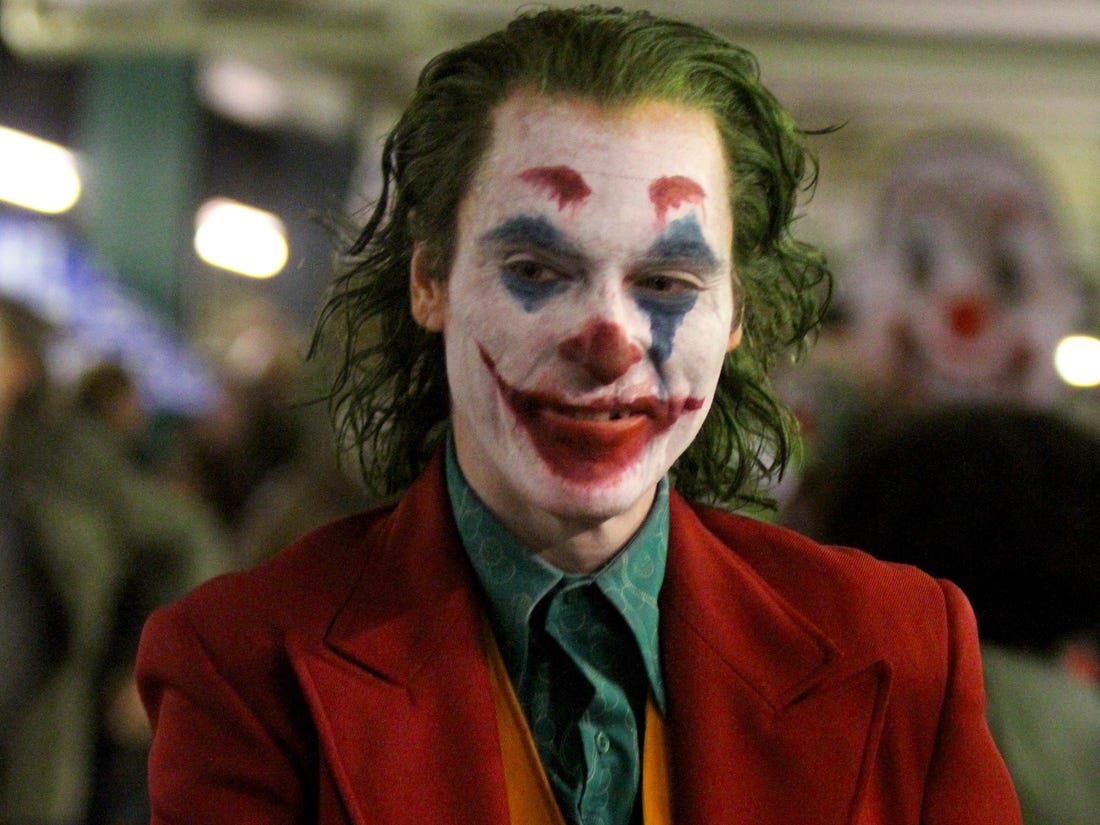
A powerful movie that was at the center of the dumbest non-Trump controversy of the year. Discarding previous versions of the character, it presents the Joker as a man named Arthur Fleck (Joaquin Phoenix) struggling with poverty and mental illness. Batman has yet to emerge in this Gotham City, while Fleck dreams of being a stand-up comedian and tends to his ailing mother (Frances Conroy). The character’s signature laughter is the product of brain damage Arthur experienced as a child and Phoenix, giving a magnificent performance, makes the audience believe that Fleck is doing his best not to laugh and looking like he would rather cry. This is no superhero film, but a drama that borrows heavily (perhaps too heavily) from the work of Martin Scorsese, even casting Robert De Niro as the host of a TV comedy show. Rather than a vat of chemicals, it’s society that creates this Joker and while it’s hardly the first movie to depict an ordinary man driven to violence, the character’s popularity led to numerous commentators condemning the film as potentially dangerous to the wrong viewer. It packed theaters for months but there were no shootings, almost like violent psychos don't wait for movies to give them permission. I swear, some of these people don't even seem to think violent things happened before movies or video games were invented. Would you like to know the real reason this film was so controversial? Even from its trailer (which was the best one of the year), it was clear that the film would focus on how the uncaring systems of America hurt and alienate people every day and then expect them not to get angry about it. It's a timeless, obvious truth that when you push people hard enough, they push back...and yet we're all supposed to sweep that under the rug and put up stupid memes on Facebook about how expressing gratitude will solve all your problems. Joker lifted up the rug and the public responded in a big way - not because they're mass murderers but because it feels like that's what the world is always trying to turn them into.

3. Apollo 11
50 years after the historic expedition to the moon, this documentary treated the public to a treasure trove of rarely seen footage of the event. With no narration and no interviews, it places the viewer right into the era and the images are so polished it looks more like it was shot yesterday. Astronauts Neil Armstrong, Buzz Aldrin and Michael Collins spend a week getting to the moon and back while an evocative musical score and audio from NASA communications set the mood. What’s most impressive is how the film takes these world famous events and presents them from new angles. The actual touchdown on the moon is seen from a camera attached to the landing craft and watching the surface come closer and closer is a breathtaking experience. The filmmakers probably didn't intend this, but watching a film about one of America's greatest achievements in a time when the country is collapsing around us is truly a bittersweet feeling. It would be ill-advised to get too nostalgic for an era that had plenty of its own problems but the surprisingly moving scene where President Nixon speaks to the astronauts can't help but recall a time when even the corrupt presidents could at least string a sentence together.

2. Tigers Are Not Afraid
If Guillermo Del Toro had directed City of God, the result might look something like this emotional and dark fairy tale set in an environment that's all too real. In an unnamed Mexican city, the ongoing drug wars have devastated the area and orphaned numerous children. When Estrella's (Paola Lara) school is suddenly shot at, her teacher attempts to calm her down by telling her she now has three wishes. As she joins a band of orphans led by a hardened boy going by "El Shine" (Juan Ramon Lopez), Estrella wonders if she can use her wishes to help...but like the famous story of the monkey's paw, these wishes have unintended consequences. It's a strong example of what is sometimes called "magical realism," with charming visual touches to offset the gritty subject matter. It's a knockout of a movie, with beautiful direction by Issa Lopez and strong performances from the children in the cast. Harsh but empathetic, it's a powerful portrait of a situation that often feels invisible to the rest of the world.

1. Parasite
Coming at the end of a decade, this brilliant movie about class and economic desperation feels very much like a culmination - of Joon-ho Bong's impressive career, of unflinching Korean cinema that has produced unforgettable crime and social dramas for years, and of an era where capitalism has brought intense suffering to people all over the world. The struggling Kim family gets a lucky break when Ki-woo (Woo-sik Choi) is hired as an English tutor for the daughter of the wealthy Park family. With ruthless cunning, the entire family of four manages to secure jobs in the sprawling mansion while keeping their family connection a secret. It's hard to keep a scheme like this going forever and sure enough some major and unexpected complications occur. Bong keeps this incredibly well-written film walking a fine line between farce and tragedy and ultimately delivers a brutal look at what the humiliation of poverty does to people. If that sounds like a grim art-house vibe, rest assured this movie is as entertaining as any major blockbuster with several bravura sequences that are delightful in their ingenuity. It's a film that makes a strong statement without ever feeling preachy or obvious. If the 2020s are anything like the 2010s, that's going to become increasingly difficult to do.

11. Level 16
12. For the Birds
13. Us
14. One Cut of the Dead
15. Once Upon A Time in Hollywood
16. The Cleaning Lady
17. Alita: Battle Angel
18. Ready or Not
19. The Nightingale
20. Daniel Isn't Real
21. Epstein Didn't Kill Himself

Thursday, October 31, 2019

A History of Found Footage Horror

I've written plenty of times (and probably will again) that one of the major cinematic stories of the last decade has been the New Wave of Independent Horror. While major studios have been content to put out the same demonic possession movie every year and spin-offs of The Conjuring, the focus has been on an impressive influx of powerful and well-made independent horror films from all over the world, often with resonant social commentary. The Babadook, It Follows, Get Out, Most Beautiful Island, Cold Hell, Tigers Are Not Afraid and many others have taken the first steps in the long, arduous process of restoring mainstream credibility to the genre. But as a new era begins, an old one ends. This Halloween, I decided to take a look back at the "found footage' subgenre.

For anyone unfamiliar with the term, "found footage" typically refers to films where the story is told through in-universe cameras. The premise is often that something mysterious has happened and watching the footage shot by one of the characters may help us unravel what's going on. It can also take the form of a "documentary," with interviews and archive footage mixed with the main storyline. More recent examples have tapped into the video streaming boom by telling stories that unfold on a single computer screen. It's a storytelling style with huge potential and you can see why it attracts filmmakers working with a small budget. The lack of professional polish is an advantage when you're trying to convince an audience that what they're seeing really happened.

While initially acclaimed, the format became as ubiquitous as the slasher movies were in the 1980s. So many uninspired examples were shoveled into theaters that fans grew tired of it. The time was right for a new direction. In many ways, the new wave's attention to vivid production designs and elegant cinematography seems to be a reaction to found footage and its adopted amateur style. There will be much more to say about them but for now, let's look back at the history of found footage and highlight the best movies done in the style.

Foundations

Cannibal Holocaust (1980)
Yeesh, I always regret doing a google image search for this movie. One of the most notorious horror films is also one of the most influential. The apex (or nadir, depending on your point of view) of the Italian cannibal subgenre had an innovative structure that spends the entire first half with an anthropologist searching the Amazon rainforest for a missing film crew. The viewer expects him to be attacked by the natives, but he is respectful of the cannibal tribe and trades some modern world goodies for the crew's film reels. The second half of the film is comprised of that handheld-camera footage and it reveals that the film crew tormented and provoked the natives for the sake of more sensational footage. They're ultimately torn to pieces in the hideously violent finale that is still disturbingly realistic.

In fact, it was so convincing that upon the film's release, director Ruggero Deodato was arrested by the Italian police and the actors had to show up in court to prove they weren't actually killed on camera. Part of the reason it fooled the authorities was that animals were killed on camera in lengthy nauseating detail. It's unforgivable, especially for a movie that often criticizes the exploitation of violence, and it's the albatross that will always keep this film from being recognized as one of the greats. Several "animal cruelty free" cuts exist and prove how unnecessary it was - the movie still packs a nasty punch without them.

Morality aside, this is the granddaddy of the entire found footage style. But only hardened viewers should consider seeing it. And if you're not hardened, you will be.

This is Spinal Tap (1984)
This is obviously not a horror film. However, many directors were experimenting with the "fake documentary" idea in the 70s and 80s and this is the most prominent example. While poking fun at glam rock and hair metal, the film alternates between interviews with actors in character and staged "concert footage" of Spinal Tap performing songs like "Tonight I'm Gonna Rock You Tonight." The techniques used have been copied by many other films in a number of genres.

Prince of Darkness (1987)
John Carpenter's ambitious tale of the apocalypse is mostly in line with the typical 1980s horror style...except for its most frightening scene. The characters dream of a transmission from the year 1999 where a dark figure emerges from a church on scratchy videotape footage. The sudden introduction of realistic imagery in a film otherwise full of elaborate effects is chilling and a great early example of what the style was capable of.

Tales From the Crypt - "Television Terror" (1990)
One of the best episodes of the popular anthology show is still being ripped off decades later. Talk show host and demagogue Morton Downey is basically playing himself as an obnoxious television host who explores a haunted house during a live broadcast. Nobody in the crew believes the place is actually haunted but the viewers know better. It's a brilliant half hour, filled with crass and cynical fun up until its show-stopping ending. Other episodes of TFTC played with this format but this is definitely the most dramatic example.

Man Bites Dog (1992)
Three directors from France and Belgium shot this hugely influential film entirely on black and white handheld cameras. A serial killer named Ben has allowed filmmakers to follow him around on his daily business of murdering people and hiding the bodies. The crimes get more depraved and the crew gets more involved, but eventually Ben messes with the wrong people and the walls begin to close in on him and his new accomplices. The abrupt manner in which the film ends is just as important to this subgenre as any scene in Cannibal Holocaust and was copied in at least a dozen movies in the years since.

Ghostwatch (1992)
This British made-for-TV movie upped the ante and created an entire fake news broadcast. Actual fake news, not today's "fake news." Like "Television Terror," it was a live exploration of a haunted house that frequently cut back to the hosts for commentary. A malevolent ghost terrorizes the reporters and eventually the TV station itself. Although it was produced in advance, it was presented as a live broadcast and starred actual newscasters familiar to the public. Much like the Orson Welles "War of the Worlds" radio broadcast, British viewers were completely fooled and the BBC reportedly received 30,000 calls from people freaking out just after it ended. The tabloids and talk shows had a field day and there was much condemnation thrown at the producers for scaring the crap out of the UK. These days it's more fondly remembered.

First Wave

The Blair Witch Project (1999)
This low-budget phenomenon was the moment that found footage came into its own as a subgenre rather than just the occasional gimmick. Three filmmakers wander the woods of Maryland to explore the local myth of the Blair Witch and are never seen again. A revolutionary viral marketing campaign convinced many moviegoers that this "lost footage" was in fact real, the last time a feat like this could be pulled off. This movie is sometimes credited with inventing the found footage concept, but hopefully by now it's clear how influenced it was by earlier films. As a movie, it demonstrates both the strengths and weaknesses of this format. The hair-raising ending is very effective but the film itself is padded out to feature length with repetitive scenes of the characters bantering and arguing.

The Last Broadcast (1998)
It actually beat Blair Witch to the punch by several months, but went almost unnoticed in its initial release. Made on a budget of $900, there are superficial similarities but the releases of the two films were too close together for one to have influenced the other - just one of those weird coincidences in movie history. The hosts of a popular public access show disappear while wandering the woods in New Jersey and the only remaining crew member is charged with murder. While the protagonists pore over the missing footage and try to restore other corrupted data, the real truth is revealed. Unlike Blair Witch, this one ultimately downplays the supernatural elements in favor of a commentary on narcissism and the pursuit of fame. The super low budget was made possible in part by shooting in digital video, one of the first films to do so.

Noroi: The Curse (2005)
Japan took a shot at the found footage idea and the results were pretty magnificent. Once again, a paranormal investigator disappears and another character looks over the footage for clues. Several disparate threads of the missing man's work are all tied together by appearances of a strange presence with a distinctive mask. The formula was already getting worn even at this early point, but the movie is still terrific - rich in detail, intelligent and very creative, even replicating Japan's insane game shows for a key scene. Despite its European origins, the found footage era has unfolded primarily in the United States. We may have missed out on some intriguing possibilities because of that.

Behind The Mask: The Rise of Leslie Vernon (2006)
The influence of Man Bites Dog is very clear in this witty parody of the slasher genre. Leslie Vernon is hoping to become the next great masked killer and invites a local news crew to follow him around as he prepares for his big moment. In fact, most of the movie is meticulous preparation, with funny explanations given to the silliest cliches of slasher films. This one has a bit of a twist - once the final confrontations begin in earnest, the style shifts back to a more traditional cinematic approach.

REC (2007)
The first found footage movie to apply the format to a zombie movie, which would be done many more times in the years since. Reporters doing an otherwise routine story on the local fire department find themselves locked inside an apartment building where a viral outbreak is turning the residents into crazed monsters (it's one of those movies that doesn't want to use the word "zombie," but come on they're zombies). It's taut and suspenseful with a pants-shittingly terrifying final scene featuring a hideous monster played by human special effect Javier Botet. REC proved to the world that a scary creature can look even more frightening filmed in blurry night vision.

Second Wave

Paranormal Activity (2009)
This one again. I've written about it in detail before, but you can't do a history of found footage without the low-budget hit that brought forth a tidal wave of imitators once studio execs saw the box office returns. For now, we'll just note that it displayed a new level of ingenuity when it came to working with almost no money. The audience stares at the surveillance footage of the young couple sleeping in their haunted condo and gets worked up over even the slightest movement. The marketing campaign was also pretty brilliant, with one-off screenings in various places for years before the official release and commercials that showed audiences in night-vision jumping in their seats.

"Marble Hornets" (2009)
Found footage and YouTube are a match made in heaven. God only knows how many amateur productions are in the site's library but this series is stunning in its effectiveness. While filming a student film in a seemingly nondescript forest in Georgia, the presence of the mysterious Slender Man upends the lives of everyone involved. Hollywood has made two unsuccessful attempts at a film featuring this beloved internet character, but this series understands that less is more. Over the course of numerous brief episodes (some are less than a minute), the viewers are trained to start searching every frame for Slender Man, whose appearances are often extremely subtle. "Marble Hornets" received acclaim that isn't typical for a YouTube show, even getting props from Roger Ebert.

Lake Mungo (2010)
Australia tried out found footage with this fake documentary and the effect is so well-executed it would easily fool viewers watching it with no context. After the sudden death of a teen girl named Alice, her family begins to suspect her ghost may be lurking in their home. The story unfolds slowly with considerable restraint and after several unexpected twists and turns, the family discovers that the answers might be at the archaeological site of the title. It’s an involving film that’s difficult to classify, avoiding most of the hallmarks of the horror genre but delivering a handful of overwhelmingly frightening moments. Those looking for something more traditionally scary will be frustrated but those who are receptive to it have a powerful experience in store for them.

Trollhunter (2011)
It was Norway's turn and they opted to update some of their mythology with a story of a film crew following a grizzled man who hunts trolls for the Norwegian government. We're talking actual trolls here, not whiny babies pissed off about a Ghostbusters remake. As with REC, the low tech aesthetic actually makes the monsters look more convincing then they might have been in a typical Hollywood production. It's also funny to see even the silliest aspects of troll lore played straight, like how they can smell the blood of a Christian man (what happens if you decide to be an atheist on the spot?). The setting also helps the film avoid a typical problem with found footage. The scenes of mundane conversation that help make the footage convincing can also bore an audience, but in this case the breathtaking scenery of Norway steals the show whenever the trolls aren't onscreen.

Paranormal Activity 3 (2011)
The second Paranormal Activity film was a letdown, a fifteen minute story stretched to feature length by repetitive surveillance footage. The third one, however, struck gold by going back in time to an era before digital cameras. Like the first film, the characters want to document possible demonic activity in their home but in this case, they need to rely on cumbersome old technology. Dennis is trying to find a way to monitor the large living room/kitchen area and eventually gets the idea to strap the camera to a rotating fan. This leads to several scenes where the audience's point of view shifts from one side of the room to another. It's just so clever and could have supported a film that was completely independent of the series.

VHS (2012)
Concurrent with the found footage boom was a revival of anthology horror films, which have been a part of the genre since 1924. This movie, the first in a series with rapidly diminishing returns, showcases five tales all done in this style. It's more consistent than most anthologies, but the first and last segments are the clear standouts. "Amateur Night" is about a group of loathsome pick-up artists who cross paths with a deadly succubus. "10/31/1998" is a bravura tale of trick or treating friends who wander through a haunted house. It's primarily a showcase for exceptional special effects, all the more impressive because it's basically done in one take (or at least with the cuts disguised by static).

The Sacrament (2013)
The idiosyncratic horror director Ti West restages the Jonestown Massacre in the modern era, with journalists from the "VICE" documentary series traveling to South America to investigate a strange commune. The interview with the leader known as "Father" (the amazing Gene Jones) is tense but otherwise things seem okay. Well, everyone knows where this is going and when it turns bad, the results are utterly horrifying and unflinching yet you can't look away. The fact that it all really happened with only minor details changed makes it even worse. It's brilliant but painful.

The Taking of Deborah Logan (2014)
There was a strange trend of movies featuring the full names of characters, perhaps to make it seem more credible as a "true story." Audiences were invited to witness the fates of Emily Rose, Molly Hartley and Michael King (among others) but the most memorable person to show up in the title was Deborah Logan. Played by Jill Larson (who honestly deserved an Oscar nomination), Deborah is a woman suffering from early Alzheimer's symptoms who agrees to have a graduate student document her condition for a thesis project. Her mind deteriorates with startling speed but the crew realizes there also may be something supernatural at work. The strength of the movie's themes is that it's hard to tell the difference. While there is some gnarly imagery near the end, none of the demonic possession stuff can compare to the horror of losing your identity.

Unfriended (2014)
The next major innovation in found footage was telling a story entirely from the perspective of a computer screen. A movie called The Den was the first one to try this, but it wasn't especially plausible and they really botched the ending. Unfriended was the one that nailed it. A group of friends is chatting via webcams when they're targeted by the malevolent spirit of a girl who killed herself after being brutally bullied. The format allows otherwise routine web browsing and instant messaging to become an ingenious method of conveying information to an audience and to set up some good scares. Whatever becomes of found footage in the future, I suspect that this approach will become more common. It's already been used in last year's missing person drama Searching.

Hell House, LLC (2015)
As far as I know, this is the last great found footage horror film. It's nothing new in terms of concept but damn did they execute it well. Beginning with a mysterious tragedy at a haunted house where several people died, investigators attempt to figure out what really happened. Most of the movie is footage of the haunted house crew preparing their event as weird things start happening. The house they used is such a good setting and the scares are so clever that you're just as likely to grin as you are to jump. Good stuff. They made two sequels but they were both awful so don't worry about those.

Happy Halloween, everyone! If you're wandering an abandoned building with your digital camera and you start seeing a lot of static, get out of there!

Thursday, October 24, 2019

Tales From the Crypt: Season Six, Part Two

Staired in Terror: A fleeing criminal (D.B. Sweeney) hides out with a mysterious old woman (Rachel Ticotin) in a house she claims has a cursed staircase. Meanwhile, the local sheriff (R. Lee Ermey) is determined to get inside. It's not scary but it's very clever and it's nice to get an old-fashioned ghost story after several more grounded tales of crime. B+

In the Groove: Miguel Ferrer returns for his fourth(!) appearance on the show as a pissed off radio host whose show basically consists of him pretending to have sex. Following a long ratings struggle, he meets an ideal co-host (Linda Doucett) who brings out his repressed anger to a potentially dangerous extent. Ferrer is brilliant and Doucett is subtly effective as the sweet little devil on his shoulder. Slash from Guns N Roses also has a small role as a rival DJ, for no other reason than it's the 90s and Slash has to appear in accordance with the showbiz laws of the era. A-

Surprise Party: Ray (Adam Storke) defies his father, who had tried to keep him from inheriting a farmhouse on a valuable piece of property. With the old man gone and the will unchanged, he arrives at the place to find that there's a party going on. But what's the occasion? Well it turns out Dad had a good reason for trying to keep him away. The writing is pretty bad but there are some nice makeup effects near the end. B-

Doctor of Horror: Two put-upon security guards (Hank Azaria and Travis Tritt) working at a mortuary make a deal with a mad doctor (Austin Pendleton) conducting some very unorthodox experiments. It's funny but also very dark and has a great cast. Pendleton gives a creepy and charismatic performance while Ben Stein shows up to call the guards "lowlife shitheads" before getting killed. Considering how uninspired much of this season has been, it was a delight to see the episode totally go for broke in the climax, where the Re-Animator influence becomes very clear. A

Comes the Dawn: Before 30 Days of Night, there was this episode about poachers hunting bear in Alaska and finding vampires instead. Michael Ironside plays a former colonel who enlists a mysterious tracker (Vivian Wu) to help find a grizzly, but someone...or something got to it first. It's effective and the vampires look good, but some of the acting is just strange. Ironside is a pro but Wu uses two or three different accents and I don't even know what to make of Susan Tyrell in a brief but bizarre role as a bartender. B

99 & 44/100% Pure Horror: Say what? Is this an episode or a wi-fi password? It's actually a play on an old advertising slogan for soap, which makes sense for a story about a wimpy executive (Bruce Davison) who runs a soap company and his spoiled bitch wife (Cristi Conaway) who designs the advertising. When the Board of Directors decides they want to go in a new direction, he's forced to fire her and I think we've gone through enough of these episodes to know what's coming. Still, there's a fantastic payoff, but gory and darkly humorous. Meanwhile, the Cryptkeeper is training himself for the "Diecathlon." B

You, Murderer: Like the comic it was based on, the season finale is shot entirely in first person. Director Robert Zemeckis changes the protagonist to a criminal who, to elude the police, had plastic surgery to make himself look like Humphrey Bogart. Although he had been dead for over a decade, Bogart shows up for a few shots via manipulated archive footage, the same technology that Zemeckis had recently pioneered in Forrest Gump (which the Cryptkeeper makes fun of in the intro). The director attracted an excellent cast that includes John Lithgow, Isabella Rossellini and Sherilynn Fenn. It's a gimmick in search of a story, but it's nice to see some true ambition in a season where that often felt lacking. B+

That's all for this year, kiddies! Join us next October for the final season!

Sunday, October 13, 2019

Tales From the Crypt: Season Six, Part One

Hello kiddies! We all know October is the best month. Beautiful foliage, seasonal festivals, apple crisp...and for the purposes of this blog, Tales From the Crypt! Let's get right into it.

Let the Punishment Fit the Crime: Catherine O'Hara plays an amoral attorney who gets arrested in a backwater town for a dispute over her license plate. With the help of her hapless public defender (Peter MacNicol with a ridiculous wig) she hopes to beat the rap because the sentencing in this town is very harsh. "Cruel and unusual" doesn't even begin to describe it. It's an irreverent take on crime and punishment that, because it's the 1990s, shoehorns in a reference to frivolous lawsuits. Thankfully, the infamous McDonalds hot coffee suit isn't mentioned. B

Only Skin Deep: Not to be confused with "Only Sin Deep" from Season One, this is the story of a serial abuser named Carl (Peter Onorati) who meets a masked woman (Sherrie Rose) at a party. He ignores all the red flags, including that she's in no hurry to take off the mask. You can probably already see where this one is going, but Carl is such a bastard that the audience is very excited for him to get what he deserves. Rose gives her character a nice spooky edge that sets the whole mood. B+

Whirlpool: Frequent Stephen King collaborator Mick Garris directs this meta episode, which unfolds mostly in the offices of EC Comics in the 1950s. After submitting a subpar story for Tales From the Crypt, the writer (Rita Rudner) is fired by her tyrannical boss (Richard Lewis) and finds herself in a weird time loop. It's a quick and entertaining half hour but it doesn't really make much sense. Is there any connection between the Groundhog Day stuff and the comics? Doesn't seem like it. I would have rather seen more of the Cryptkeeper getting frustrated during a house renovation and installing "scare conditioning." C+

Operation Friendship: Tate Donovan plays a meek programmer named Nelson who even gets pushed around by his hyperactive imaginary friend Eddie (Peter Dobson). As the phantom interferes with Nelson's romance with a psychologist (Michelle Rene Thomas), the first half of this episode feels like a totally different show. But then we get an idea of just how evil Eddie actually is. It's all pretty interesting if you try and determine exactly what's going on in Nelson's head, but despite having a psychologist character the episode isn't at all interested in that perspective. B-

Revenge is the Nuts: A facility for the blind is ruled with an iron fist by a ruthless tyrant (Anthony Zebre) who plays cruel games with the residents, even rolling marbles down the hallway when they're trying to walk. The group of blind protagonists (including Teri Polo and Isaac Hayes, who naturally gets to make a Shaft joke) is finally pushed too far and some righteous revenge follows. It's a good episode with interesting ambiance that casts most of the proceedings in an eerie dark blue light, but these more grounded tales of vengeance are getting a little old. Hopefully we'll get some more monsters at some point, that would really be "the nuts." B

The Bribe: Terry "The Stepfather" O'Quinn plays a straight-laced fire marshal with a grudge against the strip club that once employed his daughter (Kimberly Williams). He dismisses their bribery attempts but when that same daughter badly needs money, he heads down a dark path. It's well-acted and well-shot with a sensational double twist ending that is classic EC Comics. The Cryptkeeper begins this episode by doing a pretty good impression of Richard Nixon. I'd be curious to hear his Trump impression, although if we're being honest, he looks more like Kellyanne Conway. B+

The Pit: A dumb but somewhat amusing riff on Bloodsport. Mark Dacascos and Stoney Jackson play cage fighters who are constantly harangued by their showbiz girlfriends (Debbe Dunning and Marjean Holden) who were once fighters themselves. The guys are friendly rivals but the girls absolutely hate each other. So once they're roped into a "Malaysian death match," they wonder if maybe the women ought to be doing the fighting. The actual fight scenes are quite good (not something I thought I would say about a Tales from the Crypt episode) so it's strange that the finale is left unresolved. The episode doesn't so much end as simply run out of time. B-

The Assassin: Of the EC Comics stories I'm familiar with, this is not one I imagined would work for an episode. It's told entirely in first person narration and is essentially one scene. The writers must have agreed and so they wrote a completely different story while holding on to the name. It didn't turn out so well. In this version, a crew of asshole FBI agents barges into the home of a housewife (Shelley Hack) and are convinced her husband is actually a deadly assassin. It's a total mess with a twist that's easy to see coming (and far worse than the one in the comic). At least it gives Cam Clarke a chance to do another uncredited voice over so that's something. Maybe it was all because the Cryptkeeper was distracted, as the Grim Reaper (William Sadler) turns up at his tomb. "He drinks all my liquor and all he talks about is himself!" D+