Showing posts with label Horror. Show all posts

Saturday, April 26, 2025

Deadgirl and Male Hopelessness

The 2008 horror movie Deadgirl is one of those films that stuck with me. The current vibe in the United States has helped with that, although we'll get to that in a moment. 

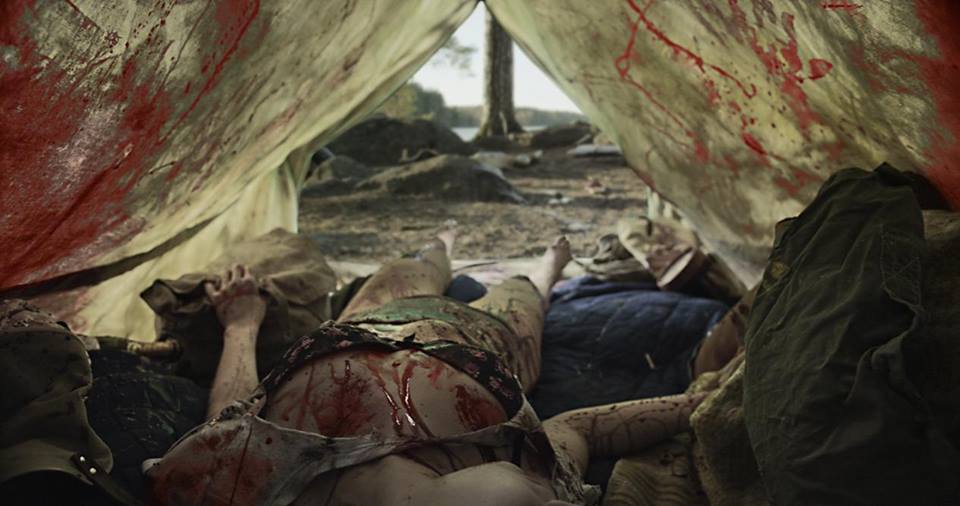
Two alienated high school seniors named JT (Noah Segan) and Ricky (Shiloh Fernandez) skip school one day and wander around an abandoned asylum. To their great surprise, they find a mute, undead woman (Jenny Spain) chained naked to a table in the basement (not easy to find pictures that I felt comfortable posting, that's for sure). JT is a genuine sociopath and immediately comes up with a perverted idea of what to do in this odd situation. Ricky is more sensitive and doesn't want to partake, despite becoming increasingly despondent over his unrequited love for JoAnn (Candice King). Throughout most of the movie, Ricky struggles to find the courage to defy his best friend and free the captive.

It's an unpleasant concept, it's an unpleasant movie, and the reviews definitely reflected that. For the most part, critics dismissed it as exploitative and juvenile, even borderline misogynistic. You can see where they're coming from, but given everything that's happened since 2008, Deadgirl is also arguably one of the most prescient movies of this still young century. I haven't seen anything else (not even Netflix's Adolescence, as good as it was) that so accurately depicts the psychology of young men descending into hateful madness by rejection from women.

"Think about it," JT says at one point.  "Folks like us are just cannon fodder for the rest of the world. But down here... you see, we're in control. Now we call the shots down here, man. Feels good, doesn't it? It's all right to say. You don't have to be the nice guy down here, Ricky."

The logic goes like this - they feel like losers in high school, particularly in regard to romance. Therefore they will be losers for the rest of their lives. Therefore the best they can hope for is an undead slave in the basement of an old building. It might sound ridiculous, but it felt real to me back when I first saw it and it still does. For decades, popular culture has drilled into the heads of young boys that to be a real man, you have to be promiscuous. If they haven't managed to get with the same amount of women as James Bond by the time they're adults, they have failed. It's totally absurd, but the damage it does is terrifyingly real. The intense shame and humiliation forced onto young men who have not met this impossible standard can (quite literally, in many cases) drive them insane. 

I got picked on a lot growing up. Girls had no interest in me. For whatever reason, I didn't go down this path but I always feel like I could have. Because of that, whenever I read about some young man committing some appalling crime out of romantic frustration, I end up thinking of the pain underneath that behavior. And I end up thinking of Deadgirl.

Now we're going to get into spoiler territory, just FYI. After getting roughed up by JoAnn's meathead jock boyfriend Johnny (Andrew DiPalma), Ricky and JT spill the beans about Deadgirl but loosen her restraints before introducing them, leading to her taking a bite out of Johnny. About a day later, Johnny gets violently ill and enters a similar undead state. This gives JT the idea to create a new Deadgirl, since the original is beginning to rot. He and a dumb stoner named Wheeler (Eric Podnar) try to kidnap a random woman at a gas station and this is the only moment the movie becomes funny as she ends up beating the shit out of both of them and escaping.

JT isn't about to give up and now thinks he's going to do Ricky a favor and turn JoAnn into the next Deadgirl, since that will get around that pesky issue of consent. This finally pushes Ricky to act and he frees Deadgirl. After the ensuing chaos, JT has been bitten and JoAnn is mortally wounded, but Deadgirl has spared Ricky and escaped. JT urges Ricky to let him bite JoAnn and turn her undead, but instead Ricky breaks down and tearfully tells JoAnn he loves her and will save her. She spits blood in his face and tells him to "fucking grow up." This final rejection causes Ricky to lose whatever decency he has left. Sure enough, the final reveal is an undead JoAnn chained to the table as the new Deadgirl.

Seventeen years after the movie first came out, social media has created a huge industry of insufferable "alpha males" pushing the same old destructive ideas onto a whole generation of young boys and convincing them to blame the resulting feelings of inadequacy on women, even though this whole cycle is maintained by other men. Women are not interested in perpetuating this dynamic, after all it's not doing them any favors either. The "manosphere" urges them to use their frustration as an excuse to act out in all sorts of ways, from voting for fascists in elections to sending death threats to video game developers if the women in their games aren't sufficiently beautiful. 

On that note, I hope you'll indulge me in a bit of a tangent, as the noxious culture around modern video games reminds me a lot of Deadgirl as well. In recent years, some game studios have started designing their female characters to look less like supermodels and more like women you might meet in the real world. This has proven to be intolerable for a lot of really annoying fanboys who treat every design choice as an attack on Western civilization. The example I've included is not a parody but an actual reaction to Bethesda Studios making a tree monster a little less sultry looking in the new remaster of Elder Scrolls: Oblivion. This attitude baffles a lot of people who stumble on it. Why do they even care this much? Well, I might be able to explain.

Have a look at this old commercial for Playstation 2. It's a clever ad, but it also sums up what I'm getting at. For a lot of lonely and frustrated young men, advancing technology like AI, VR, or even just better video game consoles means the promise of a reality that can replace the one we live in. Did you catch that one shot of the gamer being embraced by the hot mermaid underwater? She seems to have actually been some kind of octopus monster, but it still seems like a very purposeful inclusion. If the games get realistic enough, men can finally have access to women that are programmed never to reject them. What they want is a virtual Deadgirl, and that's why challenging beauty standards in games is such a threat. More powerful video games won't be useful to them if the women in there don't cater to their specific fantasies. 

What might it take to end this era of young men being radicalized by their loneliness? It won't be possible without some pretty major changes that I'm not sure society is currently capable of. You have to convince them that they are not failures and can still get a lot out of life even if adolescence is painful, because adolescence will likely always be painful but it makes up not even a quarter of your entire life. It does not need to decide anything about the subsequent 60 years or so and telling kids that it does is deeply cruel and irresponsible. Still, it's a hard case to make when capitalism thrives on subjecting people to low quality of life in the name of financial gain for the ruling class. That gives credence to some of our worst anxieties about adulthood and life in the "real world." This is all a symptom of much larger issues that I hope are solved someday although it's hard to be optimistic about that.

Until that happens, Deadgirl will remain painfully relevant. 

Sunday, October 27, 2024

Covid Horror: The First Wave

What a difference a few years makes. If an alien were to arrive on Earth today, it would take them a while to figure out that a deadly disease had terrorized the entire planet for 2020 and most of 2021. Despite being a society obsessed with grievance over the wrongs perpetrated against us in the past, this is one unpleasant subject that we've decided to try our best to forget about. Like the villain at the end of a slasher movie, Covid-19 is still out there and people still get sick from it although it's now treated as something like pneumonia - it sucks to get it, but it won't kill most people (except you really don't want to end up with "long covid," a wrinkle that we still don't seem to know anything about). 

That impulse to throw what may be the defining event of the decade down the memory hole is a response to severe trauma, but history shows that this never really works. 1950s America tried its hardest to forget the horrors of World War II, but it still emerged in the infamous (and brilliant) comics like "Tales from the Crypt" and "The Vault of Horror." In that tradition, we've already seen some horror films addressing what we all just went through, some arriving much sooner than expected. They can yield a lot of insight about how we're reckoning with all that's happened, so Halloween is a good time to look at them.

The movies in this short list are the ones that address the plague directly and have it as part of the story, rather than horror films with stories that can serve as metaphors for it like When Evil Lurks or Halloween Ends. And just to clarify early on, I know that "pandemic" is the scientifically appropriate word to describe what happened, but it's also antiseptic and doesn't capture the horror of it all in the way that "plague" does, so that's what I'll be using.

Host (2020) and Dashcam (2022)

Any discussion of horror addressing the Covid era has to start with Rob Savage, who coordinated a team of quarantined friends to create the found footage film Host only months into the plague. 

This ghost story debuted on streaming in July 2020 and is depicted entirely as a videochat meeting, an example of the “screenlife” subgenre codified by Unfriended. Bored during the quarantine, a group of friends decide to conduct an online seance. One of them isn’t very respectful of the forces being dealt with and wouldn’t you know it, some evil entity begins terrorizing them. The limitations involved are apparent but it's hard not to be amazed at how quickly they turned this around and were able to work together so well despite never gathering in person. 

Savage outdid himself with his next film, the bananas adventure of an obnoxious right-wing insult comic (Annie Hardy) who visits an old friend (Amar Chadha-Patel) in the UK at the height of the plague. She’s also a streamer and the whole film is told through her channel, including her encounter with an elderly woman who seems to be infected by…something. Through all the pandemonium, insipid and bigoted messages pour in from her viewers. It seems Hardy was playing herself and is a genuine anti-vaccine nut, which led to tedious "discourse" about whether it's acceptable for someone like that to appear in a movie. I have no clue whether Hardy realized she was being made of, but it's pretty sad that so many viewers can't discern a movie's point of view without the director stepping into frame and saying "this is bad." This is a hilarious, scathing depiction of the madness of 2020s America but in the end, it’s mostly background for a traditional (although very well-executed) found footage monster movie.

Safer at Home (2021)

Another screenlife film that takes place a few years into the future, but in this case the danger of Covid remained as intense as it was in 2020. A group of quarantined friends gather on a video conference to try and recreate their Las Vegas trips of the past, complete with drugs. But the merriment leads to disaster after tensions emerge and a startling accident changes everything. An ambulance might have been useful but is quickly dismissed by the characters for dubious reasons. The best scenes are able to evoke the despair of living under the cloud of a deadly plague, but even three years later, it's already dated. It borrows a lot from Unfriended except the clever writing, asking viewers to suspend quite a bit of disbelief up until the final unintentionally hilarious twist. 

Machination (2022)

We covered this one in the Horror Around the World series, but it's so good that we might as well talk about it again. Most of the movies on this list use the plague as an interesting backdrop for a ghost story or some other supernatural tale, but this Maltese film goes straight for the horror of isolation and mental illness. It was an anxious time for all of us, but I think we all knew at least one person for whom it was the absolute worst possible scenario. Someone already prone to intense nervousness who would be so shaken by the onset of Covid that they might never believe it was safe to go outside again. Maria (Steffi Thake) is an extreme germophobe afraid to set foot outside once the disease starts to spread, leaving her alone in a small house with her demons. It’s far too realistic for comfort as Thake’s intense performance can convince a viewer that they are really watching someone lose their mind.

There's one scene in particular that I just love. Maria wakes up late one morning and has two messages on her phone. The first is from her annoying boss wondering why she hasn't been eager to resume work in dangerous conditions. The second is from her conspiracy theorist brother rambling about how evil the vaccines are. It's the last straw and she smashes her phone, severing the final connection to the outside world. I think most of us wanted to do the same at least once during that whole ordeal. 

Sick (2022)

Kevin Williamson retooled his famous Scream screenplay for the quarantine era. Perhaps that’s an oversimplification - the self-referential humor is absent but there are still plenty of scenes involving masked men with knives. At the height of quarantine, Parker (Gideon Aldon) and her best friend Miri (Beth Million) hunker down in an isolated lake house only to encounter some uninvited guests. There were a lot of intriguing directions a premise like this could go in but the movie doesn’t seem very interested in that and is surprisingly tedious. I did wonder if this was just a completely generic slasher until Covid presented an opportunity to give it a unique twist, but a reason for it emerges towards the end as it plays a key role in a late reveal.

The Harbinger (2022)

This one comes to closer than any of the others to capturing the pure existential terror of life under Covid. At the height of the lockdown, the desperate Mavis (Emily Davis) begs her childhood friend Monique (Gabby Beans) to break quarantine protocol and come to her aid. What Monique discovers is that Mavis is being plagued by terrible nightmares that make her nearly impossible to wake up, sometimes going on for days, and that this is something of a bizarre contagion itself. 

A nightmare that won’t end is as appropriate a summation of that era as you're ever likely to find. It's themes run very deep, sometimes at risk of overpowering the movie at large. The dream demon wearing a plague doctor mask can represent Covid itself, mental illness, the disinformation that flourished during that time, the societal indifference to mass death, and who knows what else. It’s not a perfect movie, but future scholars researching the early 2020s will find a wealth of material to analyze. 

So that's all for now, but I wouldn't be surprised if more films come along that react in some way to what we all went through during Covid. I have a hunch it may drift more towards metaphor rather than more direct depictions, so perhaps at some point I should go through a few of those too. Happy Halloween!

Sunday, October 1, 2023

Horror Around the World - Part III

By the time I was finished with this exercise last year, I was convinced this couldn't be done again. But in the end, I couldn't resist trying. All it took was a few surprising discoveries and I was right back down the rabbit hole. If you want a refresher, here's the first year and this was the second year.

Now that I've finished another list, the question returns - could I ever pull this off again? I spoke too soon last time so I hesitate to say no, but it wouldn't be easy. We've covered a total of 93 different countries at this point. I had leads on movies from Saudi Arabia, El Salvador, Mongolia, Sri Lanka, Libya, Trinidad and Tobago and some others, but I just couldn't find anywhere to watch them. I may yet track them down but another 31? It's hard to imagine right now. 

It also might require loosening my criteria. For example, I was excited for a movie that seemed to be about ghosts stalking people in the Algerian desert, only to learn that the movie in question was a French/Moroccan production and filmed entirely in Morocco (if you recall, we covered Morocco last year). Even though it might be nominally about Algeria, it didn't strike me as a true Algerian film. Situations like that come up pretty often. Co-productions aren't disqualifying by any stretch (there have been a lot so far) but they need to be shot at least partially in the country in question and/or involve a native cast and crew. 

The well may be getting dry, but that's only for now. I've seen a difference even since I started this. Two years ago, I had a bit of a tough time finding an Indian horror film. Now, probably due to the unexpected success of the action epic RRR, you can find a trove of them on Netflix. I hope more countries take advantage of internet streaming and low budget ingenuity until every nation has had its chance to scare the world. 

I've compiled a list on Letterboxd of all the movies that have been part of this activity (you might have to click on "read notes" to see which country each one is from). I won't do another post like this until I have 31 more, but I'll update that list as I find other movies. 

1. United Arab Emirates - Djinn (2013)
For the first Emirati horror film, the producers hired none other than Tobe Hooper, the man who made one of the most revered movies of this genre - The Texas Chainsaw Massacre. Hooper had never quite been able to replicate the success of that movie and this was his last feature before his death in 2017, which some critics described as an inauspicious end for such an influential director. On the other hand, the UAE has so much money that they probably could have hired anyone they wanted, so it speaks well of Hooper's legacy decades later that they chose to approach him.

The movie is about a native couple who return home after an extended stay in the United States only to find that their new home was built on a site that was once home to evil spirits. It's a detail quite similar to Hooper's own Poltergeist and a malevolent djinn begins to cause similar chaos. The story falls apart as it nears the end and it's clear that the director didn't have a huge budget to work with, but its unique pedigree makes it interesting to watch regardless. Unfortunately, it didn't turn out to be very popular in the UAE - even the royal family criticized it.

2. Myanmar - A Mhya A Mhya (2019)
Good lord, this was challenging to find. I learned pretty quickly that this country (also known as Burma) does produce a fair amount of movies but they almost never get released in the western world. This particular film is not listed on IMDB or Letterboxd. Those sites are often seen as infallible but they do have their blind spots, which is a pain because I like to corroborate these movies before I list them here. The screenshot up there? I took it myself because nothing turns up on Google (you mostly get a different movie called Mya Mya, which looks interesting but I couldn't find it).Thankfully, there is a very basic Wikipedia page for this one and I was able to find it with subtitles on a website that was all kinds of shady, like some collector wandering a dangerous marketplace in a faraway land searching for treasure. The things I do for you folks.

Anyhow, let's talk about the actual movie. The title refers to a Buddhist chant about spreading good deeds. A young girl named Snow White (seriously) is contacted by a ghost claiming to be her real mother. This ends up exposing her family’s complicated and very melodramatic past, but they still try to make it work despite everything. However, “May May” is determined to get her daughter back. There’s a charming homemade quality to the production but the subtle handling of the ghost’s appearances works pretty well. Unlike many of the movies I've covered, the ghost doesn't seem to bear any connection to the traumatic history of Burma/Myanmar. By the surprising ending, it has become a somewhat harsh admonishment for parents to treat their children well.

3. Georgia - 247° F (2011)
The country, not the state. I've done a lot of second guessing about the eligibility of this one because it was financed by an American studio and features many American actors. However, it takes place in Georgia and was filmed there by a Georgian director and crew. It's also in English, which is a fairly common marketing decision for a lot of these movies regardless of whether or not an English-speaking country was involved in the production. The collaboration feels significant in this case given Georgia's history - it was one of many regions that established itself as an independent nation after the fall of the Soviet Union and after the nonviolent Rose Revolution in 2003, worked to form closer ties with NATO and the western world. Russia retaliated by invading in 2008, peeling off territory in a manner very similar to what's happening in Ukraine now.

Supposedly based on an actual incident in Georgia, this is a movie about four young people who are vacationing there and accidentally get locked inside a sauna. It's one of those situations that's unnerving to even think about and the fact that it's nothing nefarious and just the result of a simple accident makes it feel way more plausible. It can feel grueling and not always in a good way since three of the four main characters are obnoxious even by horror movie standards. There's also a certain "bro" energy that I could have done without but was pretty typical in the early 2010s.

4. Uruguay - Virus: 32 (2022)
This tense, well-made zombie film opens with an impressive ten minute tracking shot that introduces several characters in the same Montevideo apartment complex just before the mysterious outbreak begins. As Iris and her daughter Tata try to elude the zombies inside an empty athletic facility, they realize that after expending a certain amount of energy, the zombies are inactive for a short period of time (32 seconds, in fact). There’s no explanation given for this quirk, but it’s the kind of unique touch that helps when you’re working in such a crowded subgenre.

Like a few other South American countries, Uruguay was ruled by a military dictatorship for much of the Cold War era. It has bounced back strongly in the decades since but it's no secret why zombies would resonate with them - the loss of free will among those infected is a big reason why the idea endures so much. There are a few scenes, including a harrowing sequence involving a newborn baby, that go beyond typical zombie violence and feel informed by real atrocities. It's hard to articulate exactly why, but at the same time it feels unmistakable. 

5. Senegal - Saloum (2022)
I'm surprised it took me three years to get Senegal on the master list. It's the country that led Africa into the world of film production in the 1950s and 60s, home of Ousmane Sembene, who is often called "the father of African cinema." Sembene made mostly realistic social dramas rather than horror, but I suspected there must have been something produced in that area that could qualify. Their film scene has slowed down as the country's economic fortune worsened, but movies still occasionally get made there. 

This is a genre-bending movie that begins as a Tarantino-esque caper rooted in recent African history. A trio of elite mercenaries escape the September 2003 military coup in Guinea-Bissau and end up in Saloum, a remote region of Senegal. Their scheming goes awry when deadly ancestral spirits descend on the small village they’re hiding out in. The story is quite matter of fact about the supernatural elements but it feels like two movies back to back rather than one cohesive whole. It’s still well worth watching thanks to strong acting, impressive cinematography and its unique vision.

6. Kazakhstan - Sweetie, You Won't Believe It (2021)
The former Soviet countries (along with Russia itself) aren't known for being especially funny. Movies from this part of the world tend to be very bleak and most of the horror I've seen from these places bears that out. That's why this goofy Kazakh farce was such a surprise. Perhaps after being famously befuddled by the mockery of the Borat movies, they decided to lighten up a little.

Dastan is a stressed, cash-strapped guy whose nagging wife Zhanna is pregnant. Desperate for a break, he leaves with two friends for a fishing trip only to run afoul of a gang of criminals and a disfigured lunatic on a murder spree. But none of that frightens him as much as what might happen if Zhanna gives birth and he’s not there. It’s very funny, if occasionally incoherent, and effectively blends splattery violence with “Three Stooges”-esque pratfalls.

7. Latvia - Spider (1991)
Vita is a young Catholic woman recruited by a local artist to be a model for his painting of the Virgin Mary. When she gets a look at the artist’s hedonistic lifestyle, something awakens within her and she starts having visions of being attacked by spiders and other creepy crawlies. She also may have a real demonic stalker. This film was released not long after Latvia gained independence from Russia and it seems they watched a lot of 1970s giallo while they were waiting. Vita is quite similar to the female protagonists of those movies who would be tormented by lust and repression (and usually played by Edwige Fenech). Also like those movies, this is mostly a collection of set pieces with little in the way of plot or character arcs. With some beautiful cinematography and impressive creature effects, it’s the best looking movie in this year's list.

8. Jamaica - Nefarious (2020)
Although it's a small island nation, Jamaica has had a huge cultural impact on the rest of the world. Their unique dialect, a mixture of English and Creole, is instantly recognizable. This bloody film angrily pushes back on the tourist-friendly stereotypes. There’s no dreadlocks or reggae, just a grim story unfolding mostly at night in a neighborhood devastated by crime and violence. An insecure loutish guy named Mark tries to impress his new girlfriend’s brother only to find that the guy is in league with some kind of monstrous entity. There are a lot of regional folk elements that weave in and out of the storyline, which can make it hard to follow for those unfamiliar. Don’t underestimate it just because of its obviously low budget, it’s got some disturbing gore and a truly hideous monster. It’s hard to imagine the cruise ship companies are fans.

9. Nepal - Kagbeni (2008)
This adaptation of “The Monkey’s Paw” was seen as a landmark film for Nepal due to the sophistication of the cinematography and production design, to the point where the phrase "post-Kagbeni" is sometimes used to describe Nepali movies that have come out the years since. A young brewer named Ramesh is unable to propose to the girl of his dreams Tara because of her father’s disapproval. One night, he and a friend offer shelter to a mysterious old traveler who rewards them with a monkey’s paw that can grant wishes. Ramesh only half-seriously wishes for a chance to marry Tara but sets in motion a gradual series of unintended consequences that could destroy his life.

While the movie takes place in the present day, the village the main characters live in feels extremely provincial. The women don't have any say in who they end up with and there's one scene where a boy is beaten with a stick by his teacher for not doing homework. The script doesn't endorse or condemn this stuff, it's just treated as the way things are...which makes sense, if you think about it. European countries probably feel the same way when they see American movies about people who can't afford to see a doctor. The horror of the original "Monkey's Paw" story is rooted in good intentions gone terribly wrong, which is a very universal fear. It just means that we get to see beautiful shots of the Himalayas during this retelling. If I was filming a movie near the world's highest mountains, I would do the same.

10. Malta - Machination (2022)
Malta is a small island country in the Mediterranean Sea whose economy depends in large part on tourism. The whole world was terrorized by the COVID-19 plague, but countries that rely on attracting visitors were hit with another layer of pressure when everyone was afraid to fly anywhere.  Most of the horror movies inspired by Covid used the catastrophe as an interesting backdrop for a ghost story or some other supernatural tale. This film goes straight for the horror of isolation and mental illness, transporting its audience to a time we would all prefer to forget. Maria is an extreme germophobe afraid to set foot outside after the onset of Covid, leaving her alone in a small house with her demons. It’s far too realistic for comfort as Steffi Thake’s intense performance can convince a viewer that they are really watching someone lose their mind. In one highly relatable scene, Maria smashes her phone after getting sick of hearing from her annoying boss and conspiracy theorist brother.

11. Bolivia - Blood Red Ox (2021)
This disturbing and personal film begins when Amir returns home with his boyfriend Amat to visit his friend Amancaya. While driving to the rainforest, they see an injured ox on the side of the road and Amancaya decides to end its misery with a shot to the head. Shortly afterward, Amat begins having bloody hallucinations. Amir is worried, but something’s not quite right with him either. There’s a lot going on here in terms of themes - environmental destruction, Incan mythology and ritual, and especially mental illness, which is about the only thing the audience has left to cling to after the movie piles on a tiring series of twists and rug pulls. There are still a lot of beautifully filmed scenes, with one involving shadows and car headlights being particularly striking.

I doubt this will be the last LBGT-themed horror film out of Bolivia given that it's been a major issue there in recent years. The government passed some very progressive legislation protecting their rights, but the population is still very divided. People in that community are murdered there with alarming regularity and the police often decline to investigate these incidents. Similar to other parts of the world, younger people are more committed to justice for everyone and will likely carry the day in time.

12. Bahrain - Dead Sands (2013)
A messy, goofy, but charming zombie movie that follows an ensemble cast of characters out on the town for an evening when an undead outbreak begins. They alternate between speaking Arabic and English to each other, which is interesting even if some of the actors have a tough time selling the dialogue in what's obviously a second language. The movie aims for the Romero approach to zombie stories, even moving the characters to a mall for the final act, that highlight human selfishness in the midst of a deadly threat. The depiction of societal unwillingness to take the deadly contagion seriously, as well as the numerous scenes of characters letting petty grievances endanger everyone else, turned out to be quite prescient given what we've all lived through in the past few years.

13. Kyrgyzstan - Albarsty (2017)
I don't think I'll ever be able to spell the name of this country without checking a map first, but I was pretty impressed by the first movie I'd seen from there, horror or otherwise. It opens with a heartbreaking scene of the pregnant Ainura losing her baby. Afterwards, she and her husband Tamir adopt a quiet little boy named Ulan and the house is targeted by the “albarsty,” an evil spirit with origins in Central Asian folklore. At first it seems like we’re dealing with the tired trope of parents taking home an evil orphan, but that’s not quite what’s going on. In the midst of an increasingly muddled storyline, it helps to know that the albarsty was typically considered a manifestation of guilt. This is primarily a story about the horror of miscarriage, trauma that doesn’t necessarily heal after an adoption or another pregnancy. The entity rarely appears on screen, but it’s rendered with effects that are simple yet very effective.

14. Zimbabwe - Nevanji (2021)
A low-budget film about two parents, Lillian and Terrance, struggling to care for their son Nashe with a mysterious illness. While babysitting, the boy’s aunt brings in a shamanic healer against the wishes of the parents. Nashe seems to be getting better but he’s also been possessed by the spirit of a malevolent ancestor. There’s the common theme of tradition versus modernity, but this film doesn’t especially side with one or the other, it’s more interested in making the point that either can be compromised by human deception and error. The acting is a little spotty, but most people will be able to identify with how fearful and stressed the parents are at their son’s condition. Some things are just universal.

I might be the first person to ever log this movie on Letterboxd, although it's hard to be certain. I was a little surprised by that, since you can rent it on Amazon Prime (as of this writing) and much of it is in English. Zimbabwe was once part of the British colony of Rhodesia so many people there speak the language. In this case, it's similar to Nefarious given that the characters speak a dialect that mixes English with the native Shona language.

15. Portugal - Tombs of the Blind Dead (1972)
Zombie movies from this era are really interesting because although Night of the Living Dead had already changed the horror genre forever, the familiar tropes associated with the walking dead hadn't been totally established yet. This leads to interesting variations on the idea, like in this film about two old friends who reunite unexpectedly while on vacation. The relationship between the two women is actually quite interesting, but the proper story begins when they encounter the reanimated corpses of heretics executed in medieval times. While hanging on the gallows, their eyes were pecked out by crows, which means they have to hunt by sound. 

The combination of the gorgeous shooting locations and the unique design of the zombies is often striking. It has its excesses, including what seems like a very inefficient method of ritual sacrifice, but the slow motion shots of hooded figures riding horses through the night remained unique and effective even as hundreds of other zombie movies have been released in the decades since. At the time of its release, it was subjected to intense censorship, including by American distributors who inexplicably wanted to re-edit it into a “Planet of the Apes” film.

16. Ecuador - The Swamp of the Ravens (1974)
A distinctly 1970s take on Dr. Frankenstein that follows the evil Dr. Frosta, who believes he can restore the dead to life. Expelled by his colleagues, he continues his research in a shack deep in the swamps of Ecuador. His procedure only works within 8 minutes of death, but Frosta has no problem resorting to extremely unethical means of getting fresh corpses. The swamp is actually full of buzzards, but “ravens” must have sounded more menacing. This film has some notoriety in bad movie circles (Rifftrax even took a pass at it), which is likely due to the hammy English dub and a bizarre scene where the whole thing stops so one character can sing about being in love with a robot. That may set the wrong kind of expectations - it’s crude and poorly written, but it’s not a Troll 2 or a Plan 9 From Outer Space.

17. Slovakia - Nightsiren (2022)
A lot of the scariest things I've seen in horror movies are things that could really happen, and the shocking first scene of this movie definitely applies. Sarlota runs away from her abusive mother but causes a terrible accident in the process. She returns as an adult (never a good idea) and learns that the disappearance of her and her sister was blamed on a reclusive woman accused of witchcraft. It isn't long before she runs afoul of the intolerable men who run the village through intimidation. The place feels so primitive in its mindset that the occasional glimpse of modernity, like a TV set or a cell phone, feels totally out of place. But that's the point. The primitive superstitions about women and witchcraft are being compared to the more modern "witch hunts" of this era. It's reluctant to fully embrace its folk horror elements, but it does get very surreal and weird by the end.

18. Slovenia - Killbillies (2015)
I put these two countries together to hopefully avoid confusion. They are in fact two separate places. The original title of this movie was Idyll until some savvy distributor changed the name to Killbillies. The poster also reads "The hills are alive with the sound of SLAUGHTER," which is delightful. The main character is Zina, a model doing a fashion shoot in the wilderness with a photographer and a younger model that she can barely tolerate. The glamour gets rudely interrupted when the group is attacked by crazed yokels. It borrows heavily from backwoods horror like Deliverance or Wrong Turn, but the premise of leaving a big city to encounter raw savagery in the country is quite effective when you're talking about a developed country with a high quality of life. Most of these movies make the viewer want to stay far away from wherever they were filmed, but the climactic chase through a mountain forest might have you looking up tickets to Slovenia...although you will probably avoid any homemade liquor.

19. Azerbaijan - Aporia (2019)
This was marketed as a zombie movie but is actually about the terror of survivor’s guilt and living under oppression. The residents of a small village are abducted by a military organization, injected with mysterious drugs, and then executed en masse. The only two survivors are stuck in a muddy pit alongside some of the corpses. The majority of the movie is a survival story with the brief zombie elements showing up near the end, and horror fans are likely to feel cheated by the bait and switch. There is still a bitterness, unmistakably a product of real-life trauma, that leaves a mark and the ending is just plain mean. The unnamed military group likely represents the authoritarian regime of the Aliyev family, who have ruled Azerbaijan since the 1990s.

Unfortunately, the only version of this movie I could find had a terrible English dub attached to it. I didn't even think this sort of thing happened anymore - I'd expect it for a 70s film like The Swamp of the Ravens, but not for a film less than five years old. I tried my best not to hold that against the movie - I'm sure this dialogue sounded a lot better in its intended language.

20. Venezuela - Infection (2019)
A zombie film that was swiftly banned in its home country. An outbreak begins as a result of a contaminated heroin needle and soon the walking dead (the fast variant) are rampaging across the nation. Atypically for this subgenre, the human characters are mostly on their best behavior and cooperate with one another. Other than that, it’s a very straightforward 2000s zombie film, although the story behind it could make for an interesting movie on its own. 

It was suppressed not for violence, but for subtle and allegorical shots at Hugo Chavez and his adherents that didn’t go unnoticed. As one example, there's a brief shot where blood splatters on a television that happens to be running a propaganda piece about the success of the Bolivarian Revolution that put Chavez and later Nicolas Maduro in power. The filmmakers defied the ban in early 2020 and showed the film in several Venezuelan cities. I couldn't find any information on what happened afterwards but given the timing, the onset of Covid probably rendered the issue irrelevant. It's original release was around the time that the Zika virus broke out in Venezuela and with Covid following shortly after, there were several added layers of topicality.

21. San Marino - The Last Days of Earth (2017)
This is the smallest country I've covered so far, so it makes sense that it comes with the smallest movie. There have been a lot of low budget movies as part of this activity, but this is a whole other level - an experimental film done in the style of the silent era, shot in muddy black and white and featuring only one actor. The English translation of the intertitles is riddled with grammatical errors, which reminded me of the infamous movie Ax 'Em....but don't worry, it's much better than that one. It lifts the premise of the Lars Von Trier movie Melancholia about another planet about to collide with Earth and wipe out all life (the planet is even named “Melancholia” in both films). One unnamed man struggles to cope with the reality and imagines what might come afterwards. That’s about all there is to it but it generally works. If anything, it’s a demonstration of the power of music - the droning, moody, almost industrial score adds tons of atmosphere to footage of cityscapes and amusement parks that would otherwise be boring.

22. Barbados - The Barbados Project (2022)
The title could describe both the storyline of this found footage film as well as the work that went into making it. A local news crew investigates reports of a large creature prowling the island and learns that it has some connection to a mysterious government organization called “Building Six.” There’s a very homemade feel to it but the filmmakers have good instincts, using analog and digital filters to make the CGI look more convincing. The story also goes into unexpected places, leaving the central characters behind for the third act, which features archive footage from the 1980s and a Tiktok-style video from the year 2030. The ambition behind this is off the charts and it’s hard not to be impressed. 

Like a lot of countries in the Caribbean, Barbados was once a British colony. In 2021, they rewrote their constitution and became a fully independent republic, no longer considering the Queen of England as their head of state. Not even Canada has done that yet. Between that and making basically a kaiju film with very limited resources, this is a nation eager to prove itself. Seems to be going pretty well.

23. Lithuania - Anarchy Parlor (2015)
This bloody movie arrived to the torture party several years too late. It's about a group of young Americans who party recklessly until they end up in the clutches of an affably evil tattoo artist. Most of the plot is lifted wholesale from Hostel, but I suppose they figured if people are making money off depicting Eastern Europe as a savage land of strip clubs and torture chambers, it might as well be the Eastern Europeans themselves. The dialogue is often laughably bad and Robert LaSardo as the villain is the only cast member who gives a credible performance.

24. SwitzerlandSennentuntschi (2010)
There are many European horror films out there that were financed with Swiss money, but it's a little harder to find one that's an authentic product of Switzerland. This is a feminist film inspired by an old folk tale of a woman made out of rags and straw who comes to life. A young girl discovers a skeleton buried in the woods and the movie flashes back to 1975, when a mysterious mute woman wanders into an Alpine village. The story then flashes back again to a few days earlier at a remote cabin occupied by three men who believe she is the incarnation of the doll they made. It’s probably longer and more complicated than it needed to be, but this movie has a lot of ambition. 

We've gone through a lot of folk horror in the process of compiling this list, and most of them have reverence for the tales of olden times. This one ultimately wants to discredit them as products of religious hysteria and men blaming women for their own moral failings. So it’s actually a little bit funny that the beautiful mountain scenery gives the film such a fairy tale quality.

25. Ghana - Diabolo (1992)
Ghana has one of the most prolific film industries in Africa, but their films are tough to find in the western world. This one is a pretty goofy story about an evil man who lures women into his clutches only to turn into a snake and attack them. I had plenty of deja vu for the Nigerian movie Karishika during this - the same muddy VHS footage and upbeat music that's very much at odds with the subject matter, but this one is a good deal more entertaining. There's very little dialogue and a good sense of visual storytelling, with the scenes featuring the real-life snake being particularly well-staged. The cast must have nerves of steel.

26. Croatia - The Rat Savior (1977)
Like Leptirica last year, this was a Yugoslavian film that is now claimed by the region it was made in. Croatia cites this twist on Invasion of the Body Snatchers as one of the greatest films in their country’s history. The homeless Ivan searches for shelter underground only to stumble on a group of wealthy humanoid rats that can pass themselves off as regular people. Now he has to try and figure out what’s happening while slowly going mad from paranoia about how many of them are nearby at any given time. 

Invasion of the Body Snatchers was deeply rooted in American political anxieties of the 1950s - this is a commentary on class that is more broadly applicable but was especially potent in the 1970s as Yugoslavia dealt with a severe economic crisis. Despite the low budget, the rat makeup is quite effective in its subtlety.

27. Cyprus - The Ghosts of Monday (2022)
Despite the title, this film is less about ghosts and more about a cult, with a touch of cosmic horror thrown in. A film crew has arrived to shoot a pilot for a new paranormal reality show in the storied Grand Hotel Gula and most of the first half is arguments about creative direction between the showrunner Eric and the host Bruce, who also happens to be his father in law. The horror elements come very suddenly and while it’s not exactly what you might call graceful, there is some creativity - one scene inside a glass elevator looks like something Dario Argento might have done. It also has the distinction of being one of the final roles of Julian Sands before he disappeared into the mountains of Southern California.

If I've counted correctly, this is the sixth movie since I started this project to have a cast of primarily English-speaking characters despite the setting. At least it has some thematic sense this time - the supernatural occurrences are placed in the context of the UK's acrimonious history with Cyprus, from the invasion of Richard the Lionhearted during the crusades to the occupation by the British Empire after World War I. Naturally the one native Cypriot in the cast is the one most attuned to it.

28. Hungary - Post-Mortem (2020)
Speaking of World War I, the role it played in shaping horror films can't be overstated. I've mentioned this before, while discussing Germany in the first year of this exercise, and the impact was quite similar in Hungary - apocalyptic death and destruction, nearly an entire generation wiped out, the fall of an empire, and decades of violence and unrest afterwards. 

The main character in this film is Tomas, a young man still traumatized by his near death experience in the Great War. He now works in the realm of post mortem photography, the art of taking pictures of the recently deceased for the sake of their surviving long ones. This was very much a real thing back then and the scenes of him arranging the corpses for their close-ups are just as disturbing as anything else in the movie. While working in a small village devastated by both the war and the deadly 1918 flu, Tomas and a sweet little girl realize that a shadowy figure is appearing in all of the photos (it periodically feels like an old-timey prequel to Shutter). It can sometimes feel like two mismatched films trying to co-exist, a quietly arresting drama about national trauma and a swing for the fences horror story where people get dragged around as thundering music blares. Messy as it can be, it mostly works thanks to the thematic strength of its setting - a village in mourning overrun by ghosts is as powerful a symbol for the aftermath of the Great War as anything else I've seen.

29. Dominican Republic - The Devil's Hole (2012)
I got this one from a website run by someone with access to thousands of rare DVDs who will send you a digital copy of one if you pay. I'm not totally sure it's legal so I'm not going to give a link, but it ended up being quite helpful...to a point. The subtitles were extremely spotty, only translating some of the dialogue and being downright questionable at times. A character is struck by a car early in the film and the subtitles read "I shit in the area," which I don't think anyone said. I had to rely on visual storytelling, my very limited grasp of Spanish (and Latin, since they have a lot of root words in common), and the movie's Wikipedia page to get the gist of what was going on. The behind the scenes work that goes into making these lists can get wacky.

A psychic medical school student named Sofia and several friends are on their way to a spring break vacation when their car goes off the road (hopefully everyone kept their bowels under control this time). They find a foreboding house to spend the night in, only to discover that it was once used by the military during the Parsley Massacre, a mass killing of Haitians in 1937 led by the dictator Rafael Trujillo. Throw in some black magic and you’ve got yourself a mean haunting. The low-budget effects are often campy, but the bloody deaths and overall grimy atmosphere of the house give it some bite. Like a lot of horror movies we've covered, it uses the trappings of horror to reckon with difficult history. Unlike the others, Catholicism is treated with a lot of reverence - its intervention saves the day during the unexpectedly corny ending.

30. Bulgaria - Roseville (2013)
This movie is supposedly based on a real unsolved murder case in 1985, but there doesn't seem to be any background information available on the internet. Real or not, it serves as the foundation for a slow-paced possession story about four people encountering an evil presence at a remote mountain lodge. One of them is an American photographer who is so obnoxious that he almost torpedoes the movie. This character is arrogant, aggressive, won't use the native language, and seems desperate to shoot something. We can only really blame ourselves given that these are the traits American culture tends to embrace.

Even without him, this movie would still be a little frustrating. Most of the big scares turn out to be hallucinations and other ones just don't really land - the demonic dog following one of the characters around actually looks pretty friendly. Leaning into the true crime/cold case aspects of the story might have helped.

31. Antarctica - South of Sanity (2012)
The first time I did one of these lists, I made a joke about hitting every continent except Antarctica. Well, now we've got all of them. I couldn't have found a better way to end this third (and probably last for quite a while) batch of 31 movies, even if it's not a "country" in any sense of the word. There are no indigenous people of Antarctica and nobody else there except research facilities and rich tourists. So who made this horror film? Penguins?

A group of real British researchers shot this movie for fun while stationed there. It’s extremely rare for a non-documentary film to shoot in Antarctica and the spectacular snowy vistas lend a unique look to what is otherwise a pretty standard low-budget slasher. About a dozen characters find themselves isolated and vulnerable as a killer in a freaky mask picks them off one by one. Despite how small the group is, they don’t seem to notice that their colleagues have vanished for an inordinately long time. That and the amateurish acting makes it hard to get out of the mindset that you’re watching someone’s home movie, but there's entertainment to be found in that as well.

That brings us to the end of this three year adventure. I've enjoyed this immensely and I hope you've found it interesting as well. I'll continue to search for movies from other countries to add to the master list and hopefully you'll see another 31 movies pop up on October 1 sometime in the future. Long live horror and Happy Halloween!

Saturday, October 1, 2022

Horror Around the World - Part II

31 days, 31 countries....no repeats!

I did this last year, but I'm definitely not the first to have done it. James Rolfe at Cinemassacre ended up doing it at the same time, but other writers have done the 31 days, 31 countries in Octobers past. However, I have yet to see anyone do it twice. This makes a total of 62 countries and while I'm typically reluctant to brag, I feel pretty good about that. Could I do this for a third year? I did some preliminary research and I came to the conclusion that I could only squeeze about ten to twelve more countries into the overall list. Another 31 just doesn't seem possible. 

However, you'll notice that a good chunk of this list are films made in the last decade, with a few being the first ever horror films from their countries. So in another ten years, who knows? There are roughly 195 countries in the world, give or take some disputed territories. What I have on this list and last year's list represents only about a third of them. Join the party, you guys!

1. Ukraine - Ghoul (2015)
I couldn't imagine starting with any other country. The Russian invasion of Ukraine and the Ukrainian people's steadfast resistance has been some of the most extraordinary history I've seen in my lifetime. It's settled into something of a stalemate, one that could go on for years. I hope it ends sooner rather than later, for the sake of both nations.

Eligibility was a bit wonky for this movie, which is a co-production with the Czech Republic. However, it was shot in Ukraine and is deeply rooted in the country's history so I think it's a worthy selection.  It's a found footage movie that was made shortly after Russia’s invasion and occupation of the Crimean Peninsula, but the story looks back on another atrocity perpetrated by Ukraine’s bullying neighbor. The “holodomor” was a famine orchestrated by Joseph Stalin during the 1930s to crush a Ukrainian independence movement, something Russian leaders deny to this day (as if that's worth anything).

The film begins with three American filmmakers arriving to film a documentary about the grisly incidents of cannibalism which occurred during the height of the famine. Their hosts take them to a house in the countryside that was the site of a particularly brutal murder only to find out that the place is possessed by the spirit of the real-life cannibalistic serial killer Andrei Chikatilo, whose mind was warped by his experiences during the famine. The Americans seem to have brought the most overused found footage tropes along with them, including characters who act extremely stupid, but the way the horror is rooted in real history makes it quite compelling.

There weren't a lot of Ukrainian horror films to choose from. Whenever the country gets back on its feet, I think that will change.

2. Taiwan - Detention (2019)
That's right, Taiwan gets its own entry. No China, I will not be recording a simpering apology in your language so you'll just have to deal. This powerful horror film is actually based on a video game by the Taiwanese studio Red Candle Games and takes place at a school during the “White Terror,” an era when the people of Taiwan were brutally oppressed by Chiang Kai-shek and his Kuomintang party following their retreat from mainland China after losing their civil war against the communists and Mao Zedong. Wei is a student terrified of being exposed as a member of an underground book club reading forbidden literature, while Fang has developed an questionably close relationship with one of her teachers. During a typhoon, both of them are trapped at the school, which has become a nightmarish distortion of itself populated by various ghosts and monsters. 

It’s surprisingly close to the story of the game and both versions memorably use surreal horror as a metaphor for the real-life terror of living under occupation. This is the exact kind of movie I hope for when doing this exercise, one that is deeply rooted in the history of its country of origin and rewards viewers who take the time to do a little research on the background.

3. Tunisia - Dachra (2020)
The first Tunisian horror film was a grim tale that examines the tension between tradition and modernity that lingers in the years following the 2011 Arab Spring uprising that overthrew a repressive regime and established a new democratic system. Yassmine, Walid, and Bilelare are three bickering journalism students collaborating on a research project involving an institutionalized woman who survived an attempted murder that was never solved. Their search leads them to an isolated village in the woods where the people dabble in the occult, along with revelations none of them expected. It’s easy to get invested in the mystery of it all, making for a tense movie that creates unease with composition that often puts the characters at the far side of the frame. The last half-hour is such a gruesome ride that it might be a while before you realize that you still have a lot of questions about the storyline. Apparently people are still victimized by occult rituals in the more remote parts of Tunisia, which is unnerving to say the least. If this is what Tunisian horror looks like, all I've got to say is welcome to the fold.

4. Peru - The Entity (2015)
Not to be confused with the brutal American horror film where Barbara Hershey gets repeatedly raped by a ghost, this is a fairly traditional found footage movie that incorporates some regional history. I came across a lot of found footage while searching for films to use for this, although not all of them were available. The format allows people to make effective horror without much of a budget, just some essential creativity. I suspect it opened doors for a lot of aspiring directors across the world.

The story revolves around four students working on a class project on the trend of "reaction videos." In the early stages of their research, the group learns that three of the people featured in one of these videos have died under mysterious circumstances, which leads them into the path of a vicious ghost with a penchant for lifting people in the air before slicing them up. The threadbare, occasionally silly plot is held together mainly by coincidence (or is it?) but the film gains an interesting historical perspective when it's revealed the ghost was a victim of the Spanish Inquisition. The fact that the ghost speaks in the indigenous Quechan language drives the point home. Like a lot of the films I covered last year, this is another examination of the horrors the Catholic Church has inflicted on the Spanish-speaking world throughout history.

5. Poland - Diabel (1972)
If you've never seen a movie by the Polish maniac Andrzej Zulawski, you are in for a ride. Good luck turning away from the screen during the hysterical mayhem of this film’s first seven minutes. An imprisoned nobleman named Jakub is rescued during a prison riot by a mysterious man dressed all in black. The already traumatized Jakub is manipulated by the stranger into a series of grisly murders, eventually bringing down the wrath of the authorities. Even at this early stage in his career, Zulawski had perfected his kinetic visual style and affinity for characters who always appear in the midst of a nervous breakdown. 

Although it it set in the 1790s, the story has parallels to a series of real incidents in the 1960s when Poland’s communist government baited dissidents into protests to provide a pretext for a crackdown on free speech. The regime figured out what was going on and they were not amused, although they could have just as easily objected to the taboo-shattering violence and depravity. Either way, they prevented the film’s release and it was not seen by the public until the late 1980s after the regime had fallen. Zulawski was so disgusted by the whole thing that he left his homeland and made the rest of his films elsewhere in Europe, including his best known work - Possession.

6. Singapore - Revenge of the Pontianak (2019)
According to Southeast Asian folklore, a pregnant woman who dies before or during childbirth and is not given proper burial rites will return as a vampiric creature known as a pontianak. Khalid moves back home to his native village with his new wife Siti and young son Nik only to find himself haunted by the vengeful presence of the boy’s mother Mina. The movie wisely keeps the pontianak out of sight until near the end, even if it isn’t quite sure what to do with her once she appears. Seeing her beat the crap out of an angry mob near the end is jarring compared to the rest of the film. The art direction uses a lot of eerie blue and red lighting to beautiful effect. It also takes place in 1965, which was the year Singapore seceded from Malaysia. Is this tale of a twisted romance gone wrong some sort of allegory for those events? I would love to hear an analysis from someone with more expertise on that region's history.

7. Greece - Medusa (1998)
The Greek myths are some of the most famous stories in history, so I was very surprised to learn just how few horror films they've produced. You would think there would be all sorts of movies featuring minotaurs, gorgons or hydras, right? Not so much. At first, all I could find were incredibly dull British co-productions that relied on the gorgeous Greek scenery but had very little apparent interest in their culture. It took some digging, but I eventually found the sort of movie I was hoping for.

The only film made by George Lazopoulos is a retelling of the classic legend in a contemporary setting. You see this kind of thing constantly with Shakespeare, but not as much with Greek myth. Perseus is a knife enthusiast and petty criminal who breaks into his childhood home to find it occupied by a mysterious woman who always wears dark glasses. Meanwhile, police are investigating strange stone statues that resemble people who have gone missing. There is a very unique feel to this film - it’s low-key, naturalistic and quietly unnerving. It sometimes feels like more could have been done with the idea, but there are a lot of clever little details for those who remember the ancient tale.

8. Paraguay - Morgue (2019)
This movie does impressive work with limited resources, filmed in mostly one location with a tiny cast. Diego is a struggling, hapless security guard for hire who commits a hit and run one night on a deserted road. The very next evening, he is assigned to patrol the local morgue that just happens to be housing the corpse of the man he hit. What follows is a familiar “reap what you sow” paranormal tale, but it’s a real nail-biter with one particularly brilliant jump scare. When Diego is locked into a dark room near the end, the viewer might find themself fighting off claustrophobia along with him. The director also picked up something else from American mainstream horror - the film is supposedly “based on actual events.” Yeah, sure it is.

9. North Korea - Pulgasari (1985)
There's a hell of a story behind this monster movie. The South Korean director Sang-ok Shin and his ex-wife, the actress Eun-hee Choi, were abducted by agents of the North Korean government in 1978. Kim Jong-il, at that time the heir to North Korea’s repressive dictatorship, forced the two to get remarried and they spent nearly a decade producing movies to try and elevate the famously reclusive nation’s cultural stature. This was the last film Shin made for them, finished shortly before the Vienna Film Festival of 1986, when the two of them sprinted to an American embassy and finally escaped.

The movie takes place in feudal Korea. A peasant blacksmith is unjustly imprisoned by an evil monarchy and carves a metal figurine of a monster, begging the gods to give it the power to avenge him. The figurine comes to life, eating metal and steadily growing large enough to help the villagers topple their oppressors. The creature effects are actually quite good but the otherwise ham-fisted movie suffers whenever Pulgasari is not on screen. The North Koreans intended this to be a proud communist tale but Shin complicated that message with the third act. As Pulgasari begins to terrorize his own people after the revolution, he becomes a metaphor for Kim il-Sung’s abuse of the North Korean populace once he came to power. Luckily for the director, nobody figured that out at the time.

This film was surprisingly easy to find. There seems to be an unspoken agreement among movie buffs worldwide to ignore North Korean copyright because the Kim dynasty is just such a pain in the ass.

10. Ireland - The Devil's Doorway (2018)
This is a powerful found footage movie about two priests, the devout young Flynn and the older, skeptical Thomas, who travel to one of Ireland's infamous "Magdalene laundries" in the year 1960 to investigate a strange paranormal occurrence. They discover profound evil, both human and supernatural. These were real places operated by the Catholic Church (yep, them again) for centuries that were supposedly a place to rehabilitate "fallen women" like prostitutes or unwed mothers but in reality functioned more like prisons. 

The director Aislinn Clarke wisely shot the whole thing in 16mm film, which visually differentiates it from its peers and also makes it resemble the sort of low-budget socially conscious documentaries of that era. The building used for the facility is also a great setting. The demonic elements are mostly what we've all seen before but the condemnation of the church's real-life abuses is razor sharp.

11. Nigeria - Karishika (1996)
My goal with this activity is not to mock any countries. Both years I've done this, there have been times when I finished a movie that turned out to be awful and thought "I should find something better than that, just to be fair to them." Unfortunately, this is the only Nigerian film I could track down and, well...as number 5 from last year might say, it's-a no good.

At the very least, it's quite a trip - a low budget, bible-thumping two and a half hour mess that begins with what looks like some sort of company meeting in Hell. Satan is annoyed about his lack of success in corrupting the world, so he sends the demoness Karishika to Earth. The shape-shifting trickster tempts men and takes cruel advantage of women suffering from infertility but a heroic pastor stands in her way. The film is well-known in its native country as a key part of the early "Nollywood" output and, somewhat unbelievably, people who grew up watching it describe it as a frightening experience. I really want to find movies that reflect well on their home country, but it didn't work out this time. I can't recommend it for sober viewing, but at least that theme song is a real banger.

12. Vietnam - Muoi (2007)
Given that Vietnam spent much of the last century in brutal battle with colonial powers, you might expect there to be a lot of horror films as a result. Not so much. In fact, this ghost story was the first one to come out of the country and was suppressed for months due to its violence, which would be considered unremarkable in Japan or Korea, whose horror traditions have clearly influenced it. As a result of the delay, a different horror movie (Ghosted Stream) was released earlier and stole its thunder, making it debatable which one was actually "first."

A Korean writer named Yun-hui travels to Vietnam to meet her estranged friend Seo-yeon as part of the research for a book. Seo-yeon shares the background information on a local folk tale involving a woman named Muoi who was betrayed and mutilated a century earlier. However, Yun-hui begins to suspect that the legend might be repeating itself around her. The premise is engaging at first, but the plot gets lost somewhere in the middle of the endless hallucinations and dream sequence fake-outs.

13. Panama - Diablo Rojo (2019)
Panama’s first horror film was produced by a very specific group called the "Panama Horror Film Company." It's about a middle-aged bus driver and his younger co-worker who stumble upon a powerful coven of witches who embody the legend of “La Tulivieja.” This is a variant on the vengeful mother archetype similar to La Llorona, but exclusive to Panama and Costa Rica. With some brutal kills, unexpected comic moments and a superb-looking monster, this movie is often reminiscent of the work of Sam Raimi, all packed into an exciting 73 minutes. Gotta love a short-ass movie.

14. Israel - Jeruzalem (2015)
The Z in the title is clearly meant to evoke World War Z, which had a major action sequence set in Israel. This is a homegrown found footage movie about the onset of the apocalypse that comes just at the right time to ruin vacation for Sarah and Rachel. The whole thing is from the point of view of Sarah's new Google Glass (does she know it's always recording?) and while it's the standard found footage plot we've all seen plenty of times, setting it at the epicenter of the world's most intractable conflict gives it a sharp edge. 

The Israeli military is portrayed as trigger happy and paranoid and ultimately it seems logical that a place plagued by so much man-made evil would also attract the supernatural variety. The highlight of the film is the introduction, which is styled like 1970s archival footage. I think I would have preferred a whole movie in that vein, although I am a sucker for stories about evil that has terrorized mankind throughout history.

15. Czech Republic - Witchhammer (1970)
If you can get through this two hour movie without singing the title to the tune of Peter Gabriel's "Sledgehammer," you are a more disciplined person than I. Although it was likely influenced by the success of the British film Witchfinder General a few years earlier, this striking movie has more in common with “The Crucible,” both in terms of its narrative and subtext. In the year 1678, a destitute old woman steals a communion wafer for a friend, which provokes such a hysterical witch hunt that the local government recruits the amoral inquisitor Jindrich Boblig. Almost immediately, Boblig is coercing and torturing women into false confessions with only the deacon Krystof Lautner willing to stand up for what’s right.

It’s not the fastest paced movie but it lays bare the hypocrisy and corruption behind this sort of moral panic, whether it's about witchcraft or acknowledging the existence of gay people in a classroom. Like Diabel, it also uses an older historical era (a completely true story in this case) to critique the show trials put on by the occupying forces of Soviet Russia during this time. The communists were slow on the uptake and the film played all over the country before they pulled it from theaters. It wasn't seen again in Eastern Europe until 1989. 

16. Laos - Dearest Sister (2016)
Laos is a one-party Communist state and not the ideal environment to nurture a film culture. However, one has still managed to emerge (albeit under the watchful eyes of censors) with Mattie Do's socially conscious horror films at the forefront. Dearest Sister was the first film Laos had ever submitted for consideration for the International Feature category at the Academy Awards. The Oscars have little respect for horror so it was not nominated, but it did bring a lot of welcome attention.

A young woman named Nok relocates from her dead-end village to the city of Vientiane to work as a caregiver for her cousin Ana, who is going blind. She is married to a rich European dirtbag who is rarely home, leaving Nok as Ana’s constant companion. In addition to losing her sight, Ana is also experiencing strange bouts of clairvoyance, everything from winning lottery numbers to menacing ghosts bringing ill omens. The shots from Ana’s point of view, where muddy figures appear in her blurry field of vision, are quite unnerving. However, it’s just as much a social drama as it is a horror film. In addition to a familiar look at the clash of tradition and modernity, the story highlights the lack of opportunities for women in Laos - going abroad and meeting a white man is seen as the best option for success. In the end, the corrupting influence of money is more frightening than any ghost.

17. Norway - Lake of Death (1958)
At first, I assumed I would pick Trollhunter, but I've written about that one here like two or three times already so I decided to find something else. This is an old-fashioned ghost story that is beloved in Norway but almost unknown outside of Scandinavia. Lilian brings several of her friends to a remote cabin by a lake in anticipation of meeting her twin brother Bjorn there. However, when they arrive Bjorn is missing with evidence suggesting suicide by drowning. While her guests delve into the history of mysterious deaths near the lake, Lilian finds herself drawn to something lurking underneath. 

It relies heavily on dialogue, sometimes feeling like a play, complete with a story-within-a-story opening that serves no real purpose. Still, the scenery of Norway looks gorgeous even in black and white and there is an eerie atmosphere that’s often compelling. I think it also deserves some credit for doing the "cabin in the woods" setup way before that became so common. The Norwegians remade it into a more generic sort of horror movie in 2020, although that one is worth watching just to see Norway in color.

18. Serbia - Leptirica (1973)
Technically, this folk horror farce was a Yugoslavian film, but it was filmed entirely in the Serbian region and since Yugoslavia's dissolution, Serbia has understandably claimed it. The miller of a small village is attacked and killed by the wicked vampire Sava Savanovich, basically a Serbian variant of Count Dracula. The bumbling villagers try to come up with a plan to stop him but none of them are prepared for the gnarly final twist. It doesn’t totally work but the movie has charm thanks to it’s realistic pastoral production design. The mill referenced in the legend (and the shooting location for the movie) is a real place in the small Serbian village of Zarozje. It's marked on Google Maps and everything!

I could have gone with a certain other "Serbian Film," but it just seemed too easy. Not that there isn't plenty to say about that one. Perhaps I'll get to it another time.

19. Malaysia - Roh (2021)
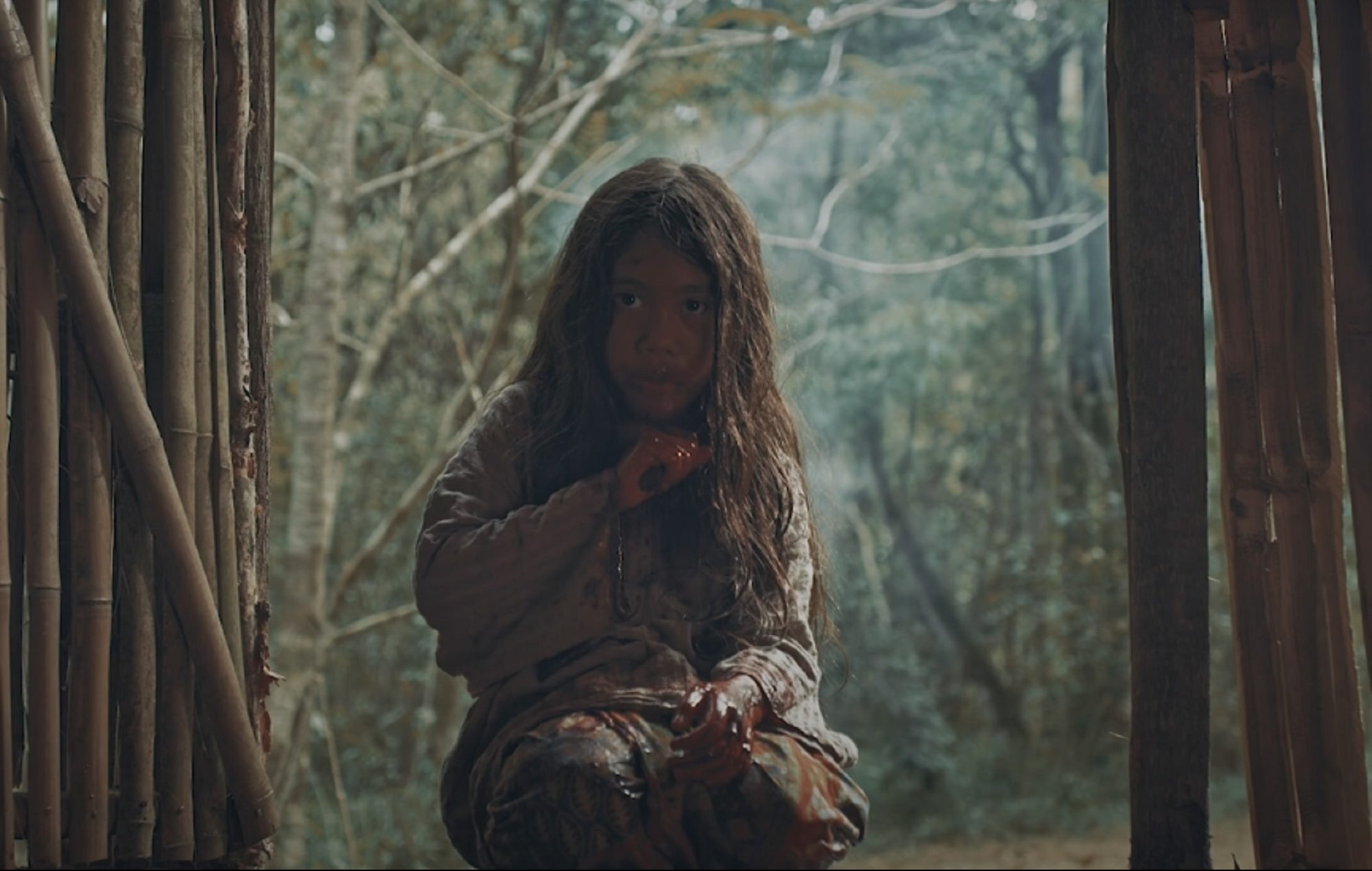
A grim movie that unfolds deep in the jungle during an undetermined time period, where single mother Mak and her children Along and Angah live in almost complete isolation. One day, a little girl covered in mud arrives with cryptic warnings about a “ghost hunter.” The scary moments are extremely effective but the story as a whole is dreamy and elusive. Maybe a more in-depth knowledge of Malaysian superstition and myth is required to fully appreciate what's going on here and unlike some other regional folk horror films like this, it doesn't seem in any hurry to throw a bone to international audiences. However, any viewer is likely to get lost in the gorgeous jungle scenery.

20. Colombia - The Hidden Face (2011)
This film resembles a classic Hitchcock mystery in the vein of Rebecca or Shadow of a Doubt. Adrian, the conductor of the Bogota Philharmonic Orchestra, has just been dumped by his girlfriend via video message. Ouch. He assumes she just ran off with another man, but his new girlfriend Fabiana can’t shake the feeling that there is a strange presence in the house. It’s gripping, economic storytelling that is rarely predictable. The truth behind the mystery is not what you expect, but it’s both chilling and darkly funny.

Many of the South American films we've covered these past two years deal with the horrors of their past. Aside from a brief reference to the continent being a safe harbor for Nazi war criminals, this is a very different approach - a story that brings attention to the cultural arts of a modern nation. People in the United States tend to write off Colombia as a typical banana republic with a lot of cocaine, so it's a shame this perspective hasn't been seen by more people here.

21. Denmark - When Animals Dream (2015)
This is a moody and unusual story with a welcome emphasis on characterization. It’s not hard for the audience to identify with Marie, an isolated girl with a seriously ill mother and a miserable job at a fishery where most of her coworkers are macho idiots. Not exactly in line with Denmark's "happiest country on Earth" reputation. When people in her small town start turning up dead, she wonders if it has anything to do with the strange changes her body is going through. It's actually more effective as a portrait of adolescent struggle than as a horror film. Even though most viewers will know what's coming, it still feels out of place once the supernatural elements emerge.

22. Morocco - Achoura (2019)
The title refers to a real Moroccan children festival that has drawn the attention of a child-snatching monster in this lush and stylized movie. A group of childhood friends who were traumatized by the creature have to come together as adults when it suddenly returns. If that sounds familiar, it’s because it’s an extremely similar premise to Stephen King’s “It," complete with numerous flashbacks to when the characters were all kids. The movie attempts to tell the whole story in 90 minutes, which is pretty tough. If you recall, the last Hollywood adaptation of "It" needed two movies and over five hours and still left some things out.

Naturally, some viewers will find this irritating but honestly, I thought it was fascinating. "It" is one of my favorite stories and to see such an American tale filtered through a different culture was incredibly interesting. There are some regional twists on how the creature behaves and one detail in the opening scene was particularly noteworthy. It takes place years earlier and one of the children who appears has been married off to a much older man despite only being about 12 years old. "It" is primarily a story about childhood trauma, but those traumas can look very different depending on where you are in the world.

23. Estonia - November (2017)
This is a deeply weird black and white folk horror movie that opens with a sentient skeletal pinwheel abducting a cow. These creatures are called kratts and they are just one of many supernatural oddities that the inhabitants of a poor village accept as just part of daily life. They resort to all sorts of trickery and black magic to survive the harsh living conditions while trying to weasel out of the inevitable consequences. Viewers aren’t really told a story, they just spend two hours in this bizarre place taking everything in. The gorgeous photography and examination of the region’s unique folklore make it intermittently compelling.

24. Costa Rica - The Sanatorium (2010)
Costa Rica has been a pacifist, stable democracy since the 1980s, giving it a reputation as an oasis of calm in the often tumultuous region of Central America. That stability translates into an irreverent take on the Duran Sanatorium, a real place which functioned over the years as a clinic for tuberculosis patients, an orphanage and of course, an asylum. Tales about the haunted place, many including a sinister nun, have brought international attention from ghost hunters. A small and mismatched documentary film crew head out to the place and might find some great evidence if they can stop bickering. It’s mostly a deadpan comedy that goes totally bananas in the last twenty minutes. It feels lighter and softer than one might expect from a movie like this, but benefits from being filmed in the actual sanatorium. 

25. Iceland - Lamb (2021)
A plodding fable that got a wider release than is typical for this sort of movie. The main characters are a lonely couple who make a modest living as farmers out in an isolated and beautiful region of the country. At some point in the past, they lost a child but fate takes a strange turn when they discover that one of their sheep has given birth to some hybrid creature that is half lamb and half human. They happily adopt the lamb, who they name Ada, as their own but the truth about her origins will eventually come out. The filmmakers seemed to have a tough time depicting the creature, using mostly CGI that varies wildly in quality from scene to scene. It would be easier to ignore if there was more going on in the story. Other than a thin look at parental grief, the movie doesn’t do much besides waste time. I didn't love it but the bleak and beautiful scenery of Iceland is truly one of a kind.

26. Cambodia - The Spell (2019)
A somewhat formulaic film that begins with Thida and her husband Nak moving into his beautiful childhood home to find that it's now haunted by the angry ghost of a young woman named Lin. Thida has no clue what's going on but both Nak and especially the housekeeper are acting strangely. In terms of style, it borrows a lot from their East Asian neighbors. But, as you've probably noticed after two years of this, the story of a wronged woman exacting supernatural vengeance is an international staple. However, there are differences in terms of how deeply each country wants to get into the issues at hand.

While the story has some sympathy for Lin (and they gave her a catchy musical leitmotif), the thematic power of the film is undermined by flashbacks that reveal she was crazy all along and Nak didn't do anything wrong. It's a missed opportunity that feels strangely defensive - Cambodia has obviously come a long way since the days of the Khmer Rouge but human rights organizations have called out the country for widespread domestic violence that is generally considered socially acceptable. The kind of thing the US Supreme Court looks at and says "we need more of that." 

27. Netherlands - Amsterdamned (1988)
If someone absolutely had to make this pun, at least it was the Dutch themselves. This action-filled slasher depicts the city of Amsterdam shaken up by a killer with scuba gear who is killing people seemingly at random from the city’s famous canals. Two swaggering detectives struggle to catch the maniac while under pressure from nervous city officials. This is a film that tries to do a lot and mostly succeeds, blending the typical masked killer story with elements of Jaws, hardboiled crime drama, a sense of gallows humor, and a spectacular speedboat chase towards the end. Your typical slasher does not go this hard so this was a nice surprise.


28. Finland - Lake Bodom (2016)
The most infamous unsolved murder in Finnish history happened at Lake Bodom in 1960, when three people on a camping trip were stabbed to death and another was seriously injured. With the killer unknown to this day, the case has taken on a lasting presence in Finland's culture similar to the Zodiac killings in the United States. The metal band Children of Bodom is just one example.

This film takes place in the present day as four students journey to the site in the wake of a nude photo scandal that has shaken up their school. They intend to study the crime and the viewer is prepared for a copycat killing to unfold. Instead things go in a very different direction and to say more would spoil the surprise. There seems to an effort to connect modern teen misbehavior to the brutality of the original murders, but I don't think the story quite pulls that off. It's still quite a gripping film.

29. Egypt - 122 (2019)
In Egypt, calling 122 is the equivalent of 911 in the United States. Nasr and his deaf, pregnant wife Umneya are legally married but are struggling to find enough money for a ceremony and reception. That proves to be the least of their worries after a brutal car accident - Umneya wakes up in the hospital but Nasr has been abducted by organ harvesters working in the basement of that same hospital. The bloody mayhem that follows is pretty straightforward for this kind of movie, but the tension around the martial status of the main characters is pretty interesting. Egypt is a conservative Muslim country so the writers were likely careful about how to depict that situation. The stigma of the unwed mother is a rare thing that unites most of the mainstream religions and cultures. The lengths that the writers of Lethal Weapon 4 went to avoid Murtaugh's daughter being an unwed mother are more ridiculous than anything in this film.

30. Belgium - The Devil's Nightmare (1971)
In the black and white introduction to this gothic film, a Nazi general explains that a curse has afflicted his family for centuries, targeting the first daughter born to each generation. In the present day, he lives in a castle and invites seven lost tourists to stay the night. However, the castle grounds are prowled by a mysterious succubus. There’s an interesting blend of eras - it resembles the haunted house films of Golden Age Hollywood but there’s quite a bit of swinging sixties energy here too. In an interesting touch, each of the guests represents one of the seven deadly sins and are punished in appropriate ways, almost 25 years before David Fincher’s Seven.


31. Honduras - La Condesa (2020)
This film begins in the late 1970s, when two brothers bring their significant others to a remote family mansion called La Condesa (the Countess). While visiting, they stumble on evidence of terrible atrocities committed there in the past and struggle with the dilemma of keeping it quiet for the sake of their family or bringing it to light for the greater good. The story alternates between this era and the present day, when the niece of the two brothers visits with her girlfriend and confronts the same issue.

It’s a straightforward metaphor for what a lot of countries go through, not just Honduras, when dealing with the less flattering aspects of their past. The advances in communication in recent years have made it even harder for governments to control what information gets to the general public. The film stops addressing it in the final act in favor of more traditional scares. It’s still well worth a watch thanks to the shadowy mansion setting and the baroque music box score.

Happy Halloween!