Easel Kill Ya: Tim Roth plays a struggling artist who accidentally causes the death of his neighbor and is inspired to recreate the incident on his canvas. Egged on by a rich, creepy art collector (William Atherton), he begins to look for more…inspiration. The lead character is underdeveloped even by Tales from the Crypt standards, but this episode has a nice moody feel and an interesting theme of our human fascination with death and darkness. B
Undertaking Palor: At the time, this probably seemed like an average episode, but now it looks tremendously influential if you have followed the horror genre in recent years. A group of teenage horror fans sneaks into a morgue only to discover that the immensely creepy mortician (John Glover, the voice of The Riddler in Batman: The Animated Series) is involved in a twisted plot to increase business. An early scene of the man going about his work in surprising detail while opera plays in the background may have inspired the notoriously revolting short film Aftermath. Like “Television Terror” in Season 2, this episode also was an early and even more ambitious innovator of the found footage style, shifting between multiple cameras during the final scene. The characterization of the kids themselves places this episode squarely in the early 90s, dating the show in a way most other episodes don’t, but there’s still an engaging Stephen King-esque camaraderie among them. B+
Mournin’ Mess: Steven Weber plays a down on his luck journalist who, like many real-life journalists, works full-time but doesn’t make enough to pay his rent. Shortly after covering a routine story about a civic organization designed to provide proper burials for the homeless, he gets a tip that there is more to the cause than meets the eye. It’s mostly unremarkable up until the nightmarish ending, which features outstanding makeup and set direction while playing on primal fears. B-
Split Second: The next two episodes are the first that I’ve seen based on a comic I’ve already read. That number should increase thanks to the great collection of EC comics I got for Christmas. It’s interesting to have the additional insight into the adaptation and this one is quite good. A newly-married owner of a timber company (Brion James), totally oblivious to the antics of his predatory wife (Michelle Johnson), develops a bad habit of subjecting his employees to violent fits of jealousy. They’re not going to put up with it forever. Modern audiences may find the gender politics in this episode to be offensive, but then again, nobody of any gender ever really comes off well in Tales From The Crypt. Directed by Russell Mulcahy (Highlander), it faithfully hits all the beats of the original story while fleshing out the camaraderie between the loggers. The changes to the ending are revealing – the original comic ends right before the gory payoff would begin, encouraging readers to imagine it. The show, of course, delivers it in all its blood-soaked glory. B+
Deadline: Crypt MVP Walter Hill is back, so we know this episode will be in a different class. At this point, it’s not breaking new ground to tell the story of another alcoholic, desperate reporter, although it does make me grateful I got out of journalism. Hill gets a great performance out of Richard Jordan as the lead – he’s manic, self-centered and yet strangely sympathetic as the writer whose determination to find a sensational story ultimately corrupts him. The script actually softens the edges of the characters from the original comic, which makes the grim finale all the more tragic. A-
Spoiled: The series returns to the topic of infidelity yet again for this ridiculously campy episode, which fakes the audience out with a soap opera introduction but maintains the arch tone in its story of a neglected housewife (Faye Grant) who has an affair with the cable repairman (Anthony LaPaglia). Everyone loves to make fun of soap operas, but I’ve seen a few episodes of them and they aren’t nearly as over the top as the saucy repartee in this episode. Even the Cryptkeeper wouldn’t risk puns like these. If you’re twelve years old, you might find this hilarious, otherwise it gets old quick. The twist ending, however, is actually pretty funny. C
Yellow: In addition to horror and noir drama, EC also turned out a great deal of war stories during its run and one of the most famous was “Yellow,” a story about the conflict between a hardened general and his gentle son. This comic gets the deluxe treatment as a forty minute episode of the show with Robert Zemeckis directing. It doesn’t take its wartime setting quite as seriously as you might think, but perhaps they thought it would hard to do a traditional war story just after the Cryptkeeper used the phrase “ready, maim, fire!” What does lend this episode some serious weight, however, is the casting of screen legend Kirk Douglas. Aside from just giving an outstanding performance, his presence draws comparisons to Stanley Kubrick’s Paths of Glory, another tale of how pride gets people needlessly killed in times of war. His real life son, Eric Douglas (Michael must have been busy), plays the general’s son, who just doesn’t have the stomach for combat but was drafted anyway because that’s what happened in World War I. With Lance Henriksen and Dan Akroyd in supporting roles, the acting here is on a whole different level from what we’ve seen on the show. The adaptation is also very smart, expanding the story by dramatizing the incident that happened off-screen in the original comic. Most importantly, it does justice to the story’s shocking, unforgettable ending. Easily one of the show’s finest moments. A
That wraps up Season 3. I'd say Season 2 was marginally better, but good times were had by all. Onward we go!
Wednesday, March 12, 2014
Saturday, March 1, 2014
Oscars 2014 Educated Guesses
Last year, I wrote this from the hospital. I had some intense dreams during that time, but one stood out. The night before the 2013 Academy Awards, I dreamed Christoph Waltz won Best Supporting Actor. However, I had already predicted Tommy Lee Jones and didn't think much of it. That evening, Waltz did indeed win. I'm not sure what was more memorable, that moment of realization when I remembered my dream...or the painful awkwardness when an old woman working at the hospital emptied the trash in our room while Seth MacFarlane sang loudly about boobs. Anyway, I stand by these predictions for the moment, but they are subject to change in the event of another random prophetic dream. With that established, let's get to it.
Best Animated Feature
The Croods
Despicable Me 2
Ernest and Celestine
Frozen
The Wind Rises
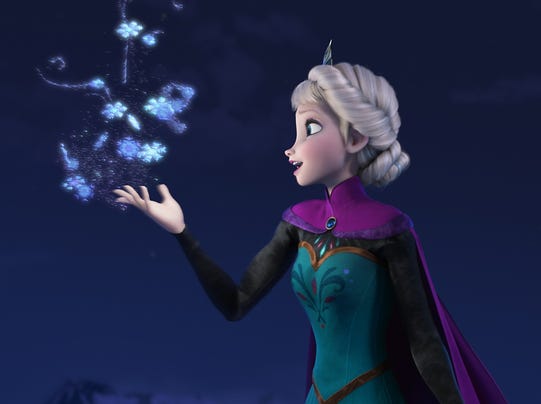
Who Will Win: The beautifully animated crowdpleaser Frozen is the clear front-runner here. The Croods is by-the-numbers stuff from Dreamworks, not as good as How To Train Your Dragon but not as bad as Shark Tale. Despicable Me 2 would win if the category were Most Ubiquitous In-Your-Face Marketing, but it's not. As for the hand-drawn features, Ernest and Celestine is an obscure Belgian film, the kind of oddity that's become standard in this category, but there's no way enough people saw it for a victory. The only one that poses a threat to Frozen is The Wind Rises, the supposedly final film from anime legend Hayao Miyazaki, who pulled off one of my all-time favorite upsets in 2002 when Spirited Away took home the gold. However, that film had a larger release and I don't see it happening for him this time. Frozen is the most successful Disney film in a long time and the song "Let It Go" has become huge in a way not seen since the days of Alan Menken (should be an easy win in the Original Song category).
My Choice: Miyazaki, not just for The Wind Rises but for his entire magnificent career. I'm not sure if it really is his last film, since he announced his retirement after both Princess Mononoke and Spirited Away and then thankfully kept at it, but he's getting old and I'm not sure anyone will be able to step into the void he will leave behind in the world of animation.
Best Documentary Feature
The Act of Killing
Cutie and the Boxer
Dirty Wars
The Square
20 Feet From Stardom
Who Will Win: Two of the contenders here are fighting for the prize, representing the battle of "serious" vs. "light-hearted" that has defined this category in the last few years. On Team Uplifting is Cutie and the Boxer, which is probably too eccentric to shore up votes, and 20 Feet From Stardom, a tribute to back-up singers that looks to have the best shot at the win. On Team Serious, Dirty Wars is worthy subject matter, but there's too much focus on the journalist Jeremy Scahill. If you're going to be onscreen all the time in a documentary like this, it helps to have a sense of humor like Morgan Spurlock or Michael Moore. In Scahill's case, it just looks like blatant self-aggrandizement and Dirty Wars often feels like it is more interested in him than in the war crimes that he's investigating. The Square, about the Egyptian revolution, had a tiny theatrical presence before Netflix picked it up and screened it exclusively on their site. It's an unprecedented situation as far as the Oscars go, so I'll be curious to see what impact that has, if any.
That leaves The Act of Killing, an unconventional but devastating look at the 1960s genocide in Indonesia, as the other film with a real chance to win. It's easily the most critically acclaimed of the bunch (if you haven't seen my list, I'm also a huge fan). However, it is not an easy watch - complex, challenging and sometimes even nauseating as the filmmakers reveal the extent to which propaganda and corruption have blinded the perpetrators to their own crimes. If the voters go with which movie made them feel the best as they left the theater, 20 Feet From Stardom will win handily.
My Choice: As usual, this category is just as notable for what didn't get nominated as what did. No Leviathan, no Stories We Tell, not even Blackfish, which was the documentary seen by the most people this year. But even if those films were all competing, I'd still be firmly behind The Act of Killing. People literally risked their lives to get that film made and it continues to haunt me months after seeing it.
Best Adapted Screenplay
Richard Linklater, Julie Delpy and Ethan Hawke for Before Midnight
Billy Ray for Captain Phillips
Steve Coogan and Jeff Pope for Philomena
John Ridley for Twelve Years A Slave
Terence Winter for The Wolf of Wall Street
Who Will Win: John Ridley, who adapted the memoirs of the real Solomon Northrup and has brought huge attention to a hugely important American story. The Best Picture race is unbearably close, so the voters will make sure Twelve Years A Slave goes home with something and this is it's best chance for a win.
My Choice: Twelve Years A Slave is an impressive film for many reasons, one of which is that it rarely feels like it was even written, more like it's just the past unfolding right before your eyes. However, the writing was clearly taken very seriously and I invite everyone to check out this excellent essay by Wesley Morris about what makes it so different from other films that have taken on this subject matter.
Best Original Screenplay
Eric Warren Singer and David O. Russell for American Hustle
Woody Allen for Blue Jasmine
Craig Borten and Melisa Wallack for Dallas Buyers Club
Spike Jonze for Her
Bob Nelson for Nebraska
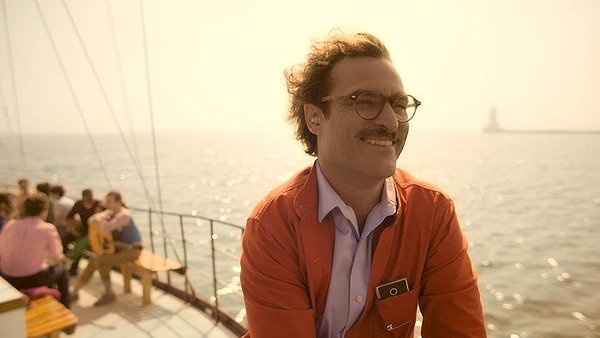
Who Will Win: This is fairly close, but I can tell you who won't win - Woody Allen. The round of awards he received for Blue Jasmine, including a tribute at the Golden Globes, has thrust his revolting personal life back into the spotlight. Most of the time, the Academy Awards don't really care about that stuff as long as they like your work (see Exhibit B - Roman Polanski), but the collective wail of outrage if Allen won yet another Oscar would be enough to knock the Earth off its axis. Among the other contenders, the screenplays for American Hustle or Dallas Buyers Club could win, but this category tends to go a little highbrow and I think Spike Jonze is going to squeak ahead. The trailers for Her, about the romantic relationship between a man and his phone's artificial intelligence, were not flattering but the movie itself takes the gimmick premise seriously and has true speculative science-fiction virtues to offset its hipsterity (Is that a word? I'm gonna declare it a word).
My Choice: Bob Nelson. Nebraska's dark comedy masked some quietly powerful observations about modern America, specifically the despair felt by older people who know that their children won't do as well as they did...and yet it also made a case for the importance of figuring out what you really need, rather than what society says defines success.
Best Supporting Actress
Sally Hawkins in Blue Jasmine
Jennifer Lawrence in American Hustle
Lupita Nyong'o in Twelve Years A Slave
Julia Roberts in August: Osage County
June Squibb in Nebraska
Who Will Win: This is a close two-way competition between Jennifer Lawrence and Lupita Nyong'o. As anyone with an internet connection knows, Lawrence is a highly popular actress with a charming public persona. She just won Best Actress last year for Silver Linings Playbook, her previous collaboration with David O. Russell and Bradley Cooper. Two years in a row, Tom Hanks style? Seems like overkill. The victory would make a much bigger difference for Nyong'o, a newcomer who has gotten a lot of new fans thanks to endearing appearances on talk shows this Oscar season. Her scenes are some of the most wrenching in Twelve Years A Slave and I suspect she'll have a new golden accessory to show for it.
My Choice: You would have to be a real pill not to be happy for Nyong'o if she pulls it off, but I think my choice would be June Squibb. She had most of the funniest lines in Nebraska, including an epic scene where she defends her husband and son from toxic family members.
Best Supporting Actor
Barkhad Abdi in Captain Phillips
Bradley Cooper in American Hustle
Michael Fassbender in 12 Years A Slave
Jonah Hill in The Wolf of Wall Street
Jared Leto in Dallas Buyers Club
Who Will Win: Leto. Easiest call of the night. He's been a steamroller in the "playoff" awards, and it's the kind of showy, tear-jerking performance the Oscars love.
My Choice: Barkhad Abdi, the Somali-born actor who was working as a limo driver in Minnesota before he auditioned for Captain Phillips as was cast as pirate captain Abduwali Muse. How can anyone resist that story? But even without that, his sensitive performance was absolutely essential to the success of Captain Phillips. There's been a disturbing recent trend of movies re-creating American military operations with fetishistic attention to detail (e.g. Zero Dark Thirty, Lone Survivor) and with little thought to other perspectives. There are moments in Captain Phillips that lean dangerously close to that, but Abdi never lets you forget the humanity of the Somali pirates and the miserable global economy that drove them to these acts in the first place.
Best Actress
Amy Adams in American Hustle
Cate Blanchett in Blue Jasmine
Sandra Bullock in Gravity
Judi Dench in Philomena
Meryl Streep in August: Osage County
Who Will Win: Cate Blanchett has been cleaning up in the playoffs. Voters won't punish her for Woody Allen's conduct. If anyone upsets, it will probably be Amy Adams, who has racked up four nominations in eight years but has yet to win.
My Choice: This category seems lazy. It's like there are only a dozen actresses who are ever considered and the same names keep showing up every year. The fact that three-time winner and all-time nomination champ Meryl Streep, amazing as she is, is basically guaranteed a spot every year even for movies nobody likes is a little ridiculous. There are a LOT of under-appreciated actresses who did great work this year, the first one that comes to mind for me is Brie Larson in Short Term 12. Out of this group, I suppose I'm rooting for Adams just cause she's the only one here who hasn't already won.
Best Actor
Christian Bale in American Hustle
Bruce Dern in Nebraska
Leonardo DiCaprio in The Wolf of Wall Street
Chiwetel Ejiofor in Twelve Years A Slave
Matthew McConaughey in Dallas Buyers Club
Who Will Win: This is a formidable category and it looks like McConaughey will be the winner. It wasn't that long ago that he was known mostly for taking his shirt off in terrible romantic comedies. But he's branched out and given a series of impressive performances, including this portrayal of the late Ron Woodroof, a classic larger-than-life Texan with more than a little bigotry in his worldview who becomes an unlikely crusader for the rights of AIDS victims when he catches the illness himself. So far the "McConnaisance" has been well-rewarded on the awards circuit. However, the others have big pockets of support too. Ejiofor was an early front-runner and could be lifted by a rising tide of wins for Twelve Years A Slave. DiCaprio has been nominated many times without a win. His time will come, but I think he might be pretty old when it finally does. Speaking of old, the last time Bruce Dern was nominated was in 1978, when McConaughey was nine years old. His career is widely admired and if anyone upsets, it will likely be him...but an upset doesn't seem likely.
My Choice: In the fall of 2003, I spent a semester abroad in London. One night, my British cinema class went to a screening of Dirty Pretty Things, which featured an unknown actor named Chiwetel Ejiofor as an immigrant doctor who was working as a hotel clerk in the UK and trying to get home to his family. The movie was fantastic, Ejiofor blew everyone away and it was one of the great movie theater experiences of my life. Since then, I've rooted for him to find mainstream success but he's been ill-served by Hollywood and didn't have too many other memorable roles under his belt. When I first saw 12 Years A Slave, I thought "how could he possibly not win?" I guess McConaughey's Texan accent is just too charming. In all serious, McConaughey did give a great performance but I know who I'm rooting for.
Best Director
Alfonso Cuaron for Gravity
Steve McQueen for Twelve Years A Slave
Alexander Payne for Nebraska
David O. Russell for American Hustle
Martin Scorsese for The Wolf of Wall Street
Who Will Win: Last year, the whole controversy about Ben Affleck's exclusion turned this category into chaos. This year, we're back to normal. Alfonso Cuaron has won most of the preliminary directing awards, including the telltale Director's Guild of America trophy. More than the other movies represented here, Gravity is foremost a director's film. It was unbelievably ambitious and he handled it perfectly.
My Choice: Cuaron, alongside Guillermo Del Toro, Alejandro Gonzales-Inarritu and others, represents a new wave of visionary Mexican filmmakers who have yet to get the recognition they deserve. The verisimilitude he achieved in Gravity is just astounding - digital effects can often conjure up locations that look a little too perfect, too obviously removed from the world we know, but his depiction of outer space was never unconvincing.
Best Picture
American Hustle
Captain Phillips
Dallas Buyers Club
Gravity
Her
Nebraska
Philomena
Twelve Years A Slave
The Wolf of Wall Street
Who Will Win: It's been three years since the Academy changed the rules for this category, allowing for anywhere between five to ten movies each year depending on the amount of enthusiasm for individual films displayed in the convoluted preferential ballots. So far, there have been nine nominees each time for whatever reason. With that many, it's easy to pick off a few. The Wolf of Wall Street is too polarizing, although I think its reputation will rise in time. Dallas Buyers Club and Nebraska are both seen primarily as a showcase for actors. Her is way too strange to get a majority of the vote. Philomena was one of the last nominees to hit theaters and is just smaller-scale than most of the competition. Captain Phillips doesn't have many nominations outside of this, indicating a less than ideal amount of support among Academy members.
So that brings us down to the three heavy hitters and this is where it gets tough. American Hustle made a big wave when it first came out and has 10 nominations, including one in all four acting categories, which indicates massive support. However, I find it hard to believe it will win because it has absolutely no gravitas whatsoever. It's supposedly about the FBI Abscam scandal of the 1970s, but it doesn't have anything in particular to say about that incident...or anything else for that matter. It's been amusing to watch critics try to ascribe meaning to it ("It's about how we all con each other!" Uh yeah...sure) because they don't feel comfortable admitting that they just had a great time watching a team of top-notch actors chew the scenery with 70s clothes and hairstyles. And it is indeed a fun movie for that reason, but Best Picture? That's a bit much.
Normally, the Producers Guild award is a reliable oracle for this category but it's no help this year. For the first time in its history, there was a tie...between Twelve Years A Slave and Gravity. That's a nice indicator of just how excruciatingly close it will be this year. Twelve Years looks the most like a classic winner and while it is emotionally exhausting, I think most of the people who finished it will be moved enough to put it just over the top. However, there are a lot of reasons Gravity could win instead - it will likely dominate the technical awards (and all those people get a vote for Best Picture), the Academy has a tendency to pair the Best Picture and Director winners together, and it leaves you with a feeling of triumph as opposed to somber reflection. But in the end, it's still science-fiction (albeit not terribly fantastical) and the Oscars have long held a bias against this genre. So I think the outstanding craftsmanship, emotional impact and social importance of Twelve Years A Slave will give it a narrow victory...but honestly, I wish I could just pick both and say "one of these two." I know, that's cheating.
My Choice: My opinion of the nominees goes something like this: Gravity > Twelve Years A Slave > Nebraska > The Wolf of Wall Street > Philomena > Dallas Buyers Club > Captain Phillips > Her > American Hustle. However, I often don't see the Best Picture Oscar as that simple. The historical value given to a film by this award is nothing to take lightly, even if there are plenty of embarrassing past winners we could make fun of. With that in mind, I think a victory for Twelve Years A Slave is an important message to send, a rebuke to Gone With the Wind (Best Picture of 1939) and other older films that made life on a plantation look like one big family gathering. Honestly, Fruitvale Station would have been an even better choice and I actually liked that more than any of the nominees, so best of both worlds. Unfortunately, that won't happen and I probably shouldn't repeat my rant on that subject. I loved Gravity, but its technical innovations and epic suspense have already guaranteed it a place in film history. We'll see how it plays out tomorrow night, it's a 50-50 shot.
Best Animated Feature
The Croods
Despicable Me 2
Ernest and Celestine
Frozen
The Wind Rises
Who Will Win: The beautifully animated crowdpleaser Frozen is the clear front-runner here. The Croods is by-the-numbers stuff from Dreamworks, not as good as How To Train Your Dragon but not as bad as Shark Tale. Despicable Me 2 would win if the category were Most Ubiquitous In-Your-Face Marketing, but it's not. As for the hand-drawn features, Ernest and Celestine is an obscure Belgian film, the kind of oddity that's become standard in this category, but there's no way enough people saw it for a victory. The only one that poses a threat to Frozen is The Wind Rises, the supposedly final film from anime legend Hayao Miyazaki, who pulled off one of my all-time favorite upsets in 2002 when Spirited Away took home the gold. However, that film had a larger release and I don't see it happening for him this time. Frozen is the most successful Disney film in a long time and the song "Let It Go" has become huge in a way not seen since the days of Alan Menken (should be an easy win in the Original Song category).
My Choice: Miyazaki, not just for The Wind Rises but for his entire magnificent career. I'm not sure if it really is his last film, since he announced his retirement after both Princess Mononoke and Spirited Away and then thankfully kept at it, but he's getting old and I'm not sure anyone will be able to step into the void he will leave behind in the world of animation.
Best Documentary Feature
The Act of Killing
Cutie and the Boxer
Dirty Wars
The Square
20 Feet From Stardom
Who Will Win: Two of the contenders here are fighting for the prize, representing the battle of "serious" vs. "light-hearted" that has defined this category in the last few years. On Team Uplifting is Cutie and the Boxer, which is probably too eccentric to shore up votes, and 20 Feet From Stardom, a tribute to back-up singers that looks to have the best shot at the win. On Team Serious, Dirty Wars is worthy subject matter, but there's too much focus on the journalist Jeremy Scahill. If you're going to be onscreen all the time in a documentary like this, it helps to have a sense of humor like Morgan Spurlock or Michael Moore. In Scahill's case, it just looks like blatant self-aggrandizement and Dirty Wars often feels like it is more interested in him than in the war crimes that he's investigating. The Square, about the Egyptian revolution, had a tiny theatrical presence before Netflix picked it up and screened it exclusively on their site. It's an unprecedented situation as far as the Oscars go, so I'll be curious to see what impact that has, if any.
That leaves The Act of Killing, an unconventional but devastating look at the 1960s genocide in Indonesia, as the other film with a real chance to win. It's easily the most critically acclaimed of the bunch (if you haven't seen my list, I'm also a huge fan). However, it is not an easy watch - complex, challenging and sometimes even nauseating as the filmmakers reveal the extent to which propaganda and corruption have blinded the perpetrators to their own crimes. If the voters go with which movie made them feel the best as they left the theater, 20 Feet From Stardom will win handily.
My Choice: As usual, this category is just as notable for what didn't get nominated as what did. No Leviathan, no Stories We Tell, not even Blackfish, which was the documentary seen by the most people this year. But even if those films were all competing, I'd still be firmly behind The Act of Killing. People literally risked their lives to get that film made and it continues to haunt me months after seeing it.
Best Adapted Screenplay
Richard Linklater, Julie Delpy and Ethan Hawke for Before Midnight
Billy Ray for Captain Phillips
Steve Coogan and Jeff Pope for Philomena
John Ridley for Twelve Years A Slave
Terence Winter for The Wolf of Wall Street
Who Will Win: John Ridley, who adapted the memoirs of the real Solomon Northrup and has brought huge attention to a hugely important American story. The Best Picture race is unbearably close, so the voters will make sure Twelve Years A Slave goes home with something and this is it's best chance for a win.
My Choice: Twelve Years A Slave is an impressive film for many reasons, one of which is that it rarely feels like it was even written, more like it's just the past unfolding right before your eyes. However, the writing was clearly taken very seriously and I invite everyone to check out this excellent essay by Wesley Morris about what makes it so different from other films that have taken on this subject matter.
Best Original Screenplay
Eric Warren Singer and David O. Russell for American Hustle
Woody Allen for Blue Jasmine
Craig Borten and Melisa Wallack for Dallas Buyers Club
Spike Jonze for Her
Bob Nelson for Nebraska
Who Will Win: This is fairly close, but I can tell you who won't win - Woody Allen. The round of awards he received for Blue Jasmine, including a tribute at the Golden Globes, has thrust his revolting personal life back into the spotlight. Most of the time, the Academy Awards don't really care about that stuff as long as they like your work (see Exhibit B - Roman Polanski), but the collective wail of outrage if Allen won yet another Oscar would be enough to knock the Earth off its axis. Among the other contenders, the screenplays for American Hustle or Dallas Buyers Club could win, but this category tends to go a little highbrow and I think Spike Jonze is going to squeak ahead. The trailers for Her, about the romantic relationship between a man and his phone's artificial intelligence, were not flattering but the movie itself takes the gimmick premise seriously and has true speculative science-fiction virtues to offset its hipsterity (Is that a word? I'm gonna declare it a word).
My Choice: Bob Nelson. Nebraska's dark comedy masked some quietly powerful observations about modern America, specifically the despair felt by older people who know that their children won't do as well as they did...and yet it also made a case for the importance of figuring out what you really need, rather than what society says defines success.
Best Supporting Actress
Sally Hawkins in Blue Jasmine
Jennifer Lawrence in American Hustle
Lupita Nyong'o in Twelve Years A Slave
Julia Roberts in August: Osage County
June Squibb in Nebraska
Who Will Win: This is a close two-way competition between Jennifer Lawrence and Lupita Nyong'o. As anyone with an internet connection knows, Lawrence is a highly popular actress with a charming public persona. She just won Best Actress last year for Silver Linings Playbook, her previous collaboration with David O. Russell and Bradley Cooper. Two years in a row, Tom Hanks style? Seems like overkill. The victory would make a much bigger difference for Nyong'o, a newcomer who has gotten a lot of new fans thanks to endearing appearances on talk shows this Oscar season. Her scenes are some of the most wrenching in Twelve Years A Slave and I suspect she'll have a new golden accessory to show for it.
My Choice: You would have to be a real pill not to be happy for Nyong'o if she pulls it off, but I think my choice would be June Squibb. She had most of the funniest lines in Nebraska, including an epic scene where she defends her husband and son from toxic family members.
Best Supporting Actor
Barkhad Abdi in Captain Phillips
Bradley Cooper in American Hustle
Michael Fassbender in 12 Years A Slave
Jonah Hill in The Wolf of Wall Street
Jared Leto in Dallas Buyers Club
Who Will Win: Leto. Easiest call of the night. He's been a steamroller in the "playoff" awards, and it's the kind of showy, tear-jerking performance the Oscars love.
My Choice: Barkhad Abdi, the Somali-born actor who was working as a limo driver in Minnesota before he auditioned for Captain Phillips as was cast as pirate captain Abduwali Muse. How can anyone resist that story? But even without that, his sensitive performance was absolutely essential to the success of Captain Phillips. There's been a disturbing recent trend of movies re-creating American military operations with fetishistic attention to detail (e.g. Zero Dark Thirty, Lone Survivor) and with little thought to other perspectives. There are moments in Captain Phillips that lean dangerously close to that, but Abdi never lets you forget the humanity of the Somali pirates and the miserable global economy that drove them to these acts in the first place.
Best Actress
Amy Adams in American Hustle
Cate Blanchett in Blue Jasmine
Sandra Bullock in Gravity
Judi Dench in Philomena
Meryl Streep in August: Osage County
Who Will Win: Cate Blanchett has been cleaning up in the playoffs. Voters won't punish her for Woody Allen's conduct. If anyone upsets, it will probably be Amy Adams, who has racked up four nominations in eight years but has yet to win.
My Choice: This category seems lazy. It's like there are only a dozen actresses who are ever considered and the same names keep showing up every year. The fact that three-time winner and all-time nomination champ Meryl Streep, amazing as she is, is basically guaranteed a spot every year even for movies nobody likes is a little ridiculous. There are a LOT of under-appreciated actresses who did great work this year, the first one that comes to mind for me is Brie Larson in Short Term 12. Out of this group, I suppose I'm rooting for Adams just cause she's the only one here who hasn't already won.
Best Actor
Christian Bale in American Hustle
Bruce Dern in Nebraska
Leonardo DiCaprio in The Wolf of Wall Street
Chiwetel Ejiofor in Twelve Years A Slave
Matthew McConaughey in Dallas Buyers Club
Who Will Win: This is a formidable category and it looks like McConaughey will be the winner. It wasn't that long ago that he was known mostly for taking his shirt off in terrible romantic comedies. But he's branched out and given a series of impressive performances, including this portrayal of the late Ron Woodroof, a classic larger-than-life Texan with more than a little bigotry in his worldview who becomes an unlikely crusader for the rights of AIDS victims when he catches the illness himself. So far the "McConnaisance" has been well-rewarded on the awards circuit. However, the others have big pockets of support too. Ejiofor was an early front-runner and could be lifted by a rising tide of wins for Twelve Years A Slave. DiCaprio has been nominated many times without a win. His time will come, but I think he might be pretty old when it finally does. Speaking of old, the last time Bruce Dern was nominated was in 1978, when McConaughey was nine years old. His career is widely admired and if anyone upsets, it will likely be him...but an upset doesn't seem likely.
My Choice: In the fall of 2003, I spent a semester abroad in London. One night, my British cinema class went to a screening of Dirty Pretty Things, which featured an unknown actor named Chiwetel Ejiofor as an immigrant doctor who was working as a hotel clerk in the UK and trying to get home to his family. The movie was fantastic, Ejiofor blew everyone away and it was one of the great movie theater experiences of my life. Since then, I've rooted for him to find mainstream success but he's been ill-served by Hollywood and didn't have too many other memorable roles under his belt. When I first saw 12 Years A Slave, I thought "how could he possibly not win?" I guess McConaughey's Texan accent is just too charming. In all serious, McConaughey did give a great performance but I know who I'm rooting for.
Best Director
Alfonso Cuaron for Gravity
Steve McQueen for Twelve Years A Slave
Alexander Payne for Nebraska
David O. Russell for American Hustle
Martin Scorsese for The Wolf of Wall Street
Who Will Win: Last year, the whole controversy about Ben Affleck's exclusion turned this category into chaos. This year, we're back to normal. Alfonso Cuaron has won most of the preliminary directing awards, including the telltale Director's Guild of America trophy. More than the other movies represented here, Gravity is foremost a director's film. It was unbelievably ambitious and he handled it perfectly.
My Choice: Cuaron, alongside Guillermo Del Toro, Alejandro Gonzales-Inarritu and others, represents a new wave of visionary Mexican filmmakers who have yet to get the recognition they deserve. The verisimilitude he achieved in Gravity is just astounding - digital effects can often conjure up locations that look a little too perfect, too obviously removed from the world we know, but his depiction of outer space was never unconvincing.
Best Picture
American Hustle
Captain Phillips
Dallas Buyers Club
Gravity
Her
Nebraska
Philomena
Twelve Years A Slave
The Wolf of Wall Street
Who Will Win: It's been three years since the Academy changed the rules for this category, allowing for anywhere between five to ten movies each year depending on the amount of enthusiasm for individual films displayed in the convoluted preferential ballots. So far, there have been nine nominees each time for whatever reason. With that many, it's easy to pick off a few. The Wolf of Wall Street is too polarizing, although I think its reputation will rise in time. Dallas Buyers Club and Nebraska are both seen primarily as a showcase for actors. Her is way too strange to get a majority of the vote. Philomena was one of the last nominees to hit theaters and is just smaller-scale than most of the competition. Captain Phillips doesn't have many nominations outside of this, indicating a less than ideal amount of support among Academy members.
So that brings us down to the three heavy hitters and this is where it gets tough. American Hustle made a big wave when it first came out and has 10 nominations, including one in all four acting categories, which indicates massive support. However, I find it hard to believe it will win because it has absolutely no gravitas whatsoever. It's supposedly about the FBI Abscam scandal of the 1970s, but it doesn't have anything in particular to say about that incident...or anything else for that matter. It's been amusing to watch critics try to ascribe meaning to it ("It's about how we all con each other!" Uh yeah...sure) because they don't feel comfortable admitting that they just had a great time watching a team of top-notch actors chew the scenery with 70s clothes and hairstyles. And it is indeed a fun movie for that reason, but Best Picture? That's a bit much.
Normally, the Producers Guild award is a reliable oracle for this category but it's no help this year. For the first time in its history, there was a tie...between Twelve Years A Slave and Gravity. That's a nice indicator of just how excruciatingly close it will be this year. Twelve Years looks the most like a classic winner and while it is emotionally exhausting, I think most of the people who finished it will be moved enough to put it just over the top. However, there are a lot of reasons Gravity could win instead - it will likely dominate the technical awards (and all those people get a vote for Best Picture), the Academy has a tendency to pair the Best Picture and Director winners together, and it leaves you with a feeling of triumph as opposed to somber reflection. But in the end, it's still science-fiction (albeit not terribly fantastical) and the Oscars have long held a bias against this genre. So I think the outstanding craftsmanship, emotional impact and social importance of Twelve Years A Slave will give it a narrow victory...but honestly, I wish I could just pick both and say "one of these two." I know, that's cheating.
My Choice: My opinion of the nominees goes something like this: Gravity > Twelve Years A Slave > Nebraska > The Wolf of Wall Street > Philomena > Dallas Buyers Club > Captain Phillips > Her > American Hustle. However, I often don't see the Best Picture Oscar as that simple. The historical value given to a film by this award is nothing to take lightly, even if there are plenty of embarrassing past winners we could make fun of. With that in mind, I think a victory for Twelve Years A Slave is an important message to send, a rebuke to Gone With the Wind (Best Picture of 1939) and other older films that made life on a plantation look like one big family gathering. Honestly, Fruitvale Station would have been an even better choice and I actually liked that more than any of the nominees, so best of both worlds. Unfortunately, that won't happen and I probably shouldn't repeat my rant on that subject. I loved Gravity, but its technical innovations and epic suspense have already guaranteed it a place in film history. We'll see how it plays out tomorrow night, it's a 50-50 shot.
Monday, February 10, 2014
Tales From the Crypt: Season Three, Part One
Loved to Death: The season premiere tells the sleazy tale of a lonely creep screenwriter (Andrew McCarthy) who is obsessed with old-school Hollywood and fixated on his neighbor, a B-movie actress (Mariel Hemingway). When he acts like a moron and alienates her, his evil landlord gives him a love potion for his own twisted amusement. Naturally, things go wrong fast. On the surface, it’s very silly but this episode is saved by a rich subtext of how entertainment gives men ridiculous ideas about women and romance. B
Carrion Death: An episode starring Agent Dale Cooper himself, Kyle McLaughlin. He plays a notorious escaped convict who ends up handcuffed to a dead police officer. Now he has to drag a corpse through the searing desert if he wants to reach the Mexican border. The episode can’t resist some outrageous slapstick gore at the end and in general, this is a fun and well-paced tale. B+
The Trap: You can get a lot of money through life insurance, the problem is you have to die before they fork it over. In this episode directed by Michael J. Fox (who appears near the end), a bullying jerk (the great Bruce McGill) strong-arms his wife (Teri Garr) and his mortician brother (Bruno Kirby) into helping him fake his death so he can collect the funds. However, once his accomplices get a taste of life without him, they find it hard to go back to the status quo. Fox infuses the episode with black comedy and stages some laughably crass sequences on the way to the devilish ending. A-
Abra Cadaver: The lewd opening of this episode ensures it will never appear on basic cable. Two bickering brothers who are both doctors (Beau Bridges and Tony Goldwyn) disagree on whether or not brain activity continues after death. The brother who backs the theory takes some truly drastic measures to prove it, leading to a mind-bending storyline with a whopping triple-twist ending. It can be on the slow side, but the core concept is interesting to think about. B+
Top Billing: This tiresome showbiz farce shows that some of the weaknesses inherent in adapting these comics are still popping up. An obnoxious struggling actor (Jon Lovitz) goes to extreme lengths to get a part in Hamlet, but it’s not the role he thinks it is. The awesome final twist is classic EC comics, but seven pages of buildup is a lot easier to enjoy than 20 minutes. So far, I’ve seen that the success of Tales from the Crypt episodes are determined by how they deal with the expansion needed to accommodate the TV show format. In this case, having to tolerate Lovitz’s antics was asking a little too much. For some reason, this particular episode attracted a lot of recognizable stars to tiny roles – Oscar winner Louise Fletcher appears for about 30 seconds as an agent. C+
Dead Wait: Most of this show’s strong episodes have been pulpy fun, not truly scary. But when you bring in Tobe Hooper, director of the horror masterpiece The Texas Chainsaw Massacre, you’re gonna get scary. James Remar plays a thug who infiltrates a plantation to try and steal a rare black pearl from its owner (John Rhys-Davies). However, a voodoo priestess (Whoopi Goldberg, who hangs out with the Crypt Keeper in the episode’s outro) is onto him. This show’s violence is generally goofy, but Hooper has a knack for making it extra visceral. There’s one scene in particular that’s amazingly putrid. A fun cast and a pro at the helm make this a satisfying episode. A-
The Reluctant Vampire: The show takes an unusually light touch with this episode about a modern vampire who works a night watchman at a blood bank, while helping himself to some of the goods, naturally. However, the discrepancy has not gone unnoticed. It’s a silly episode, but the script does well with funny details and Malcolm McDowell’s funny, eccentric performance as Donald Longtooth make you root for him. Also fun is Michael Berryman, the distinctive-looking actor from The Hills Have Eyes, as a zealous vampire hunter. B+
Wednesday, January 29, 2014
Top Ten Films of 2013
For a while, I didn't think I was going to have one of these this year. With the twins born in February, the lifestyle around here is obviously a LOT different. These lists were always on the late side just because it's harder to get to see smaller movies in Connecticut (for the record, I am pissed that I still can't see Miyazaki's The Wind Rises for another month...I'm pretty confident that would have landed on here somewhere, for now let's just assume it tied with one of the movies currently on the list). I watched a lot of films on Netflix during late nights up with babies, but actually getting to the theater was tougher. It's a small price to pay, obviously, for having two cute little men crawling around the house. And yet movies are an important part of my identity, and falling far behind made me feel a bit like I was losing part of myself.
Typically, I recover from my geographical disadvantage with Operation Drink From Fire Hose, the annual December-January binge where I'm watching movies constantly. However, this year it was derailed early on by the wave of ear infections, pinkeye and flu that invaded our house around Christmas. As tough as it was, it didn't last forever, and by January things were mostly back to normal. So I decided not to give up on this tradition and had quite a rally when it came to movie watching. The convenience of Netflix, as well as that ever-shortening window between a film's theatrical release and its DVD release, made things easier...although there's still a handful of films I wish I'd made it to. Still, I ended things with a list I was very happy with. It helped that 2013 was a good year.
Family comes first...but the reason the word "first" even appears in that phrase is because there's other things out there to focus on sometimes. So the next time someone tells you that your interests fade away once you have children, tell them to stop watching Judd Apatow movies and grow a pair. With that out of the way, here's ten movies I really liked.
10. The Lords of Salem
It's not a Rob list without horror, right? There were a few horror films I could have thrown up here, but none were more visually striking than the latest movie from former metal singer Rob Zombie. Back in 2005, he stunned genre fans with The Devils Rejects, an alternately hilarious and horrifying allegory of post-9/11 America that, among other things, had a final scene that used all of "Free Bird." Since then, he regrettably got bogged down with unnecessary remakes of the first two Halloween films, but The Lords of Salem is one formidable comeback. A radio DJ (played by Zombie's wife, Sheri Moon) is sent a sample song from a mysterious new doom metal band, a melody which seems to have bizarre effect on her life. Zombie gets to have some fun with that old cliche about metal being "the devil's music" and also shows just how well he understands the visual language of horror. No cats jumping into the frame or ghosts in medicine cabinet mirrors here, just top notch ambience and imagery so intense I'm not sure I would recommend this one to people without some experience with the genre.
9. Elysium
So here's a movie I really liked that nobody else seemed to care about one way or the other. The second feature from Neill Blomkamp (District 9) envisions a future in which all the rich folks live on a pristine satellite in space while everyone else lives on the ruined Earth below. When a factory worker named Max (Matt Damon) gets radiation poisoning, his only hope is to get to Elysium, where they have machines that can cure any ailment in seconds. The subtext of all this isn't very far under the surface, which often gets a movie like this criticism for being too "blunt" or "in your face." Honestly, I prefer movies that don't sugarcoat things and the whole scenario is a great metaphor for how too many powerful people in America view health care - as a luxury that you only get if you can pay for it, like a big-screen TV that also just happens to keep you alive. Of course, the movie's not just one long sermon about compassion for the least of us. Blomkamp is already a master when it comes to judicious use of digital effects and staging action scenes. It may not be the revelation that District 9 was, but it's still miles ahead of most action films that come out these days.
8. Twelve Years A Slave
Here's why you should never read the comments. While perusing an article about Steve McQueen's slavery epic, I saw someone ask why there were "so many movies about slavery" and urging for a reduction in "negative Black movies." A reaction like that only illustrates the cultural importance of this film. Not only that, there really haven't been all that many films that depict slavery in America, even less once you filter out patronizing bullshit like Gone With The Wind, where all the slaves are just delighted to be trapped on the plantation. There's some exploitation stuff like Django Unchained or Mandingo, and I think the bluntness of exploitation can be well-suited to this subject, but this movie is a whole different kind of experience. The great and (until now) unappreciated actor Chiwetel Ejiofor plays Solomon Northrup, a free black man who is abducted and sold into slavery in the South for a dozen years. It's a beautifully made, chilling portrait of dehumanization occasionally punctuated by the brutal violence that was a fact of life during this era. Based on the real-life Northrup's memoirs, Twelve Years a Slave is a film that feels like a journey, one that will prompt a great deal of reflection when it finally ends. It's a film to be reckoned with - hard to like, but easy to appreciate.
7. Drug War
The story of Drug War is familiar stuff - cops, crime lords, undercover operations - but you rarely see it executed this well. Directed by Hong Kong filmmaker Johnnie To, this remarkably taut adventure is devoid of sentimentality or filler. Louis Koo is superb as Timmy Choi, a scheming, self-serving dealer who hopes to avoid the death penalty by teaming up with Zhang Lei (Honglei Sun), the tough cop (and brilliant mimic) who busted him. The entire film is a master class in building tension up until the no-holds-barred finale. This was the first time To was allowed to shoot on mainland China, and he conjures up a memorable atmosphere, alternately sterilized and grimy. I'm not sure the Chinese government will be in a hurry to let him do it again.
6. Blackfish
A devastating documentary about the tragedy that can come from treating nature too recklessly, similar to the stories of Steve Irwin and "Grizzly Man" Timothy Treadwell. But instead of an individual, the subject is Sea World and its cavalier pattern of abducting wild killer whales and training them to do tricks in front of massive crowds. Director Gabriela Cowperthwaite set out to investigate the shocking death of veteran trainer Dawn Brancheau at the hands of an orca named Tilikum. What she found was that given the whale's violent history in captivity, the incident shouldn't have been all that shocking. What is shocking, however, is the appalling behavior by the Sea World executives, whether it's the CEO blaming Brancheau for her own violent death or instructing tour guides to tell flat-out lies to tourists about killer whale life expectancy in order to mask the reality of the creatures dying young while imprisoned. Several former Sea World employees share powerful anecdotes and the cumulative effect of their stories has already left quite a welt on Sea World, judging from their unhinged gloating on Twitter after Blackfish failed to grab an Oscar nomination for Best Documentary. With or without awards, this is a powerful film that goes beyond the ethics of Sea World and makes us question our own human arrogance for thinking we can bend the natural world to our will.
5. Short Term 12
Destin Cretton's first feature takes viewers inside a group foster home, a setting rarely seen in the movies, and it's one of the most convincing and compassionate portraits of troubled young people I've ever seen. In its compact 90 minutes, it gives a glimpse into the lives of teens who have suffered and waiting around while the system decides just what to do with them. Keith Stanfield and Kaitlyn Dever are standouts among the younger actors, but the film's core narrative focuses on the not-much-older supervisors, specifically Brie Larson as Grace, who is forced to examine her own demons after meeting a young girl with a similar life story. It's a tough story to pull off, but the film's blend of hope and melancholy contributes to a genuinely moving experience.
4. John Dies At The End
Two aimless friends discover an alternate dimension that is quietly threatening the human race and have to rely on a mysterious drug called "soy sauce" that can send users across dimensions but also across time. It only gets weirder from there in this sublime horror-comedy from Don Coscarelli, who gifted the world with the one-of-a-kind masterpiece Bubba Ho-Tep ten years ago. Filled with absurd twists, gloriously off-the-wall humor and one very heroic dog, it's an unpredictable joy to watch. The film critic Dana Stevens coined the phrase "artisinal horror," referring to low-budget horror films like this one that refuse to play by any of the genre's rules. I'm not sure if that's the phrase I would use, but she's on to something. Part of the fun of this movie is the gradual realization of just how out there it is, although it doesn't compromise the entertainment value in the slightest.
3. Gravity
How does one define the "movie of the year?" I've thought about this a lot lately and came up with an informal method of evaluating a movie's box office success, critical AND audience response, and impact on day-to-day pop culture. With that in mind, the title would seem to go to Gravity and it's a bandwagon I don't mind jumping on. The movie is a tremendous technical achievement and a vivid story of survival filled with breathtaking suspense. George Clooney shows up for a while to do his smooth-talking-George-Clooney routine, but for the most part it's up to Sandra Bullock as the stranded novice astronaut to carry things along and she makes it look easy. Director Alfonso Cuaron had to invent new technology to make this film possible and the results are so striking that I still have to remind myself that this was not actually shot in outer space. Cuaron's movies are always great demonstrations of what movies as an art form are capable of, with this one's 17-minute opening tracking shot as just one example. It's not perfect, in fact I was surprised by how clumsily the lead character's tragic backstory was handled, but a viscerally thrilling movie experience like Gravity can get away with a lot.
2. Fruitvale Station
The story of Oscar Grant, whose outrageous death at the hands of trigger-happy police officers was captured on video for the whole world to see, has been adapted into a small masterpiece that only needs empathy to drive home just how cruel modern America can be if you're a young black man in the wrong place at the wrong time. With a premise like this, the ending is a foregone conclusion, but the bulk of the movie is simply the last 24 hours of Oscar Grant's life. Grant, played to perfection by the outstanding Michael B. Jordan, is genuinely kind but also troubled, trying to get his act together but prone to fits of pride or anger. In short, he's like a lot of us trying to make sense of the screwed up world we live in. The more time you spend with Grant, the more devastating that foregone conclusion becomes. In a depressing development, the movie was completely shut out by the Oscars, with some commentators looking at the pile of nominations for Twelve Years A Slave and concluding that Hollywood can only focus on one black movie at a time. I suspect that this is part of it, the other part being the notoriously short memories of Academy members. The ceremony is supposed to honor a year's worth of film but nothing released before October hardly ever gets nominated. If they had any brains, you would be seeing about five or six nominations for this July release, including Best Actor for Jordan and Best Supporting Actress for Melonie Diaz, who broke my heart as Grant's girlfriend and mother of his child. The fact that incidents like this keep appearing in the news means that this film's importance will only grow over time. For each of those events, a story like this could be told.
1. The Act of Killing
In the end credits for Joshua Oppenheimer's amazing documentary, dozens of crew members and even a co-director are listed as "Anonymous." These are the Indonesian crew members who didn't feel safe attaching their actual names to The Act of Killing, which deals with mass killings in that country during the 1960s, an atrocity barely known to the outside world. After a failed coup by Communist forces, the country's leaders retaliated by wiping out hundreds of thousands of supposed "Communists," i.e. union leaders, public intellectuals and ethnic Chinese. Fifty years later, many of the perpetrators have gone unpunished and still enjoy protection from the state and are something akin to celebrities. Their cavalier attitudes about the slaughter bring the concept of "cognitive dissonance" to a whole new level and things get even stranger when the director invites them to recreate the genocide as a film that they would have total creative control over. Borrowing tropes from their favorite musicals and crime films, they stage increasingly surreal interpretations of the event. However, revisiting the past brings reflection, and to at least one of the killers, the beginnings of true remorse and shame. It's a bizarre experience to watch, but the human drama becomes positively overwhelming by the unforgettable conclusion. This is a truly dangerous film, but also one that has the potential to change lives and really do good in the world. It has a nomination for Best Documentary, but an Oscar doesn't feel like enough. A movie like this deserves a Nobel Prize.
Happy 2014, everyone. Back to babies!
Sunday, December 15, 2013
Tales From the Crypt: Season Two, Part Three
Korman’s Kalamity: Tales from the Crypt goes meta with this story about a horror comics cartoonist named Jim Korman (Harry Anderson) whose drawings start coming to life. It’s a fun idea, but in practice is a little too over the top, with intrusive music and lazy characterization. In particular, Korman’s ridiculously obnoxious wife (Colleen Camp), more of a cartoon than anything on Korman’s pages, almost singlehandedly ruins the whole thing. If today’s network of feminist blogs existed in the early 1990s, they would have ripped this episode a new one. Still, it’s salvaged a bit by great creature effects. B-
Lower Berth: The Cryptkeeper’s origin story is actually quite serious, told without the host’s trademark humor, but then again it’s pretty funny in retrospect. It’s a colorful tale full of sideshow freaks and exhumed mummies set in the era of classic horror. The mood and atmosphere are so potent, combined with amazing makeup effects (the show in general is very good at this) that this could be mistaken for an episode of The X-Files. A-
Mute Witness to Murder: This great Hitchcockian episode tells you all you need to know in its title. Patricia Clarkson plays the woman (blonde, naturally) who is so traumatized by her sudden discovery that she loses her voice. The psychologist who ends up treating her…is also the murderer (Richard Thomas). The moody, eerie episode does a great job backing Clarkson’s character further and further into a corner, providing very effective suspense even though some clues about the ending wind up being a little too obvious. A-
Television Terror: The Blair Witch Project is usually given credit for inventing the “found footage” gimmick within the horror genre, or maybe Man Bites Dog if you’re a little more cinema savvy. However, its origins go back a little farther than that. The use of it for one key scene in John Carpenter’s Prince of Darkness is arguably the scariest moment in that film, and before that, Ruggero Deodato’s infamous Cannibal Holocaust pioneered the use of it to add verisimilitude to on-screen violence. Early use of it also pops up in this episode, starring Morton Downey, Jr as a megalomaniacal Geraldo-esque TV host exploring a supposedly haunted house. The style was still too new for this episode to use it to its full potential, but that’s no problem. This is crass, cynical fun with excellent pacing up until its epic finale. A
My Brother’s Keeper: Timothy Stack and Jonathan Stark play Siamese twins who are literally joined at the hip. One is a cultured gentleman and the other is a boorish psychopath. When one of them falls in love, it brings tension between them over a potential separation procedure to the surface. Of course, this is Tales from the Crypt and romance is never simple. This episode mines its premise for increasingly silly slapstick and sit-com humor but then shifts dramatically into an ultra-dark ending that’s satisfying even if it doesn’t feel especially earned. B-
The Secret: A melancholy fairy tale about an orphan with a mysterious condition who is adopted by a highly eccentric family. You’ll be able to guess one of the twists right away, which can make this one a bit tedious as you wait for it to get to the point. Still, this episode is strikingly different in tone from most of the series thus far and has a lot going for it. The cast includes David Lynch regular Grace Zabriskie and Larry Drake, who played the evil Santa last season, and it always looks fantastic, thanks to the direction of veteran set designer J. Michael Riva. A-
Nice run of episodes there! In general, Season 2 seemed a lot more consistent, but the series still occasionally has trouble balancing its love of ironic humor with real fright. Not to say that I'm not still enjoying myself immensely. On to Season 3!
Sunday, November 24, 2013
Tales From the Crypt: Season Two, Part Two
The Sacrifice: This episode is almost a remake of the film noir classic Double Indemnity, although with a few lurid twists. In this incarnation, the insurance salesman is played by Kevin Kilner and Kim Delaney is the femme fatale who would like her obnoxious husband (Don Hood) to have a sudden “accident.” The lack of supernatural elements signals that this episode is adapted from an issue of the excellent Shock SuspenStories, and yet it winds up being dull and predictable. I can’t help but think they’re picking the wrong issues. C
For Cryin’ Out Loud: The Cryptkeeper, decked out in hair metal attire, introduces this humorous episode about a sleazy rock promoter (Lee Arenberg, who you may remember from “Seinfeld” as the guy who had his thumbs broken by Jerry) about to skip town with embezzled charity funds until he’s confronted by a bank teller (Katey Segal) who had been keeping an eye on him. All the while, he’s tormented by a voice in his head claiming to be his conscience (Sam Kinison). It’s set during an Iggy Pop concert, featuring the real Iggy Pop who’s on hand to drop a lot of F-bombs. Really clever writing makes this episode good fun. B+
Four-Sided Triangle: Patricia Arquette plays a young farmhand who suffers a head injury and then falls in love with a scarecrow. Her abusive employers write her off as just nuts, but does the scarecrow really come alive? I won’t spoil it, but it probably doesn’t play out the way you think it does. It’s a strange little episode, but the over the top performances of Chelcie Ross and Susan Blommaert as the despicable rednecks who run the farm make it pretty fun. B-
The Ventriloquist’s Dummy: This one is packed to the brim with talent. Richard Donner is back in the director’s chair with a script by Frank Darabont of The Shawshank Redemption. The legendary comedian Don Rickles plays a ventriloquist who takes on a hopeless protégé (Bobcat Goldwaithe). It’s so involving that you forget that the supernatural element is coming…but if you think you can guess the twist, you’re probably wrong. It culminates in a spectacularly gory finale worthy of vintage Peter Jackson. Great stuff. A
Judy, You’re Not Yourself Today: Carol Kane plays a rich vain housewife who unwillingly switches bodies with an old witch disguised as a saleswoman (Frances Bay). Her pompous gun nut husband (Brian Kerwin) finds a clever way to switch them back, but that’s not the end of the story. This is a lively episode with fantastic music and an absolutely brutal takedown of gun culture in America. This is the second time the series has given the NRA a tough broadside, could be an interesting pattern. A-
Fitting Punishment: Moses Gunn plays a crooked, cheapskate mortician who becomes the legal guardian of his nephew (Jon Clair). Having another person to deal with interrupts his finicky lifestyle to a dangerous extent. Gunn is so good as this evil bastard that you just can’t wait to see him get his comeuppance. That anticipation drives what would otherwise be a slow episode. The spooky finale is worth the wait, however, as director Jack Sholder (The Hidden) showcases some great images, including a shout-out to The Changeling. B+
Saturday, November 16, 2013
"Dear Mr. Watterson" doesn't go deep enough
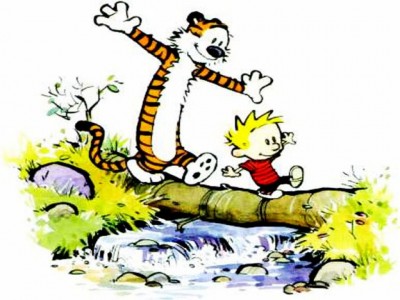
It's not hyperbole to say that "Calvin and Hobbes" is the closest thing I have to a religion. For all the writing I do on here about important entertainment from my past, none of those TV shows or movies, or even Spider-Man, played as big a role in my life as Bill Watterson's legendary comic strip. Everyone who knows me has probably heard me react to a situation by saying "This is like that Calvin and Hobbes strip where..." As a kid, I enjoyed it at face value for Calvin's mischief and the frequent appearance of dinosaurs. Reading it when I was older revealed the deep meaning behind those panels. I realized I had taken powerful lessons from those comics and it didn't feel like an accident when I came across this illustration of a speech given by Bill Watterson shortly after I left my job. It was a scarily perfect summation of the last year of my life...but maybe I'm getting ahead of myself.
The "Calvin and Hobbes" phenomenon is explored in the documentary Dear Mr. Watterson, which just opened in a handful of theaters but is also available for purchase and download via Itunes. It's an entertaining watch and I would happily recommend it to any fan of the comic, but I couldn't help but feel like it missed a few major opportunities. But I'll quickly sum up the best parts of the film - the section detailing the visual resemblance between the world of "Calvin and Hobbes" and Watterson's hometown of Chagrin Falls, Ohio, other comic strip artists giving their perspective on why the strip is so memorable, and a moving conclusion that analyzes the famous final Sunday strip ("It's a magical world, Hobbes old buddy, let's go exploring.")
Anyone who has knows the strip's history won't be surprised that the elusive Watterson never appears on camera. He tends to give one print interview per decade and it appears no picture of him has been taken since the 1980s, to the point where his elusive nature has given "Calvin and Hobbes" a whole new layer of intrigue. The director, Joel Allen Schroeder, respects Watterson far too much to mount some guerrilla attempt to ambush him for an interview and spends a lot of time on screen himself. It doesn't surprise me given this particular subject matter. "Calvin and Hobbes" is one of those special treasures that feels deeply personal to each fan even though it's been enjoyed by millions of people all over the world. Actually, I said something similar about Iron Maiden's music and I believe that's the measure of a truly great work of art. However, my main disappointment with the documentary is that it never gets at why it feels so intensely personal to those who read it. The movie leaves you with the impression that it was simply because of great illustrations and a sharp wit, and while those things are certainly integral to its success, it goes far deeper.
Seth Green, co-creator of "Robot Chicken," describes the strip as "so subversive," but the movie never follows up on exactly why that is. Naturally, it covers Watterson's relentless battle to prevent "Calvin and Hobbes" from being merchandised, a rejection of what would have surely added up to hundreds of millions of dollars. However, it isn't mentioned that his decision was completely in line with the overriding themes of the strip. The reason "Calvin and Hobbes" is subversive is that it completely rejects the rat race and the idea that success is defined only by acquisition of wealth. Calvin's adventures drive home that real fulfillment comes from play and leisure, rather than work, and is there anything more taboo in modern America than that? This country is obsessed with productivity and profit and has no concern with the mental and emotional well-being of its people. Then we wonder why so many people here snap and go on murderous rampages. Those who make unprofitable activities like leisure or vacation a priority get called lazy or indulgent or, my favorite, "entitled."
The wave of dogshit articles using "entitled" as a pejorative against anyone who would like a life that doesn't suck demonstrates how hard it actually is to actually live the philosophy of "Calvin and Hobbes." If you're not working at some terrible job, you're expected to be looking for some terrible job full-time, rather than taking time for things like walking in the woods, sledding down a hill, playing with a cardboard box, or anything else Calvin enjoys doing. The irony is that the word isn't even being used correctly. If you really think you're "entitled" to something, you won't make any effort to get it since you think the world owes it to you. But I think that anyone who was a kid in the heyday of "Calvin and Hobbes" knows by now that society isn't going to give anything to you, ever. If you want a meaningful life, you have to fight against conventional wisdom and very powerful interests to take it for yourself, and that's the opposite of "entitled." In the end, I think Watterson's decision to avoid licensing altogether was not just to protect the artistic integrity of his work, but also to maintain the life he wanted. If "Calvin and Hobbes" became a multimedia empire like "Garfield," he's not just a cartoonist but a manager. It just wasn't how he wanted to spend his days.
"There's never enough time to do all the nothing you want," Calvin once said. Time for rest and reflection is treated as a luxury but Watterson knew it was essential. This is the reason I believe the strip connects with people the way it does, because deep down most of us know what's really important, we just ignore it in the name of sensibility. Perhaps it's a bit foolish to expect a documentary to delve that deep into the strip's meaning, but then again, there was one particularly interesting scene where the director analyzed a strip towards the end of the comic's run. Calvin imagines sledding off the top of a huge mountain but the end reveals it was just a tiny hill and he looks back, disappointed by the brief sled ride. Schroeder reads this as a metaphor for Watterson realizing that the thrill of creating "Calvin and Hobbes" was fading and now we know it didn't last much longer after that. In the end, I think I wanted more analysis like that...less discussion of the strip's popularity and more about its actual content. Maybe next time.
Wednesday, October 23, 2013
Tales From the Crypt: Season Two, Part One
Dead Right: While mostly known for more traditional horror, the EC comics often told stories that dialed down the supernatural elements in favor of familiar human cruelty. In this episode, Demi Moore plays a greedy, bitchy secretary who meets a highly accurate fortune teller. She’s given a prophecy that she will become rich if she marries a lonely slob (Jeffrey Tambor in grotesque fat makeup), but the way this unfolds is highly unexpected. This episode has a lot of clever visual touches, but what makes it work is the acting. Moore is highly committed to her anti-heroine – she was a major star at this time, so it’s impressive that she was willing to play such a miserable human being. Meanwhile, Tambor gives a joke character some humanity that gives the final twist a touch of tragedy that usually gets buried by this show’s love of irony. A
The Switch: You’ll never guess who’s in the director’s chair this time. Give up? It’s none other than Arnold Schwarzenegger, who upstages the Crypt Keeper in this episode’s intro. A rich naïve old man (William Hickey) falls for a young woman (Kelly Preston) and seeks out a mad scientist who can make him young again. Schwarzenegger does well with the story’s escalating absurdity right up until an ending that’s pure EC Comics. I’m not sure how good he is with actors, however, both Hickey and Preston give very awkward performances. B+
Cutting Cards: Walter Hill’s back to direct an instant classic episode about two gamblers (Lance Henriksen and Kevin Tighe) who have an epic pissing match you have to see to believe. You might think a game of Russian Roulette would settle things, but what comes next (“Chop Poker”) is even more gruesome. Full of masterful suspense and plenty of macho banter from the two leads, this is probably the best episode I’ve yet seen. The thirty minutes feel like three. A
Till Death: A scumbag developer (D.W. Moffett) needs money to finance a dream land deal, so he turns to a voodoo priestess (Will Smith’s TV mom Janet Hubert) to try and snag a rich bride. But the idiot doesn’t listen to her and gives his target an overdose of the love potion, which leads to all sorts of mayhem. This episode boasts some phenomenal makeup effects, but the first half is somewhat dull and the “gold digger” thing already feels old. B
Three’s A Crowd: Another tale of human frailty. A working class sad sack (Gavan O’Herlihy) competes with his rich friend (Paul Lieber) for the affections of his wife (Ruth de Sosa). Lieber plays his character as such an alpha-male dipshit that you’re practically rooting for him to get killed, but there’s a lot more to this episode than that. In the end, it’s a deeply sad story of insecurity. It’s a bit manipulative for my tastes, but the episode is helped by a vulnerable performance from O’Herlihy and some great direction from David Burton Morris. The lighting in particular is noticeably excellent. B+
The Thing From the Grave: Most of the classic images from the old EC Comics involve the undead – beautifully illustrated panels of corpses covered with maggots as flesh falls off their bones. This seminal moment in horror history is translated beautifully in this episode, as a murdered man (Kyle Secor) comes back from the dead to protect his love (Teri Hatcher) from a psychotic boyfriend (Miguel Ferrer). The veteran character actor owns this episode as the villain, making it all the more fun when this abusive prick gets what he deserves. This one also has one of the more amusing opening bits – the Crypt Keeper is caught looking at a corpse porn magazine. A
There's a lot of Season 2 left to go, but things have already gotten much better. The best ones here channel the vibe of the comics in a way that would do any fan proud. I'm quite excited to get further into it!
Wednesday, October 16, 2013
Tales From The Crypt - Introduction and Season One
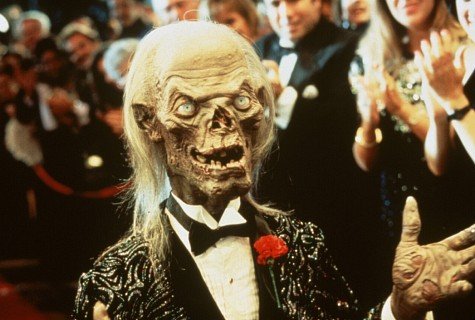
Despite all my years as a huge horror film buff, I somehow never got around to seeing Tales from the Crypt, the iconic HBO anthology starring an animatronic corpse who cracks himself up with his own ridiculous puns. My sudden interest in checking it out came after I read a fantastic book about the legendary 1950s horror comics called "The Horror! The Horror! Comic Books the Government Didn't Want You to Read!" That title is anything but hyperbole, by the way, but we'll get to that in a minute.
I knew a bit about the 1950s horror comics beforehand - I had seen some of them and had been impressed by how frighteningly brilliant they still are. The book made a compelling case that society needed this kind of grim entertainment to process the horrors of World War II, something not allowed by the stifling entertainment that typically defines this decade. The surrealistic gore and dark twist endings weren't all they had to offer, either. Many took on issues of the day, including racial discrimination in an era when it was not politically correct to do so. The comics were hugely popular and eventually attracted the attention of the usual suspects who can be counted on to spoil the fun for the general public. Since video games wouldn't be invented for a long time, the so-called "moral guardians" decided that horror comics were single-handedly turning children into murderous delinquents and the issue even led to Congressional hearings.
Eventually, the criticism became so intense that the comics industry adopted a system of self-censorship. Every issue could be evaluated and if deemed acceptable, would receive approval from the Comics Code Authority. When it first began, the rules were so strict that you couldn't even have the word "horror" on the cover. Of course, you didn't have to get the seal but most retailers were unwilling to put comics on the shelves unless approved. It's a bit like how the MPAA can use the NC-17 rating to banish independent films from the majority of movie theaters if there's too much gay sex in them. This ultimately destroyed the horror comics...they were gone, but definitely not forgotten.
By the time Tales From the Crypt, which adapts a comic for each episode, premiered in 1989, everything had changed. The groundbreaking intensity of 1970s horror films, followed by the gore-crazy 1980s, had demolished many of the taboos of the past. The comics were reborn with all the violence, swearing and nudity that's still a hallmark of HBO, but instead of being ostracized it was welcomed with open arms and lasted for seven seasons. Major movie stars and directors couldn't join in the fun fast enough. The Cryptkeeper began showing his ugly face all over the place, including a few movie spin-offs and a Saturday morning cartoon version where he introduced stories that actually had happy endings. A more detailed look at the story of those comics can be found in a fantastic hour-long documentary on the Season 1 DVD. But let's talk about the episodes! I gave up using letter grades for reviews a while ago, but I'm going to bring it back for now just because there's so many episodes to discuss and it could get hard to make comparisons eventually.
The Man Who Was Death: The pilot was directed by Walter Hill, the distinctive filmmaker behind cult classics like The Warriors and Streets of Fire. His sensibility meshes well with the story of Niles Talbot (Bill Sadler), an executioner who enjoys throwing the switch far too much. When his state unexpectedly abolishes the death penalty, he finds himself out of a job and decides to hunt down and electrocute acquitted murder suspects in his spare time. It’s fairly predictable, especially the final twist, but the story really couldn’t end any other way. Sadler is entertaining in the lead role and there’s a nice satirical point here – Talbot is just doing his job when pulling the switch on behalf of the state, but killing people in the exact same fashion outside of work makes him an outlaw. A-
And All Through the House: Directed by Robert Zemeckis (Who Framed Roger Rabbit?), this is a morbidly funny tale of a scheming wife (Mary Ellen Trainor) who murders her husband on Christmas Eve and plans to indulge in his money with her new boyfriend, who inexplicably refers to himself as “The Dick Monster.” She gets her comeuppance when the house is invaded by an axe-murdering lunatic dressed as Santa (character actor Larry Drake). Zemeckis stages the mayhem very well and the ending evokes classic horror films by not showing the money shot and leaving it to your imagination, where it’s sure to be much more gruesome. It’s ridiculous, but that comes with the territory when you’re dealing with evil Santas. One thing’s for sure, it’s a lot better than Silent Night, Deadly Night. B
Dig That Cat…He’s Real Gone: The first great episode comes courtesy of Lethal Weapon director Richard Donner, who employs a lot of flashy editing tricks reminiscent of comic book panels. A homeless man (Joe Pantoliano) undergoes a mad scientist’s experiment to give him a cat’s nine lives and becomes a sideshow sensation as “Ulrich the Undying.” It’s a hilarious episode with great twists and a dim view of human nature that’s consistent with the comics that inspired this series. As a bonus, there’s also an incisive NRA joke that’s even more satisfying now than it was in the late 1980s. A
Only Sin Deep: A weak episode about a vain prostitute (Lea Thompson) who sells her beauty to the local pawn shop owner/sorcerer for a small fortune. After she uses the money to insinuate herself into the 1 percent, she suddenly begins to age rapidly. It’s meant to be an indictment of the character’s greed, but the details of the deal sound so harmless (he only asks to make a plaster mold of her face) that even the most virtuous person would have agreed. It’s a lot more interesting when someone makes a devil’s bargain knowing full well what they are getting into, with Ariel in The Little Mermaid as just one example. Aside from that, the episode also suffers from clumsy dialogue, a weak ending and Thompson’s obnoxious New York accent. C-
Lover, Come Hack to Me: This ridiculously sleazy episode makes me glad I never watched this show growing up with my parents in the room. Directed by Tom Holland (Child’s Play), it’s the story of a sad little heiress (Amanda Plummer) and her obnoxious gold-digging spouse (Stephen Shellen, a rare male example of this trope) who get lost in a storm on their wedding night and find shelter in a creepy abandoned mansion. While there, he finds out more than money runs in her family. The ending is satisfyingly gruesome, but the rest of the episode drags like crazy. It illustrates the potential problems of adapting those 50s comics – many of the stories were only about 4 or 5 pages, which means you’ve got to be creative while stretching them to a half-hour of television. Didn’t work so well here. C+
Collection Completed: The golden years aren’t so great for a retired workaholic (M. Emmet Walsh) and his crazy-cat-lady wife (Audra Lindley). Slowly driven insane by a series of petty domestic slights, he adopts a twisted new hobby. Walsh is great as the miserable old bastard and director Mary Lambert (Pet Sematary) captures the necessary buildup that was missing from the previous episode. It’s a great example of the pitch black humor that seems to be an early strength of the series. A
Only six episodes for Season 1...they were just testing the waters. There are a lot more in Season 2, so we'll see if things become more consistent. Then again, anthologies in general tend to be pretty hit and miss. If I don't get another one of these up before then, Happy Halloween!
Friday, September 6, 2013
Gargoyles Season 2, Volume 2 Finally Available!
So this happened.
My previous posts about Gargoyles are the most popular in the history of this blog, but I wasn't sure the situation would ever be resolved. After eight years of fans waiting and pleading with Disney, they finally just put this baby out with no fanfare whatsoever. Perhaps this was the set that was originally going to be released last Christmas but didn't show up for whatever reason. I first heard the news on Facebook, of all places. For the last six months or so, the Gargoyles page (which previously had been mostly inactive) was offering links for fans to stream the episodes one at a time. It seemed out of the blue and I suspected something was going to happen with these DVD releases soon.
Technically, this doesn't complete the series, but it's close enough. After the mammoth second season, the show was changed to Gargoyles: The Goliath Chronicles and continued for another short season. However, series creator Greg Wiseman only wrote the first episode and Season 3 is considered vastly inferior and outside of the canon. Plus, if I remember right, the epic three-parter that concludes Season 2 ends on a satisfying note.
So what are we waiting for? Here's the link on Amazon. The price is steep, even after being reduced by Amazon, but I guess Disney wants to be sure they turn some kind of profit on this since that's the reason they dragged their feet for so long. If you remember the show, you know it's worth it. Mine's already on the way.
Subscribe to:
Posts (Atom)