Friday, October 1, 2021

Horror Around the World - 31 Days, 31 Countries, 31 Films

Horror has been my favorite genre for a long time, as you surely know if you've ever read this blog. It is the most consistent when it comes to offering a look at the deep-rooted fears and traumas of the place where it's made. It's not an exaggeration to say that if you become familiar with the horror films of a certain country, you will have a better insight into that country. Not necessarily the same as visiting, but since international travel is a pipe dream these days, you gotta take what you can get. 

There is so much to offer and yet a lot of viewers are missing out. As much as I love the horror community on Twitter (one of the major reasons I have an account there at all), I've learned that there is a contingent of the fandom that are total meatheads when it comes to anything subtitled. For example, whenever the popular streaming show The Last Drive In with Joe Bob Briggs picks an Asian or European horror film to screen, there's always the chorus of people whining about the subtitles. Yes, in 2021. I don't get it. If you can find an English dub, great. But don't let something so minor rob you of these experiences because I can guarantee you'll find a lot of the same thrills that make English-language horror appealing.

This October, I decided to take a quick trip around the world and pick a horror movie from a different country every day. Most of these are great films that reflect well on their countries of origin. However, the pickings were slim in a few places and I had to choose based on what I've been able to see. That's one thing remarkable about being a movie buff - the more you see and learn, the more you realize you still have to see and learn. You're never "done" and that's how I like it. 

Feel free to read this all in one sitting or one entry per day to correspond with the month of October. Whatever you think would be most fun. Either way, we're starting close to home.

1. United States - Night of the Living Dead (1968)
It's difficult to find good things to say about the USA in this day and age, but we do have a proud history of horror films. This film in particular was such a shock that the whole of horror's history as a genre can be divided into two halves - before Night of the Living Dead and after it. In addition to establishing most of the rules of the zombie subgenre (which had previously focused more on the Haitian/voodoo approach), George Romero's grainy black and white nightmare was a genuine bombshell to audiences used to science-fiction creature features that always ended happily with the defeat of the man in the rubber monster suit. 

The hero was a young black drifter named Ben, played by Duane Jones in a bit of casting that was brave for 1968. Meanwhile, the ostensible heroine was driven insane by the events of the first ten minutes. Most of the story took place in a cramped farmhouse that was slowly overrun by the zombies breaking through the doors and windows. A child zombie killed her own parents. The violence became tame even by the end of the 1970s but the brutal ending will never lose its power to shock. The trauma of so many years of racial violence and Vietnam gave birth to this movie and a golden age of American horror that lasted throughout the next decade. 

2. United Kingdom - The Wicker Man (1973)
Anyone who knows the name only because of Nicolas Cage's ridiculous yelling in the Neil Labute remake is missing out. The original film, directed by Robin Hardy, is a stone cold classic and often posited as the greatest British horror movie ever made. The pious detective Neil Howie travels to a remote island in search of a missing girl and discovers a seemingly harmless pagan commune led by Lord Summerisle (the late great Christopher Lee). It greatly offends his Christian sensibilities and he doesn't hesitate to make that known. By the time we get to the legendary twist ending, Howie has much more to worry about than blasphemy.

The conflict between Christianity and the ancient pagan religions is especially resonant when coming from the UK. Whether it's Celtic myth or the Norse beliefs of invading Vikings, the country has a long history of fascinating regional beliefs being suppressed by the advent of Christian churches from mainland Europe. It's probably the reason why the many, many ripoffs (most recently Midsommar) can't quite replicate its magic.

3. Germany - The Cabinet of Dr. Caligari (1920)
This masterpiece is the most famous example of the German expressionist style and is often considered the first true horror film. A man at an insane asylum tells the story of the evil Dr. Caligari, who orchestrated a string of murders committed by his sleepwalking minion Cesare. The thin story is overshadowed by the stunning production design, full of jagged architecture and distorted perspectives that was downright radical at such an early point in cinematic history. It was made shortly after World War I and is the product of a deeply traumatized nation, furious at authority and doubting if they would ever recover. Anyone interested in how the Great War shaped the early days of horror cinema should definitely check out Scott Poole's excellent book Wasteland.

Although the twist ending was reportedly forced upon the writers, it continues to inspire filmmakers over a century later. Like many of its progeny, it doesn’t really make a lot of sense if you think about it.


4. Japan - Ju-On: The Grudge (2002)
This movie scared the absolute shit out of me the first time I saw it. One of the best films that came out of the internationally renowned "J-horror" wave of the late 90s and early 00s, Ju-On begins with a brief depiction of a heinous crime shot like a grainy home movie. That bit itself is quite disturbing, but you're just getting started. The house where the murders occurred becomes a deathtrap as anyone who enters it is stalked by a ghost with nearly limitless power.

Takako Fuji gives one of the all-time great horror performances as the vengeful Kayako, with her guttural growling and bizarre contortions. The long-haired ghost woman (the "yurei") has been a staple of Japanese horror for centuries, but I'm not sure it's ever been scarier. The climactic scene of her slowly descending a staircase, her body bending in unnatural ways, as the heroine is too terrified to move, is unforgettable. The director, Takashi Shimizu, actually directed the English-language remake himself but despite a few memorable scenes, that movie is a mere shadow of this one.


5. Italy - The Beyond (1981)
Italian horror is among the most distinctive in the world. The gothic violence, the emphasis on mood over plot, their weird insistence on dubbing all the spoken dialogue over the footage. Idiosyncrasies aside, Italy has produced a lot of great horror films, particularly during the late 70s and early 80s. 

A young woman inherits an old hotel in Louisiana and soon everyone around her is being attacked by supernatural forces. The building rests atop one of the gates of Hell and has menaced the nearby community for centuries. Arguably the finest movie from the underappreciated goremaster Lucio Fulci, it has a compelling surreal atmosphere and fantastic production design. The crew reportedly only worked with a three page treatment of the story rather than a full script, which will not surprise anyone who has seen it. It is essentially a series of excellent set pieces involving gouged eyes, flesh-eating spiders and the most spectacular headshot in film history. The bizarre ending is truly stunning despite not making a lick of sense.


6. South Korea - A Tale of Two Sisters (2003)
Thanks to Parasite's historic Best Picture victory at the Oscars, the cinema of South Korea is more visible than ever. While best known for social dramas and bruising crime films, they have also made their fair share of horror movies. A Tale of Two Sisters ranks among the greatest psychological horror films and has already been remade a few times, both officially (The Uninvited) and unofficially (Goodnight Mommy). 

A teen girl named Su-mi returns from a mental institution with her younger sister Su-yeon to stay with her father and erratic stepmother. The already fraught family situation is exacerbated by the fact that the house is haunted. Everything changes around the midpoint of the film when the audience is hit with an absolute haymaker of a twist. Many more revelations follow and it's a lot for anyone to take in on first viewing. Unlike a lot of other similar films, it absolutely holds up on repeat viewings - loaded with foreshadowing and without a single inconsistency. Even if you find the story elusive, the combination of the sweeping production design, beautiful music and complex emotions leaves a strong impression.


7. France - Martyrs (2008)
This is not the most violent or transgressive film ever made. It just feels like it is. The "New French Extremity" of the 2000s gifted the world with jaw-droppingly brutal movies like Inside and Frontiers, but while all of those movies will make you wince, this one is the most emotionally wrenching. It confronts a level of despair most movies don't want anything to do with.

As a child, Lucie escaped from a mysterious torture chamber and was raised at an orphanage. Now an adult tortured by a hideous apparition representing another victim she couldn't save, Lucie returns with her sweet best friend Anna for revenge against the perpetrators, who seem to be a normal family. The girls eventually discover the terrifying but fascinating truth. Only the most hardened viewers will be able to stomach the devastating horrors of this film's final act, leading to a conclusion I've still been trying to figure out over a decade later. Unlike many other extreme films, however, this one has the intellect and gravitas to justify what it puts its audience through.


8. Mexico - Tigers Are Not Afraid (2019)
I think that part of the story of the horror genre in the 2020s will be a wave of powerful films from Mexico and Central America, with this emotional fairy tale seen as the opening salvo.  In an unnamed Mexican city, the ongoing drug wars have devastated the area and orphaned numerous children. When Estrella's school is suddenly shot at, her teacher attempts to calm her down by telling her she now has three wishes. As she joins a band of orphans led by a hardened boy going by El Shine, Estrella wonders if she can use her wishes to help...but like the famous story of the monkey's paw, these wishes have unintended consequences.

It's a strong example of what is sometimes called "magical realism," with charming visual touches to offset the reality that, supernatural elements aside, this depiction of the human cost of Mexico's endless struggle with gangsters and drug dealers is all too real. It's a knockout of a movie, with beautiful direction by Issa Lopez and strong performances from the children in the cast. Unflinching but empathetic, it's a powerful portrait of a situation that the rest of the world doesn't seem to think much about.


9. Canada - The Brood (1979)
Much like the United States, Canadian horror dabbles in lots of different tones and subgenres and doesn't necessarily have many traits that immediately reveal its origins. If they wanted to, they could claim body horror as their own, given that the country is home to David Cronenberg, the undisputed king of this subgenre. He made this particular film after an acrimonious divorce and boy, does it show.

His self-insert character is Frank, who is in the midst of an ugly custody battle for his daughter when he learns that his wife Nola is being treated at a bizarre new-age institute run by Dr. Hal Raglan (played as a pompous dandy by Oliver Reed in a great bit of casting). Raglan's treatment involves helping patients externalize their inner struggles into things like rashes or boils to help them move on, but in Nola's case it has manifested as something much more dangerous. The horror escalates nicely, with each new detail about what's happening more unsettling than the last. It also makes being a parent look just as terrifying as anything the movies could come up with. Critics at the time found it too grim for their liking and the initial reviews were scathing, but it is now seen as a key moment in both Cronenberg's career and the body horror subgenre.


10. Spain - The Day of the Beast (1995)
The director Alex de la Iglesia has a unique sensibility which is on full display in this hilarious satire that is credited with revitalizing the horror genre in Spain. Cura is a Catholic priest who is convinced he has determined the day the Antichrist will be born and sets off on a mission to a crime-ridden neighborhood in Madrid to try and draw Satan's attention by committing as much evil as possible - shoplifting, getting high on LSD and listening to death metal, among other things. With the help of a record store clerk and a TV psychic, Cura eventually determines that the Beast is closer than anyone thinks. 

In the midst of the inspired scenes of extended slapstick is a sharp commentary on how the Catholic Church obsesses over scripture and prophecy while the real world is falling apart around them. The depiction of big city life in this film makes it clear the church would be more useful if its concerns were more grounded. Catholic institutions are frequent targets in horror movies from the Spanish-speaking world. They may have conquered those regions, but they clearly made enemies along the way.


11. China - The Untold Story (1993)
Mainland China isn't big on horror films. You want that, you've got to head to Hong Kong, home of some of the most bugnuts exploitation movies you'll ever see. Their "Category III" films are the equivalent of NC-17 in the United States, but such a rating is not considered commercial suicide there. In fact, some of them make quite a bit of money, including this loose treatment of the infamous real-life Eight Immortals Restaurant murders of 1986.

After the discovery of several limbs on a beach, the police begin searching for the killer. There’s no mystery for the viewers as we’re immediately introduced to Wong Chi-Hang (local star Anthony Wong), a butcher who has been trying to murder and cheat his way into owning a rival’s shop. It’s a wild ride - there are scenes so savage you can barely believe what you’re seeing and then there are ridiculous moments depicting the police officers as so immature and incompetent they make the cast of Police Academy look like consummate professionals. Anyone not used to the kitchen sink approach of these Hong Kong movies might find it unwatchable.

12. India - Phoonk (2008)
In the United States, the cinema of India might as well be another universe. Many associate the country with colorful musicals but haven't seen any. Indian horror films are even tougher to find. Nobody seems in any hurry to get them seen in this part of the world - sometimes you can find one streaming somewhere only to find that there are no English subtitles. The difficulty is unfortunate because I would like to get more insight on what frightens this deeply conservative, traditionalist nation.

The prolific director Ram Gopal Varma is something of a trendsetter in Indian horror, and he offered viewers a large cash reward if they could watch this film alone in a theater, which must have been hard to manage given its box office success. It was a bold move for a movie with a title that sounds like a cork being pulled from a bottle. The atheist entrepreneur Rajiv has a bitter falling out with two of his close associates, who place a curse on his daughter that invites an evil spirit. As with The Exorcist, the unbeliever is forced to seek spiritual help after medical science proves useless. With little in the way of blood or special effects, the movie relies on its emphatic score and some interesting camerawork to scare viewers. Still, it’s hard to imagine this drawn-out film frightening anyone who didn’t already put a lot of stock in cultural superstitions. One passing moment I found interesting - a female character is meant to be seen as a threat by the audience because she refuses to lower her eyes while arguing with Rajiv.


13. Australia - Lake Mungo (2010)
This is not just a great horror film, it's one of the best Australian movies in any genre that I've seen. I suppose that's appropriate, since genre labels are slippery with this particular movie. The "fake documentary" style of found footage has been done several times now, but this one is so absolutely convincing it would easily fool people watching it with no context. 

After the sudden death of a teenage girl named Alice, the family begins to suspect that her ghost may be inside their home. The story unfolds slowly, with considerable restraint and unexpected twists and turns, with the family eventually learning that the answer might be at the archaeological site of the title. There aren't a lot of truly scary moments, but the ones that are there hit like a truck. While it's not for everyone, it makes enough of an impression that it seems to grow in international stature year after year, inspiring ever more analysis and curiosity about its reclusive director Joel Anderson.


14. Russia - Sputnik (2020)
Russian cinema is bleak and their horror films are no exception. When Americans think of the title, they immediately think of the satellite launched by the Russians in 1957, but this movie has very little to do with that. The word itself translates to something like "fellow traveler" which is definitely relevant to this understated and serious movie with an effective claustrophobic setting.

During the decline of the Soviet Union in the 1980s, a strong-willed doctor named Tatiana is brought to a military installation to examine a cosmonaut who has been acting strangely since his spacecraft crashed upon returning to Earth. By the end, the story is just as much about the cold-blooded ethos of the former Soviet Union as it is about an alien invader. Horror movies go into risky territory when they take themselves this seriously, but what makes it work are the exceptional digital effects used for the creature, which puts most Hollywood visuals to shame. 


15. Sweden - Let the Right One In (2008)
This offbeat vampire story was an instant classic, pirated all over the world long before an official release was available in most countries. During a bleak winter in 1980s Sweden, a lonely teenage boy named Oskar makes friends with Eli, who appears to be a girl about his age. As they get closer, Eli helps Oskar deal with the brutal bullying he is receiving, which culminates in a show-stopping ending that's both frightening and darkly satisfying. 

The matter of Eli's gender is left ambiguous, which was an uncommon plot point at the time but has brought the film a sizeable LGBTQ fanbase in the decade since. The American remake in 2010 didn't want to touch that with a ten-foot pole and made the character definitively female.

16. New Zealand - Braindead (1992)
Despite my dedication to this genre, I have yet to see a serious New Zealand horror film. I assume there are some out there, but in general horror-comedies dominate here. Movies like Black Sheep, What We Do In The Shadows, Deathgasm and Killer Sofa are the norm, which suggests a country not especially willing to show vulnerability. I would be curious to see what that might look like, perhaps drawing on the struggles of the indigenous Maori people, but it's hard to complain when they're just so good at what they do now.

Also known as Dead Alive, this early Peter Jackson classic is the bloodiest movie ever made if one is making the judgement simply based on the amount of blood spilled on screen. However, it’s much more likely to make you laugh than scare you. Lionel lives under the thumb of his psychotic, domineering mother but is considering breaking away when he falls for Paquita. Unfortunately, Mum gets bitten by a “Sumatran rat-monkey” and becomes a decaying zombie spreading her condition to other people. Plenty of gross-out humor ensues (one scene involving custard is almost vomit-inducing) until the absolutely brilliant final act, a jaw-dropping showcase of practical gore effects full of creativity that only the most uptight scold wouldn’t appreciate. I watched this one a lot as a teenager and can attest that it's a massive hit at parties.


17. Guatemala - La Llorona (2020)
Anyone who has read this blog within the past year or so will recognize this one, which I believe will be one of the great films of the decade, never mind that the decade is young. It's a ghost story within the larger real-life tale of former president Efrain Rios Montt, who was responsible for a genocidal campaign that killed over 100,000 of Guatemala's indigenous Mayan people in the 1980s. The dictator in this film is named Enrique Monteverde, but anyone who saw this movie in Guatemala knew damn well what it was really about.

Monteverde is found guilty but the verdict is overturned by a corrupt higher court, not that this will protect him from the vengeful spirit wandering his estate. Meanwhile, his conflicted daughter Natalia is beginning to grasp the enormity of her father’s crimes. The classic folklore depicts La Llorona as a spectral woman crying for her lost children and that's certainly the case here...but the reason her children are no longer with her is much different than in the legends. It is a shining example of how powerful horror can be when it engages with history. Many surviving victims who testified at Montt's trial wore opaque veils to protect their own identity, a scene that appears in one of the movie's most powerful moments. It broke some barriers for the genre, earning a Golden Globe nomination and coming within striking distance of an Oscar nomination. 

18. Indonesia - The Queen of Black Magic (2020)
In the 1980s, Indonesia had a run of bonkers low-budget horror like Mystics in Bali and Lady Terminator but faded from international view for a long time afterwards. During the last decade, the streaming boom helped bring attention to a new generation of talent that has made some fearsome movies. One of the biggest names in this revival is Joko Anwar, who wrote the screenplay for this intense film directed by Kimo Stamboel. The story begins when three men bring their wives and children to the rural orphanage where they grew up. While visiting the ailing owner of the place, they realize the building is haunted because of an unspeakable crime that occurred when they were kids. The bus on the nearby road full of dead bodies is also probably a bad sign. It can be hard to keep all the characters straight but this is still one hell of a horror movie with a ruthless final act. Anyone who is creeped out by insects is going to have a particularly bad time. In a nice bit of Asian horror camaraderie, one of the major scares is clearly a tribute to Ringu.

The premise of people returning to the boonies to discover a terrible secret is pretty common with these films and it's hard not to speculate about a connection to the 1960s genocide overseen by the Suharto regime and thrust back into the spotlight in 2013 by the documentary The Act of Killing. This film in particular seems driven by something darker than just a straightforward supernatural story and the ultimate reveal of how one generation has failed another makes a lot of sense in that context.


19. Brazil - At Midnight I'll Take Your Soul (1964)
Europe has Dracula and Frankenstein. The United States has Freddy and Jason. Brazil has Coffin Joe, who appeared in the country's first ever horror film. Played by director Jose Mojica Marins, Coffin Joe is a sinister occultist and undertaker who sports a top hat, cape and unusually long fingernails. He terrorizes his native village searching for the perfect woman to impregnate and carry on his evil bloodline. While not overly gruesome for modern audiences, the character’s cruelty and the violent images of this film were shocking for its era. The villain also had a major distaste for Catholicism, ranting against the faith and even going out of his way to eat meat on a Friday in full view of the congregation. This was quite a bold choice in highly Catholic South America. 

This film can feel a bit primitive in terms of its narrative, but the black and white photography is often striking. A few years later, a sequel was released called This Night I'll Possess Your Corpse and in 2008 Marins returned to play the villain as a senior citizen in Embodiment of Evil.

20. Thailand - Shutter (2004)
The J-horror wave lifted up a few Thai films as well, including this involving ghost story loaded with clever scares. Tun is a fashion photographer driving home with his girlfriend when they hit a young woman and leave the scene. After a few spooky encounters and creepy images in Tun's pictures, they begin to suspect they are being haunted by the ill-fated pedestrian...who was definitely not a stranger. The mystery unfolds very nicely up until the final reveal, a potent visual representation of guilt. It also became an unintentional tribute to traditional photography, with crucial scenes involving darkrooms and Polaroid cameras just as everything was about to go digital.

21. Iran - Under the Shadow (2016)
Most movies made during the 2010s that take place in the 1980s are full of nostalgia. This one...not so much. This is a slow-burning movie about a frustrated woman named Shideh, who has been banned from medical school by the state because of her participation in leftist groups before the 1979 revolution turned Iran into a theocracy. During the brutal decade-long war with Iraq, her husband is drafted and she is left behind in the family apartment with her young daughter. Over time, she realizes they are being menaced by a malevolent djinn, an obvious but still potent metaphor for the anxiety that comes with war, social upheaval and oppression. The moment where a missile hits the apartment building is as frightening as anything the djinn does. It's sad that the Western world is only interested in Iran when it comes to things like nuclear weapons and religious extremism because underneath that is an ancient culture with a lot to offer. 

22. Argentina - Aparecidos (2007)
This is not a widely known film, which is a shame because it's very powerful. Two siblings named Malena and Pablo return from Spain to their native Argentina as their father is comatose on his deathbed. Pablo gets the idea to drive to the rugged southern region of the country to find the family’s old home, which leads to a series of encounters with apparitions who appear to be re-enacting a murder from twenty years earlier. Against their better judgment, the siblings get involved and several heartbreaking revelations are revealed. 

The title is a reference to the “desaparecidos,” the people who were abducted and murdered by a right-wing dictatorship during Argentina’s “dirty war.” As this history gets more central to the plot, the movie becomes moving and much more frightening than it might have been as a typical ghost story. Without this added gravitas, it would be harder to forgive the script’s reliance on poor decision making - without Pablo’s constant impulsive behavior, there would be no movie.

23. Austria - Cold Hell (2018)
Another mainstay as far as this blog is concerned, but what can I say? It's just really good. In the cultured streets of Vienna, a serial killer is targeting Muslim women. One crime is witnessed by Ozge, a Turkish cab driver who becomes his next target. Unfortunately for the killer, she is an aspiring kickboxer with a lot of unresolved anger. In addition to some first-class suspense and action, Violetta Schurawlow's performance as the surly heroine is a large part of the reason the movie really works. She is just a grump but you root for her anyway.

It can be tough to pin down exactly what this movie is saying about the experience of Middle Eastern immigrants in Europe. Most viewers will expect the reveal of the killer's identity to go a certain way and be surprised at what actually happens. Lots of possible interpretations, but I think of it as a reminder that the only thing that really distinguishes brutality in the third world versus the first world is a nice suit and a sleek office.

24. Cuba - Juan of the Dead (2012)
How many horror stories out there have titles that are just variations on Dawn of the Dead? Someone should look into that. Juan is a fisherman prone to harebrained schemes who encounters a zombie in the ocean one day. Before long, they are swarming Havana and the enterprising Juan starts his own business devoted to killing them so their family members don't have to. He literally picks up the phone and says "Juan of the Dead, we kill your loved ones." There's some cheeky satire about Cuba's useless communist government - they claim the zombies are actually "dissidents" planted by the United States - but capitalism doesn't come out looking all that great either. There's a lot to like here, although the emotional element isn't as strong as, say, Shaun of the Dead. The tension between Juan and his embarrassed daughter feels like it's been done in a thousand other movies.


25. South Africa - Fried Barry (2021)
The weirdest movie on this list, which is definitely saying something. In this whacked out story, a drug-dealing dirtbag named Barry is abducted by aliens while walking the streets at night. However, the only agenda the aliens seem to have is taking Barry's body for a test drive through Cape Town for a days long bender of drugs, prostitution and crime. The movie was reportedly shot without a formal script and it certainly shows, but the aimless wandering is mostly gripping thanks to the lush electronic score and lead actor Gary Green's skill at conveying the alien's mostly silent bewilderment. The behavior of the human characters, however, is often inexplicable.


26. Turkey - Baskin (2015)
Turkish movies rarely get any attention in North America (other than that clip from Karateci Kiz of the guy getting shot in slow motion like ten times) but this surreal trip down the rabbit hole quickly found appreciation among the horror fandom. The title translates to “police raid” and the central characters are a group of tight-knit macho cops who are assigned to investigate an abandoned building. The first half masterfully builds dread while getting into the disturbed head of the team’s rookie but the movie falls apart when the cops find a hellish underground lair full of blood-stained maniacs led by a hooded man who speaks only in vague pseudo-profundities.  Anything resembling plot is totally abandoned in favor of twisted imagery and some kind of fractured timeline. I didn't love it, but there are some startling images in this movie. 


27. The Philippines - Eerie (2019)
As we've established already, Catholics attract evil. That’s certainly the case at Santa Maria, the all-girls school where this atmospheric Filipino film takes place. The sweet school counselor Patricia (or "Miss Pat") is the only one who can interact with the ghost of Erika, a student who committed suicide years earlier. When another student dies mysteriously, Patricia becomes determined to find the truth and butts heads with the authoritarian Sister Alice. 

The South Korean Whispering Corridors series seems to be the primary influence and the movie evokes a similar vibe during its best moments. It also relies too much on fake outs and repetitive scenes set in the same bathroom. In the end, what holds it together is the genuine kindness of Bea Alonzo’s performance as Miss Pat. The conflict between her and Sister Alice could represent the divide between the strict Catholicism of the old days and a more modern, sensitive incarnation that could make a greater difference in the world. Erika's tragic fate is an example of what is at stake.


28. Chile - Trauma (2017)
Believe the title. This brutal movie is a strong challenger to Martyrs for the honor of being the most extreme film on the list, with a hideously disturbing opening scene no viewer will ever forget. In 1978, when the country was ruled by the dictator Augusto Pinochet, a young man named Juan is forced by his own father to commit unspeakable acts. Decades later, Juan is a dangerous monster who terrorizes a group of young women vacationing in the countryside. 

The "Spinsters of Horror" website coined the phrase "cultural extremism" in response to the increasing number of vicious movies like this that, despite how tough they are to get through, pale in comparison to the real-life atrocities they reference. That's part of the point, especially in a country like Chile where so many of Pinochet's collaborators were never punished. The theme of this film is how a society creates its own monsters, just as oppression and cruelty create the most shocking horror movies. 

29. Romania - Be My Cat: A Film For Anne (2016)
Ever since the clever marketing campaign for The Blair Witch Project, it has been assumed that no found footage movie would ever fool the public the same way again. This disturbing and highly believable tale of obsession and madness easily comes the closest. Adrian (played by the director) is an aspiring filmmaker who became fixated on actress Anne Hathaway after seeing her performance as Catwoman in The Dark Knight Rises. The film we’re watching is his plea for Hathaway to come to Romania and star in his movie, with Adrian frequently talking to the camera as if she was right there. Once he begins to work with local actresses, it becomes clear that Adrian is not just delusional but totally no holds barred crazy, justifying his vicious treatment of them with the pompous authoritarian rhetoric about “art” sometimes used by a certain type of male director.

 It’s frighteningly convincing and the kind of experience that gets audiences debating on whether a movie can be “too real.” I'm very curious about whether Anne Hathaway has actually seen it. If she has, she hasn't said anything.


30. Pakistan - Hell's Ground (2007)
In most of the western world, this would just be a run of the mill slasher with some random zombies thrown in. In Pakistan, however, it was groundbreaking in a few ways: the first “splatter” movie to get past the nation’s censors and the first film shot entirely on digital video. A group of young adults are on their way to a concert when they take a wrong turn onto a back road near a contaminated river. If only they had listened to the eccentric old man who warned them about it. It’s as simplistic and sloppily written as many of the movies that inspired it and like those films, the most interesting part is the villain: a killer in a white burqa who attacks people with a flail. Audiences in Pakistan not used to homegrown movies like this made it a box office sensation.

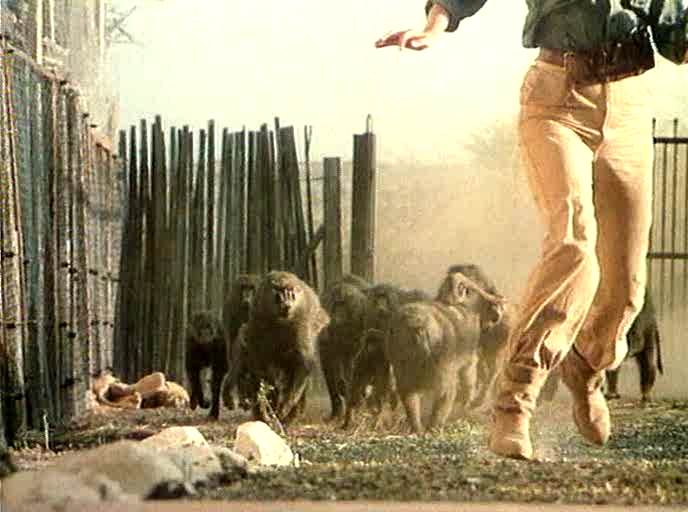
31. Kenya - In the Shadow of Kilimanjaro (1986)
We're at the end now and every continent has been covered (until some killer penguin movie comes out of Antarctica). This animal attack movie was based loosely on a true incident in 1984 when a brutal drought led to a few incidents where starving baboons attacked the residents of a nearby small town. The movie blows this up into a whole horde of baboons laying siege to the place. The half-baked story and characters will have viewers glancing at the time waiting for the monkeys to show up but it's worth waiting. The animal work is really quite impressive. Monkeys seem cuddly until they're ganging up to try and kill you.

Thursday, April 22, 2021

Oscars 2021 Educated Guesses


My sense of time is all screwed up.

Usually at this time of year, the Oscar predictions have been in the can for two months. But like everything else, the Academy Awards has experienced major disruption during the past year. In retrospect, it was a stroke of good luck that the 2020 ceremony happened only about two weeks before COVID-19 brought the world to its knees, with Parasite's amazing, historic win as one final moment of goodness and triumph before the darkness took over. That moment ended up near the top of the very short list of actual good things that happened in 2020. 

14 months later, the Academy has had the longest time out of these organizations to figure out a way to conduct its business amid the ruthless plague that may be starting to wane but is still very much a threat. Their solution has been to spread the nominees and guests across multiple venues, both in the United States and Europe, so that winners can accept in person while still adhering to social distancing guidelines. They're reportedly hoping to avoid footage of winners accepting via videochat programs like Zoom, especially after several moments from the Golden Globes went viral for all the wrong reasons.

One of the stories playing out over the past few years is the Academy's reluctance to give its top prize to movies that premiere on streaming services, trying their best to keep the movie theater experience relevant. Steven Spielberg spoke for many of his peers when he said that movies that come out on Netflix, Amazon Prime, etc should be competing for Emmys, not Oscars. This year they don't particularly have a choice. Movie theaters were empty for most of the year and almost all of the nominees had to swallow their pride if they had any hope of being seen by the public. I'm perfectly fine with streaming premieres competing at the Oscars (especially given that most of them aren't originally intended for that and end up getting bought by these companies at film festivals) but I have to admit that when it comes to trying to see all the nominees, I prefer the theater. The films are spread across numerous streaming services, some on the obscure side, so there was a lot of get-the-free-trial-watch-the-movie-then-cancel-before-I-have-to-pay action going on over the last couple of months. 

But since I've gone to all the trouble of seeing these movies, let's talk about them!


Best Animated Feature

Onward
Over the Moon
Shaun the Sheep: Farmageddon
Soul
Wolfwalkers

Who Will Win: Here's the first example of what I was just talking about. Pixar's Onward is the only one of these films to actually play in theaters, opening mere days before the lockdowns began. That one has some writing issues and will surely be outshined by Soul, the other Pixar movie from this year that ended up debuting on the Disney+ service. Wolfwalkers, by the frequently nominated studio Cartoon Saloon, might have had a better shot if it had found a more prominent platform than Apple TV+. Seriously, I don't know anyone who has that one. Soul should win this without much trouble.

My Choice: Soul is a deserving winner and the most interesting Pixar movie in a few years, but I can't help rooting for Farmageddon. I wish stop-motion features won this category more often.


Best Documentary Feature

Collective
Crip Camp
The Mole Agent
My Octopus Teacher
Time

Who Will Win: There's not an obvious winner here, but I'd bet on the Netflix documentary My Octopus Teacher, about nature filmmaker Craig Foster's unexpected bond with an octopus living in the kelp forest off the coast of South Africa. Time is probably the one most relevant to today's world, which could help its chances but I think it's anti-incarceration viewpoint will seem extreme to many of the voters.

My Choice: My Octopus Teacher is an amazing feat of underwater photography but any footage not shot by Foster is weirdly manipulative and stagey. I'd pick Collective, an epic story about how a tragic fire at a concert unearthed deep-rooted corruption in Romania's health system.
 

Best Adapted Screenplay
Ramin Bahrani for The White Tiger
Sacha Baron Cohen, Anthony Hines, Dan Swimer, Peter Baynham, Erica Rivinoja, Dan Mazer, Jena Friedman, Lee Kern and Nina Pedrad for Borat Subsequent Moviefilm
Christopher Hampton and Florian Zeller for The Father
Kemp Powers for One Night in Miami
Chloe Zhao for Nomadland

Who Will Win: Check out that list of writers on Borat, that has to be some sort of record. The Academy will probably avoid that one just to save on production costs for the statues. I'm also not sure what a "screenplay" looks like for a movie that's so dependent on improvisation and hidden camera stunts. This category tends to favor individual writers and I suspect it will go to Nomadland. Zhao took a non-fiction book and modified it to have a combination of fictional characters and the real people involved. It's a creative concept and ended up being quite effective.

My Choice: I enjoyed a lot of the eloquent debate between the characters in One Night in Miami. A little bit of trivia - Kemp Powers is also the co-director of Soul, so he's probably going home with an Oscar one way or another.


Best Original Screenplay
Will Berson and Shaka King for Judas and the Black Messiah
Lee Isaac Chung for Minari
Emerald Fennell for Promising Young Woman
Darius and Abraham Marder for Sound of Metal
Aaron Sorkin for The Trial of the Chicago 7

Who Will Win: This is a close category stacked with heavy hitters, but I think it would be foolhardy to bet against Aaron Sorkin. It helps that his dialogue was delivered by several excellent actors in what was probably the year's best ensemble. Another potential winner is Emerald Fennell, whose carefully constructed script for Promising Young Woman pulled off several twists and turns.

My Choice: I don't really have a favorite here, although the subtleties of Minari's characterization and setting details were impressive.


Best Supporting Actress
Maria Bakalova in Borat Subsequent Moviefilm
Glenn Close in Hillbilly Elegy
Olivia Colman in The Father
Amanda Seyfried in Mank
Yuh-jung Youn in Minari

Who Will Win: For all the love Parasite got last year, the Academy was chastised for not nominating anyone in the cast for the acting awards. This year, this category will likely be won by a Korean actress starring in an American film where most of the dialogue is in Korean. Youn has a long career in her native country but was unknown in the West until she played the irreverent but wise grandmother in Minari. She seems genuinely astonished by the attention, which should work in her favor. Who doesn't love an unassuming winner? The closest competition is Glenn Close, who is on her eighth nomination and has never won. She almost had it two years ago until she was upset by Olivia Colman, who is also here but unlikely to repeat history. What's hurting Close this time is that Hillbilly Elegy was roasted by critics. Youn will almost certainly win, so let's hope Close's ninth nomination is for a better movie.

My Choice: Maria Bakalova, and not just because pretending to be attracted to Rudy Giuliani is Oscar worthy in and of itself. In addition to amazing improvisation skills, she was the unexpected heart of Borat and gave it a surprisingly emotional story arc. The category fraud may be hurting her, she gets much more screen time than her competition.

Best Supporting Actor
Sacha Baron Cohen in The Trial of the Chicago 7
Daniel Kaluuya in Judas and the Black Messiah
Leslie Odom, Jr in One Night in Miami
Paul Raci in Sound of Metal
Lakeith Stanfield in Judas and the Black Messiah

Who Will Win: Here's an odd situation: the two lead roles of Judas and the Black Messiah both ended up in the Supporting category. I suppose the voters couldn't agree on who the main character was? Going by screen time and the overall structure of the film, Stanfield is clearly the lead role but the Oscar will likely go to Kaluuya, who does have more of a true supporting role as the late Black Panthers leader Fred Hampton. The British actor does such a good American accent that he saw fit to remind the audience on Saturday Night Live that there are indeed black people in the UK. By the end of Sunday night, there will likely be an Oscar-winning black person in the UK.

My Choice: Kaluuya is a force of nature, but my favorite performance here is Paul Raci as the gentle mentor figure in Sound of Metal. I don't think that character ever raises his voice but commands a lot of respect just the same.

Best Actress
Viola Davis in Ma Rainey's Black Bottom
Andra Day in The United States vs. Billie Holiday
Vanessa Kirby in Pieces of a Woman
Frances McDormand in Nomadland
Carey Mulligan in Promising Young Woman

Who Will Win: This is super close and the precursor awards have been spread out among this group. I feel confident it will either be Viola Davis or Carey Mulligan. Davis won Best Supporting Actress a few years ago for Fences, but that was a widely criticized case of category fraud and it has been frequently argued that she still hasn't really gotten her due. However, given that Ma Rainey's Black Bottom is all but certain to win Best Actor (see below), some voters may feel that wins for both lead categories is overkill. Meanwhile, Carey Mulligan is a highly respected performer best known for costume dramas who has never won and played against type to memorable effect. I'm predicting her but it feels like a coin toss.

My Choice: Viola Davis. That was a larger than life performance that only a few actresses could have managed. She was able to show new sides to Ma Rainey throughout the movie and the audience always wants to see more of her.

Best Actor
Riz Ahmed in Sound of Metal
Chadwick Boseman in Ma Rainey's Black Bottom
Anthony Hopkins in The Father
Gary Oldman in Mank
Steven Yeun in Minari

Who Will Win: The easiest call of the night. The late Chadwick Boseman is all but certain to win posthumously for the intense, vulnerable performance he gave as a trumpet player barely keeping his demons at bay. Could anyone possibly beat him? Steven Yeun is making history as the first actor of East Asian descent to ever compete in this category. Embarrassing, isn't it? We always talk about how black people get shortchanged at the Oscars, but Asians have it much worse in that sense. He would have a good chance if Boseman were still alive. Unfortunately, he isn't. The actor's sudden death from cancer last summer has made Hollywood well aware that this is the only chance they will have to recognize his talent.

My Choice: I like Riz Ahmed and Steven Yeun's performances quite a bit, but it has to be Chadwick Boseman. That performance was so good he would have easily been nominated if he were still alive, although it would have probably been much closer.


Best Director

Lee Isaac Chung for Minari
Emerald Fennell for Promising Young Woman
David Fincher for Mank
Thomas Vinterberg for Another Round
Chloe Zhao for Nomadland

Who Will Win: The big story this year was the nomination of two women in this typically all-male category. It came as quite a surprise given that it can be like pulling teeth for even one nominated. But female directors have become more visible than at any other point in my lifetime that I can recall and it becomes less feasible to ignore them with each year (not that it won't happen again because it probably will). The winner looks to be Chloe Zhao, who has been streamrolling through this awards season and has the telltale Director's Guild win that almost always coincides with the Oscar.

My Choice: I don't have a strong preference this year. A win by Zhao will be greeted with all sorts of jubilation and excitement and that's always nice to see. 

Best Picture
The Father
Judas and the Black Messiah
Mank
Minari
Nomadland
Promising Young Woman
Sound of Metal
The Trial of the Chicago 7

Who Will Win: How is anyone supposed to predict a category that swings from Green Book one year to Parasite the next? This has been the hardest category to predict for several years now, but let's see what we can eliminate right off the bat. The Father and Sound of Metal haven't been as widely seen as the rest. Daniel Kaluuya is the only one from Judas and the Black Messiah who has been getting awards and it's safe to assume that trend will continue. Mank would have had a great shot about ten years ago, when the Academy had a streak of giving Oscars to movies about show business, but the trauma of the Trump years seems to have convinced them to put away childish things. Promising Young Woman has exceeded expectations for what's essentially a classed-up version of the rape/revenge movies from the 1970s, but I imagine it's too confrontational for some of the members.

The remaining three are the ones with a real shot at this. Minari has a lot of admirers and in many ways feels like a classic "American Dream" tale, but I think it's just too quiet and gentle to win. The Trial of the Chicago 7 could very well pull it off. It has mawkish boomer qualities similar to Green Book and it would be reasonable to assume that demographic could prevail again. But I don't imagine this is a year where the voters will go back to the 1960s, not when the present has been so harrowing. It seems like a time for something more contemporary, which brings us to Nomadland. In addition to being a very well-made film in just about every respect, it has a certain melancholy that really speaks to the moment. The final scenes in particular, which unfold in a desolate town ruined by economic collapse, cut right to the heart of things. So my prediction is Nomadland, but it's not a sure thing. This category never is anymore.

My Choice: Honestly, I don't find this year's Best Picture race all that exciting, certainly not compared to last year. Nomadland and Minari are both lovely and I would have no complaints about either of them winning. Most of the stuff I really liked didn't get nominated for anything. In terms of what did, my mind keeps going to the Bosnian film Quo Vadis, Aida that is competing in the International Feature category. That movie is an absolute knockout with an emotional impact that left me trembling (just a little bit). I would love to see it in contention here, but no dice. 

That's all for this year. If all goes well, only 10 months until I do this again!

Friday, January 8, 2021

Top Ten Films of 2020

Declaring the current year the "worst year ever" has been a silly December tradition for a while now, but this was different. Even though 2021 has certainly come out swinging, I would be surprised if it could sustain the same consistent day to day despair as 2020. There's no need to rehash it all but it certainly had as profound an impact on movies as everything else. With theaters more or less empty since March, those of us who follow movies as a hobby were left to our own devices...often literally. All of us want to put out our annual lists as per usual, but in the absence of "must-see" movie events to coalesce around, the lists will be more idiosyncratic and personal than ever based on whatever winding path we took through the various streaming services out there.

There usually ends up being one horror movie on these lists, but this year that genre dominated in a big way. I didn't expect it but in hindsight it makes sense. The conditions were perfect. Studios were unsure of just what to do with their major releases, either delaying them until next year or experimenting with outlandish pricing (sorry guys, I'm not paying $20 or $30 to watch a movie once at home). Horror, perhaps the most resilient and versatile of movie genres, figured out years ago that the best way to reach its audience was to take advantage of the emerging world of streaming. 

Then there's the real-life horror of the past year. A common theme in this genre is the sins of the past coming back to menace people in the present day. COVID-19's reign of terror in the United States was facilitated not just by a psychotic president but an overall cultural indifference to the health, happiness and safety of its citizens. Something like this requires major intervention by the powers that be and instead our government determined it was more cost effective to just let people die. We'll be paying for this for a long time and horror films are just barely getting started when it comes to processing that.

It's not all scary stuff, though. Read on!

10. Ride Your Wave
In a small city by the seashore, a college student named Hinako with a passion for surfing meets a dashing young firefighter named Minato. Their picture-perfect romance is interrupted by Minato’s sudden death, but Hinako discovers that if she is near water, she can summon his ghost by singing their favorite song. Masaaki Yuasa has a highly distinctive style, but don’t let his screwball animation style and goofy facial expressions fool you - this is a classic tearjerker similar to the work of his countryman Makoto Shinkai. It’s a charming, bittersweet story about grieving with lovely characters and gorgeous animation, particularly during the surfing scenes.

9. Borat Subsequent Moviefilm
The cheerfully bigoted journalist made a surprise return in this sequel, which is subtitled "Delivery of Prodigious Bribe to American Regime for Make Benefit Once Glorious Nation of Kazakhstan." After he was imprisoned for embarrassing his homeland in the previous film, Borat Sagdiyev (Sacha Baron Cohen) is called upon to bring a gift to Vice-President Mike Pence in order to get the nation in the same good standing with President Donald Trump as North Korea and Russia. Like its predecessor, the movie is a combination of a scripted storyline and hidden camera stunts with unsuspecting Americans. The filming took place shortly before Covid swept the world, which was cleverly incorporated into the plot. Even before its release, it made headlines due to a queasily funny prank on former New York mayor turned dripping, farting lawyer Rudy Giuliani, clearly following the president's lead in terms of how to relate to women. Baron Cohen continues to be utterly fearless but the surprise with this film is how heartfelt it is, thanks to the out of nowhere brilliant performance of Maria Bakalova as Borat's teenage daughter Tutar. Her character has a powerful story arc and she ultimately walks off with the film.

8. Feels Good Man
It was a story only possible in the age of the internet - soft-spoken cartoonist Matt Furie can only watch in horror as his creation, a frog named “Pepe,” is inexplicably turned into a symbol of fascists and white supremacists. This poignant documentary traces the slow evolution of the character beyond the control of his creator and the various iterations of the meme go hand in hand with the larger story of lonely men on the internet who retreated from society into a ideology of hate that eventually took over the United States when Donald Trump was elected president. Meanwhile, Furie has to reckon with the fact that his character was eventually placed on the Anti-Defamation League’s list of hate symbols and, when he’s finally had enough, goes into legal battle against the likes of Alex Jones. Pepe also appears in several impressive cartoons created just for the film.

7. Body Cam
Something is hunting the police officers in a small city and it becomes clear very early that the culprit is supernatural. Officer Renee Lomito (Mary J. Blige) and her rookie partner (Nat Wolff) investigate and find that the answers lie within the police department itself. The concept is such an absolute no-brainer that it's amazing it wasn't done earlier. While the script is sympathetic to good police officers, there is a certain catharsis seeing the police up against an enemy that no amount of shooting can stop, experiencing the fear that minorities in America feel all the time. If the government bureaucracy won’t hold the police accountable, maybe something else will.

6. The Invisible Man
Remakes of horror classics are inevitable, but many of them could take a lot of lessons from how well Leigh Whanell updates the classic 1930s monster movie to come at the same tale from a totally new and modern perspective. In the first scene, Cecilia (Elisabeth Moss) flees her abusive, controlling husband, an engineer named Adrian (Oliver Jackson-Cohen). Instead of the expected pursuit, she gets news that he has committed suicide. However, Cecilia knows this is out of character and realizes Adrian is using frightening new technology to reassert his hold on her without being seen. The invisibility suit is the only fantastical thing about this harrowing tale of stalking and the way Cecilia is doubted and dismissed by her friends and family is something many women identified with. The special effects are seamless and the suspense is top notch. On a personal note, this was also the last movie I saw in a theater before the plague messed everything up.

5. Da 5 Bloods
The word “the” is about all that’s missing from Spike Lee’s epic tale of four Vietnam War veterans (Delroy Lindo, Clarke Peters, Isiah Whitlock, Jr and Norm Lewis) returning to the country decades later. The “bloods” are out to recover the remains of their squad leader (the late Chadwick Boseman) as well as dig up a shipment of gold bars they were ordered to retrieve but instead buried. There is a lot of good acting here, but viewers will finish the movie blown away by Delroy Lindo’s towering performance as Paul, the heartbroken and dangerously unstable man whose sanity begins to unravel as he returns to Vietnam. Lee’s films are never short on ambition - this is a searing analysis of the connection between American foreign policy and how black people are treated in their homeland, a modern retelling of The Treasure of the Sierra Madre and a tragic look at how deadly unresolved trauma can be. It has contrived and unwieldy moments, but is unquestionably a great American film all the same.

4. Tread
The amazing true story of Marvin Heemeyer, a highly skilled welder who encased a bulldozer in steel and concrete and used it to destroy several buildings in a small Colorado town. A protracted zoning disagreement with the local government drove Heemeyer into a vengeful rage and he spent over a year constructing his indestructible tank that left police helpless as it tore through everything in its path. There are enough re-enactments of the incident that the movie is almost a feature film adaptation, but the real-life helicopter footage of the mayhem is utterly jaw-dropping. There is much insight to be gained through the interviews and especially from the excerpts of the audiotapes Heemeyer recorded before his rampage. Despite how outlandish the story sounds, it was brought on by a seething resentment that is uncomfortably familiar.

3. The Assistant
This spare but powerful drama depicts one day in the life of Jane (Julia Garner, conveying heavy emotions with subtle facial expressions), who works long hours at the New York offices of a powerful movie studio. It becomes clear in short order that the owner of the company is a serial predator who is constantly taking advantage of young women desperate for fame. The executive is known to the audience only as a bullying voice on a telephone, never named and never even seen, but he’s obviously meant to be a stand-in for the notorious Harvey Weinstein. All the employees know what’s going on, including Matthew Macfadyen as the worst HR manager in history, but there’s just too much money on the line to do the right thing. You may never have worked in an environment where the whole bureaucracy existed to protect a perverted scumbag, but you’ll feel like you have by the end of this quietly furious movie.

2. The Hater
This epic Polish film examines a kind of evil native to its era, one that uses modern technology to unleash the worst human impulses for its own ends. A manipulative little creeper named Tomasz (Maciej Musialowski) is expelled from college for plagiarism and ends up working for a “troll farm,” basically a PR company specializing in drumming up negative attention. Assigned to a smear campaign against a progressive pro-refugee mayoral candidate in Warsaw, Tomasz uses social media (mostly Facebook) to whip up anti-Islamic hysteria while also using his newfound skills to pursue a personal vendetta, leading to consequences that will be familiar to anyone who has paid attention to the resurgence of white supremacist violence in the Western world. Insightful about the conditions that produce a person like Tomasz without ever being sympathetic, the movie may have been too accurate for its own good. It was originally planned to open in 2019, but was delayed for several months after the real-life murder of Gdansk mayor Pawel Adamowicz unfolded in a way uncannily similar to the film.

1. La Llorona
A beautifully made Guatemalan film that adapts the old Latin American legend into a powerful and highly relevant look at recent history. In a scenario that mirrors the high-profile prosecution of former president Efrain Rios Montt, the elderly General Enrique Monteverde (Julio Diaz) is on trial for a genocidal campaign that killed over 100,000 of Guatemala’s indigenous Mayan citizens in the 1980s. He is found guilty but the verdict is overturned by a corrupt higher court. However, nothing will protect him from the vengeful spirit wandering his estate. Meanwhile, his conflicted daughter Natalia (Sabrina De La Hoz) is beginning to grasp the enormity of her father’s crimes. This is not a scary movie in the traditional sense  - in fact, the audience will be rooting for La Llorona. The horrors committed by real people are far worse than anything we could dream up for our folklore. If you want to brush up on the history of Guatemala before or after watching this, the documentary 500 Years is a great resource.

The director, Jayro Bustamante, surely intended to comment on the history of his own country but it's unlikely he knew just how appropriate this story could be in other parts of the world. Americans look down on countries like Guatemala, thinking ourselves too advanced and too powerful to worry about the same problems they might have had. And yet ever since the November election, we've found ourselves in an era very similar to the events referenced in this film. The rest of the world has plenty to teach us...if we're willing to stop bragging, show some humility, and pay attention. 

11. Sputnik
12. His House
13. Sound of Metal
14. Random Acts of Violence
15. Us Kids
16. Ma Rainey's Black Bottom
17. Lucky
18. Mank
19. Blood Quantum
20. Relic

A little note on scheduling: this year's Academy Awards have been delayed until the end of April to give Hollywood more time to get their movies to audiences. Naturally, the stuff I write each year about them will be delayed as well. Have a good year, stay safe, don't try to overthrow any governments.

Monday, December 21, 2020

Ranking the Assassin's Creed series

Self-explanatory. I've been playing these games for 13 years and with the release of Assassin's Creed: Valhalla, I figured it was a good time for something like this. I haven't played any of the smaller side games or read the novels or comics or what have you...I mean, these games are taking longer and longer to finish, who's got the time? Throw up your hood and strap on that hidden blade, we're going from worst to best.

12. Assassin's Creed: Unity

I have to be honest here. This is the only mainline entry in the series I haven't played. It was the first AC game to be released on the Xbox One, which I didn't yet have but was considering buying to play this. Then...it came out. The internet lit up with screenshots of absurd bugs and graphical errors and the general consensus of the reviewers was that even without the technical issues it was a weak game, with shoddy gameplay and poor use of the French Revolution setting. I couldn't quite bring myself to buy the Xbox One for something like this (it was Rock Band 4 that eventually compelled me to do it).

The game also got in some trouble for the fact that there were four different playable characters and they were all men. After the backlash that, frankly, everyone should have seen coming, the developers said it was too hard to animate a woman's hair. That did little to soothe the Twitter masses. After all, they were able to painstakingly restore Colonial-era Paris but long hair was too difficult?

Years later, I have the console but I don't think I'll go back and try it. One issue with this series as a whole is that the games tend to become outdated quickly. This is especially true with...

11. Assassin's Creed

The one that started it all. This one came out so long ago that there must be a decent percentage of the fanbase that has never tried it out. If they do, they're in for a shock. Compared to even the first sequel, this was a borderline tech demo. But it's the story that made it work just well enough to start a series.

During the Crusades, we're given our first introduction to the centuries long war between the Assassin Brotherhood, which values freedom and transparency, and the Templars, who seek control over the populace. A grouchy assassin named Altair is assigned to take out a series of highly ranked Templars in three different Middle East cities - Jerusalem, Acre and Damascus. There was also the storyline taking place in the present - a bartender named Desmond Miles is recruited by the Templars to relive the memories of his ancestor Altair using a device called the Animus. Things ended with a wild cliffhanger that did wonders to get me excited for the next game.

The bones were there - the sneaking, the climbing, the exploring. It just needed a LOT of work.

10. Assassin's Creed: Syndicate

This one is fairly well-regarded so it may come as a surprise to see it so low, but it just didn't work for me. The main characters are twins Jacob and Evie Frye, who work to build up a criminal enterprise in Victorian-era London. The developers found a solution to the "female hair" problem - Evie's is always tied back. London is a fine location (climbing Big Ben was delightful) but I think the setting was too close to the present. Too many guns, too many factories, too many vehicles. It just didn't feel right.

It didn't help that the combat was just dreadful. Unlike other games where your assassin can fight off a small army with enough skill, in Syndicate you're screwed if you encounter more than two or three enemies. Maybe that was supposed to encourage stealth, but that didn't seem to work very well either.

9. Assassin's Creed III

When the premise for this game was announced, people were stoked. A Native American assassin hunting down colonists during the American Revolution? Yes please! Unfortunately, the final product was weighed down by bloat. Feature creep was definitely an issue.

You can tell things are a little off right away. A prologue featuring the main character's father went on for some three hours before we met the real protagonist, Ratonhnhakekon (nicknamed "Connor" to make it easier for the other characters). There are also a ton of gameplay mechanics and many of them are totally unnecessary. There's a crafting system that is utterly incomprehensible and the management of overseas Assassin campaigns used in previous games was ruined by a baffling interface. Other mini-games sneak in for one or two appearances and are never used again. The combat is glitchy as hell. The most successful addition to the series gameplay were naval battles that proved to be so popular the series has used them in several games since.

While the plot itself is messy and Connor is mostly a one-note character, the thematic side of the storyline is masterful. The final scene is just brilliant - Connor wanders over to Boston harbor, where the British ships are leaving while the newly independent colonists brag about the virtues of freedom. Then Connor looks over and sees slaves being sold on an auction block. He shakes his head in disgust. Roll credits. It took some serious stones for a huge commercial game to call out the hypocrisy of the American Revolution, but there's another side to it. There's an ongoing sidequest where Connor acquires a homestead and begins to recruit people from all different backgrounds with various specialties. By the end of the game, it's a thriving little community, contrasting what America could be against the reality of what America too often is. It's borderline tragic that this game didn't turn out better as a whole.

8. Assassin's Creed: Liberation

Eligibility is iffy in this case. Liberation was originally released on Playstation Vita, but since it eventually got an HD makeover and a release on the major consoles, I'm going to count it. Because of that, it's definitely a smaller game than all the others on the list but still worth playing. 

Aveline de Grandpre was the first female protagonist of the series, working to reduce the Templar presence in colonial New Orleans. It can sometimes feel like a detective game as Aveline can access different parts of the city depending on how she's dressed. I have mixed feelings about this. On the one hand, it may be a commentary on what is sometimes referred to as "code switching." On the other hand, there were several times when I was stuck walking around in a fancy dress to advance the plot when I wanted to be running around and climbing buildings. 

Thankfully, the setting is delightful, especially when you get out of the city and start exploring the bayou. I was also quite pleasantly surprised by a visit to the Chichen Itza site in Mexico. 

Assassin's Creed: Valhalla

7. Assassin's Creed: Revelations

The final appearance of everyone's favorite assassin, Ezio Auditore. Now an elder statesman in the order, he journeys to the Turkish city of Constantinople (now called Istanbul) to shore up the Assassin presence there. Ezio takes on something of a protege with the younger Yusuf, who gives him a new toy - a blade with a hook at the end that adds all sorts of fun quirks to the climbing. You'll want to explore in this one, the art direction is often magnificent.

The gameplay is not as successful. You're tasked with driving out the Templars in one district of the city at the time, an element that has been used in many of the games since but is very rough at this point. To that end, you're encouraged to purchase property but it's really expensive and I mostly gave up on it without seeing any consequences. The tower defense mini-game that pops up at the end of these power struggles is a baffling departure from the typical formula that's totally out of place.

One subplot I didn't see coming was the numerous flashbacks to the later days of Altair from the first game. These scenes are not always gracefully integrated, but the way they ultimately dovetail with the main story to conclude the arcs of both these characters is satisfying.

6. Assassin's Creed: Origins

This game was the start of a major change in the series, both in terms of story and gameplay. Ancient Egypt is a setting that you couldn't go wrong with, but it required the overarching lore to go much farther back in time than any previous game, to an era where the Assassins and Templars as we know them didn't exist. The protagonist is Bayek, who serves the people of Siwa as a "medjay," which is basically an ancient constable. However, he's also nursing a serious grudge against a group of masked cultists who tore his family apart. By the end of the story, the seeds of the rivalry that will echo throughout history have been planted.

As the player explores the absolutely vast recreation of Egypt, they have to get used to several gameplay elements that borrow primarily from RPGs - equipping various pieces of armor and weapons, skill trees, and a combat system intended to be more precise than the often unbalanced fights in the previous games. It takes some getting used to and is pretty rough around the edges, which is expected for when a long-running series tries to innovate.

The setting is very well fleshed out - you really get a sense of the tensions resulting from Greece's occupation of Egypt, further complicated by the involvement of the burgeoning Roman Empire. The player gets to interact with the likes of Cleopatra, Julius Caesar and Pompey the Great. The one character the game doesn't know what to do with is Aya, Bayek's estranged wife. She shows up intermittently and becomes a playable character, but since you don't get any opportunity to level her up, it becomes more of a nuisance than anything.

Assassin's Creed: Mirage


5. Assassin's Creed: Odyssey

As of this writing, the most recent Assassin's Creed game I have played and certainly the biggest. During the Peloponnesian War in Ancient Greece, the grandchild of King Leonidas strikes out as a mercenary before coming into conflict with a sort of proto-Templar organization called The Cult of Kosmos. The main characters are once again siblings, Alexios and Kassandra, although in this case you pick one at the beginning and stick with them. It seems like most players have picked Kassandra and with good reason - with the Greek accent this game often feels like a Wonder Woman simulator.

The developers borrow a lot from open-world RPGs like Dragon Age, introducing the concept of choosing dialogue responses, which gives some control over the main character's personality. The new combat introduced in Origins is more polished this time but the real draw of this game is exploring Greece. The series has never had an open-world that was so huge and so beautiful - it's one of the most visually beautiful games I've played, period. There's plenty for the player to do, whether it's getting involved with the ongoing fights between Athens and Sparta, sailing from one gorgeous island to another, or (if you're alone in the house) kicking bad guys off cliffs while shouting "This is SPARTA!"

This game does so much right, so why isn't it ranked higher? Well, it really duffs the ending. Or I should say...endings. The conclusion of the Cult storyline and a major revelation tying the past to the present are relegated to sidequests, which is a strange choice considering the implications for the overall lore of the series. As for the main ending involving Kassandra's family, it can go several ways depending on the player's choices and the game is absolutely ruthless about this. You can get everything "right" except for a single line of dialogue and wind up with a brutally depressing ending. In other words, if the next game is like this, I'm reading the fuckin' walkthrough.

4. Assassin's Creed: Rogue

This game was actually released at the same time as Unity, based on the smart assumption that many players (like me) weren't quite ready to move into the next console generation and might enjoy one more adventure on the Xbox 360. Ubisoft probably didn't anticipate that, due to Unity's many issues, this one would end up with a far better reputation. It's best described as an expansion of Black Flag with some precise tweaks, but that's no problem given that Black Flag has the best interface in the whole series (more on that in a bit).

The protagonist is a cocky Irishman named Shay Cormac, an Assassin serving during the Seven Years War. Reckless decisions made by the leaders of the brotherhood alienate Shay to the point where he leaves the group to pursue his own goals, eventually encountering Haytham Kenway, the charismatic Templar from Assassin's Creed III who just might convince him to turn. Not only is it a powerful character arc, it forces the player to re-evaluate the entire morality of the series.

Another reason this one is a personal favorite is that it takes place in a region where I've traveled extensively - the Atlantic Provinces of Canada. The familiarity brings pluses and minuses. On the one hand, I'm quite sure Prince Edward Island doesn't have any sheer marble cliffs to climb. On the other hand, sailing towards the Gaspe Peninsula and seeing Perce Rock, a famous natural arch that I've visited in real life, was a great thrill.
3. Assassin's Creed: Brotherhood

After the runaway success of Assassin's Creed II, Ubisoft wanted another game pronto to take advantage. However, the game designers knew that it would take a decent chunk of time to produce what would become Assassin's Creed III. So they came to a compromise that has been a mixed blessing - Brotherhood is the continuing story of Ezio Auditore as he takes his battle against the evil Borgia family into the city of Rome. This game is great but the corporate pressure to release games on a yearly schedule caused some major issues for the series.

The scope of the game is wisely limited to an excellent recreation of Renaissance-era Rome and Ezio concentrates his efforts in the city on growing the ranks of the Assassin brotherhood. In a really brilliant mechanic, the player encounters various people in distress and offers them the chance to join. They train during their own off-screen missions and also can join you in combat. I felt real pride watching my first recruit, a young woman dealing with corrupt city guards, grow into a lethal fighter who had my back during the big endgame confrontations. 

There are also more of the spooky puzzles that illustrate the influence of the Templars on other eras, including the present. In a particularly cheeky move, this game had a sequence where a photo of Chief Justice John Roberts revealed a Templar ring on his finger. This was shortly after the horrendous Citizens United ruling. Check out his entry on the Assassin's Creed wiki, it's hilarious.

2. Assassin's Creed IV: Black Flag

The issues that came with Assassin's Creed III clearly shook the developers, as they worked aggressively to deal with them in the next game. They took note of the popularity of the naval segments and made those central to the storyline about piracy on the high seas. Seeking fortune in the Caribbean, Edward Kenway leaves Britain and adopts the life of a scoundrel. His first mate, a Haitian named Adewale, often acts as his conscience and when the crew encounters the Assassin brotherhood, he finds a lot of appeal in their ethos. Edward's not interested, however, at least not until the British colonizers begin to clamp down on piracy.

Once you have a ship and are free to explore the open sea, it's clear just how much the game's various systems have improved. The crafting system was streamlined and simple and upgrading the ship was nice and straightforward. In the older games, trying to get all the various collectibles was a fool's errand since you could barely keep track of your progress. This time, however, you can simply press a button in any area to get a list of what there is to find and track it on your map accordingly. It's actually feasible to 100% this one and given how much fun it is to explore, you might actually want to try.

What really makes this one so special is that was the first AC game to nail the "open world" concept. You can spend hours just sailing across the gorgeous teal water, exploring islands, looking for treasure, swimming underwater among shipwrecks, creeping around old Mayan temples and eventually getting back to the main story whenever you feel like it. Your crew will even sing authentic (and delightful) sea shanties if you're sailing for a while. Grab a bottle of rum and get lost in this one for a while.
1. Assassin's Creed II

The reason this series is still putting out huge games all these years later is because of Assassin's Creed II. After the rough first game, the team had to nail this one...and boy, did they.

The secret to its success was in large part due to its setting and the lead character. Ezio Auditore (voiced by Roger Craig Smith) is still the best protagonist of the series, a carefree young man from a wealthy family in Florence whose life is turned upside down by the evil Borgia dynasty. Upon discovering that his family was linked to the Assassin brotherhood, he begins a satisfying arc from an impulsive and angry young man into a calculating, lethal assassin. The story takes the player all around Florence and later, to the canals of Venice and the beautiful countryside of Tuscany. I've seen a lot of Italy and was pretty impressed with how well they captured it.

Most of the varied gameplay and story elements that make these games fun were introduced here. You can go on hair-raising climbing adventures in old catacombs to find treasure. You can laugh as Ezio calls Leonardo da Vinci's flying machine a "pezzo di merde." You can stumble on mysterious glyphs that lead to spooky puzzles revealing the influence of the Templars over the course of history. You can climb famous buildings before jumping off and landing in a hay cart, miraculously uninjured. And of course, you can smite your enemies before delivering Ezio's catchphrase, "requiescat in pace." It's all here and the success of all the subsequent games has depended in large part of how well they could recapture the thrill of this one.

Assassin's Creed: Valhalla has been out for about a month at the time of this writing, but I have yet to play it. I've learned that you need to allow some time for Ubisoft to do some bug fixing and sure enough, they just put out a patch to fix issues like the player's horse getting its head stuck inside boulders. I kid Ubisoft, these games are still a reliably fun experience and a way to engage with history that's truly unique to this medium. I hope to be playing new ones for many years to come.