Showing posts with label Top 10. Show all posts

Wednesday, December 31, 2025

Top Ten Films of 2025

Today marks the end of another year in which I felt a lot of gratitude for the movies that help us reflect on and greater understand the deeply stupid world we live in. Those moments when you feel like other people realize just how screwed up everything is, that it's not all in your head, feel more precious by the day. It's pretty routine hear to people declare that cinema is "dead" because of declining theater attendance or corporate mergers or whatever nonsense studio executives are hoping to do with AI, but as long as movies are still being made that can offer that elusive sense of solidarity, it isn't dead. It's a period of pretty intense changes, and it seems likely that not all the changes will be good, but the art form will survive. Here are ten good arguments for why.


10. Cloud
I just watched this one last night, talk about getting in right at the buzzer. Anyway, Kiyoshi Kurosawa has been making films about the dehumanizing effect of the internet since the turn of the century - if anyone was entitled to an “I told you so” in the year 2025, it was him. Ryosuke (Masaki Suda) is a mild-mannered scammer who buys random items of questionable quality and sells them on the internet at inflated prices to people who don’t know better. As his tactics get more brazen, a small community of disgruntled “customers” begins grumbling and orchestrating small pranks. It all seems like typical online toxicity, until it suddenly isn’t and the film’s second half becomes an intense crime thriller as an angry mob hunts Ryosuke down. Despite the vast amount of shootings and other violent encounters with origins in internet pettiness, the direct connection between the perpetually aggrieved tenor of social media and deadly real world events is something many people don’t want to acknowledge. This movie won’t let you forget it.

9. Strange Harvest
We need at least one out-of-left-field horror pick on a Rob list, don't we? Here's one you almost certainly won't see on any others - a terrifying serial killer story told in the style of a fake true crime documentary. This is not a new idea, but it updates the aesthetic to match the ubiquitous Netflix style most of us have gotten used to in recent years. The effect was just so convincing that it reminded me of the first time I saw Lake Mungo years ago, and I hope this film has a similar long journey to widespread discovery and acclaim. 

The notorious “Mr. Shiny” (Jessee Clarkson) terrorizes the San Bernadino era with hideous occult murders, pursued relentlessly by two detectives (Peter Zizzo and Terri Apple). The story goes in some wild directions, but is never less than totally absorbing. The attention to detail is what makes the execution work so well - the drone shots, the meticulously rendered archive footage from the beginning of the killing spree in the 1990s, and the way the experts are shown arriving and getting comfortable before the formal interviews begin - it all evokes that distinctive modern true crime feel. It’s unlikely that such a documentary would show the gruesome crime scene photos the viewers are treated to, but perhaps that can be written off as the fictional director resorting to unethical exploitation.


8. Train Dreams
This beautiful, haunting film unfolds in the early years of the 20th century, an era of rapidly advancing technology experienced through the perspective of Robert Grainier (Joel Edgerton, who makes it impossible to imagine anyone else in the role). His wife (Felicity Jones) and infant daughter are the light of his life, but his work logging and building railroads takes him away from the family cabin for long periods at a time. It may not sound very complicated from just a brief description, but this is a sad, profound look at our simplest needs as human beings and how forces always seem to conspire to keep them from us. It’s also almost unbearably gorgeous, shot masterfully by Adolpho Veloso in the lush temperate rainforests of Washington state. 


7. No Other Choice
A beautifully directed black comedy about a man named Man-su (Byung-hun Lee, best known in America as the villain in "Squid Game") who made a very good living as a longtime manager at a paper mill but suddenly finds it all at risk when he’s laid off by the plant’s new owners. Desperate to keep his family’s house, Man-su applies for a job at another mill and resolves to murder the other applicants to make sure things go his way. However, he’s far from a hardened killer and his murder attempts frequently turn into desperate mayhem. While very funny, the sad truth of the story is that this is absolutely the kind of behavior encouraged by capitalism. It’s also easy to forget about the themes altogether and just take in the splendor of Park Chan-wook's filmmaking, with stunning deep focus cinematography, unexpected but brilliant camera angles, and scene transitions that are breathtaking in their creativity.


6. The Perfect Neighbor
This hugely compelling documentary uses innovative storytelling to explore a distressingly familiar American story. Composed almost entirely of police body camera footage, the first half of the movie is a series of encounters between officers and Susan Lorincz, a “Karen” living in a predominantly black Florida neighborhood who keeps coming up with asinine reasons to call law enforcement on the nearby children. The pattern reaches what may have been an inevitable conclusion when Lorincz fatally shoots her neighbor Ajike Owens, leaving four children without their mother and the community in shock. Watching the police arrive that night as the news spreads around the neighborhood is devastating, but important to see in a country where these incidents end up becoming just another statistic. The case led to a lot of debate about Florida’s “Stand Your Ground” laws, but the movie’s primary interest is not the legal factors but the psychological ones, specifically how racist paranoia can drive someone to near madness. In other words, the fact that Lorincz felt like her life was threatened just before the shooting is less important than the fact that she already felt like her life was threatened by simply existing near black people.


5. It Was Just An Accident
Undeterred by two decades in prison, the dissident Iranian director Jafar Panahi went to great lengths to complete this rebuke to the cruelty of his country’s ruling theocrats. It was shot entirely in Iran without securing government permission, and since it was co-produced by a French studio, France has submitted it as its entry for the Best International Feature category at the Academy Awards, where it will almost certainly get nominated. A seemingly ordinary man gets in a minor car accident and takes his car to a nearby mechanic, but one of the employees is a man named Vahid (Vahid Mobasseri) who suspects him of being the government agent who tormented him in prison years earlier. Vahid kidnaps the man and seeks out other former prisoners to identify him, although it proves difficult since they were blindfolded for most of their imprisonment. Will they take revenge on the man despite not being certain it’s him? The tight screenplay walks an impressive balancing act, often teetering on the edge of black comedy while depicting the tragedy of otherwise peaceful souls being left with hate and rage in their hearts as a result of oppression. In another provocation to the Iranian regime, several female characters spend most of their time onscreen without the traditional hijab.


4. Wake Up Dead Man
The arrival of the third film in Rian Johnson's Knives Out series was proof that these aren’t just the most enthralling detective movies of their time, but thoughtful and amusing examinations of life in 2020s America. This time, the ace detective Benoit Blanc (Daniel Craig, still doing the hilariously weird accent) heads to rural New York, where a bullying Catholic priest (Josh Brolin) has been murdered and suspicion falls on the assistant pastor, Father Jud (Josh O’Connor). As Blanc analyzes what he calls an “impossible crime,” the story becomes a surprisingly detailed dissection of the difference between what religious faith is supposed to be and the reality of what it often is…..while still being frequently hilarious. As per usual with this series, there is a great ensemble cast, including Glenn Close, Mila Kunis, Jeremy Renner, Thomas Haden Church, Jeffrey Wright, and more.


3. Weapons
Expectations for Zach Cregger's next film were quite high after Barbarian, but it still doesn't seem like we were prepared for how good this movie is. All but one student in Justine Gandy’s (Julia Garner) third grade class vanish without a trace one night, leaving the community frantic and desperate. The mystery unfolds slowly from various perspectives, including that of Justine, a parent (Josh Brolin), a police officer (Alden Ehrenrich) and the principal (Benedict Wong). It's a fantastic cast, including an unrecognizable Amy Madigan in a role that is expected to get her an Oscar nomination for Best Supporting Actress, although going into details about that character might spoil the fun. In general, this is a movie that's more fun on the first viewing the less you know about it. For now, it's enough to say that it's a very absorbing experience full of unexpected humor and with what may end up being the most hilarious, cathartic, utterly brilliant ending of the decade.


2. Dead Talents Society
This delightful, endlessly creative Taiwanese film deserved much better than being dumped unceremoniously on Netflix. The setting is a huge entertainment complex populated by ghosts who compete to make a splash in the crowded world of Asian urban legends. They orchestrate their scares with a small crew, get interviewed on television, and thank the people who killed them if they win at the Golden Ghost Awards. An unlicensed amateur referred to as “The Rookie” (Gingle Wang, giving a deeply sympathetic performance) desperately needs a break and gets some much needed guidance from an ambitious manager (Chen Bolin) and an aging ghostly icon (Sandrine Pinna). Making fun of Asian folklore and horror films is one thing, but what makes this movie so special is how sweet and heartfelt it is despite the ghoulish trappings. 


1. One Battle After Another
Paul Thomas Anderson has long secured his reputation as one of the great American directors, but I've personally admired most of his movies more than I actually loved them. That changed this year - I had no idea he had a vibrant, exciting movie like this in him. Thomas Pynchon’s novel Vineland was the foundation for an epic, beautifully made, disarmingly funny examination of America’s slide towards an authoritarian police state in the 2020s. Leonardo DiCaprio plays Bob, a former member of the French 75 revolutionary group who is now a bumbling single father raising his daughter Willa (Chase Infiniti). When Willa is kidnapped by the group’s old enemy, the white supremacist Colonel Steven Lockjaw (Sean Penn), Bob has to join with new allies to get her back. 

The biting depiction of the rank hypocrisy of the far right gave fascist influencers a few days worth of engagement farming, there’s a lot more to the film than that. The fraught, violent family dynamic between Bob, Willa, and Lockjaw resembles the warring segments of America’s population who somehow have to keep sharing the country together. Meanwhile, the contrast between Bob and the cool as a cucumber activist Sergio (Benicio Del Toro) illustrates that changing the world isn't always about yelling and blowing things up. Sometimes it's just helping out your neighbors. I can't pretend to have absorbed everything going on here in one viewing - it will likely take several to fully take in the complex themes of this sprawling film, which is one of the shortest three hour movies out there thanks to Andy Jurgensen’s fantastic editing.

If you're looked at other top ten lists for 2025, there's like a 90 percent chance this film was at the top of those too. I try to be original with these things, but sometimes the choice is just very clear.

11. Companion
12. Titan: The Oceangate Submersible Disaster
13. Left-Handed Girl
14. Cover-Up
15. Good Boy
16. Eddington
17. In Your Dreams
18. Presence
19. Predators
20. Lost in Starlight

2026 should be.....interesting, if nothing else. Good luck, everyone.

Tuesday, December 31, 2024

Top Ten Films of 2024

If I can fill out this top ten list earlier in the year, I consider it a very good year for movies. This time, I didn't have a full list of ten until just a few days ago. Does that make it a bad year? Not really...maybe a little weaker than I would have expected, but there was plenty of interesting stuff to see. I feel the need to assure everyone that I do in fact watch other movies besides horror and animation. I can't help if it they've been outperforming most of the other genres when it comes to bold, innovative work full of ideas and resonant themes. 

Speaking of horror, the only silver lining I can think of for this year's miserable presidential election, where a majority of people looked back on the chaos and corruption of Orange Caligula's first term and said "I want some more" like a bunch of really dumb Oliver Twists, is that the genre is about to get another major shot in the arm. Have you noticed the wave of pregnancy-themed horror since the end of Roe v. Wade? That's only the beginning, and it leads nicely into the point I wanted to make.

A lesson I've taken from 2024 is that it's time to rethink how we engage with the world around us and work towards better things. We've defined activism and advocacy simply by how much time we spend getting stressed about bullshit little teapot tempests that don't last the week. The day by day immersion, personified by the 24 hour news networks, is a failure...at least in terms of what we wanted from it. If you're talking about really changing hearts and minds, it doesn't come from yelling at people on Twitter....but it might come from art. The numerous fascinating movies that came out this year about the trans experience (more on that in a while) have more potential for improving things than retweeting zingers that you like. Maybe it's time to back away from that kind of stuff and more towards the potential of great art. A wise man once said, "you don't have to attend every argument you're invited to." With that, let's get started.

10. Union 
Working class solidarity will be essential to getting through the next several years in the United States. A good case study is this compelling observational documentary about the grassroots effort to start a labor union at a huge Staten Island warehouse owned by Amazon, one of the largest employers on the planet. Thousands of people who work in just that one location are underpaid and overworked and the uphill campaign is started by Chris Smalls, who was promptly fired. As they make inroads with convincing their coworkers to vote for the union, Amazon pulls all manner of dirty tricks and legal nonsense to maintain the status quo of abusing their employees while Jeff Bezos spends his fortune on conspicuously phallic rockets. The filmmakers ultimately had to distribute the movie themselves as too many companies were reluctant to damage their own relationship with Amazon. You won’t see this one on Prime Video anytime soon, but a google search will do the trick.

9. Hit Man
Half of this consistently charming movie is a biopic of the undercover operative Gary Johnson (played very well by Glen Powell), and the other half is a twisty romantic drama inspired by his life but definitely fictional. While working as a college professor, Johnson makes some extra money by assisting the police with his technical expertise, but the sudden suspension of the dirty cop Jasper (an oily but surprisingly likeable performance from Austin Amelio) leads to him having to play the “hit man” role to ensnare those conspiring to commit murder. He turns out to be surprisingly good at it, at least until he begins an ill-advised romance with a suspect (Adria Arjona). Knowledge of the true story won’t help you here, but the sometimes disarming storyline always works thanks to Richard Linklater’s skill at plotting and dialogue.

8. Memoir of a Snail
A weird and poignant Australian stop-motion animated film about a girl named Grace (voiced by Sarah Snook), who is obsessed with snails. Her already difficult childhood gets bleaker when she is separated from her beloved twin Gilbert (Kodi Smit-McPhee) and must try to find meaning in life without him. As with his previous film, Mary and Max, Adam Elliot is able to create a totally unique mixture of morbid, almost grotesque visuals with oddball comedy and surprising warmth. Once you’re on its wavelength, it’s hard to resist. How can you not love a movie where a stop-motion character starts creating stop-motion films of her own?

7. Rebel Ridge
Aaron Pierre gives a cool, commanding performance as the ex-marine Terry, who is accosted by police who steal the money he was carrying to post his cousin’s bail. The premise sounds a bit like a Rambo film, but this is not a guns blazing action movie but a tense drama about Terry struggling against police corruption with only an intrepid court employee (AnnaSophia Robb) on his side. There are a number of other movies that address the rot at the heart of policing in the United States, but Jeremy Saulnier’s skill for finding the little wrinkles of humanity in all of the characters makes it feel extremely convincing. Abuse of civil asset forfeiture laws, which is what allows Terry to be so blatantly robbed, is a real and pervasive issue in America and the film makes a convincing case that money, not racism, is the true reason behind police misconduct and the refusal of the institution to hold itself accountable.

6. Flow
This gorgeous Latvian animated film takes place in a world where humanity has disappeared and animals of all kinds roam the woods. In the aftermath of a catastrophic flood, a lone cat joins with a dog, a capybara, a lemur, and a huge secretarybird to try and keep their heads above water. These are not talking cartoon animals - with a few exceptions, they behave like real animals would. It creates a dreamlike atmosphere that allows viewers to get totally lost in the painterly visuals. There are plenty of messages about tribalism or global warming to interpret here, but the movie’s gentle touch makes it easy to ignore any of that. The lack of dialogue is also useful for international distribution - it attracted a number of viewers in the United States, an impressive feat for any animated movie that isn’t American or Japanese.

5. Rita
Given how often La Llorona gets mentioned on this blog, it should come as no surprise that I saw Jayro Bustamante's new movie as soon as I possibly could. Sure enough, it's another gorgeous Guatemalan film that blends history and the supernatural in the same way Bustamante did last time, using an infamous state-run orphanage as the setting for a dark fantasy tale. Rita (Giuliana Santa Cruz) ran away from her abusive parents but ended up committed to the place, where she joins a sisterhood of teenage girls who dress like angels and plot to rise up against the cruel adults who run the place. This was a real place that was teeming with heinous abuse and corruption and the resulting scandal led to large protests and the arrests of several high-ranking government officials. Opinions will vary on whether it was necessary to depict the girls as taking on traits of various fantasy creatures, but it’s an interesting way to convey the high stakes of the situation and lends itself well to Bustamante’s already prodigious storytelling talent.

4. Anora
Sean Baker's interest in those on the margins of society continues with the story of a young New York stripper (Mikey Madison in a breakthrough performance) who meets Vanya (Mark Eydelshteyn), the son of a powerful Russian family. Anora agrees to his impulsive marriage proposal and dreams of a life of luxury, but once the news reaches Vanya’s family in Mother Russia, all hell breaks loose in a sharp deconstruction of fairy tale romantic comedies. The movie is bursting with life thanks to Baker’s ability to effortlessly shift from screwball comedy to affecting drama, particularly in the film’s centerpiece around the halfway point - a scene of prolonged mayhem and shouting that goes on for at least 20 minutes. The story and characters are prioritized over social commentary, but it’s a moving examination of how the careless whims of the rich and powerful can wreak havoc in the lives of the less fortunate people around them.

3. Sing Sing
The effortlessly moving story of the Rehabilitation Through the Arts program in New York’s Sing Sing prison. John “Divine G” Whitfield (Colman Domingo) is a founding member of the program, an innocent man waiting for a parole hearing that could set him free. The group of inmates collaborates on a wacky original play that tries to incorporate all of the different ideas they came up with during brainstorming sessions. Anyone who has seen other movies about life in prison will be taken aback by how different this film’s approach is, treating everyone involved as genuine human beings rather than just depicting the place as a hotbed of savage violence. The impressive naturalism is achieved by the use of 16mm film and the fact that the only career actors in the cast are Domingo and Paul Raci as the play’s director. The rest of the cast is made up of former inmates playing themselves, people who really did participate in this program. One of them, Clarence Maclin, is even expected to get a Best Supporting Actor nomination in a few weeks. The result is an authentically uplifting look at people finding ways to hold onto their humanity in an environment determined to take it from them.

2. The Substance
A gonzo, swing for the fences body horror film starring Demi Moore as Elizabeth Sparkle, an aging actress so desperate to save her fading career that she is willing to try a black market drug. “The substance” allows her to temporarily live as a younger version of herself (Margaret Qualley) but it’s a messy process that’s difficult to maintain, so it’s only a matter of time until something goes wrong. And go wrong it does as this thrilling movie barrels towards its absolutely insane conclusion. Even though it all borders on the absurd, there is a genuine look at the pain women feel in a society that values them only for their looks, mostly thanks to Moore’s exceptional performance. With all the fearsome body horror on display (seriously, the makeup effects are breathtaking), one of the most powerful scenes is just Elizabeth standing in front of a mirror, looking great but only able to see flaws, being destroyed by insecurity.

1. I Saw the TV Glow
A beautiful, haunting masterpiece that felt even more important by the end of this year.  In 1996, a young boy named Owen (Justice Smith) befriends the slightly older Maddy (Brigette Lundy-Paine), who introduces him to her favorite show - “The Pink Opaque.” The experience of discovering the show and bonding with Maddy causes Owen to have realizations about himself that he doesn’t even have the vocabulary to describe. Like Jane Schoenbrun’s previous film, We’re All Going to the World’s Fair, this is primarily a story about growing up transgender and the terror of having to deny your true self out of (justified) fear of the outside world’s reaction. While it’s never definitively stated, it’s much less subtle this time and the movie is meant to be experienced as a metaphor - a completely literal interpretation of the storyline will just leave you confused. Every element of the film is rendered with impressive skill, from the striking neon production design to the meticulous recreation of 1990s young adult television. 

This film is at the forefront of numerous stories about trans people and their experiences - Emilia Perez, The People's Joker, Carnage for Christmas, and others. I'm not an expert on their struggles and so it would be dumb to try and gauge how well any of these movies capture the reality, but I do know a thing or two about how movies communicate meaning. I Saw the TV Glow is able to convey intense, personal emotions even to people who don't have the experiences behind them and even without a straightforward storyline. It's a formidable achievement, one that might even save lives in the coming years (if you live in Florida, you should probably buy a copy now while you still can). 

Honorable Mentions
11. The Wild Robot
12. Love Lies Bleeding
13. Thelma
14. Nosferatu
15. Wicked Little Letters
16. Riddle of Fire
17. The Contestant
18. Longlegs
19. Hundreds of Beavers
20. Lowlifes

Good luck in 2025, everyone. We'll need it.

Sunday, December 31, 2023

Top Ten Films of 2023

2023 - a tumultuous year that will likely be remembered as an oasis of calm once we get into the sheer hell a presidential election brings. Seriously, if someone came up with a system to cast an absentee ballot now and then sleep for the next twelve months, they would make a fortune. But there will be plenty of time to talk about next year when it's over, assuming any of us are still alive. In the meantime, it's time to talk about this year's movies.

Hollywood's in a bit of a catastrophic mood thanks to a combination of a few high-profile labor strikes and quite a few high profile box office bombs. I can't blame them for being upset about the former, but the lessons from the latter are pretty clear. It's true that the superhero genre is on the verge of total burnout, but all that means is that it just becomes one of many genres instead of the dominant one. They won't make a fortune simply by existing anymore, but the great ones will still bring in the crowds (see no. 4). The "Barbenheimer" phenomenon was about as clear a demonstration you could ask for that people are eager for something they haven't seen before. Barbie was the highest-grossing movie of the year, while Oppenheimer made way more money than your typical three hour biopic about a famous scientist. It also helps that unlike your typical bloated Marvel movie, those films didn't need to make the equivalent of a small country's GDP in order to break even (but they did anyway!).

There are a lot of other smaller successes out there when you start looking for them. But box office isn't a qualification to get on this list, so let's get to the favorites.

10. Oppenheimer
Oh, speak of the devil. That may have multiple meanings depending on how you feel about the sweeping, larger than life story of Robert Oppenheimer (Cillian Murphy), the physicist who led the project that developed the first atomic bomb. Upon hearing that the Nazis are working on an atomic weapon, Oppenheimer is recruited and whole town is built from the ground up in New Mexico to accommodate the massive endeavor. Germany is defeated before the bomb is ready, but the United States government decides to use it on Japan instead, in what may be history’s most lethal example of the sunk cost fallacy. Upon realizing that the military will keep pushing for bigger and more destructive weapons, Oppenheimer ruffles feathers by speaking against the Cold War arms race and his reputation comes under siege during the Red Scare. 

It’s a huge movie with a lot of material to grapple with, although despite the gravitas it feels unwilling to confront the true horror of what the bombs did to Japan. Oppenheimer surely knows full well, but his true feelings about it all are difficult to parse. His inner conflict and contradictions are also those of America, and both have to face the truth about their role in advancing science that could destroy humanity. Nolan uses a non-linear structure (like the dream layers in Inception) but retains impressive clarity, cutting between the story of the bomb’s creation, Oppenheimer’s ordeal while questioned about his loyalty to America, and a Senate hearing in the late 1950s where the whole affair would be re-litigated. Robert Downey, Jr gives one of his best performances as the vindictive bureaucrat Lewis Strauss and Matt Damon steals scenes as General Leslie Groves, but most of the enormous ensemble cast gets a chance to shine, including Emily Blunt as Kitty Oppenheimer, Florence Pugh as Jean Tatlock, David Krumholtz as Isidor Rabi, Rami Malek as David Hill, Tom Conti as Albert Einstein, Gary Oldman as President Harry Truman, and many more.

9. Anatomy of a Fall
The courtroom drama of this film is really just a backdrop for an intense story about marriage and family. The popular writer Sandra Voyter (a complex performance from Sandra Huller) becomes the prime suspect when her husband (Samuel Theis) suddenly falls to his death. The police can’t rule out foul play and the only witness is the couple’s blind son (Milo Graner), who is put through an emotional wringer by the trial. Every ugly detail of Sandra’s marriage is publicized and dissected, including the centerpiece of the film - an escalating ten minute argument that was surreptitiously recorded. It’s one of those movies that feels intellectual and distant at first until you get to the third act and realize that you’re totally wrapped up in it thanks to the superb acting all around (even the dog gives a great performance) and memorable details. Just before his death, the husband was listening to a reggae instrumental cover of 50 Cent’s “P.I.M.P.”

8. The Boy and the Heron
This was an astounding year for animation, maybe the best in all the years I've been making these lists. It was so good that the beautiful Hayao Miyazaki movie was somehow only my third-favorite animated film of the year. It's said to be the last film from the world’s most renowned animator, although one could be forgiven for skepticism given how many times Miyazaki announced his retirement only to be drawn back to the craft he has so thoroughly mastered. 

A young boy named Mahito loses his mother during a World War II bombing and moves to the countryside with his father and his aunt Natsuko. The home is in proximity to a mysterious tower housing a strange alternate world, and when Natsuko vanishes, Mahito forms a contentious partnership with a rude talking heron. The artistry is magnificent, with impossibly beautiful animation and another gorgeous musical score from longtime collaborator Joe Hisaishi, but the surreal storyline is all a vehicle for Miyazaki to make a deeply personal statement about aging, the value of creation, and putting your faith in the next generation. The original Japanese title, “How Do You Live?” is a better match for the themes.

7. May December
Julianne Moore plays Gracie, a character inspired by Mary Kay Letourneau, a woman who was jailed for an affair with a middle-school student only to marry him after her release. Gracie’s story has inspired a movie, so the actress Elizabeth Berry (Natalie Portman) decides to spend some time with her and her husband (Charles Melton) for the sake of her performance. At first glance it seems like a typical suburban household but there is a lot of regret and denial under the surface and the fragile dynamic is upset by the presence of someone new. Moore and Portman are very good, but the standout performance is given by Melton, who becomes the poster child for stolen innocence. There’s a lot going on with this movie - Todd Haynes mines maximum discomfort out of this lightning rod subject matter while also adding some amusing commentary on how tawdry a lot of these “ripped from the headlines” films are despite the high-minded claims of the cast and crew. It’s a movie for movie buffs, in other words, but gripping enough for anyone.

6. When Evil Lurks
Demian Rugna, the director of the knockout horror movie Terrified (not to be confused with the Terrifier films) returned with a relentless, gorgeous, incredibly grim horror film with the most original take on demonic possession in decades. Deep in rural Argentina, two brothers (Ezequiel Rodriguez and Demian Salomon) learn that one of their neighbors has become a “rotten,” a person used as an incubator for some demonic figure. They try to deal with the issue themselves without using the proper rites of exorcism and almost immediately, an evil force spreads mercilessly like a contagion. 

The first half is disorienting as the film is slow to reveal details about its quietly post-apocalyptic setting as the viewers are hit with one brutal setpiece after another, all rendered with terrific gore effects. While the supernatural plotline stands on its own, there’s something real and disquieting about how appropriate it feels for its era. You will feel intense frustration at how these characters act impulsively and make catastrophic decisions, ignoring the advice of experts, in a way that is all too reminiscent of the various traumas of the 2020s.

5. Killers of the Flower Moon
A complex, gargantuan retelling of a shameful episode in American history. In the early 1900s, the native Osage people of Oklahoma discovered oil on their land and became some of the wealthiest people on Earth (although an insulting government bureaucracy controlled access to the money). Years later, the dim-witted Ernest Burkhart (Leonardo DiCaprio) returns from World War I to work for his uncle William “King” Hale (Robert DeNiro), who pretends to be a friend of the Osage but actually has a heinous plot to steal their wealth. At the suggestion of his uncle, Ernest marries Mollie Kyle (a breakout performance by Lily Gladstone) while plotting against her family and participating in Hale’s scheme of embezzlement, fraud, and mass murder. It often feels like a classic Scorsese crime epic - what’s damning is just how easily that template can be used for a story about the relationship between the United States and its indigenous people. 

The Native reaction to the film was conflicted, but there were numerous Osage people involved with the film. Their input is said to have changed everything from wardrobe and setting details to moving the entire focus of the storyline away from the FBI (which was at the center of David Grann’s book) to the marriage between Ernest and Lily. There was also much discussion of its massive 3.5 hour length. While never boring thanks to Thelma Schoonmaker’s editing, it’s an awfully long time to sit with such a devastating portrait of greed at a level that should be incomprehensible…but in the times that we live in, is all too comprehensible.

4. Spider-Man: Across the Spider-Verse
With this masterful sequel, this series of animated films continues to shame its live-action counterparts in terms of offering an exhilarating viewing experience. While saving the multiverse at the end of the last movie, Miles Morales (voiced by Shameik Moore) inadvertently caused the creation of The Spot (Jason Schwartzman), an insecure dimension-hopping supervillain who threatens all the different realities. The society of Spider-people finds itself at odds over how to deal with them, offering a clever commentary on the worst of nerd culture. There are some memorable additions to the cast - the futuristic Spider-Man Miguel O’Hara (Oscar Isaac), the British punk rock Spider-Man Hobie Brown (Daniel Kaluuya), the pregnant Spider-Woman Jessica Drew (Issa Rae), and the Indian Spider-Man Pavitr Prabhakar (Karan Soni), among others. As the 140 minute epic (currently the longest animated film ever made in America) catapults from one show-stopping action scene to the next, you can almost feel the art of animation being pushed beyond its limits. The animators themselves certainly felt it - hopefully they will be treated better next time.

3. Godzilla Minus One
Overwhelmingly positive word of mouth helped this instant Japanese classic become an unlikely box office success, even beating the Disney animated film Wish. This outstanding take on the definitive kaiju returns Godzilla to the post-WWII setting of the original film. Once again, American nuclear testing in the Pacific awakens and enrages the gigantic creature and Big G takes out his anger on the already desperate Japanese people. Given that the country is still rebuilding after the war, it is in no shape to deal with a threat like this, which is the basis for the movie’s odd title - Japan is at “zero” following their defeat, so Godzilla is about to take them to “minus one.” 

It’s been understood for decades that Godzilla is the star of these movies and the humans are inconsequential, but this film has arguably the most compelling human characters in the entire series - the survivor’s guilt-ridden pilot Koichi (Ryunosuke Kamiki) and his surrogate family Noriko (Minami Hamabe) and little Akiko (Sae Nagatani). The spectacle side of the equation is just as strong, with monster mayhem that looks like it cost a fortune but was apparently only $15 million (some receipts might be necessary in order to believe that). It’s about as perfect a giant monster movie as anyone could hope for.

2. How to Blow Up A Pipeline
A fictional distillation of the themes of a nonfiction book that examined the history of radical environmentalist movements, particularly those who believe that destroying the infrastructure of industries that pollute the Earth is defensible given the stakes involved. A group of people from all walks of life coordinate a plan to blow up a pipeline deep in the Texan wilderness. The film alternates between their meticulous preparation and flashbacks about how each of them got involved, making for a compelling illustration of the various ways that pollution destroys lives. It’s tense, exciting, and goes further than most movies would dare when it comes to capturing the frustrated rage of this era.

It pissed off all the right people, who predictably miss the point and whine about "glorifying" an act of terrorism. It's not about whether or not it's the "right" thing to do, the point of the movie is that a growing amount of young people feel like it's their only hope...and can you blame them? The activists themselves are not always sympathetic (a couple of them are irritating, which tends to be the case in real life as well), but the cause is another matter. After decades of governments bending to the whims of polluters and ignoring the huge movement advocating for environmental justice, should anyone be surprised when people start to think that there’s no legal solution to this problem?

1. Suzume
This is a Makoto Shinkai film, which means that there will be big emotions, gorgeous colorful skies, and people rushing through city streets. There's definitely a formula by now, but I'll be damned if it doesn't still bring the house down. Suzume is a teenage girl who has spent most of her life living on the island of Kyushu with her aunt since the death of her mother. After encountering the mysterious Souta, she unwittingly releases a dangerous natural force and must travel across Japan to set things right.

The marketing did this movie a bit of a disservice by trying to sell it to the West as a young adult love story. There's some of that, but this is primarily a story about the long shadow of the devastating March 2011 earthquake and tsunami...and the children who had to grow up without loved ones because of it. Haunting piles of debris are a frequent sight during Suzume's journey, which becomes almost unbearably emotional by the ending. Seriously, I'm quite relieved that nobody in the theater had a camera pointed at me during the last twenty minutes of this movie because it was not pretty. I admit it, I'm biased towards movies that that reduce a crowd to a collective sobbing wreck because it's not an easy thing to do. A truly beautiful film in every sense of the word.

Honorable Mentions
11. Are You There God? It's Me, Margaret
12. Nimona
13. Evil Dead Rise
15. Dumb Money
16. Huesera: The Bone Woman
17. Poor Things

18. Lonely Castle in the Mirror
19. Bottoms
20. Unicorn Wars

I can't shake the feeling that 2024 is going to be absolutely miserable, but maybe I'll be wrong? Good luck, everyone.

Saturday, December 31, 2022

Top Ten Films of 2022

I've heard some critics complain that 2022 was a weak year for movies. I have no clue what they've been watching. From where I'm sitting, this was an excellent year. The rankings on this list were fluctuating almost constantly since summer or so, and I even extended this year's honorable mentions out to 25 so I could shout out a few more movies. No complaints here.

It's not the quality of movies that's in flux, it's the distribution. Movie theaters themselves are still on life support, clinging to a handful of big event movies to tide them over for an entire year at a time. Meanwhile, everything else is divided up among the ever increasing number of streaming services. It's both a blessing and a curse - streaming allows for the chance to see movies that would likely never get into a theater in most parts of the country, but we all have to pick and choose which services to commit to, meaning that all but the independently wealthy will miss out on something. 

I think that unless the studios are a little more generous in terms of making their stuff available on multiple streaming sites, we're in store for a resurgence of piracy that takes advantage of advancing streaming technology. As one example, the bizarre experimental horror film Skinamarink played at some festivals this year (one of which I was lucky enough to participate in digitally), but the word of mouth was so overpowering that it was pirated like crazy. I did some digging and found that most people were seeing it on a piracy website with a domain that appears to be registered in the small Pacific island nation of Tonga. Good luck reining that one in. The movie is scheduled to premiere on Shudder in January, which is good news, but at this rate everyone will have already seen it. 

I don't have the magic answer to these issues, but it's clear that movie distribution needs to throw out a lot of the conventional wisdom and adapt to rapidly changing times. But for now, let's talk about my favorite movies of 2022.

10. Navalny
A compelling profile of Alexei Navalny, the lawyer and anti-corruption activist who emerged as the chief domestic adversary of the Russian dictator Vladimir Putin. He’s everything authoritarians hate - irreverent, quick-witted, a skilled communicator and, as it turned out, very resilient. In the summer of 2020, he was poisoned by agents of Putin and would have died had he not been taken to Germany to receive treatment. During his recovery, he investigates the incident with the help of a genius Bulgarian hacker with the alias "Bellincat" who almost steals the show. While the film is sympathetic to the cause of Russian freedom, it’s thankfully not a hagiography. Some valid criticism is discussed and Navalny is given the chance to respond to it. It’s a strong example of truth being just as dramatic as fiction, particularly the astonishing scene where Navalny prank calls one of the henchmen behind the poisoning and tricks him into divulging crucial information.

9. Glass Onion
The sequel to Knives Out places the genius detective Benoit Blanc (Daniel Craig) in the midst of another complex mystery. At the height of the COVID-19 plague, Blanc unexpectedly receives an invitation to a Greek island owned by famous billionaire Miles Bron (Edward Norton). The character is an unapologetically obvious (and scathing) parody of Elon Musk, so it's pretty funny that I've seen so many ads for this movie on Twitter. I wonder if he'll ever put two and two together. Probably not, the guy's an idiot. Not long after the group gathers, it’s revealed that one of the rich and influential guests has murder on their mind. It’s an incredibly entertaining film, with a clever structure and many delightful observations about the absurdity of life in the 2020s. Janelle Monae is a standout as Bron’s ex-business partner, but like the original film, it has a great ensemble cast, including Kate Hudson, Kathryn Hahn, Dave Bautista, Jessica Henwick, Madelyn Cline, and Leslie Odom, Jr.

8. We're All Going to the World's Fair
A haunting low-budget film that begins with an eight-minute static shot of the teenage Casey (Anna Cobb) recording a YouTube video where she formally signs up for the “World’s Fair Challenge,” an online horror role-playing game where participants are supposed to record the mysterious changes that might happen to them afterwards. Right from the start, the movie nails the eerie tone and aesthetics of these “creepypasta” stories. Casey’s videos attract the attention of another World’s Fair player, an older man who goes by “JLB” (Michael Rogers). His intentions aren’t easy to determine but eventually he, along with the audience, becomes unsure whether or not Casey is really suffering from a real breakdown or if she’s just giving some sort of method acting performance. It’s a stark, unsettling look at desperate loneliness and a certain kind of madness unique to the internet.

Or maybe it's about something else altogether. In the months since I first watched this, I've realized just how deep its themes run. Numerous viewers have described it as a perfect representation of what it's like to be transgender, which is fascinating because on the surface it doesn't appear to be about anything of the sort. The director, Jane Schoenbrun, is trans herself, so I'm sure there's plenty to work with here for folks with the experiences necessary to spot it. 

7. Not Okay
This razor-sharp satire begins with a cheeky message warning viewers of “an unlikeable female protagonist.” That refers to Danni (Zoey Deutch), a lonely, ditzy photo editor who fakes a trip to Paris to try and get attention on Instagram. Unfortunately, there is a terrorist attack in Paris during that same week, forcing Danni to incorporate that into her deception. It brings her all the attention she ever wanted, but a lie like that can’t last forever and the only thing the internet loves more than a hero is to destroy a hero. It’s hilarious but also quite emotional - Danni is terrible, but Deutch gives her enough humanity that we have to wonder if even someone like her deserves the online witch hunts that happen every day.

6. Everyone Will Burn
As this absorbing Spanish horror film begins, Maria (Macarena Gomez) is preparing to jump off a bridge and end it all when the sudden appearance of a young girl named Lucia (Sofia Garcia) stops her. She is still mourning the death of her son years earlier and the revelation that Lucia has some unnatural abilities and a violent streak doesn’t stop Maria from taking her in. It’s obvious to both her and the audience that Lucia is evil, but Maria is too furious at the gossipy small town she lives in, where her son was bullied to suicide and where she has been treated callously for years, to care. There are some scenes where the audience may start to agree that letting these petty snobs get murdered by a demon child might not be such a bad thing. The blend of soapy rage-fueled melodrama and supernatural horror is impossible to resist. It should feel ridiculous and silly, but there’s an emotional truth to everything that makes it work.

5. Athena 
An unnamed French city is turned into a war zone after a teenage boy is killed by police officers. Directed by Romain Gavras, son of the great Greek director Costa Gavras, this kinetic film focuses on the murder victim’s three brothers - Moktar (Ouassini Embarek) is a local gangster, Abdel (Dali Benssalah) is a decorated soldier, and Karim (Sami Slimane) is leading the uprising against the authorities. The already intense story is taken to new heights by the tremendous cinematic technique on display, with at least a dozen long takes ambitious enough to make Alfonso Cuaron jealous. The opening shot in particular is a ten minute marvel that moves in and out of buildings and cars, down entire streets, and onto rooftops. This style of cinematography is becoming more common as a directorial flex, but in this case the immediacy conveyed by a long take is a perfect match for the already arresting events. Even if the movie seems unwilling to fully commit to the radical aspects of its story, the sheer filmmaking verve makes it a stirring experience.

4. Marcel the Shell with Shoes On
Lots of movies with long titles came out this year. Not sure if that has any significance. Based on a YouTube series from over a decade ago, this is an adorable, creative film about a talking seashell (voiced by Jenny Slate) living in a rental house with his grandmother (Isabella Rossellini). Marcel, rendered in excellent stop-motion animation alongside his real surroundings, has remained hidden for years but is now being interviewed by a documentary filmmaker (played by the director, Dean Fleischer Camp). When clips hit the internet, he becomes a viral sensation and is even interviewed on his favorite show, “60 Minutes.” It’s a quick, engaging 90 minutes of delightful underplayed comedy that manages to both parody emotionally manipulative documentaries and also evoke a lot of genuine emotion.

3. Playground
In the first scene of this unsparing Belgian film, a sweet young girl named Nora (Maya Vanderbeque) is sobbing as she has to leave her father behind on the first day of school. Despite her fears, she makes friends without much trouble but discovers that her older brother Abel (Gunter Duret) is experiencing intense bullying. He refuses to accept help, the adults are useless, and the whole ordeal could have a calamitous effect on Nora’s still developing personality. The original title of the film is “Un Monde,” which translates to “A World.” The animalistic power structure of grade school does indeed seem like the entire world to kids, a feeling amplified by Wandel’s decision to keep the camera at eye level with the children for the entire film. It’s not easy to watch but it treats the daily humiliations of adolescence with the gravity they deserve.

2. Everything Everywhere All At Once
This word of mouth hit delivers everything it promises in its title and then some. Action cinema veteran Michelle Yeoh got the role of a lifetime as Evelyn Wang, a hapless laundromat owner who discovers the existence of countless parallel universes and is recruited to help save them from a cosmic threat. During her trip through the multiverse, she might also be able to repair her relationships with her neglected husband (Ke Huy Quan) and depressed daughter (Stephanie Hsu). The various alternate realities are often gleefully absurd and if you haven't had them spoiled yet, try to keep it that way if you have any intention of checking this out. It’s totally ridiculous and really shouldn’t work but the story is so emotionally involving that you completely buy it.

Movies this wacky don't usually make the kind of splash this one did, but it has amassed a legion of....let's say....passionate fans. So why has it connected so much? Part of it is because you rarely get such a committed look at the Asian-American experience in American films but there's more to it than that. Multiverses are all the rage lately but this film's heartfelt, maximalist storyline feels like water in the desert after so many years of detached, play it safe blockbusters. After some brutal years of plague and acrimony, people are more than ready for some catharsis.

1. Argentina, 1985
The enthralling true story of how the leaders of Argentina’s military dictatorship were tried by a civilian court for their crimes against humanity. The military overthrew the government in 1976 and terrorized the populace for six years, kidnapping and murdering tens of thousands of people during the "Dirty War." Eventually, public outrage forced them to hold elections in 1983, leading to a new government, but the question of what would happen to the perpetrators remained. The case is assigned to the worn down prosecutor Julio Strassera (Ricardo Darin) and the much younger lawyer Luis Moreno Ocampo (Peter Lanzani), who have to struggle against threats of violence and huge institutional resistance to finally get justice for the thousands upon thousands of people who suffered.

Mitre pulls off a deft balancing act, employing flashes of sardonic wit to keep the story from getting too heavy while also driving home just how difficult, and necessary, it is to bring powerful people to justice for their crimes. What this film captures so well is the high stakes and its depiction of an entire fascist apparatus lurching and lashing out to prevent actual justice from being done is incredibly relevant. It's not the kind of movie that gets a big audience in the United States, but our recent (and arguably ongoing) national trauma has shown that we could learn a lot from the history of other countries and maybe even adopt some humility(!). It's easy to say "nobody is above the law," but it's much harder to actually live by that. Regardless, the power of this film is that it demonstrates why it still has to be done.

Honorable Mentions
11. Till
12. RRR
13. Piggy
14. The Innocents
15. The Northman
16. Emily the Criminal
17. Tar
18. Soft and Quiet
19. Terrifier 2
20. Shin Ultraman
21. Barbarian
22. Pearl
23. Nightsiren
24. Pinocchio
(Del Toro)
25. Skinamarink

That's all for now. Good luck in 2023, everyone.

Friday, January 7, 2022

Top Ten Films of 2021

A year ago, it wasn't clear exactly how the ongoing plague would effect movies as a whole. At this point, I have a better sense of it. The blow dealt to movie theaters combined with flourishing streaming platforms has exacerbated something that had already began. Movies are experiencing what music did with the advent of file-sharing programs and YouTube - the idea of "mainstream" films that everyone is aware of is becoming very narrow and the audience is being split into different niche groups. The only film I can think of which had that feeling of a "must-see" was Spider-Man: No Way Home, and this probably won't happen again as the studios will inevitably run the "multiverse" concept into the ground.

You have to be loaded in order to access all the different streaming platforms, so movie buffs without unlimited income have no choice but to pick and choose. I've felt myself drifting into my own niche over the past year - I've become more involved with the online horror community, which is nice, but I know that has limited my broader sense of what's going on with movies. It wouldn't take much for this annual list to become completely dominated by horror. Maybe that would be more fun but for now, I'm still trying to cast a wide net.

One note about eligibility for this unusual year - I decided that anything that competed for the Oscars back in April would not be considered for this list, even if the extended awards season meant that some of the nominees technically released in 2021. Other people might do it differently, but the idea didn't sit right with me. If I had, Quo Vadis, Aida would be ranked first on this list. So I highly recommend checking that one out. It will almost certainly be showing up on the Best of the Decade list in 8 years.

10. The Night House
This seemingly traditional ghost story stars Rebecca Hall as Beth, a woman left alone in a lake house after her husband kills himself. While struggling with her emotional distress, she discovers evidence that her husband led a disturbing secret life. The truth about everything turns out to be different from what typically happens in this sort of movie. Hall puts a unique spin on the typical widow role - Beth is heartbroken but also barely holding back seething anger and resentment over the situation she's found herself in. It's gripping and atmospheric filmmaking that also has a heart, thanks to Sarah Goldberg as Beth's incredibly loyal friend.

9. In the Same Breath
I know, I know. Who wants to watch a documentary about COVID-19 when our entire lives are a documentary about COVID-19? I was drawn to this one because of my own interest in how movies, fiction and non-fiction, interpret history and I think that if this miserable plague ever ends, it will be an important document in terms of how it's remembered. It's an unusually personal subject for the director Nanfu Wang, who was born in China but has been living in America for many years.  She traces the early days of the virus from its initial detection in the waning days of 2019 at a Chinese “wet market” before it quickly overwhelmed the city of Wuhan. In typical fashion, the Chinese government responded with ruthless censorship and forced patriotism, but none of that kept the virus from spreading all over the world. Meanwhile in the United States, people used their freedom of speech to spread absurd misinformation and protest safety measures, wantonly spreading the disease with little concern for their neighbors. The disillusionment Wang feels at watching both her old and new home fail catastrophically at protecting their people will hit home for just about anyone.



8. The Stylist
The stylist is Claire (Najarra Townsend), who is very good at her job but struggles with social situations and making friends. The fact that she is a serial killer who drugs and scalps her victims doesn’t help either. When she unexpectedly bonds with the bubbly Olivia (Brea Grant) while doing her hair for a wedding, Claire makes an effort to give up her murderous ways. The depiction of intense social anxiety, that feeling that any minor mistake in interacting with someone will ruin a once in a lifetime chance, is so accurate it hurts. She is a dangerous lunatic, but Townsend is so good that your heart will break for her anyway. The director, who was once a hairstylist herself, has a cameo as a woman in the absolute wrong place at the wrong time.

7. Claydream
A profile of the genius stop-motion animator Will Vinton, the visionary with a distinctive handlebar mustache who first coined the term “claymation.” Vinton started out working in a small house in Oregon, but his steadily growing studio created Oscar-winning short films, the stunning feature film The Adventures of Mark Twain, and several famous commercial mascots like the California Raisins and the talking M&M candies. He was hailed as the next Walt Disney until his career fell apart thanks to his lack of reliable business instincts and a disastrous partnership with Nike. The documentary focuses a lot on the financial side of things, which may disappoint viewers hoping for a more in-depth look at his creations, but there are many clips of his brilliant work that are often smartly matched with the emotional undertones of the current scene. Vinton passed away from myeloma during production on the movie, which brings everything to an unexpectedly bittersweet conclusion.

6. Pig
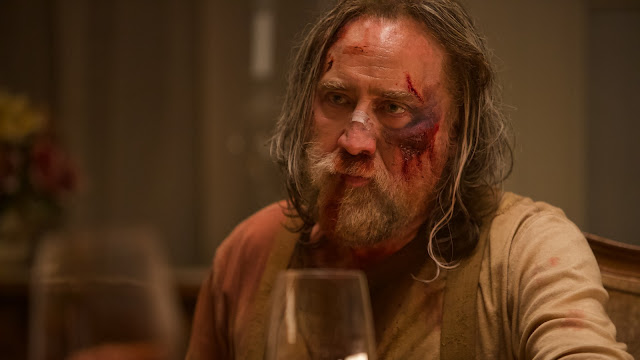
It's easy to forget in the midst of all the memes and questionable role choices that Nicolas Cage is still a great actor. He had his least showy role in ages as Robin Feld, who was once a renowned chef but has since retreated into the Oregon wilderness to make a meager living foraging for truffles and selling them to a supplier (Alex Wolff). Robin's only friend is his beloved pig and he is forced to re-enter society when the animal is stolen one night. It's the setup for a typical revenge drama, but this movie is actually a pointed deconstruction of those movies, particularly John Wick. Robin has no intention to use violence to get the pig back - instead he relies on his connections in the Portland restaurant scene. While his time in isolation has seemingly robbed him of social graces (if he had them to begin with), it has also left him clear-eyed about how people deny themselves happiness because they think they need to in order to succeed. Defying expectations to the very end, it’s a surprisingly poetic drama about trying to hold on to what gives your life meaning.
5. Procession
Six middle-aged men who were abused by children by Catholic priests are approached by the filmmakers and offered a chance to collaborate on short films about their experiences. It’s similar to the premise of The Act of Killing, although in this case the subjects are far more sympathetic. The scenes they come up approach similar themes in many different ways, offering insights about healing from trauma that aren’t necessarily specific to the abuses of the church. Which approach the viewer finds the most memorable is something of a rorschach test (it will surprise nobody who knows me that my favorite was the scene where a man restages his meeting with a dismissive Catholic oversight committee and gives himself the chance to deliver the profane rant they deserved). It’s often as emotionally brutal as anyone would expect but there are also moments of surprisingly cathartic laughter and moments of personal triumph. Opening up past wounds for the sake of helping future victims is a truly heroic act.

4. Mass
Six years after a school shooting, four parents gather in a church to discuss the impact it has had on their lives. You could hardly blame any viewer for not wanting to engage with this subject matter, but nobody who decides to watch it will forget its emotional impact. Jason Isaacs and Martha Plimpton play the parents of a teenage boy who was shot, while Ann Dowd and Reed Birney play the parents of the teenage boy who did the shooting. The acting from all four leads is truly awe-inspiring as the pained politeness gradually gives way to the deep hurt and frustration underneath. For anyone curious, the madness of American gun culture is discussed but only briefly. It focuses on what’s missing from most of the angry debates and commentary about the endless cycle of violence - a reckoning with the awful pain of people who have encountered it firsthand, the people who can’t go back to their regular lives when a two hour movie ends.

3. Mad God
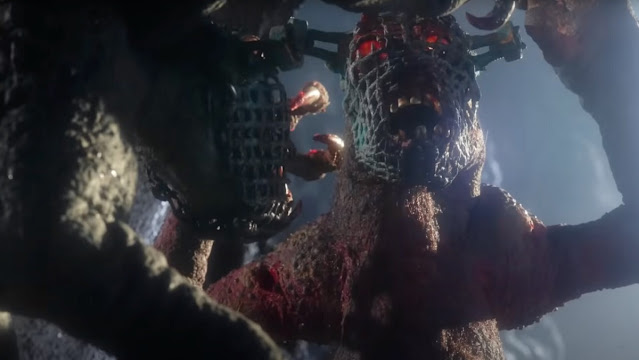
Going back to the stop-motion animation, here is a very different approach to the style. The special effects maestro and animator Phil Tippett is best known for his work on other people's movies, particularly the original Star Wars trilogy. However, he also spent 30 years working sporadically on this engrossing stop-motion film, one that may be just too ghastly and uncompromising for anyone not deeply invested in animation as a medium. A man in a gas mask descends into a vast industrial hellscape, encountering all manner of grotesque creatures as he carries out his ambiguous mission. There is no dialogue and not much of a plot, either - the whole thing operates with the bizarre logic of a nightmare. The production design and character movements are peerless. In a few scenes, real-life actors are worked into the setting but you’ll find yourself questioning whether this is just more top-notch animation. The various depictions of cruelty and squalor on display might make a viewer concerned for Tippett’s state of mind, but nobody will be able to deny his mastery of this art form.

2. Censor
A fascinating, ambitious movie that takes place during the United Kingdom’s “video nasties” panic of the 1980s, when dozens of crudely violent slashers and Italian cannibal films snuck past oversight boards thanks to new and unregulated VHS technology. I've been fascinated by this era for a long time and it was really exciting to see a movie engage with it so deeply. Enid (Niamh Algar) is one of these censors, dutifully removing the most objectionable bits from movies with titles like "Rat Brothel" and "Cannibal Carnage." She’s able to brush most of these movies off until she watches one that reminds her of the disappearance of her younger sister, an event she was present for but has no memory of. In the meantime, her parents have "censored" it for her sake, ignoring her pleas for more details and getting angry with her for trying to figure things out herself.

The storyline begins to unravel along with Enid’s mind and the movie makes a compelling case that censorship, whether performed by an office worker, your parents, or even your own mind, is ultimately harmful because it allows people to react to the upsetting parts of life by investing in a reality that simply doesn’t exist and leaves them unable to cope with the awful truth when it can no longer be ignored. The idea is more politically relevant than the creators likely could have imagined in a year when the public's refusal to accept the reality of everything from an election to the true dangers of a killer plague (and the media figures who capitalize on their troubled feelings by feeding them the false information they crave) led to devastating consequences.

1. Beyond the Infinite Two Minutes
An ingenious low-budget Japanese film that makes the most of its wacky premise while also shooting the entire story in what appears to be a single take. Kato (Kazunari Tosa) is a café owner who discovers that the closed circuit camera feed connected to his computer is actually some sort of two-way time mirror with a two-minute delay. In other words - if you are watching the café from his upstairs apartment, you are looking two minutes into the future. If you are watching the apartment from the café, you are looking two minutes into the past. It’s mind-blowing stuff, but the cast gets the gist of it quickly and soon Kato’s employees and friends are doing all sorts of humorous tricks. Naturally, they get a bit too cavalier with time and space and end up getting into trouble. The enthusiasm of the cast is infectious and what makes the movie really special is that it has a lovely warmth to go along with its intelligence. It does more with its tiny budget than blockbusters that spend obscene amounts of money but I don't think that was what moved me to put it at number 1. For its very brief running time (70 minutes, so efficient!), this movie made me feel like everything was okay. In this joyless, hopeless world, that is truly remarkable.

11. Last Night in Soho
12. Worth
13. Belfast
14. Zola
15. Bad Trip
16. The Girl Who Got Away
17. The Green Knight
18. Come True
19. Masking Threshold
20. The Found Footage Phenomenon

In my highly unscientific evaluation, 2021 sucked about 5 percent less than 2020. Let's keep up that progress, everyone!