Showing posts with label Politics. Show all posts

Sunday, October 14, 2018

What if Donald Trump nominated Michael Myers to the Supreme Court?

The following is a parody...well, barely.

Wolf Blitzer: Welcome back to the Situation Room, I’m Wolf Blitzer. Washington is still reeling from the shocking news of Supreme Court Justice Brett Kavanaugh’s sudden death from alcohol poisoning. Earlier today, President Trump announced his nominee to replace him - Michael Myers.

[show picture]

Blitzer: Now we’re getting word that Judge Myers is being accused of attempted murder. A woman named Laurie Strode claims that Myers tried to kill her with a butcher knife on Halloween night 40 years ago while she was babysitting. When asked for his reaction, Judge Myers said…nothing. In fact, nobody has ever heard him speak. For more on these shocking developments, we’re joined by two members of the United States Senate. Majority Leader and professional hypocrite Mitch McConnell of Kentucky…

McConnell: Afternoon, Wolf.

Blitzer:…and self-aggrandizing hack Susan Collins of Maine.

Collins: Thank you. [turns to camera] Don’t change the channel! In just a few minutes I will reveal how I plan to vote!

Blitzer: So what do you two make of these allegations? Do you believe Michael Myers really chased Laurie Strode around with a knife?

McConnell: Absolutely not. Why are we damaging this man’s reputation over allegations that are 40 years old? There were many babysitters in her neighborhood that night and none have come forward to corroborate this harebrained story.

Blitzer: For the sake of accuracy, Senator, I believe that’s because they were all murdered that night.

McConnell: Seems awfully convenient.

Blitzer: What about the children she was babysitting? Has anyone taken their testimony?

McConnell: Well, uh, I’ll leave that to the FBI. They’ve just started their investigation, which will take no longer than five minutes.

Blitzer: I see. And Senator Collins, how have these new revelations affected your decision?

Collins: Can I get a drum roll?

Blitzer: ….I guess. [drum roll starts]

Collins: 10…9…8…7…6…5…4…3…2…1…here we go! I am going to vote to…..confirm Judge Myers!

Blitzer: So you don’t believe the allegations?

Collins: No, I believe Miss Strode.

Blitzer: But how can you believe both of them? That makes no sense. Somebody must be lying.

Collins: Well, not so fast. Judge Myers hasn’t commented on the matter at all. He is a very dignified man who won’t get dragged through the mud. I expect that he won’t speak much from the bench, much like Judge Thomas. However, Miss Strode is likely telling the truth except she has the wrong Michael Myers. Maybe we should be looking into Michael Myers the actor!

Blitzer: So you think the actor Mike Myers is the one who attacked her?

Collins: It would explain a lot, wouldn’t it?

Blitzer: Don’t either of you think it would be a good idea to postpone the Senate vote to make time for a real investigation of these charges?

McConnell: That will not happen. If we allow the Democrats to ambush us with this nonsense, no man who ever chased a woman around with a bladed weapon will be safe. We all lived through the 70s and 80s so let’s not pretend we don’t have our own babysitter corpses in the closet ready to pop out and scare someone who’s trying to hide from us. A lot of women are saying things like “no” and “please stop,” but we’re just going to ignore what they want and push this thing right through.

Blitzer: Do you think history will look favorably on the Senate if they dismiss such a serious allegation of violent assault?

McConnell: Don’t lose perspective. I’ll tell you what the real violent assault is - getting yelled at by women when you’re trying to walk through an airport.

Blitzer: That happened to you recently, didn’t it?

McConnell: Yes. They were shouting “do you always turn your back on women?” Of course I don’t. I’m perfectly happy to traumatize them to their faces.

Blitzer: One last question. If you were to find proof beyond any doubt that Judge Myers tried to kill Laurie Strode, would it affect your vote?

McConnell: No, but it would really trigger the libs.

Blitzer: Thank you, Senators. When we come back, live coverage of President Trump’s meeting with Freddy Krueger to discuss the economic anxieties of working class dream demons. Stay with us.

Saturday, June 9, 2018

Mental Illness and Quality of Life in America

Disclaimer

If you read this blog for awards season analysis and other movie commentary (if you read it at all), this post might come as something of a surprise. When I first started writing here eleven years ago, I imagined that there would be a fair amount of political entries. It didn't take me very long to learn how exhausting that really is. Politics on the internet is a constant parade of various outrages and overblown non-news stories and I'm not sure how anyone with any sort of real-life schedule is supposed to "react" to all of them. I put that stuff aside to keep the focus on what I thought I did pretty well, stuff like Oscar predictions and looking back on childhood shows with an adult's point of view. Sometimes, though, I just have to get something out and that's basically what this is. Not a rant exactly, more like a structured essay that gives me a chance to express some feelings I've been stewing about for a few years now. If that's not your thing, I understand. Oh, just one more note - I've been working on this for so long that the bulk of it was actually written before Trump was elected. I'm going to try and keep him out of it, especially since he's a particularly vile symptom rather than the disease. But with him around, basically take everything here and multiply it by ten.

Preface

I've seen quite a few articles about how anxiety and depression is rising in America, particularly with young people. As I read them, I often slowly nod my head in agreement since the observations of the journalist line up with my own observations in my personal and professional life. I honestly feel like the majority of people I know struggle with anxiety (and possibly depression, although that's harder to spot). Medical science says that people are born with a certain level of susceptibility to these feelings and that leads to a sense of inevitability that compresses the conversation into variations on "What can these individuals do to help themselves?" This is all well and good, but if we really are seeing more anxiety and depression than we used to, I think we have to talk about the bigger picture as well.

The "big picture" is usually invoked as a way to cheer someone up, as in "You had a bad day today but in the big picture, your life is going pretty well!" That's fine but I don't hear people talk about how if the picture gets big enough, it might make you feel worse. I don't think you can talk about these prominent mental conditions in America without talking about life in America. Quality of life in America to be more specific, which is often compromised by our country's obsession with productivity and profit. It's true that some people are more prone to depression or anxiety than others. That doesn't mean we always need to be making it so goddamn easy to feel that. Right now, America is facilitating anxiety and depression, keeping it going the same way my phone charger didn't create my phone but keeps it at 100% power. We've got to do better.

Obviously, there are a lot of directions we can go with this - poverty, discrimination, police brutality, war, environmental blight, our longtime tradition of constant mass shootings, border patrols re-enacting scenes from Sophie's Choice with migrant families at the Mexican border, etc. If I was younger, I probably would have tried to hit all of them with an essay like this. These days, I think a "jack of all trades" approach to advocacy leads to inevitable instances of sounding presumptuous and/or uninformed. That said, while all of these issues don't impact everyone directly, they do contribute to an overall portrait of despair that can do more damage to someone's mental state that we usually give credit for. I'm narrowing my focus to a few loosely connected issues that relate to a person's relationship with their career as well as obstacles in the way of getting the necessary help, which are topics I have plenty of personal experience with. Those who have had conversations with me in real life will probably find that much of this is familiar, but I never get the chance to tie it all together like this. Four paragraphs is a long enough introduction, I'd say. Let's start.

The Broken Bargain

Since the economy went south, it's become very common to hear things like "you should be happy to even have a job right now with the economy the way it is." Yet when you consider how so many people in America are treated by their employers, gratitude is hardly the first emotion that comes to mind.

People talk about full-time work as if there is no downside to it. But there is. There always has been. Giving up 40 hours of your life every week for years is a huge sacrifice. That's time that could be spent with your family, out in a park, doing something creative or just quiet reflection. Time is not a renewable resource. When it's gone, we're gone. The whole idea behind it is that you get paid enough to sustain yourself and enjoy the time that you're not at work. The exchange of time for money - this is a bargain that is supposed to sustain contemporary society, but it's broken.

We've lost respect for the time that people give up when they spend countless hours in an office. America's $7.25/hour minimum wage is an insult, not even close to anything resembling proper compensation for giving up that time. To make up for this, many people have taken on additional jobs, giving up even more time in exchange for earning just enough to stave off hunger for another week. I don't have enough negative adjectives to describe this situation - unjust, heinous, despicable, shameful, horrifying, take your pick. Politicians like to say "Nobody who works full-time should live in poverty." I'd prefer to say that nobody at all should live in poverty, but yes it's particularly insulting when you're also working your ass off. But there's more to quality of life than just avoiding poverty. People who are giving up that much time should make enough to pay their bills, feed their families, and have enough left over for something special every so often. A trip to a restaurant, a family vacation, an opportunity to enjoy life. Because if you can't do that, what's the point of working? What's the point of even being alive?

Sometimes you hear people say that the minimum wage should be kept low in order to encourage fast-food workers and other people at "dead-end" jobs to strive for something better. But those jobs will always exist because there's always a need for them, so someone will have to do them. Not everyone has the resume to move on to something more respectable (and fewer will in the future since higher education has gotten so laughably unaffordable), so is it really right to sentence these people to lives full of struggle just for working jobs that are always necessary and yet seen by the public as disreputable? Fast food places are everywhere so there's obviously high demand for them. Why have we collectively decided that the people who serve the food deserve to be paid so poorly?

This issue is at the heart of the "income inequality" concept, which I have to admit is a term I'm not a big fan of. Not because I don't feel it's a problem, it obviously is, but because I think the wording is ripe for distortion. It's too easy for pundits to get overly defensive and sound the alarm about the plot to bring everyone's wages to the same level. We don't actually need a society where everyone gets paid the same exact amount of money. We just need to make sure nobody gets screwed. The bottom of the ladder, so to speak, should still yield enough money to live a decent life. Once again, I'm not saying everyone needs to be able to get sports cars and mansions and luxuries of that nature, but they should be able to live comfortably with opportunities to create those memories that make life worthwhile.

Real Family Values

The fact that the phrase "family values" is almost exclusively used in American politics as a warped justification for various types of bigotry or moral censorship is a sad commentary on our national conversation in general. We shouldn't have to cringe when our leaders use that phrase, because actual family values are important and not given much respect in this country's work culture. The most glaringly obvious example is that new parents are still not guaranteed any paid time off to care for their newborn children. We love to heap praise on mothers and fathers when their respective parent-themed holidays roll around, but when it counts, it's just talk.

In the interest of honesty, I should note that this is personal. When I became a father, I was shocked and deeply discouraged by how my employer behaved. They couldn't legally deny me time off, but they tried everything to make the process as inconvenient and unhelpful as possible. I'm not going to get into all the details here, I've told the story many many times. I don't mind telling it since it has that rare 100% success rate of getting a sympathetic response, which I've never been accustomed to when talking about my problems. The unanimous solidarity people express when hearing that story, regardless of age, background or politics, makes me wonder why our laws are so behind on this issue because clearly a decent chunk of our people are not. But make no mistake, what America offers is abysmal compared to the rest of the world. Even Iran, a country we always paint as full of backwards-ass fundamentalist nutbars, will give you 12 weeks of paid family leave.

The Family and Medical Leave Act (FMLA) was passed about 25 years ago and provides 12 weeks of unpaid leave to new parents and guarantees that you will have a job when you return. I got to become very familiar with this law during my own experiences, particularly its limitations. Various exceptions within the legislation mean that a huge chunk of the workforce (sometimes estimated as high as 50 percent) is not eligible for anything. But beyond that, unpaid leave creates a very different dynamic than paid leave. Sure you can keep your job, but you are being punished for taking the time off by having your income cut off. Have you ever bought baby formula? How about diapers? It's expensive. Not the best time to be short on money. It's supposed to be an incentive to have children, but instead it becomes an incentive to go back to work earlier. That doesn't strike me as an accident.

I've seen a few articles reporting that a significant percentage of people my age and younger don't intend to have kids. If they just don't want to, that's all well and good. Being a parent is a ton of work that shouldn't be forced on anyone who doesn't truly want children. However, the most commonly cited reason is not a lack of desire but financial insecurity. They're afraid that they can't afford it or that it will compromise their careers and they're totally justified in those fears. I've seen a lot of tone deaf articles whining about not enough babies being produced so what's holding us back from doing something significant about it? Well, I read one article that speculated that opposition to paid family leave is rooted in opposition to women working at all. While I'm sure that's the motivation for a decent amount of people in Congress, I think most of it is just cold hard capitalism. Too many employers are worried that paid family leave could cause them to miss out on some potential money. As far as America is concerned, there is no greater good that's good enough to risk such a horrible fate.

So that's the sad state we find ourselves in. Productivity and profit is more important than the continuation of society itself. Bringing the next generation into the world, already challenging on its own, is turned into a major financial risk for thousands of families out there. Speaking from experience, I can tell you this sort of thing is very bad for your mental health. It poisoned my mood for the few months I spent at my job afterwards and even now, it still haunts me. I think of these lyrics from Eminem's "Like Toy Soldiers" - Even though the battle was won/I feel like we lost it/Spent so much energy on it/Honestly, now I'm exhausted/But I'm so caught up in it I almost feel like I'm the one who caused it. But I didn't. I was just trying to be a good father until my job got in the way. We won't shut up about "family values" and yet we don't actually value families. The irony is very cruel indeed.


The One Great Sight

"Wildness is a necessity. I am losing previous days. I am degenerating into a machine for making money. I am learning nothing in this trivial world of men. I must get out into the mountains and hear the news."
-John Muir


Quick note: We don't have paid sick leave either. This one really boggles the mind. Do you want a waiter serving your food at a restaurant to have the flu? Didn't think so. This is a much easier sell than family leave and yet for some ungodly reason, we still don't have it.

Vacation time...now that's a hard sell. Most people agree that taking time off to get healthy or to care for a newborn child are still practical choices. But taking time off to relax? To see a beautiful place? To enjoy uninterrupted time with your family? This isn't seen by employers or politicians as smart use of time that could be spent making other people money. This is a distinctly American eccentricity. We've been called "The No Vacation Nation" by the Center of Economic and Policy Research. There are benevolent employers out there who grant paid vacation time to their employees, but the fact that you're at the mercy of your employer when it comes to this issue is what bothers me.

Our obnoxious cultural disdain for enjoying life in non work-related ways can be summed up by a car commercial from a while back. I'm not gonna give a link to it because they can go fuck themselves. It showed an over-privileged white douchebag walking around his house insulting the French for taking six weeks of vacation each year and praising America for using our limited time on the planet making great cars instead. Yeah, I'm sure the French are sulking around Europe during their long vacations because they don't make cars as cool as ours. However, that wasn't the worst part of this commercial. The most insidious part was at the end, when the pitchman said that "only taking two weeks off in August" was worth it for a nice car. This presents two weeks of vacation as the default in America, but it isn't. The default is nothing. A large portion of people working in this country have no time off whatsoever.

Making the whole situation even stranger is that despite our reluctance to guarantee vacation time to our citizens, we still have the federal government taking care of millions of acres of protected land - our National Parks. They're meant to preserve beautiful places for our enjoyment, but these days they're used more by foreign tourists. You know what I'm talking about if you've been to one - most people there are from Germany or Canada or China or Japan. In fact, I've even seen Chinese-speaking tourists at Walden Pond. You've got to have a lot of time off to make the trip from China to Massachusetts...and be really into Thoreau. The parks are one of the greatest things America ever did. Most of the world has followed suit, but why are we not prouder that we did it first? Why do we take more pride in how efficiently we can destroy other nations rather than the beauty of where we live? I actually feel patriotic when I'm in a national park. Yeah, me. The lack of access to television and the internet probably helps with that.

There was a time when our leaders found them patriotic as well. President Theodore Roosevelt, who did more for this cause than anyone else to hold the position, once described the Grand Canyon as "the one great sight that every American should see." But good luck making good on this if you don't already live near it and don't have any vacation time. Trying to do it in a weekend would be more stressful than your job. I saw a particularly dense article (this is becoming a running theme) theorizing why more minorities in America don't go to the parks. The writer wondered if it was because there was no wi-fi. Someone actually got paid to suggest that but I'll tell you the truth for free. They don't go for the same reason a sizable portion of white people don't go - not enough money, not enough time off.

I understand that parks aren't necessarily where everyone wants to go, but whatever you enjoy doing that isn't strictly profitable...you should have time for that without having to risk your financial security. It's not unreasonable to ask for that, no matter what a brain dead commercial might tell you.

Good Help is Hard to Find

"I tell ya, I get no respect! I get no respect at all!"
-Rodney Dangerfield


If you've read everything up to this point and are on board...thanks! But this is the part you're not going to like. Still, it needs to be said. More often than not, the way people react to depression and the people who have it is the opposite of help.

This is the sad, awful truth about living with depression - being alive is hard. It doesn't even have to be a bad day. The simple state of being alive is hard. When you consider the deaths of beloved, successful people like Robin Williams, Chris Cornell or Anthony Bourdain, people who weren't dealing with any of the stuff I've been going on about, you understand just how ruthless depression is. I've got kids running around, I have to drag myself out of bed every day but it's hard when your energy level is so often depleted. Sometimes a simple thing like bending over to pick something up becomes tiring. Some days I panic if people ask too many questions because of the effort required to answer them all. Tasks that most people would complete without a second thought often require me to spend a while shoring up the energy and willpower. People just don't want to hear this. They hate the idea of someone having an "excuse" not to be overly productive or hardworking. It's simply not acceptable. So they tend to react to people who are mentally ill with passive-aggressive glurge or sometimes outright hostility. Want some examples?

"Stop being so selfish!"

You know what somebody who is struggling is going to think after you say this? Here's a hint, it's not "Wow, he's right!" More like "Well, I won't be opening up about my struggles to that person again." If that's what you wanted (and something tells me it just might be), then mission accomplished. Just don't start going on about how "I had no idea anything was wrong."

One of the worst parts of depression or any mental illness is the shame, that awful guilt about being a burden to everyone around you. Unfortunately, a lot of people feel like the proper thing to do is to pile on even more shame. They think it's about your well-being, but it's not. It's about what you can give them. They'll call you selfish for taking something away from them, never mind the hurt of what they take from you.

"You're not entitled to a living wage/sick time/vacation time/family leave/anything that might give you the impression that you're a worthwhile human being!"

Ah, the E-word. Where would assholes be without it? The thing is...it cuts both ways. You're not entitled to borderline free labor from employees who express nothing but happiness about getting screwed over! See how easy that is?

"Smiling is the best anti-depressant!"

Wait, isn't this a quote from The Stepford Wives? No? This is a thing people actually say? Wow. Well, it's inaccurate in addition to being incredibly stupid.

Otherwise well-meaning people might interpret this stuff as "tough love," but frankly nothing about it feels loving. We're all getting called out constantly by the culture around us and to be treated like this by our loved ones does not help. People who are a little more savvy will advise you to get professional help. They're right but it's not always as simple as it sounds.

It's become routine for journalists to provide the number for the suicide hotline at some point in their coverage. It's a thoughtful idea but it's not a magic bullet. The hotline's go-to move is to send you to the ER, because that's the surest bet that you'll remain alive once they're off the phone. But the suicide hotline doesn't pay that ER bill. Not only that, visits to a therapist add up. Medication adds up.

And so we've gotten to the most literal example of mental health being compromised by the whims of business and commerce. As long as we treat mental health care (or any health care, really) like a big screen TV or some other luxury, this won't stop. You can keep pushing people into darker corners, but you can't make them happy about it. We're all going to become very familiar with that reality. When the next shooting comes around (should be any day now, it's been a few weeks) and people start reprising their empty declarations about "mental health," maybe think about what it would actually take to address that instead of just using it to fill airtime.

Conclusion

This rise in anxiety and depression that baffles so many otherwise intelligent people is inextricably linked to a society that doesn't see its citizens as actual people, but economic units to be plugged at their lowest possible price into a ruthless market that provides the greatest possible returns on investment to the wealthy few...all with no thought to the resulting human resentment and misery.

It may be tempting to think that it's not worth even trying. If depression is so bad, is it even possible to do anything? The answer is yes. Some people are lucky enough to have their illnesses go into remission for a long time, sometimes even years. Many other people will always be dealing with them at least a little bit. Regardless, moments of happiness and joy are still possible. It can be anything from standing on top of Glacier Point to hearing "What is Love" start playing over the intercom while you're grocery shopping (I like that, anyway). More than anything else, hope for more moments like these is what keeps people alive. So maybe don't make it so difficult to experience them?

It's just a thought.

Tuesday, May 16, 2017

Don't Drink the Water

(Part II of a fanfiction/political commentary project)

This was not how John Quail expected to end his workday. He was sitting in a fairly small plane on the way to Palm Beach, where the President of the United States and his staff had asked for a meeting. It had started three days earlier, when Quail and some of his fellow agents prepared a report on the Reaper to the White House. Everything they suspected about the killer, including his use of the Death Note, was in the report...except for one omission. Quail decided to leave out the fact that the cause of death was up to the writer, with the default outcome being a heart attack. Instead, he wrote that a heart attack was the only one the Death Note could kill someone. Those who remembered his recent briefing about the Reaper might contradict the report, but this particular presidential administration didn't seem to be interested in any sort of research.

Nobody yet knew that Quail himself was the Reaper, except for his wife Jennifer, who shared his conviction that the Death Note needed to be used to ensure the safety and future of their daughter as well as the rest of America's most vulnerable citizens. Leaving the full capacity of the notebook out of the report gave him an option of going after a target without the death being seen as an act of the Reaper. After what the media was calling the "Health Care Massacre," (which struck him as a decent name for the legislation itself), any heart attack suffered by a prominent figure would likely be attributed to the Reaper. That could yet be useful, but he was also exploring the possibility of trying to influence public policy without having to call upon his murderous alter ego.

Several hours before the had boarded the plane, he was informed by his superior that the President's staff had reviewed the report and asked for a meeting with the Bureau's foremost authority on the Reaper. When Quail volunteered to take a walk over to the White House, he was told he was actually supposed to meet the President at Mar-a-Lago, his estate and private club in Florida. The timing was interesting as the White House had been swarmed with scandal during the past few days, even by the standards of the current administration. The sudden firing of Bureau Director James Comey had made the atmosphere at work even more chaotic, quickly taking the public's attention away from the Reaper, who had yet to strike following the deaths in Congress. The media had lost some interest as well, other than the occasional speculative report on who might be the next to die. Quail hadn't decided yet, but took the coverage under advisement.

In the initial hysteria following the Health Care Massacre, one constant point of discussion was whether Trump would be the next victim. Quail wasn't as sold on the idea as many of the more outspoken liberal commentators. He found the man's public persona as off-putting as anyone else, but the question of succession was an issue. The loss of the President would promote the Vice-President, then the Speaker of the House, then the President of the Senate, followed by the various cabinet officials. None of these people struck him as ideal occupants of the Oval Office and he would probably have to wipe out about two dozen people before he got an acceptable outcome. Such a thing was possible, but Quail was growing less enthusiastic about using the Death Note's power.

He remained haunted by the night Dominic had showed up at his condo, having figured out the truth simply from the drawing he left at the bottom of his letter to the New York Times. Quail cursed himself for his foolishness. How could he have forgotten that he used to decorate his notes with that same insignia during training? He had sent Dominic to his death and hadn't slept well since. A decent man like his fellow agent was not the kind of target he had imagined when he decided to take the Death Note out of that drawer. It was easy to rationalize the decision as necessary for the greater good, but that did little to soothe his guilt. Not helping matters was the notepad found in Dominic's car by the police, on which he had drawn the insignia himself. When news of the suicide broke, several of his agents had asked Quail if he believed Dominic himself was the Reaper and had killed himself out of guilt. Despite how easy it would have been to pin the blame for the murders on a dead man, he declined to do so, instead speculating (correctly) that he had gotten too close to the truth and had been removed before he had a chance to share whatever he had learned about the case.

When the plane landed in Palm Beach, Quail found a group of men in suits waiting for him inside the airport. Most appeared to be Secret Service agents, but he recognized one as Trump's son-in-law.

"Nice to meet you, Agent Quail. I'm Jared."

The group made their way to a limousine and arrived at the property after a brief drive. Quail had never seen anything so opulent in his life, the massive estate was all marble, stone and gold trim and looked especially beautiful now that the sun had begun to set.

"First time seeing it, huh?"

Quail nodded and his host continued. "Most of the senior staff is here. Everyone was very interested to hear what you had to say. We'll be meeting in the main dining hall."

The dining hall was surrounded by gold pillars as chandeliers glimmered overhead. Quail had been to the White House before but it looked quaint compared to this. Was he on his way to meet a President or an Emperor? Finally he was led to a table full of people he had seen on the news countless times. President Donald Trump, Vice-President Mike Pence, the president's daughter Ivanka, and the White House adviser Reince Priebus.

"What do you think of Mar-a-Lago?" Trump asked as Quail and Jared took their seats. "Isn't it the most beautiful place you've ever seen? Everyone's saying it's terrific."

"It's overwhelming, sir."

"I guess it would be if I were in your shoes. I'm used to it by now, I'm very rich. Anyway, we read your report on the Reaper. Very fascinating stuff. Very fascinating. Do you know where I could get one of these death notebooks? Could I get one? Seems like a useful thing for a President to have, don't you think? Some people in the media would suddenly be off the air. I'm just kidding, of course. But maybe I'm not."

Quail was momentarily disoriented by the flurry of disjointed words he had just heard. He felt someone's hand gently resting on his arm.

"Agent Quail, do you believe we are in danger?" Ivanka asked.

"Well, I need to be honest with you, Mrs. Trump."

"Ivanka, please."

"Anyone in the public eye is potentially in danger. If our theory is accurate, all the Reaper needs is a name. He's been quiet since the Health Care Massacre but the description of his motives he gave in the letter to the Times suggests that he may act again at some point."

"If his goal was to kill our health care bill, it worked." Priebus said. "The Senate is terrified of this guy. They won't even discuss the issue in public, let alone vote on the bill. I guess we're stuck with Obamacare for a while. My question, do you have any leads on who it is?"

"I bet it's Obama," Trump interrupted. "It makes sense. Everyone's saying that. He spies on me, you know. He watches me through the microwave. He thinks I don't know he's doing it, but I do."

"Well, I don't personally believe it's a politician," Quail replied. "I suspect it's an ordinary citizen who is fed up."

An unfamiliar voice rang out. "Some globalist Jew cuck, I bet." Quail turned to see a pale, disheveled man at the next table, slumped forward and holding an open bottle of Jack Daniels in one hand.

"Don't mind him," Jared said.

"So all we know about this person is that they are a Democrat?" Pence asked.

"I'm not quite ready to make assumptions about party registration," Quail answered. "It could be a Democrat, or it could just be someone concerned about the survival of those who are vulnerable."

Pence arched his eyebrow and clearly did not miss the jab embedded in that comment. It seemed to go right over Trump's head as he spoke again. "Why would someone like that go after the Health Care bill? It's a great plan. It covers everyone. Everyone says it's terrific."

Trump noticed the awkward silence at the table. "It does cover everyone, doesn't it?"

"Everyone who needs to be covered is covered, sir," Pence said, as if he were talking to a toddler.

"So is this how we're going to run the country now?" Priebus asked. "Our whole legislative process at the mercy of some serial killer with a magic notebook? It's ridiculous. There's got to be something we can do."

"I do have a suggestion," Quail said. This was the key moment he had been waiting for. "It might help to start something new, something that would help people. People who aren't rich, I mean. Something that the Reaper would be hesitant to disrupt by killing anyone else.'

"Any ideas?" Jared asked.

"There are a few ways you could go with this, but my first thought was the contaminated water in Flint."

"Flint?" Trump asked. "That's in Michigan, right? People love me there. Nobody thought I could win Michigan. I'm the first Republican to win there in 400 years. Hey, do you want an Election Night map? I carry them around all the time. Here, have one."

"I've...um, seen the map, Mr. President."

"Okay," Trump said. "Just let me know if you want one."

Pence spoke up again. "There is work going on to fix the issues in Flint, Agent Quail. Congress allocated some resources to the issue shortly before the massacre."

"The people there have still been without drinkable water for three years now," Quail said. "Anyway, it's just my idea. You all will decide, of course."

"Hey, do you want to be FBI Director?" Trump suddenly asked. "We need a new FBI Director. You seem pretty smart and you haven't said anything about Russia."

"That's nice of you to offer, sir, but I would...uh, prefer to focus on this investigation. That might be hard with so much extra responsibility."

The waiter came to take everyone's order and Quail learned it was Seafood Night at the club. After being assured by the President multiple times that it was the best seafood in the world, he ordered a lobster which couldn't meet such high expectations. It wasn't bad, but he had been to Maine and there was no comparison. He didn't dare say so, but then again he wouldn't have been able to get a word in either way. Trump dominated the conversation with recaps of his Election Night victory as the others at the table showed remarkable patience. After the meal, Quail bid farewell to the group and was led to the suite where he would be spending the night.

If he lingered a little longer, he might have noticed Pence leaning over towards Priebus and commenting, "That man knows more about this than he's letting on."

****

One week later, Quail gently lowered himself into his bed back at the condo. The baby was finally asleep and it wouldn't take much for him to pass out, but first he wanted to check a few news websites on his phone. Jennifer was next to him reading a paperback with a couple embracing on the cover.

"Any luck?" she asked without looking over.

"No," Quail said. "I guess my suggestion about Flint went in one ear and out the other."

"Should we break out the Death Note? You could write another letter demanding that they do something or else the whole administration dies."

"That's risky," he replied. "If the Reaper started pushing for cleaning up Flint so soon after I suggested it at Mar-a-Lago, they might put two and two together. Well, not Trump but one of the others. Still, there might be another way."

"What's the plan?" she said with a wicked grin. She had a special hatred for Trump and the rest of the Republicans and was clearly enjoying this whole thing much more than her husband.

"Well, the public believes that the Reaper can only kill by inducing heart attack. That gives me some control over the narrative."

He reached over to his nightstand and grabbed the Death Note. As Jennifer leaned over to see, he wrote the name of Michigan's governor, Rick Snyder, who had been remarkably callous about the whole incident. For the cause of death, Quail wrote "contaminated tap water."

"There's some poetic justice," Jennifer said.

Quail nodded. "Not only that, doing it this way means the story isn't about the Reaper. It keeps the focus where it belongs...on the water."

Jennifer was the first to wake up the next day as the baby began crying out for milk. He woke up shortly after and reached for the remote control. The morning news programs did not disappoint. The crawling text at the bottom of the screen read "Breaking News: Governor Rick Snyder dies from poisoned water."

"If you're just joining us, Governor Rick Snyder of Michigan was found dead late last night. Early coroner's reports identify highly contaminated tap water as the cause of death. This issue was previously thought to be confined only to the city of Flint but is now apparently affecting Lansing as well. Moments ago, President Donald Trump announced that his administration would immediately begin working with Michigan officials to contain the contamination before it spreads farther."

"Now that's more like it," Quail said quietly. All it had taken was the death of a rich white guy to get things moving.

He would keep that in mind.

Monday, May 8, 2017

I'm No Different

In all of his years working at the Bureau, Dominic had never seen anything like it. Less than 24 hours after the United States Congress narrowly passed the American Health Care Act, all 217 Republican legislators in favor of the bill were found dead. After the initial chaos had subsided, doctors on the scene determined the cause of death to be a heart attack...for every last one of them. It might not have been a huge surprise for some of the older members given the stress involved before the vote, but there were plenty of younger men (and a smattering of women) who were in otherwise perfect health and seemingly in no danger of cardiac arrest. It defied explanation but there was more to come.

A few hours after the news broke out, one of his fellow agents had reminded everyone of a letter forwarded to them by The New York Times. It had been sent via the postal service a few days earlier by someone who had declared his(or her) intention to kill anyone who voted for the AHCA. Nobody thought much of it at first - these sort of rants were common, especially in these acrimonious times, and this one seemed too outlandish to be a credible threat. The Times had printed it two days after the mass heart attacks and started another round of hysteria. It was now clear to the public that this was done on purpose, somehow. The mainstream news outlets condemned the act and were at a complete loss to explain how it happened. Internet commentators were less careful and openly rejoiced at the death of over 200 politicians who had just voted to strip thousands, if not millions of people of their health coverage. Impromptu block parties had broken out all over the country to celebrate, a strange moment in the history of representative democracy. Each state had its own procedures for replacing a Congressperson who died in office and a flurry of special elections and appointments were causing their own sort of chaos.

Congress would eventually be full again, but the FBI was no closer to figuring out just what the hell had happened in the first place. Agents had combed the Capitol building from top to bottom and come back with nothing. A few reports of suspicious characters, but they turned out to be just eccentric protesters who were as bewildered as everyone else. What had they expected to find in the first place? How could anyone trigger 217 spontaneous heart attacks? Most agents he spoke to suspected poison, but nothing yet corroborated that theory. At the moment, Dominic was on his way to a briefing room to hear from John Quail, one of the Bureau's best criminal profilers. If anyone could figure out a method to this madness, it was him. He and Quail had attended training programs together and Dominic recalled glancing over several times to see him doodling wacky symbols and stick figures in his notepad. He was one of those people who had just been born brilliant while guys like Dominic worked their asses off to get ahead. Quail didn't have a shred of arrogance, however, and the two of them always got along well. He had been absent from the office for months following the birth of his first child. A daughter, Dominic remembered. This was quite a case to come across his desk just as he was getting back into the swing of things.

Everyone found their seats while Quail got his laptop computer set up for a power point presentation. As he checked the connections, the chatter in the room subsided.

"Thanks for coming, everyone."

"Tell us you've got something, Quail," a voice said from the back. "We look like a bunch of Dipsy Doodles right now."

Quail smiled awkwardly. "Well, I might. I've been going over this letter non-stop and I do have a theory that would explain a lot. Still, you're going to have a hard time believing it. Let's start by reading over what was sent to the Times."

Dear Editor,

I will get right to the point. If the American Health Care Act passes Congress, I will kill everyone who votes for it.

I understand you may want to report this threat to the authorities. Do whatever you feel is ethical. It won't help.

I can kill anyone without leaving my home. I've known of this ability for some time now. I've never really wanted to use it, but the continuing violence enacted by this government against its own people has gone too far. I hope the deaths of these representatives will be enough to get them to change course. If not, more will die. As many as necessary until our leaders stop behaving like sociopaths.

After the moment comes, you may get many letters claiming responsibility. None of them will be from me. I will not use email or social media. You will know a letter is from me when it has this insignia drawn at the bottom. I hope the bill is defeated and you are able to discard this letter. But I fear the worst. Perhaps I will contact you again.

-The Reaper


The newspaper had obviously declined to show the actual insignia, since its entire purpose was to separate the true killer from imitators. This was Dominic's first time seeing it. There was something familiar about it. He almost raised his hand, but couldn't piece together where he might have seen that shape before. Quail noticed him briefly and continued on.

"I believe that this 'Reaper' has the Death Note."

There was silence for a few moments. Finally someone said, "What in the hell is the Death Note?"

He was ready for this and advanced the slide show. What looked like a DVD cover was now on the screen.

"Death Note is a popular Japanese cartoon about an enchanted notebook that will kill anyone whose name is written inside it. There's actually an American movie coming out later this year based on it."

Several people in the room burst out laughing.

"Listen to more about how it works before you laugh," Quail continued. "The writer can specify the cause of death but if they do not, the default cause is a heart attack. Just like the letter says, all someone has to do is enter a full name in the book while imagining the person they intend to kill. It can be done from their home and is untraceable."

That got everyone quiet.

"The show is not especially political. The main character, a guy named Light Yagami, mostly targets petty criminals. There are lots of twists and turns and eventually, Light's hubris gets the better of him and he goes down. But this guy, this Reaper, is different. Light wanted people to worship him as some kind of god and dared anyone to try and unmask him. The Reaper is cautious and has a distinct political agenda. You could almost say he's learning from Light's mistakes."

"What is this, Quail?" an older agent asked. "You're trying to tell us that this cartoon is nonfiction? What's next? Is the Reaper going to turn out to be Mickey Mouse?"

"I'm far from the first to speculate about this," he continued. "Not long after the public learned of the deaths, even before the Reaper's letter became public, there were already dozens of memes going around about Light Yagami and the Death Note. I contacted someone at Netflix who told me there had been massive recent interest in the show...as well as a 1970s grindhouse movie called I Spit On Your Grave, but that's neither here nor there."

"That's certainly an...interesting theory," someone else said. "But we need suspects. Do we have any suspects?"

Quail sighed. "That's where it gets really hard. If I'm right, whoever did this doesn't have to be anywhere near Washington, DC. This bill pissed off a lot of people, particularly the threat to people with pre-existing medical conditions. At this point, it may be easier to round up people who don't have a motive."

****

The moon and stars were on full display by the time Dominic finally got to his car that night. Everyone at the Bureau had been extremely busy since this whole thing started, but today was even harder. He had a terrible time focusing on his work after the briefing. All he could think about was that drawing on the New York Times letter. He started the car but hesitated to put it in drive. Instead, he grabbed his notebook and furiously drew the symbol with a black pen sitting in the cup holder. In this rushed form, it looked even more familiar. Suddenly, everything fit together. He started the car and headed for the Potomac.

He would have to drive across the river to find what he was looking for, a condo complex in Arlington that he had only been to once before for an engagement party. Despite the late hour, the demonstrators were still in full swing, with most appearing to be in favor of the mass deaths in Congress. There were a few signs reflecting the other point of view, including one blaming the billionaire George Soros for the whole incident, but most of them had slogans like "Thank God for the Reaper" and "Karma's A Bitch."

As the crow flies, it wasn't a particularly long trip to the condos, but the traffic made for almost a half-hour drive. Finally, Dominic reached the address he had searched for within his archived emails, the invitation to that party that he had received years ago. Hopefully the couple still lived here. As he approached Unit 45, he questioned what exactly he was looking for. It wasn't the time to report any of his suspicions, there wasn't any way to substantiate this hunch. Looking through a window, Dominic saw that all the lights were off except for one lamp. Hopefully the baby was asleep.

To his surprise, the door was slightly open. Something was wrong. He turned around to head back to his car and then he heard it.

"Come on in, Dom. I've been expecting you."

Dominic considered running away, but if everything he had heard today was true, that wouldn't do him a bit of good. He tentatively pushed the door open. John Quail was sitting at a desk in front of a laptop with his back to the door. Upon hearing the door open, he swiveled his chair around to face his guest. A small bassinet was situated next to the desk.

"It was the insignia, wasn't it?" Quail asked. "I hadn't even considered that someone might remember seeing it in my notebook all those years ago...until I saw your face during the briefing. Why didn't you ever tell me you had such a good memory, Dom?"

"So you have this...notebook of death or whatever it is?"

"Death Note," he corrected with a smile. "Would you like to see it?"

As Quail's hand reached for a drawer, Dominic swiftly pulled his gun from his holster and trained it on his colleague. "You keep your hands right where they are! I'll check it out myself later."

"Whatever you say," Quail said with a shrug. "Just try to keep it down, okay? I sent Jennifer to bed cause she was just so tired and I finally got Daisy to go to sleep. I suspect that you have questions."

He hesitated, but curiosity quickly got the better of him. "Where did that thing come from?"

"I just found it in the parking lot one day," Quail answered. "This was the end of April in 2011. I had already seen the show, so I figured it was just some merchandise. You know, like something you might get at Hot Topic. But I took it inside and decided to write down the name of Jen's boss just for fun. He was one of those old bastards who misses the days when you could hit on your employees and nobody would complain. She went to human resources but they didn't do shit. Finally, we put a stop to it when I told him where I worked and threatened to sic the Bureau on him. But the point is I thought I was just messing around. Imagine my shock when she called to tell me the guy had just dropped dead of a heart attack."

"That's six years ago," Dominic said. "What have you been doing with it all this time?"

"Well, being the patriotic civil servant that I am, I decided to use it on Public Enemy Number One."

He was almost speechless. "Osama Bin Laden?"

"Yep," Quail continued, with a slight chuckle. "What I didn't know was that the Navy Seals were just about to raid his compound. They must have stormed in there the next day and been pretty surprised to find him already dead. So of course the story we got was something a little more dramatic. I must have been the only one laughing in the theater during Zero Dark Thirty, looking like a goddamn lunatic."

The baby started to whine softly. "Can I pick her up?" he asked.

Dominic nodded and Quail gently picked up the infant. He rocked her gently back and forth and kept talking. "After that, I decided to rewatch Death Note. It freaked me out to see how corrupted Light Yagami became by the end of the series. I started to think it wasn't right to have this kind of power, so I put it away and didn't touch it for five years, although I came real close to using it on George Zimmerman."

"And then what?" Dominic asked. "The health care thing happened and you couldn't hold back anymore?"

"Almost," Quail said. "Actually, I used it once last year. When I found out Jen was pregnant, a bunch of my friends took me out for drinks. I didn't pay for a single drink that night and I lost count of how many I threw back. We got into talking politics and how the Supreme Court had been screwing us over. I made a joke that someone should take one of the conservative ones out while Obama was still President and then I realized I actually could do it. So I went home, still piss drunk, and wrote Scalia's name in the book cause he seemed like the biggest asshole of the bunch. Holy shit, did that backfire. I didn't think the friggin' Republicans would just leave the seat empty for a whole year."

Dominic felt exasperated. "This is ridiculous. You're like a...murdering Forrest Gump, just accidentally changing the course of history? I suppose you took out Fred Phelps, too?"

He shook his head. "No, after Scalia I took another break. I realized I only had so much control over the consequences of this. I agonized over whether or not to take out Trump, but I kept getting worried that it would throw the election to the Republicans. I never thought that idiot would actually win. I mean for God's sake, he's out there talking about molesting women. That would have destroyed anyone else. The thing is, I still want to believe in America. I keep hoping that our society is strong enough to deal with times like the ones we're living in. But now I realize that even if that's true, it may not be worth the lives that my inaction could cost."

Quail laid the baby back down into the bassinet. "Daisy's nice and healthy, but she might not always be that way. If she ever gets sick, our insurance will probably cover it. But if it's a pre-existing condition and that law passes, who knows? I get paid pretty well at the Bureau and I'm still not sure we'd have enough money if something come up and she wasn't covered. You see where I'm going with this? It's not just the health care either, it's all the guns out there, it's the climate change stuff, it's people getting paid almost nothing, it's drinking water getting poisoned, it's all the police violence. All these problems the government just keeps making worse regardless of who dies. They keep throwing people out to dry like this and pretty soon nobody will need the Death Note to cause death and destruction. In the long run, it's better to try and change things now."

Dominic was done. "Thanks for the story, but now you're coming with me. Get up and head towards the car." Once Quail was inside, he would handcuff him to the steering wheel and go back for the Death Note. He couldn't imagine what the others at the Bureau would think of all this. How would they test the notebook's authenticity without using it?

He meant to keep the gun pointed at Quail, but something was off. His hands fell to his sides although he maintained his hold on the pistol. He couldn't move them again. He opened his mouth to speak to no avail.

"Ah, it must be working," Quail said. "You see, what I didn't mention in the briefing is that you can specify not just the cause of death, but also the time. I wrote your name down as soon as your car pulled in but I wanted to give us some time to talk."

Dominic felt his body turning around and slowly heading towards the door. He strained as hard as he could to fight the impulses, but all it did was slow his movements down.

"You're suddenly having an uncontrollable urge to drive to a secluded area and put a bullet in your mouth. It's supposedly an immediate death with no pain. I'm sorry about this, Dom. You're a good guy and a good agent. But I can't afford to be exposed now. It's a critical time."

Despite using all of his willpower, Dominic was now back outside and still marching stiffly towards the car. Quail followed him.

"You know, any other animal on Earth would kill to protect its young. We may have an advanced society, but we're still animals. I'm no different."

The following morning, police investigating a suspicious vehicle found the corpse of an FBI agent inside. The cause of death was a self-inflicted gunshot wound. On the passenger seat rested a notebook with a scribbled symbol. Maybe one of his colleagues at the FBI would know what it was.

The Beginning

Saturday, January 28, 2017

Oscar Nominee Banned from the Oscars

The Oscar nominations are out and you might think I'm here for another discussion of the Academy's dismal record on race. Not today. In fact, this year's group of nominees is the most diverse in a long time. So diverse that one of the nominees can't attend the ceremony without breaking the law. This is no Polanski situation where he can't show up cause he'll be arrested for a past crime. Asghar Farhadi is a celebrated Iranian director who is currently banned from America thanks to Comrade Trump's ban on citizens and refugees from several countries in the Middle East.

When I first heard that this cold-hearted idea was actually going to become a real thing, banning entire nations of people from the United States (except of course, countries where Trump has business interests like Saudi Arabia and the United Arab Emirates), I didn't expect to hear about it in this context. Farhadi is nominated for Best Foreign Language Film, a category that he won in 2012 for A Separation. I typically don't include that category in my annual predictions, but it's not for a lack of interest. It's just usually not possible for me to see all the nominated films before the Oscars.

The front runner for this year's winner in that category has been a German film called Toni Erdmann, but a scandal like this could easily swing the vote. If Farhadi does win for his new film, The Salesman, what happens at the awards? We'll need someone to go up there and say "Well, the director couldn't be here because our idiot President thinks he's going to blow up the place." And if he does manage to attend, I'm sure he'll have thoughts on the matter. Either way, sounds like a recipe for the leader of the free world to complain on Twitter about how "overrated" Iranian cinema is.

Supposedly someone from the White House said to People magazine that Farhadi might be eligible for some special wavier that would get him through the ban. But if that's true, does it really make them look any better? A director can be an exception but not all the innocent children suffering in Syria right now? What the hell, man?

I don't think this will be the last time the impact of this policy will show up in unexpected places. Taking a shit on millions of people has wide-ranging repercussions. When Farhadi won last time, he made a really beautiful speech about how he believed the people of America and Iran could be friends one day if our respective leaders took it down a notch. I wonder if he still believes that. I never thought I'd be writing an Oscars post like this one.

Sunday, February 8, 2015

The Birth of A Nation - 100 Years Later

In The Harlem Hellfighters, a graphic novel by Max Brooks, a World War I regiment comprised of black soldiers gets unexpected respect in Europe for their bravery on the battlefield. In the midst of this, one character flashes back to his pre-war life as a janitor in a movie theater. In 1915, just a few years before the war began, he had watched a huge white audience embrace a film that would become notorious for its racist content - D.W. Griffith's The Birth of A Nation. Despite putting their lives on the line on behalf of America, these soldiers knew what was waiting for them when they returned home.

When I started my life as a film buff back in high school, I sought out as many classics as I could. Most of us start with the ones that get name-dropped the most when it comes to the history of film - Citizen Kane, Casablanca, The Godfather, Seven Samurai, etc. Another name I had heard quite often was The Birth of a Nation, although I avoided it because of both its massive length (nearly 3.5 hours) and its reputation as a horribly racist movie. Did I really want to spend that much time on something so pernicious? Not really. During my second year at NYU, the choice was made for me.

The silent film course was one of my favorites. I discovered all sorts of brilliant films from that era. We even had a professional musician come in and play the piano accompaniment to the experimental Russian classic Man With A Movie Camera. It left me with a love of silent cinema that continues to this day...and it's a strong love indeed if it could survive a screening of The Birth of A Nation. Most of the students in the class were also seeing it for the first time - perhaps they had avoided it for the same reasons. Movie classes at NYU typically ran 4 hours in order to accommodate a movie screening and a lengthy discussion afterwards, but Birth took up almost the entire class just to watch. The experience was far more memorable than if I had simply watched it alone.

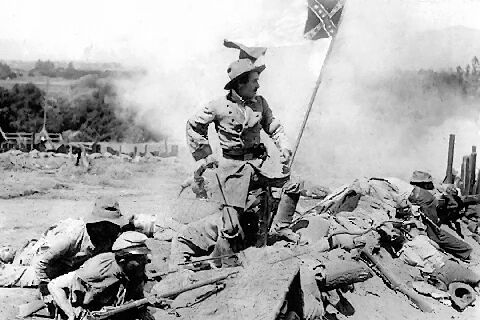
When you go into the movie with knowledge of its reputation, you sit there waiting for the bad stuff to start. It doesn't come right away. At first, it's a Civil War re-enactment played straight with most of the racism relegated to subtext. For example, the movie never acknowledges the Southern attack on Fort Sumter that began the war and treats the conflict as this mysterious force that just came out of nowhere and disrupted everyone's lives. There is also one scene I remember where black onlookers cheered for a Southern victory (Hooray! We're still slaves!). Strangely enough, Abraham Lincoln is treated with a lot of reverence and the scene of his assassination is probably the most impressive moment in the film. Unfortunately, it's also the point at which the movie conjures up this bizarre alternate history of the Reconstruction era where blacks took over the legislature and began to punish the defeated South. A lot of problems here, the biggest being that the movie doesn't believe this history is "alternate."

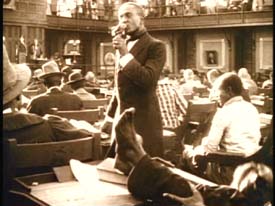
The class had been dead silent through the movie up until this point. I remember when the first gasps came. It was a scene during the election where white people were intimidated into not voting while black officials stuffed the ballot box (A century later, conservatives are still afraid of this). The new black legislators recline in their chairs and put their feet up while guzzling liquor and eating fried chicken. I am not kidding. As viewers, we're meant to be appalled at the lack of respect these men had for a system of government that had endorsed their slavery until just recently. The leader of this radical movement is a half-white/half-black man named Lynch. Not kidding about that either.

On one fateful day, the white hero is depressed about all the black people and sits alone on a tree stump. Suddenly, he sees two children pretending to be ghosts by wearing a white sheet. You can practically see the light bulb appear over his head. Sure enough, the Ku Klux Klan is born and The Birth of a Nation treats them like the goddamn Fellowship of the Ring. They ride across the land in epic scenery shots that were far beyond anything audiences had seen at the time. In the climactic sequence, distressed white people hide inside a shack while hordes of angry black men tear down the walls, a scene that would later become a staple in zombie movies. Contrary to popular belief, D.W. Griffith did not "invent" parallel editing with this sequence, but he did demonstrate how effective it could be in regard to building tension.

Speaking of tension, it hit a fever pitch during my classroom screening during one infamous scene. A young white girl is chased through the woods by a black man and when she gets cornered at the edge of a cliff, jumps to her death rather than risk miscegenation. The obnoxious intertitles tell us not to mourn because she chose death over being defiled. The man is hunted down by the KKK and put on trial. Cut to a horrifying image of a Klan mob restraining him with burning crosses in the background while the screen has a hellish red tint. A brief intertitle pops up. "Guilty." At this point, the class abruptly broke out into laughter. As if there was any doubt how that scene would end. The sheer cognitive dissonance of this sinister image of persecution being presented as an example of righteous justice was too much. The man is killed and the Klan drops his dead body at the front door of the statehouse cause you know, that's just what civilized people do.

Were we assholes for laughing? I don't know. But we had been sitting through this nonsense for two and a half hours and we needed some kind of release. The class continued to laugh at the rest of the film's racist moments because what else can you do at that point? The final scene, of a translucent (and obviously white) Jesus giving an approving smile to everything that has just happened, was the jaw-dropping cherry on top of this shit sundae. We had all expected something pretty bad, but wow. Needless to say, the conversations as we left the classroom were memorable.

The movie was controversial from the start but still a sensation with audiences. President Woodrow Wilson even screened it in the White House. It was used as a recruiting tool for the KKK and is said to have been the inspiration for many spontaneous acts of violence against black citizens. Makes Natural Born Killers look pretty harmless by comparison. D.W. Griffith was bewildered by the accusations of racism (I know, I know) and tried to make amends with another three hour epic, Intolerance, about the struggles of oppressed people through the ages. The Academy Awards wouldn't exist for another 14 years and I'm sure current members are grateful for that, given that an honorary Oscar was given to Al Jolson for his blackface routine in The Jazz Singer during that first round of awards in 1929. Ten years later, the Best Picture Oscar went to Gone With The Wind, a less outwardly offensive film than Birth of a Nation but still infused with that victimized plantation mentality.

Film critics still tie themselves in knots trying to reconcile their feelings about this movie. Never has the difference between a "influential" film and a "good" film been so glaringly apparent. Griffith's innovative techniques and the overall grandiosity of the movie ensured it a permanent place in American film history, a curse on our otherwise impressive contributions to cinema that we brought upon ourselves. As repulsive as it is, I still think anyone seriously interested in film, history and the intersection of the two should watch it. Most of the time, movies about America's sordid racial past depict a conflict between good white people and bad white people in an effort to make us feel better. By showing us the kind of mentality that was mainstream 100 years ago, this movie is actually far more educational.

Tuesday, April 10, 2012

Guest Blogging at NPPM


My brother has started a new music blog called "Neo Post-Progressivecore Music Thoughts" (NPPM) and I thought it would be fun to somtimes throw some stuff on there as a "guest blogger." Given that I spent last summer reviewing 15 albums worth of Iron Maiden material, I definitely have a lot to say about that topic. I don't anticipate cross-posting here so on the off chance you do check this blog regularly, add NPPM (link over to the right) to your routine and you'll be able to keep track.

The first entry is basically about the unsettling realization I had while listening to some new Steel Panther material - their parody of hair metal misogyny was uncomfortably close to real statements being made in the current presidential primary. Not all of my stuff there will be so political - I'd like to write about the process of choosing music for Master of the Wind and also review some albums every so often. I got a new album from one of my favorite bands way early (and legally) but I shouldn't say much until the formal release date...

Finally, here's a handy link to NPPM.

Tuesday, June 24, 2008

Deliver Us From Intellectual Laziness


So if you've been following politics recently, you've no doubt heard about Senator Obama's decision to forego public financing for his general election campaign. It's hardly a surprise, but it is controversial.

The rationale is pretty obvious. His campaign has already raised amazing amounts of money via the internet, mostly smaller donations from millions of different people. Why lock yourself into a set amount of money when it's possible the current method will yield several times that amount?

McCain has committed to public financing, even though there's growing evidence to suggest he's been violating election laws left and right. That, of course, hasn't stopped him from going after Obama on this issue. Hardly a surprise, but I expect that sort of shit from Republicans at this point, and this post isn't about him.

With Obama's decision, it's a classic head vs. heart issue...and this time, I think I'm leaning toward heart. While it is admirable that Obama has struck a chord with so many regular folks giving small private donations, the decision also reeks of the "everything to win" approach that so often made Hillary Clinton off-putting. It seems beneath someone who talks so often about changing America's typical politics.

So I'm disappointed, but I'm obviously going to still vote for the guy. At this point, he would have to bite the head off of a baby before I wouldn't. If Hillary won, I would have (reluctantly) voted for her as well, because after 8 years of Bush, the Republicans need to sit in the corner and have a fucking time out.

So I'm about to put forward a concept which may blow the minds of most political commentators: I'm criticizing a candidate for a particular action....without endorsing his opponent.


Hard to grasp, I know. At least that's the impression I get from a lot of Obama's internet supporters.

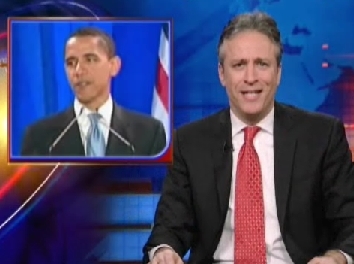
So why is Jon Stewart at the top of this entry? Well, The Daily Show recently had some fun with Obama's decision, and dug up a tape from one of last year's Democratic debates. In it, the moderator asked who among them supported public financing. There's Obama with his hand up. Oops.

And here's the typical response:

From Joseph A. Palermo:
Jon Stewart and The Daily Show should be mindful whenever Obama is the target of their satire that they don't end up regurgitating Republican talking points. The producers should be careful when poking fun at Obama not to provide fuel for the right-wing slime machine. Poke fun at Obama all you want, but do it in a way that also reveals the Republicans' mendacity and hypocrisy.

Okay, that's just lame. Obviously Republicans are not short on either mendacity or hypocrisy, but come on. Every Obama joke has to be balanced by a joke about the Republicans? What if every time someone made fun of Bush, they had to also mock a Democrat? That's stupid. Another annoying element of this is the implication that Stewart has some responsibility to help get Obama elected. No. The guy makes fun of people. That's his job.

During his routine, the normally wild Daily Show crowd was pretty quiet, prompting Stewart to say "It's okay to laugh at him. Really."

It's sad to see normally astute commentators become close-minded zealots just because it's election time. Why can't more of them be like Katie? The other night, she asked me "Did you hear about Obama? That he's a jerk and won't do public financing?" Is that intellectual honesty I smell? I knew there was a reason why I'm gonna marry her.

It is not a "Republican talking point" to note that Obama's position on public financing has changed. Not when a tape like that exists. Again, I don't think it's an egregious offense, just a disappointment. It's not going to change my vote or the vote of most people I know who don't like this turn of events. And I'm not worried this issue is giving the Republicans a chance to dust off the old "flip-flop" accusations, since on that front, McCain still has Obama outnumbered by a ratio of about 20 to 1.

So as we look back on the last eight years, let's not forget one of the main things that made Bush and his supporters so obnoxious - shit like this.

Wednesday, February 27, 2008

kthxbai


If Hillary had left the Democratic race earlier, I would have felt bad for her. I'm past that threshold now, because frankly, I'm tired of having my intelligence insulted by her tone-deaf campaign staff.

See, there's Good Hillary and Bad Hillary. Good Hillary is witty and speaks passionately about helping others. Bad Hillary is condescending and can barely hide how aghast she is that she couldn't just walk into the race and claim the nomination just because her last name was Clinton. Unfortunately, the more Obama wins, the more we see of Bad Hillary, who is just baffled that people are getting excited about her opponent's talk of bringing people back together rather than the fine details of her health care plan.

Don't even get me started on how premature that whole discussion is, by the way. Hate to break it to folks, but the new president, whoever it is, will have to make compromises with a Congress of 400+ people and 100 Senators. Whatever bill that addresses health care won't be a carbon copy of either Hillary or Obama's idea, so focusing so incessantly on that particular issue strikes me as just a waste of time.

After Obama's win in Iowa, the Hillary campaign tried to co-opt the "change" theme. Sorry, someone who's been in the public eye for the better part of the last twenty years can not turn around and cast themselves as a fresh voice. That's not to say that an Obama presidency is the only venue for such change. Had Edwards not dropped out before Super Tuesday, I may have voted for him, because I think he had a lot of the same virtues plus a better chance in the general election. The kind of "change" people are demanding goes a lot deeper than race or gender...it's about some kind of challenge to the system.

I won't go into how the Clinton machine did the impossible during the South Carolina primary (made me dislike Bill Clinton), but the most irritating part of all this is their constant, pathetic attempts to turn everything into a "Scandal." Going over every word Obama's ever said, desperate to get people outraged. Oh my god, Obama used lines from a Deval Patrick speech! Oh my god, Obama wanted to be president when he was in kindergarten! Newsflash: Nobody gives a shit. It's only a scandal if people actually care.

Never mind that her campaign's defense of her Iraq War authorization vote boils down to "I voted for the authorization, but I didn't think he would actually do it!" Give me a fucking break. She knew exactly what would happen, she just hoped we'd be welcomed with flowers and smiles instead of what we have now. She may not be consistent, but she's not an idiot.

Though her horizons look grim, I'm not counting her out yet. She may yet pull off another comeback in the next round of primaries....and if she wins the nomination, I'll do my best to resist the temptation to vote for Nader. Still, if she does pull it off, it better be by a large margin, because if these "superdelegates" override the will of the voters, we're up chocolate creek without a popsicle stick.

Monday, September 24, 2007

The Monster's not under your bed...he's in the White House

Ned Lamont told me I should blog more. So I'm gonna try. I'll talk more about that later, but there's gonna be some new stuff here soon, different that what my few readers are used to. For now, enjoy this rumination on the horror genre:

As October rolls around, I see more and more Halloween shops breaking out
the traditional skulls and capes to take advantage of the season. I enjoy
walking around those shops, playing with the theater masks and laughing at
the dog costumes on sale. I'm also a sucker for plastic toy weapons like
swords and spears, and often can't resist the temptation to take one out of
the bin and try it out in a spot where there aren't too many shoppers.

However, being a movie buff, I also wonder what sort of horror movies are
going to debut this month. So far, Saw IV is set to open right before
Halloween, the latest in a persistent strain of torture-themed films that
often top the box office but also have steadily received derision and scorn
from critics and pundits.

Some of this criticism is a bit disingenuous. After all, many of these
pundits lavished praise on The Passion of the Christ, even though I think
that gorefest could easily be re-released as "Saw 0: In the Beginning."
Still, I too am often put off by the torture films. Even in an aesthetic
sense, they often fail to do justice to their genre. Audiences squirm at the
gore, but there's nothing to really linger in your memory as you try to go
to sleep that night. Being revolted is not the same thing as being scared.

Still, it's a mistake to simply dismiss them as unworthy of some
examination. My own interest in horror movies over the years stems from
their ability to show what people are really afraid of, or were afraid of at
the time of their release. This applies to horror-themed literature as well.
Consider Dracula and other vampires. Conceived at a time when European
empires still held a great deal of power, Dracula was a foreign creature who
was able to make others in his image, a creature who could, if left
unchecked, turn an entire nation into vampires. In short, the colonizers
would become colonized. Vampire stories of that era showcase nations
insecure as to how long they would hold their grip on other parts of the
world.

Over in Japan, Godzilla, a monster created by atomic experimentation, was
the brainchild of a nation still traumatized after being struck with two
A-bombs. The clash of culture that defines the 1960s (often emblemized by
Time Magazine's infamous "Is God Dead?" cover) gave rise to a series of
films dealing with the unholy and the Satanic. Rosemary's Baby, The
Exorcist, The Omen.
If people really were turning away from God, who knows
what evil might be able to take hold of society? These fears did not take
long to find their way onto the silver screen. In the 1980s, fear of AIDS
and other STDs spreading among youth created the "slasher" genre, in which
teen promiscuity brought down cosmic retribution from the likes of Freddy
Krueger and Jason.

So what can be deduce from the popularity of the Saw and Hostel films?
Unfortunately, it means torture is very much on America's mind. The grimy
settings of these films are eerily reminiscent of the Abu Ghraib photos, the
first major incident that revealed the dark underside of our current foreign
policy. The damage the Bush administration has done to the civil liberties
of Americans in the six years since 9/11 is substantial. They push for
torture, they have shut down habeas corpus, and they push for warrantless
wiretapping (and don't even try to convince me that following the laws would
somehow allow terrorists to communicate undetected. The existing FISA court
rules allow intelligence personnel to tap someone's line for up to 72 hours
before they need to get the warrant, allowing for any sort of emergency
situation to be taken care of without having to deal with paperwork right
away. I could write a whole other column about how that issue is always
purposefully misrepresented).

Thanks to all this, there's nothing to stop the Bush White House from
declaring you an "enemy combatant," throwing you into a black van, and
flying you off to some secret torture chamber in Eastern Europe. No warrant
needed, no access to a lawyer, and no means to challenge your own
imprisonment. That's scary. A lot scarier than Saw.

Monday, July 2, 2007

Sicko


A few years ago, a woman told President Bush during a public hearing that she had to work three jobs to sustain her family. Bush smiled and replied, "Uniquely American, isn't it?" Maybe it is...but that's not something to be proud of.

That's one of only a few clips of Bush that appears in Sicko, his new documentary which has a much tighter focus than his last few films. He's taking on the health care system here in America, the costs and restrictions of which take a heavy toll on millions of Americans like that woman working three jobs.

Moore has already criticized Bush extensively (and before it was trendy, no less), and this time he lays the blame on just about everyone currently in Washington. He flashes back to the 90s, when Republicans and the Health Care lobby dismantled Hillary Clinton's proposal for Universal Health Care, and then turns around and blasts Hillary for the disgusting amount of contributions she has received from the same lobby in the years since.

However, the focus of Sicko is not really on polticians at all, but on average American folk. The opening minutes chronicle the struggles of a few people without any health insurance, like the man who lost two fingers but could only afford to get one replaced. Yet most of the stories come from people who do have health insurance and still can't get any treatment because the industry is entirely committed to making money instead of, you know, helping anyone.

There's the woman who drove into Canada because her insurance company refused to cover treatment for her cervical cancer. The widow of a man who was denied a bone-marrow transplant until it was too late. The old couple who lost their house to massive medical bills and had to move into their daughter's storage room. Moore wisely stays behind the camera during these sequences, only providing his signature sarcastic narration. In fact, he doesn't appear on screen until about 45 minutes in, when he's interviewing his own aunt and uncle.

The second half of the movie drags and is less strong. Moore goes to Canada and a few European countries and shows off their socalized health-care systems. It's not hard to make the point that most of the Western World has better health care than us, yet this section goes on for almost an hour. It's also hard to swallow that a world-famous filmmaker like him can still try and pass of the image of himself as a wandering, salt-of-the-earth John Q. Public.

The final sequence, in which Moore takes 9/11 rescue workers to Cuba for medical treatment because they couldn't afford it in the USA, has already drawn considerable controversy. It's vintage Moore, which both helps and hurts. His showboating is often hilarious, but it also gives his critics ammunition. They tend to be selective in their attacks, and will no doubt dissect the admittedly fairy-tale quality of this whole segment.

They won't talk about the testimonials, however. What can anyone even say? It's the power of these stories alone that makes Sicko one of the finest films released this year so far. The movie has come at the right time, when a looming presidential election is getting candidates to discuss what they would do to help those manhandled by the current health care system. Most politicians propose adding a few band-aids to try and fix the current one, but Moore is advocating the socialized system of the other countires he visited. It's quite audacious, given that there's still a scary and disproportinate fear of socialism left over from the McCarthy era. Maybe that's the solution, and maybe it isn't. I'll venture this, however: Nobody can walk away from Sicko and think that the system is just fine the way it is.

Friday, June 29, 2007

Mitt Romney's Dog Problem, Evil Ann Coulter, and a Summer Movie Gem


I haven't been following politics for all that long, but this is the wierdest little story I've ever seen masquerade as political news:

The reporter intended the anecdote that opened part four of the Boston Globe's profile of Mitt Romney to illustrate, as the story said, "emotion-free crisis management": Father deals with minor -- but gross -- incident during a 1983 family vacation, and saves the day. But the details of the event are more than unseemly -- they may, in fact, be illegal.

The incident: dog excrement found on the roof and windows of the Romney station wagon. How it got there: Romney strapped a dog carrier -- with the family dog Seamus, an Irish Setter, in it -- to the roof of the family station wagon for a twelve hour drive from Boston to Ontario, which the family apparently completed, despite Seamus's rather visceral protest.


Yep, they strapped the dog to the roof and he crapped himself. Anyone who has been reading this knows Mitt Romney annoys the hell out of me, but I will feel genuine sympathy (amidst my own howling laughter) if the poor sap winds up having to answer a question about this during a debate because of all this coverage.

What really cracks me up about this, though, is that picture, which I saw on the Huffington Post. The split-photo gimmick usually implies an adverserial relationship. It's used for things like Harry Reid vs. President Bush, Tom Cruise vs. Brooke Shields, Rosie O'Donnell vs. Other Obnoxious Blonde Chick with Squeaky Voice on "The View."

Here it's Mitt Romney vs. The Dog. Not his actual dog, of course, which makes it funnier. You can type in "Irish Settle" in Google Images and find that same photo. Probably only took 10 seconds in photoshop to produce that...but the laughs are priceless.


Now to switch gears into something that is decidedly not funny. Ann Coulter is making the rounds again....and again I'm perplexed that she can get away with breathtakingly bigoted and hateful comments; comments far worse than the ones that destroyed Don Imus, for example.

She was on Fox News talking about a speech by Barack Obama in Hartford last weekend. At that event (which I attended), Obama said that the right-wing had "hijacked" religion...specifically Christianity. This was the rare instance where I would have preferred to listen to someone like Pat Robertson. He probably would have at least tried to aruge Obama's actual point. Here's Coulter's thoughtful response:

"I do think anyone named B. Hussein Obama should avoid using ‘hijack’ and ‘religion’ in the same sentence.”

Get it? Cause Obama's actually a Islamist terrorist cause his middle name is Hussein? Remember King Hussein of Jordan? Everyone loved him...but that's beside the point. Is this the insightful analysis we're going to see on the news these days?

What's really obnoxious about Coulter, and why I use the word "evil" to describe her, is that I'm not even sure she means this crap. O'Reilly does...and though he's an idiot, he can be ironically charismatic in a cartoon supervillain sort of way. Even Sean Hannity seems to at least believe his own bullshit, which strikes me as a little more respectable than just saying whatever bilge will sell books to those who need their prejudices reaffirmed in print.

I mean, why else would you call John Edwards a "faggot?" Or say that the death of his son is "a bumper sticker?" Now she's on Fox responding to Obama's comments on religion? You expect me to believe she's actually a representative from the Christian Right? If she supports them, it's only because it meets expectations of the "typical" right-winger. She's the kind of person who will rail against depictions of drug use in the media and then go home and snort some cocaine.

I'm usually reluctant to use the word "evil" to describe someone. When talking about bloggers in my book about the CT Senate Race, I take a moment to criticize those who referred to Joe Lieberman as evil. Obnoxious? Sure. Totally self-centered? You better believe it. But not evil. Ann Coulter believes in nothing but herself, and has made a fortune by exploiting the worst ignorance in American society. That is evil.


To try and end this mish-mash on a positive note, I'll say that anyone looking for a randomly terrific movie in the middle of an uneven summer should check out 1408. To say too much about the plot would spoil a lot of the fun, but anyone who has seen commercials knows it's about a haunted hotel room. I'll just say quickly that the movie has a tremendous build-up to the fateful night in the haunted room, and it meets those high expectations. Really awesome horror film that's actually scary at points. More movies like this might get us out of the already played out torture movement dominating the genre right now.

Coming Soon: Reviews of Michael Moore's Sicko and Pixar's Ratatouille