Showing posts with label TWB. Show all posts

Saturday, July 27, 2013

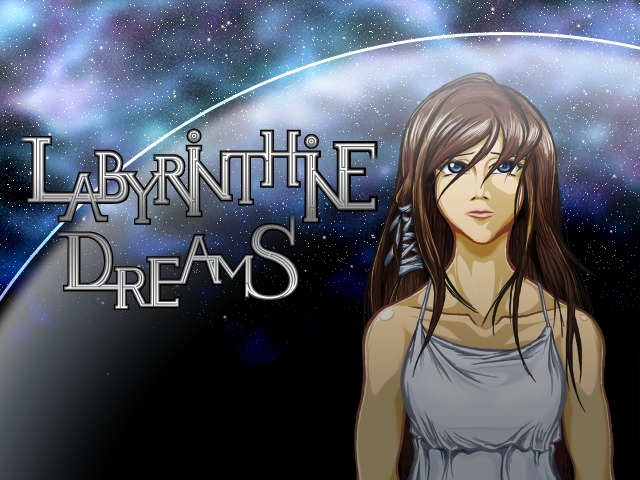
The Labyrinthine Dreams Kickstarter is on!


If you click this link and help us out with a donation, you'll have my eternal gratitude!

Nerve-wracking stuff, this crowdfunding business. We've put a dream of ours in the hands of the masses. But if it works out, Mark (ArtBane) and I will be able to work towards a major milestone in our personal and professional lives. The short version of this is that we're seeking $6,000 to enhance our puzzle game Labyrinthine Dreams. Most of the funds would go towards hiring a couple of professional artists, with other portions meant for expected business and marketing costs. If we're able to secure the money and get this work done, we'd have a real commercial game that had a chance in the competitive independent game market.

Regular readers of this blog know that I've got a long history with RPG Maker. Our six-year collaboration on Master of the Wind was how Mark and I made a name for ourselves in the RPG Maker Community, who bestowed a highly generous amount of acclaim and awards on us that remains humbling. Since then, we haven't been quite as focused. I took some time to write my novel The World Beyond and later, we began to work on our detective game X-Noir. We had some thoughts of a commercial future for X-Noir, but now that we're about two-thirds done with it, it seems that will not be its destiny. It's a little too odd, too tough to refine into something with a feasible commercial future. We needed something that would be ambitious and unique without being too sprawling and difficult to polish. Enter Labyrinthine Dreams.

We had seen a few of our friends successfully put together games that were fairly short, but highly focused in their story, gameplay and art style. Meanwhile, we had spent 2005 to 2011 on one of the longest completed RPG Maker games ever released. X-Noir was meant to be on a smaller scale, but the highly detailed nature of the game's story has turned into a fairly big undertaking itself. This time, the game would be designed so that players could complete it in about an hour and there would be one consistent gameplay mechanic throughout - mazes. With this project, Mark had a chance to tackle an idea he'd been holding on to for a while - a game set inside a dream. He had briefly worked on a previous game with this concept called Vacant before we determined that I'd be back in the writer's seat.

It was interesting timing to be sure - I had just returned from the hospital after the birth of my sons. Vacant had been dark and sinister, but I wasn't necessarily feeling dark and sinister. My mood was something like exhausted triumph. The year that led up to the birth was packed with drama, adversity and confrontations, but my wife and I had gotten past them all and now we had two cute little guys. I could go into more detail, but one of the Kickstarter rewards is an audio commentary so I should probably save it until then. But in general, I wanted to distill my experience into a story that was vague enough so others could relate to it. I'd say there's two main themes of Labyrinthine Dreams - one is an old-fashioned arc of perseverance and redemption, the other is a critical look at the toll that our cultural obsession with productivity and profit takes on quality of life.

We've got a full playable version of the game now that gives a good sense of the story and gameplay, but as with all our projects, it's art that we need some help on. There's a four-minute video on the Kickstarter page that gives a few more details. I hope you'll decide to help out, either by donating or by spreading the word. Thanks!

Friday, April 13, 2012

Some Press for The World Beyond

So I found myself on the other side of the journalism process when I sat down with my hometown paper (and former employer) to talk about the book. It was a lengthy and sometimes rambling chat, but the final product did a nice job introducing people to the concept and themes. It's not the easiest book to sum up for me, let alone someone who's not the author! I grew up in one town covered by the Town Times and worked there for several years during and shortly after college. I moved on when I got full-time work elsewhere, but it was nice that it was there for me when I needed a venue to try and make people aware this book exists.

If you want to see it as it appeared in the paper, here is Part 1 and Part 2. I've also transcribed it below to give this blog entry more of a reason to exist.
_______________

Local author combines media, reality television and music influences in new book
by Stephanie Wilcox


Rob Glidden has a background in journalism and a fascination with the reality television craze. These two things propelled him to write a futuristic novel about how a print journalist with nothing to lose finds the truth behind The World Beyond, a reality television show owned by a huge media conglomerate. Town Times recently sat down with Glidden, who was raised in Durham and currently resides in Cromwell, to talk about his new book.

How would you describe your book, The World Beyond, and who would be interested in reading it?

It's The Truman Show meets All the President's Men. If you're interested in issues with media, journalism and manipulation of the truth, you'd find this interesting.

How long did it take you to write The World Beyond?

Only two months for the first draft. The second draft was four or five months worth of editing...a lot changed there. I added stuff and beefed up some characters. The third draft was mostly fixing mistakes. I have an annoying habit of leaving out words so I read the whole book out loud.

What is your writing routine?

Afternoons when I had a few hours to work. As a journalist, I don't have a 9 to 5 job; my schedule is different week to week and I have little pockets of time. I [also] worked (on the book) on the weekends, trying to get about 1,500 words a day.

In the book, you mention the influence that music had on the development of this book. Tell me about that.

I think the book is metal. Metal inspired it. I listened to it while writing. I had a soundtrack that corresponded to characters, and certain bands are certain characters and their voices. (Metal) has always been a disreputable genre...it is angry sounding, anti-war, but it's very genuine music. It encourages you to say so if something's wrong.

In the book, you say that some of the ideas were stewing in your head for a while. How long were you mentally working on this book?

The story came in parts. The reality show fantasy adventure had been in my head for like 10 years. Reality shows got big when I as in high school - put people on an island and see how they argue. I remember being skeeved out even then. The way peoples' past anguish is packaged for television unnerves me. These are real tragedies and (reality television) is only worse now. I wanted to tell a story about that and take it further. Imagine your life as if it was television or entertainment. I thought, what if I had some adventure and it was televised and they gave me enhanced behaviors. That would be cool (to write); I can do that. I always wanted to (write a book) and I'm not getting any younger.

You use different mediums of communication to unveil the plot. That was very clever and effective storytelling. How did you know that would work for this novel?

The most fun part of the writing process was working with the different mediums of communication. The style is called epistolary; it means told through documents such as reviews, news articles, transcripts from interviews and blogs. There is an emphasis on plot-driven shows [now]. I think The Sopranos brought this along, and now Lost and others have followed. So I was trying to come up with real people and use multiple voices. I am a member of a lot of internet forums for various interests, like music or video games, so I know the way these people talk. I wanted to convey how the outside world was reacting to the show. (In the book) we only see the show from the viewer's perspective.

The main character, a veteran journalist, agrees that "good news doesn't sell." How much of this book is about the common perception of journalism?

As a journalist, I don't care if I get it first, I just want to get it right. Drew (the main character) discovers how [important] journalism really is. In the beginning he's ready to give up. He's laid off and doesn't think he's relevant or has any power. But the big media company controls everything except little newspapers...and he realizes he is the only one in a position to do what reporters are supposed to do. He rediscovers why journalism matters.

Do you have any other pieces in the works?

I thought about a sequel. I know what it would be about. And I picked out the music for it. But I don't want the same thing again, so I'm not sure.

Where can people find the book?

The paperback and e-book are both available on Amazon (For the e-book, search inside the Kindle store on Amazon). You can also find the paperback on CreateSpace, the self-publishing site I used to publish The World Beyond.
________________

That's that. If I'm fortunate enough to get more press in the future, I'll share it here.

Tuesday, April 3, 2012

The World Beyond

I'm not very comfortable with self-promotion. Most of the world is just fine and dandy with it, but I always feel like it's opening me up to some sort of trouble. However, when I spend a year on a book and another six months converting it to an E-reader format, the ideal outcome is that people read it.

First, some links. The paperback version can be found here. The newly-completed Kindle version can be found here.

During an interview for a local newspaper (which may also wind up here if there's any interest), I was asked "So why should people read The World Beyond?" I don't do so well with that question. My gut response is "Well, you don't have to if you don't want." That's not going to sell that many books, is it? But I can't help it, I'm not going to just sit here and be like "Read it cause I am brilliant, wa ha ha." If I were to offer up one of those crappy "X meets Y" marketing calculations, I suppose I could say it's The Truman Show meets All The President's Men. If you are interested in dystopian stories, journalism, issues of corporate power, epistolary storytelling and ample sarcasm, I think you might find it enjoyable.

I'm not going to rehash the entire storyline here, though I will reproduce the plot summary from the back of the book:

In the year 2044, nearly all news and entertainment is "under the umbrella" of the huge conglomerate World Media. A highly anticipated new reality show introduces three contestants who grew up in the same small town and tosses them into a huge virtual landscape. As the world reacts to this revolutionary show, Claire Lin does not believe her daughter signed on willingly. She teams up with Drew Stephenson, an embittered print journalist whose vanishing profession gives him nothing to lose. Together, they will slowly uncover the sinister truth behind "The World Beyond."

Some of the concepts in the book have been percolating in my head for a long time. The idea of people who are unwittingly starring in a reality show has been in my brain since I first became familiar with the genre around the turn of the century. Youngins might compare that element to The Hunger Games (though the stakes aren't quite as high) but my inspirations were older films like Series 7 or the aforementioned Truman Show. For a while, I wasn't sure what format to pursue. Should it be a game, like Master of the Wind? It would have been a game with an awful lot of non-playable content. Should it be a screenplay? Maybe, but then I basically have to depend on other people for it to be seen by the public. In the end, a simple book seemed like the most logical choice.

The journalism side of it is a more recent addition. I won't sugarcoat things - this job can be very disillusioning. You often hear that you have a great responsibility to the public who reads your work, but you wouldn't know it by how the industry treats you. You get paid like crap, the benefits are middling at best, and your readers typically ignore you unless you make an error. The ever-shrinking amount of media companies is also cause for great concern...perhaps "World Media" sounds fantastical at first glance, but in the time I wrote this book, two high-profile media consolidations occurred. First Comcast merged with NBC. I recall reading numerous blogs on The Huffington Post that were immensely critical of this merger and of media consolidation in general. Later that same week, AOL bought The Huffington Post. For some reason, media consolidation stopped being popular as a blogging topic on the site. It doesn't strike me as far-fetched that one day in the future, tiny local newspaper reporters like Drew Stephenson might be the only people who can investigate the potential crimes of a media congolmerate without having to worry about a conflict of interest.

Most of the famous dystopian stories deal with the idea of the government having too much power, and history has shown time and again that is indeed something to worry about. However, these days I worry more about the inverse - government having no power. I worry about corporations becoming so deregulated that they essentially exist outside the law. Does that sound ridiculous? I hope so, but if you don't think that's the endgame goal of companies like Goldman Sachs, Bank of America or Comcast, I have a bridge to sell you in Solest.

If that makes the book sound like a bleak and cynical experience, I should note that I also tried to treat all of this with a hint of black comedy. I tend to deal with upsetting elements of life by making sarcastic comments at their expense and some of that sensibility has found its way into the text. I attempted to tell parts of the story though various "documents" - Facebook conversations, message boards, interview transcripts, etc. These sections were extremely fun to write and it was great fun to try and imitate the overall tenor of the internet. It's probably still not harsh enough - I opted not to include any racial/homophobic slurs which cost those sections a bit of authenticity - but for anyone who knows me well, there is probably at least one in-joke in there for you.

So after writing the book and revising it extensively for another few months, it was time to see if I could bring it over to Kindle and other e-readers. How hard could it have been? Really damn hard, as it turned out. What a steep learning curve. I spent another six months nearly banging my head against the wall wondering why the page breaks weren't working, why certain paragraphs weren't indenting properly, and various other shenanigans. I suspect that if I do this again, it will go smoother, but it was way more of an undertaking than I expected. I hope it will be worth the effort - books seem to be going through something very similar to what the music industry experienced ten years ago.

The whole industry is changing. This also means that self-publishing has become a more viable option. I've heard enough horror stories about publishing companies (and I have one of my own, thanks to my ill-fated attempt at a nonfiction book a few years back) that I knew this would be the path I took. I'll have to overcome the stigma of self-published novels being poorly-spelled piles of incoherence, but that also gives a potential advantage of being a pleasant surprise. If anyone reads this and decides to check out the book afterwards, I hope that's what it is for you as well.