Be advised that all these times are approximate and could be compromised by things like long load times and unexpected interruptions.
8:45 - 9:00 a.m.
Setup and Opening Remarks
PHASE I 9:00 -10:00 a.m.
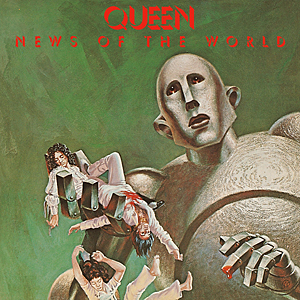
Queen - "We Will Rock You"
The Ramones - "Blitzkrieg Bop"
Red Hot Chili Peppers - "Snow (Hey Oh)"
Joan Jett - "I Love Rock N’ Roll"
Nirvana - "In Bloom"
Weezer - "Say It Ain’t So"
Yeah Yeah Yeahs - "Maps"
The Presidents of the United States of America - "Lump"
Warren Zevon - "Werewolves in London"
The Flaming Lips – "Yoshimi Battles the Pink Robots"
Stephen and the Colberts – "Charlene (I’m Right Behind You)"
Social Distortion - "I Was Wrong"
The Ramones - "I Wanna be Sedated"
Foo Fighters - "Learn to Fly"
Bang Camaro - "Push Push (Lady Lightning)"
Screaming Trees - "Nearly Lost You"
Foo Fighters - "My Hero"
10:00 - 11:00 a.m. Nirvana - "Something in the Way"
Blur - "Song 2"
Duran Duran - "Hungry Like the Wolf"
John Lennon - "Imagine"
3 Doors Down - "Kryptonite"
The Offspring - "Self-Esteem"
Garbage - "I Think I'm Paranoid"
The Knack - "My Sharona"
Bang Camaro - "Pleasure (Pleasure)"
Pretty Girls Make Graves - "Something Bigger, Something Brighter"
Silversun Pickups - "Lazy Eye"
The Offspring - "Gone Away"
Slipknot - "Before I Forget"
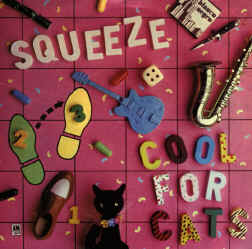
Squeeze - "Cool For Cats"
Opiate For the Masses - "Burn You Down"
Electric Six - "Gay Bar"
11:00 a.m. - 12:00 p.m. Iggy Pop - "The Passenger"
Tom Petty - "Free Fallin'"
Weezer - "Buddy Holly"
Blue Oyster Cult - "Don't Fear The Reaper"
Stone Temple Pilots - "Interstate Love Song"
Ozzy Osbourne - "Crazy Train"
Semi Precious Weapons - "Magnetic Baby"
Alice in Chains - "Man in the Box"
Skylliton - "Crabplosion"
Judas Priest - "The Hellion/Electric Eye"
Blue Oyster Cult - "Godzilla"
Sonic Youth - "Kool Thing"
The Who - "Baba O'Riley" (Teenage Wasteland)
No Doubt - "Don't Speak"
Rush - "Limelight"
Dropkick Murphys - "I'm Shipping Up to Boston"
12:00 - 1:00 p.m. Finger Eleven - "Paralyzer"
A Flock of Seagulls - "I Ran (So Far Away)"
R.E.M. - "Losing My Religion"
The Offspring - "Pretty Fly For A White Guy"
Bad Religion - "Sorrow"
Ray Parker, Jr - "Ghostbusters"
Roxette - "The Look"
The Automatic - "Monster"
Franz Ferdinand - "Take Me Out"
The Offspring - "Hammerhead"
Lynyrd Skynyrd - "Free Bird"
Avenged Sevenfold - "Afterlife"
The Who - "Behind Blue Eyes"
R.E.M. - "Orange Crush"
1:00 - 2:00 p.m. Motorhead - "We Are The Road Crew"
Queens of the Stone Age - "3s and 7s"
Soundgarden - "Black Hole Sun"
Muse - "Hysteria" Rob Zombie - "Dragula"
Kaiser Chiefs - "Ruby"
Roy Orbison - "You Got It"
David Bowie - "Space Oddity"
The Coral - "Dreaming Of You"
Anvil - "Metal on Metal"
The Von Bondies - "C'mon C'mon"
The Doors - "Riders on the Storm"
Green Day - "Boulevard of Broken Dreams"
Red Hot Chili Peppers - "Dani California"
The Doors - "Break On Through (To The Other Side)"
Rush - "Tom Sawyer"
2:00 - 3:00 p.m.
Blondie - "Call Me"
Motley Crue - "Dr. Feelgood"
Queens of the Stone Age - "Little Sister" The Clash - "Should I Stay or Should I Go?"
GlaDOS - "Still Alive"
Tenacious D - "Rock Your Socks"
Deep Purple - "Smoke on the Water"
Flobots - "Handlebars"
The Offspring - "The Kids Aren't Alright"
Depeche Mode - "Policy of Truth"
Bikini Kill - "Rebel Girl"
Pat Benatar - "Hit Me With Your Best Shot"
Golden Earring - "Radar Love"
Joy Division - "Love Will Tear Us Apart"
Black Tide - "Warriors of Time"
3:00 - 3:20 p.m.
Nirvana - "Come As You Are"
Motley Crue - "Kickstart My Heart"
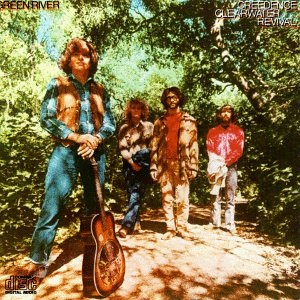
Creedence Clearwater Revival - "Proud Mary"
Children of Bodom - "Are You Dead Yet?"
Gorillaz - "Feel Good Inc."
The Doors - "People Are Strange"
3:20 - 3:30 p.m.
Break
PHASE II 3:30 - 4:30 p.m.
Creedence Clearwater Revival - "Who'll Stop The Rain?"
Kutless - "The Feeling"
Alestorm - "Shipwrecked"
Simon & Garfunkel - "The Sounds of Silence"
Stone Temple Pilots - "Vasoline"
Bad Company - "Shooting Star"
Megadeth - "A Tout Le Monde"
Bon Jovi - "You Give Love A Bad Name"
The Offspring - "All I Want"
Kiss - "Rock and Roll All Nite"
Modest Mouse - "Float On"
The Zutons - "Valerie"
Nirvana - "About A Girl"
Jonathan Coulton - "Code Monkey"
Stan Bush - "The Touch"
Europe - "The Final Countdown"
Night Ranger - "Sister Christian"
4:30 - 5:30 p.m.
Katrina & The Waves - "Walkin' on Sunshine"
Bad Religion - "21st Century Digital Boy"
Megadeth - "Hangar 18"
Freezepop - "Less Talk More Rokk"
Sweet - "Ballroom Blitz"
Puddle of Mudd - "Blurry"
Pat Benatar - "Invincible"
Bon Jovi - "It's My Life"
Depeche Mode - "Never Let Me Down Again"
Megadeth - "Tornado of Souls"
Ozzy Osbourne - "Mr. Crowley"
Rush - "Subdivisons"
The Doors - "Touch Me"
The Sounds - "Living in America"
5:30 - 6:30 p.m.
Creedence Clearwater Revival - "Bad Moon Rising"
Bon Jovi - "I'll Be There For You"
Alice in Chains - "No Excuses"
Ozzy Osbourne - "Over The Mountain"
Iron Maiden - "Wasted Years"
P.O.D. - "Youth of the Nation"
Megadeth - "Peace Sells"
The White Stripes - "Seven Nation Army"
Mastodon - "Curl of the Burl"
Billy Idol - "Rebel Yell"
The Police - "Every Breath You Take"
Foo Fighters - "Everlong"
Pantera - "Floods"
Ozzy Osbourne - "Bark At The Moon"
6:30 - 7:30 p.m. Bush - "Machinehead"
Freezepop - "Brainpower"
Black Sabbath - "N.I.B."
Linkin Park - "New Divide"
System of a Down - "Aerials"
Hollywood Undead - "Young"
Ghost Hounds - "Ashes to Fire"
Billy Joel - "Pressure"
Motorhead - "Killed By Death"
Lesley Roy - "I'm Gone, I'm Going"
Bon Jovi - "Wanted Dead or Alive"
Linkin Park - "In The End"
Bang Camaro - "Night Lies"
Rise Against - "Re-Education (Through Labor)"
Metallica - "Ride the Lightning"
7:30 - 8:30 p.m. Lynyrd Skynyrd - "Simple Man"
Pat Benatar - "Heartbreaker"
Bon Jovi - "Bad Medicine"
Survivor - "Eye of the Tiger"
Green Day - "Good Riddance (Time of Your Life)"
Creedence Clearwater Revival - "Have You Ever Seen The Rain?"
The Offspring - "A Lot Like Me"
Dio - "Rainbow in the Dark"
Journey - "Don't Stop Believing"
Megadeth - "Symphony of Destruction"
Filter - "Hey Man Nice Shot"
Rise Against - "Prayer of the Refugee"
Evanescence - "Bring Me to Life"
Poison - "Every Rose Has Its Thorn"
Ozzy Osbourne - "Mama, I'm Coming Home"
8:30 - 9:30 p.m.
Pat Benatar - "Promises in the Dark" Guns N Roses - "Shackler's Revenge"
The Outlaws - "Green Grass and High Tides"
Soft Cell - "Tainted Love"
HIM - "Wings of a Butterfly"
Antoine Dodson & The Gregory Brothers - "Bed Intruder Song"
The Clash - "Rock the Casbah"
Iron Maiden - "The Trooper"
Bon Jovi - "Blaze of Glory"
Kiss - "Detroit Rock City"
Outside - "Tribe"
The Police - "Roxanne"
Judas Priest - "Breaking the Law"
Lenny Kravitz - "Are You Gonna Go My Way"
Megadeth - "Take No Prisoners"
9:30 - 10:15 p.m.
Linkin Park - "What I've Done"
Dire Straits - "Walk of Life"
Deep Purple - "Child in Time"
Three Doors Down - "It's Not My Time"
Living Colour - "Cult of Personality"
Red Hot Chili Peppers - "Parallel Universe"
Alice in Chains - "Would?"
Authority Zero - "No Regrets"
Pearl Jam - "Alive"
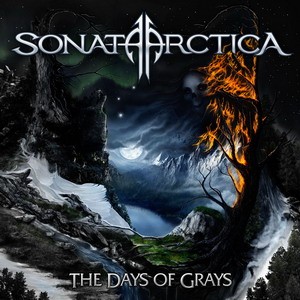
Sonata Arctica - "Flag in the Ground"
10:15 - 10:30 p.m. Break
PHASE III
10:30 - 11:30 p.m.
Red Hot Chili Peppers - "Under The Bridge"
REO Speedwagon - "Keep On Loving You"
Jet - "Are You Gonna Be My Girl?"
Fleetwood Mac - "Go Your Own Way"
Pat Benatar - "Love is a Battlefield"
Judas Priest - "You Got Another Thing Comin'"
The Strokes - "Reptilia"
Black Sabbath - "War Pigs"
Iron Maiden - "Aces High"
Nirvana - "Smells Like Teen Spirit"
The Guess Who - "American Woman"
Wolfmother - "Joker and the Thief"
Linkin Park - "Numb" Rise Against - "Savior"
11:30 p.m. - 12:30 a.m.
Boston - "Peace of Mind"
Silversun Pickups - "Panic Switch"
Pat Benatar - "Shadows of the Night"
Creedence Clearwater Revival - "Fortunate Son"
Tenacious D - "The Metal"
Boston - "More Than A Feeling"
Molly Hatchet - "Flirtin' With Disaster"
Dio - "Holy Diver"
R.E.M. - "It's the End of the World As We Know It"
Bon Jovi - "Runaway"
Anarchy Club - "Blood Doll"
Yes - "Heart of the Sunrise"
Jefferson Airplane - "Somebody to Love"
12:30 - 1:30 a.m.
Queen - "Another One Bites the Dust"
The Who - "Pinball Wizard" Billy Joel - "We Didn't Start the Fire"
Red Hot Chili Peppers - "Otherside"
Motorhead - "Ace of Spades"
Incubus - "Pardon Me"
Boston - "Smokin'"
Ayreon - "Dawn of a Million Souls"
Rolling Stones - "Gimme Shelter"
Pearl Jam - "Jeremy"
Shaimus - "Like A Fool"
That Handsome Devil - "Rob The Prez-O-Dent"
The Who - "Won't Get Fooled Again"
1:30 - 2:30 a.m.
My Chemical Romance - "Welcome to the Black Parade"
Queens of the Stone Age - "No One Knows"
Joan Jett - "Bad Reputation" Rammstein - "Du Hast"
The Killers - "Spaceman"
Nickelback - "How You Remind Me"
Paramore - "That's What You Get"
Coldplay - "Viva La Vida"
Iron Maiden - "The Clairvoyant"
Eiffel 65 - "Blue (Da Ba Dee)"
John Parr - "St. Elmo's Fire (Man in Motion)"
Def Leppard - "Rock of Ages"
Coheed & Cambria - "Welcome Home"
Bon Jovi - "Living on a Prayer"
2:30 - 3:30 a.m.
Billy Joel - "Piano Man"
The Acro-Brats - "Day Late, Dollar Short" Iron Maiden - "The Prisoner"
The Jimi Hendrix Experience - "Fire"
Hypernova - "Viva La Resistance"
Iron Maiden - "The Wicker Man"
Billy Joel - "Only the Good Die Young"
Shinedown - "Diamond Eyes"
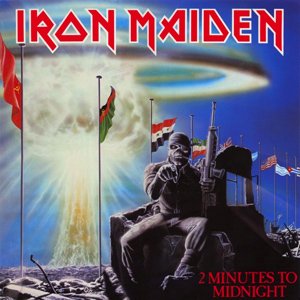
Iron Maiden - "2 Minutes to Midnight"
Rise Against - "Give It All"
Deep Purple - "Highway Star"
Queen - "The Show Must Go On"
Yes - "Owner of a Lonely Heart"
Led Zeppelin - "Stairway to Heaven"
3:30 - 4:30 a.m.
Jethro Tull - "Aqualung"
Queen & David Bowie - "Under Pressure"
The Jimi Hendrix Experience - "Purple Haze" Ozzy Osbourne - "Diary of a Madman"
Iron Maiden - "Can I Play With Madness?"
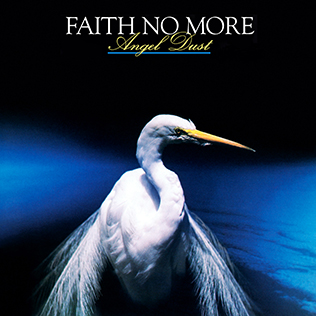
Faith No More - "Midlife Crisis"
Styx - "Renegade"
Iron Maiden - "Fear of the Dark"
Janis Joplin - "Piece of My Heart"
Foster the People - "Pumped Up Kicks"
Iron Maiden - "Infinite Dreams"
Chicago - "25 or 6 to 4"
Shinedown - "Second Chance"
4:30 - 5:30 a.m.
Anarchy Club - "Get Clean"
Def Leppard - "Photograph"
Dragonforce - "Through the Fire and Flames"
Cutting Crew - "(I Just) Died in Your Arms"
Foreigner - "Cold As Ice" Steve Harley & Cockney Rebel - "Make Me Smile (Come Up and See Me)"
Queen - "I Want It All"
Whitesnake - "Here I Go Again"
Grand Funk Railroad - "The Loco-Motion"
Billy Idol - "White Wedding"
Tears for Fears - "Shout"
The Jimi Hendrix Experience - "All Along the Watchtower"
Boston - "Foreplay/Long Time"
5:30 - 5:50 a.m.
Jackson 5 - "I Want You Back"
Tenacious D - "Tribute"
Rush - "Fly By Night"
Lacuna Coil - "Our Truth"
Iron Maiden - "Hallowed Be Thy Name"
5:50 - 6:00 a.m. Break
PHASE IV - THE GAUNTLET
6:00 - 7:00 a.m.
Foreigner - "I Want to Know What Love Is"
Anthrax - "Caught in a Mosh"
My Chemical Romance - "Sing"
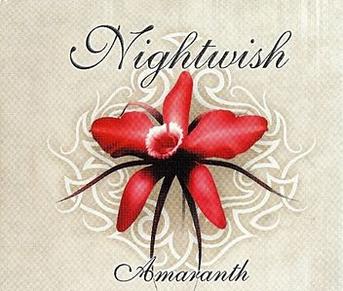
Nightwish - "Amaranth"
Barenaked Ladies - "One Week"
Iron Maiden - "Rime of the Ancient Mariner"
The Allman Brothers - "Ramblin' Man"
Dead Kennedys - "Holiday in Cambodia"
INXS - "Need You Tonight"
Rush - "The Trees"
Yes - "Roundabout"
Kansas - "Carry on Wayward Son"
7:00 - 8:00 a.m.
The Darkness - "I Believe in a Thing Called Love"
Mastodon - "Colony of Birchmen"
Pink - "Raise Your Glass"
Everlife - "Real Wild Child"
Death of the Cool - "Can't Let Go"
Tenacious D - "Master Exploder"
Iron Maiden - "Seventh Son of a Seventh Son"
Soundgarden - "Spoonman"
Queen - "Don't Stop Me Now"
Paramore - "Misery Business"
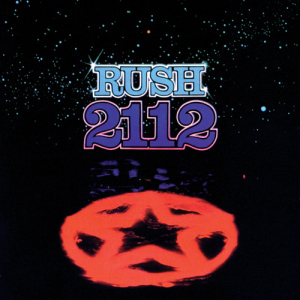
Rush - "2112"
8:00 a.m. - 9:00 a.m.
System of a Down - "Chop Suey"
Iron Maiden - "Phantom of the Opera" Aerosmith - "Dream On"
Testament - "Souls of Black"
A ha - "Take On Me"
Iron Maiden - "Run to the Hills"
Dream Theater - "Panic Attack"
Iron Maiden - "Flight of Icarus"
Quiet Riot - "Bang Your Head (Metal Health)"
Queen - "Bohemian Rhapsody"
Judas Priest - "Painkiller"
Queen - "We Are The Champions"
9:00 a.m. - ????
Sleep
The marathon starts on the morning of Saturday, November 7 and can be watched on my Twitch channel. Here's my page at Extra Life if you want to donate early or just read more about the event. Hope some of you will check it out!
Saturday, August 29, 2015
Saturday, June 6, 2015
The 24 Hour Setlist: Introduction
For my first ever participation in the Extra Life charity event for children's hospitals, I'll be singing a 24 hour marathon on Rock Band 3 from November 7th to 8th!
Here is my page on Extra Life, which has more information on that initiative. The marathon will be broadcast live on my Twitch channel.
So why Rock Band? I don’t say this lightly, and this is not hypberbole, Rock Band changed my life. We knew right away it was a cooperative game experience like none other as we selected our roles in the band. My brother Alex had a knack for the Guitar Hero series and continued that role on Rock Band. Our lifelong friend Mark took on the drums. As for me, there was nobody on the mic so I basically found myself there my default. We never did find ourselves a permanent bassist, although a few great candidates came and went over the years.
As for the mic, I loved it. My voice was the controller. I used to be nervous about singing in front of people, but I found much more confidence as I went from failing out on “Reptilia” to being able to get 100% on insane Iron Maiden songs on the hardest difficulty even while I had bronchitis. Rock Band vocals were the only video game I had where I was the most skilled person I knew (not the best singer in general, but the best at singing for the game, I don’t want to sound too over the top). At the peak of my powers, which was around the time that Rock Band 3 came out, I had gold-starred (very high scores on expert difficulty) hundreds upon hundreds of songs in RB’s ever-growing library and was one of the top 100 singers in the world as ranked by the online leaderboards.
Eventually, the genre of music games fell on hard times. Activision’s competing Guitar Hero games, which had sloppily adopted the full band format as well, flooded the marketplace with half-baked spin-offs. As for Rock Band, they were a little too eager to silence idiots who would insult the games since “it’s not like playing a real instrument.” You don’t say? All this time I thought guitars only had five notes, who knew? Not sure how that applies to singing, anyhow. Your voice is your voice. Anyway, Rock Band wanted to prove that it could actually teach people real music, so for Rock Band 3 Harmonix invested considerable expense into a “pro guitar” mode that would enable people to play along to the real notes a controller modeled after an actual guitar. There was also the addition of the keyboard that had its own “pro” mode. It was impressive ambition, but in the end Harmonix greatly overestimated the demand among players for “real instruments” and Rock Band 3 sold far less than the concurrent Guitar Hero game that had no such ambitions.
The company added more songs to the game’s huge library for a couple of years afterward, but the genre was fading away. Nobody I knew wanted to play anymore. Finally, they announced that the DLC songs would also be coming to an end. The world may have decided that “the era was over,” but I really wasn’t ready for it to go. It had brought too much joy into my life. The news of Rock Band 4's upcoming release was hugely uplifting and I decided that this year's Extra Life event would be one epic way to say goodbye to Rock Band 3.
We're still months away from the big day, but I'll be practicing on the Twitch Channel hopefully once a week (Friday nights) and later this summer, I'll post the setlist in all it's 335 song glory! Please look forward to it!
Sunday, May 3, 2015
Son of Dinosaurs
Back in the 1980s, when the Disney Channel was still a premium network, a series of dinosaur-themed specials aired that captivated kids everywhere. They were hosted by Gary Owens, a prolific DJ and voice actor who was the original Space Ghost, and writer and TV personality Eric Boardman. At the time, I was already obsessed with dinosaurs and my relatives recall me being able to spell their long names at an unusually young age. In those pre-internet times, it was much harder to find something you wanted to see if you had missed it and so you used the available technology to take the proper precautions. Son of Dinosaurs, an hour-long special that aired in 1988, had been taped onto an old VHS and that was how I watched it...and I watched it many many times. I still remember how in order to get to the beginning, you had to fast forward through footage of my family's vacation to Florida.
The shows were a mixture of educational visits to various museums and parks and silly side-stories featuring the two hosts. In one other special, Gary was actually turned into a "Garyosaurus," complete with mustache. I'm not sure why Son of Dinosaurs was the one I liked best. It might have been the novelty of its meta-premise - Gary and Eric are entrusted with a dinosaur egg that has a still living embryo inside it and decide to produce another dinosaur special as a means of doing some additional research. There was a lot of variety squeezed into this hour, including a visit to a black-tie "dinosaur ball" at a Los Angeles museum, a look at paleontologist digging sites in Alberta, Canada and my favorite bit, footage of Loch Ness that concludes with a pan under the lake's surface that seques into a stop-motion Nessie prowling around. When I actually got to visit Loch Ness many years later, that scene wasn't far from my mind.
The science in these shows is already quite dated (no feathered dinosaurs here) and I expected that they had been lost to time or restricted to bootleg VHSs like mine. But then I found out (can't remember how) that they actually were released on a couple DVDs. I recently ordered one that had three of the specials on it and obviously decided to watch Son of Dinosaurs first. Right from the first bit of footage, I got hit with a huge deja vu/nostalgia bomb. Once that wore off, it was delightful to see that it was still as enjoyable and pleasant as I remembered it. There's none of that darkness that has accompanied some of the other stuff in this series. This was just doing what good educational programming does - making learning fun. And I still want to go to that zoo in Alberta with all the life-size dinosaur replicas. That place looked awesome as a kid and it looks awesome now.
The shows were a mixture of educational visits to various museums and parks and silly side-stories featuring the two hosts. In one other special, Gary was actually turned into a "Garyosaurus," complete with mustache. I'm not sure why Son of Dinosaurs was the one I liked best. It might have been the novelty of its meta-premise - Gary and Eric are entrusted with a dinosaur egg that has a still living embryo inside it and decide to produce another dinosaur special as a means of doing some additional research. There was a lot of variety squeezed into this hour, including a visit to a black-tie "dinosaur ball" at a Los Angeles museum, a look at paleontologist digging sites in Alberta, Canada and my favorite bit, footage of Loch Ness that concludes with a pan under the lake's surface that seques into a stop-motion Nessie prowling around. When I actually got to visit Loch Ness many years later, that scene wasn't far from my mind.
The science in these shows is already quite dated (no feathered dinosaurs here) and I expected that they had been lost to time or restricted to bootleg VHSs like mine. But then I found out (can't remember how) that they actually were released on a couple DVDs. I recently ordered one that had three of the specials on it and obviously decided to watch Son of Dinosaurs first. Right from the first bit of footage, I got hit with a huge deja vu/nostalgia bomb. Once that wore off, it was delightful to see that it was still as enjoyable and pleasant as I remembered it. There's none of that darkness that has accompanied some of the other stuff in this series. This was just doing what good educational programming does - making learning fun. And I still want to go to that zoo in Alberta with all the life-size dinosaur replicas. That place looked awesome as a kid and it looks awesome now.
Thursday, April 16, 2015
How The Babadook became the Most Acclaimed Horror Film of the New Century
One of my pet peeves is when people make decisions about whether or not to watch a movie solely based on its Rotten Tomatoes score. Never mind the possibility that you may disagree with the consensus and like whatever movie you were interested enough to look up, there are issues with film criticism in general that play into those numbers. One of these is the condescension and dismissal towards horror films. I've often told people to add 20 points to a horror movie's rating on that site to balance things out. This technique proves ineffective on The Babadook, which scored 97 percent, impressive for any film but downright astonishing for this genre. It's on DVD now so it seemed like a good time to try and analyze just what went so right.
The last horror film I can think of that enjoyed this level of acclaim was The Sixth Sense in 1999, which earned a numerically appropriate six Oscar nominations to show for it. There have been plenty of great horror films in the intervening 15 years, but more often than not, horror gets about as much respect as Rodney Dangerfield. So how did The Babadook do it? How did this little Australian independent film with the funny name snap so many critics out of their judgmental haze? I think it boils down to several major elements, which I'll detail individually.
A Reminder of Horror's Potential
So how exactly did horror become such a disreputable genre in America? It hasn't always been this way. In 1973, The Exorcist received a whopping 10 Oscar nominations, including one for Best Picture. Other touchstones of 70s horror like Carrie and The Omen were also recognized. Shortly after that was Halloween, which deserves its place in the pantheon of horror classics, but inadvertently led to a boom of "slasher" films in the early 80s that changed the way the genre was viewed...and not in a good way. By the end of a decade saturated with slashers, film critics and American culture at large began to associate the entire genre with the tropes of slasher films, particularly the fact that they were meant for teenagers.
So in 1991, The Silence of the Lambs blows minds everywhere and becomes the only horror film in history to win the Oscar for Best Picture. But wait, horror films were supposed to be for dumb high-schoolers and not worthy of serious consideration. What's a snob to do? Well, people began to call Silence of the Lambs a "psychological thriller," which allowed them to justify their appreciation of it while distancing themselves from horror. That phrase has continued to be used for horror films where the scares come from non-supernatural elements and are considered "adult," even if they have grisly murder scenes worse than anything in the Friday the 13th series. Slasher films have mostly tapered off, but Hollywood continues to operate as if horror films are meant exclusively for teens who want the same experience over and over again. The same demonic possession movie comes out every year, sometimes with found footage, sometimes not. Up until a couple of years ago, when a wave of polished American independent horror films began to emerge, the best examples of the genre were coming from Europe and Asia, places where it's taken far more seriously.
Coming from Australia, Jennifer Kent's The Babadook has made enough of an impact to challenge how the genre is perceived here in the USA. It is unquestionably a horror film and unquestionably for adults. It's hard for even the most horror-averse film buff to deny its virtues. The story is highly ambitious, the visuals are wonderfully creative (the pop-up book scenes, wow!) and there's a whole lot of subtext and metaphor to sift through if you're so inclined. Viewers who are used to the well-worn tropes of mainstream horror films have pushed back against its acclaim, calling it "boring" and insisting it's not scary at all. Well, if you define "scary" by how often you leap out of your seat in shock, that may be true. On that note...
No False Scares
A lot of people say they hate jump scares. I don't think that's what they actually mean. A really great jump scare is exhilarating. What pisses people off are false scares, which are a plague upon the genre. You know what I'm talking about - someone's wandering a dark house, things are getting tense...and then something jumps out! There's some huge metallic noise, the camera whirls around...but wait! Oh, it's just a friend wearing a scary mask! Or it's just a cat! Nothing to be scared of after all!
People hate that shit and I don't blame them. A rant by Chris Stuckmann became a viral hit among movie buffs for articulating very well what we all think about this cliche. It's cheap, overused and dilutes the terror of the actual frightening moments yet to come. Horror movies specialize in building tension, but if too much gets released during these fake-outs, the audience gets burnt out quick. This doesn't mean you can't ever have someone get startled by something harmless, but you don't want to treat it the same way you treat the real thing. In The Babadook, there's a scene where Amelia gets interrupted at a very inopportune moment when her son runs into the room. It's an unexpected scene, but it's not trying to freak us out. It's trying to get us to empathize with Amelia, who just can't get any time to herself without her troublesome son causing some sort of random mischief.
The monster in The Babadook is spooky, but even it's not the real source of horror in this film. What makes it so effective is the gradual understanding of just what may be going on in the head of the main character. On that note...
Psychological Horror
So you know by now how I feel about the phrase "psychological thriller." However, psychological horror is arguably the most enduring horror subgenre, stretching all the way back to The Cabinet of Dr. Caligari in 1920.
When we first meet Amelia, she's an overworked single mother with a troublesome son prone to delirious fits. Her struggle to keep her life in order (along with Essie Davis's performance, which we'll get to) immediately resonates with viewers, many of whom also feel that they are doing their best in the current economic era and it's still not enough. However, it slowly becomes apparent that her troubles run much deeper. Her husband died in a car accident on the day her son was born and although many years have passed, she is still deeply depressed and struggling with unresolved feelings about the tragedy...feelings that none of us would admit.
When the monster shows up, the film strongly suggests that it only exists in Amelia's mind and represents the dark feelings she struggles to keep at bay. The text in the pop-up book that heralds its appearance can be interpreted to support this ("the more you deny, the stronger I'll get"). When Amelia is fully possessed by the babadook near the end of the movie, she becomes a violent danger to her son. Interestingly, the boy seems to accept the idea that a literal monster really has taken control of his mother, but the movie points towards something much scarier. Amelia blames him in part for her husband's death. She knows this is wrong but can't get it out of her mind just the same. If she were to get worn down enough by grief and depression to lose her control over those urges, the family might turn into one of those shocking stories you hear about on the news every so often.
This idea is much more disturbing than a monster who emerges from a cursed pop-up book and that's because it breaks a major taboo. Women are supposed to be happy to be mothers, no exceptions. In the arty drama We Need to Talk About Kevin, it's suggested that Tilda Swinton's dissatisfaction with motherhood is at least partly to blame for Kevin growing up to be a dangerous sociopath. Here, it's the mother that becomes the threat and not to a teenager but a small child. It's button-pushing, risky storytelling with the potential to totally alienate most of the audience...but the movie has an ace up its sleeve to keep that from happening. On that note...
Another effect the slasher films had in America was that horror began to be associated with terrible acting, even though the full history of the genre has a long list of great performances. Add Essie Davis to that list. Her performance turns this character into someone the audience cares deeply for, even during her darkest moments. There's no movie-star glamour here, she looks exhausted and disheveled for most of the movie...and that's before the really bad stuff starts. Here's film critic A.A. Dowd:
"There’s an overwhelming emotional power to this bump-in-the-dark material, and it’s owed chiefly to star Essie Davis, an Australian actress whose most prominent prior role was probably a supporting turn in the Matrix sequels. No mere scream queen, Davis offers a disturbingly acute portrait of festering resentment, demonstrating how undigested trauma can curdle slowly into abusive rage. The Babadook, the well-dressed fiend of the title, is scary. But he’s not half as scary as Davis. It’s a true transformation, from quietly frazzled mother to bellowing monster of grief."
In the final confrontation, Amelia struggles to shield her son from the monster, which appears not as the pale-faced ghoul who showed up earlier but as a huge dark shadow creeping across the room, a"dark cloud" that is often a personification for depression. This time she gives it what-for, shouting that "if you ever hurt my son again, I'LL FUCKIN' KILL YOU!" In the wrong hands, this scene could have turned into unintentional humor but Davis just nails it. Her rage is transcendent and the moment is deeply cathartic. Who wouldn't want to stand in front of their inner demons and cuss them out?
All that said, Davis really had no chance at a Best Actress nomination. Critics were blown away, but none of the major award season pundits even entertained the possibility and sure enough, they were right. There's a rumor that The Babadook's simultaneous release in theaters and on streaming services rendered it ineligible according to Academy bylaws, but that was never confirmed. If it's true, that's obviously a rule better left in the past. But if it's not, there's still not much hope for horror films when it comes to this type of award. The Silence of the Lambs and The Sixth Sense had major box office success to show off, something The Babadook never achieved. Historically, the Oscars prefer tepid middlebrow dramas like The Theory of Everything over even the most well-crafted horror films. The Best Actress category in particular has been suffering from a lack of creativity for quite a while now. That's not to say Davis would have won had she earned the nomination. Nobody was going to beat Julianne Moore last year, but even so, the recognition would have been a huge deal for people who work in the genre and for people who believe in its merit.
But the Oscars can go screw. This was an amazing performance and film history will be kind to it.
Final Thoughts
The Babadook impresses people not just because it's a great horror film, but because it's really about something. Jennifer Kent didn't just want to frighten people, she wanted to tell a story that would resonate with people who have suffered from grief and depression and, given the way the movie ends, leave them with some hope. In short, she took the genre seriously and it shows. The recent film It Follows is enjoying similar acclaim for similar reasons, including a mysterious monster ripe for analysis and a compelling lead performance from Maika Monroe. It also has outstanding widescreen and deep focus cinematography which really makes it stand out. If we keep getting horror films as good as this and if they get such enthusiastic responses, then perhaps, over a long period of time, the genre can finally get some respect here in America. Maybe.
Thursday, February 19, 2015
Oscars 2015 Educated Guesses
Every year's Oscar nominations come with surprises, often unpleasant ones. This year took that to a whole new level with a slew of startling omissions that riled up movie buffs in a way that I haven't seen in a long time. We can (and will) discuss individual snubs, but the cumulative effect of them is that the Oscars didn't live up to their promise this year. Ideally, they are a celebration of a year's great films, but that didn't quite work out. It's hard in a year where the great stuff was so diverse but then again, there were some pretty boneheaded choices on the Academy's part. Still, it could be worse. It could be the Grammys. Let's get to it.
Best Animated Feature
Big Hero 6
The Boxtrolls
How to Train Your Dragon 2
Song of the Sea
The Tale of the Princess Kaguya
Who Will Win: The first and perhaps most inscrutable controversy of this year's Oscars was the absence of The Lego Movie from this category. Popular with audiences and worshiped by critics, it would have been a clear front-runner. It may have been disqualified for its live-action sequences, although the Academy hasn't clarified that. Without it, there's no obvious winner. It will likely be one of the CGI blockbusters, but which one? The original How to Train Your Dragon would have won this category in 2010 if it didn't have the misfortune of getting matched up against Toy Story 3 and it's four-hankie finale. The sequel isn't quite as good, but it packs an emotional punch that I think voters will remember.
My Choice: Princess Kaguya has a level of thematic ambition that is far beyond what you usually see in animated films, in addition to being stunning to look at. An upset in this category is certainly possible and I would love to see this one pull it out.
Best Documentary Feature
Citizenfour
Finding Vivian Maier
Last Days in Vietnam
The Salt of the Earth
Virunga
Who Will Win: The most popular documentary of the last year was Life Itself, a moving portrait of the late critic Roger Ebert. It's not on the list this year, which suggests that the Academy is in the mood for more serious fare this time around (although this category is not very consistent about this). The two docs about photographers, Finding Vivian Maier and The Salt of the Earth, are probably out. Last Days in Vietnam is compelling stuff, but the Fall of Saigon was over 40 years ago. Virunga's central African setting probably feels too far away from your average voter. It doesn't get much more timely than Citizenfour, the documentary about Edward Snowden and the NSA that puts the viewer right in the room as history is being made. Any movie that can feature the brave but insufferable journalist Glenn Greenwald so prominently and still be tolerable deserves something.
My Choice: Citizenfour is an impressive piece of film journalism, but as a viewing experience it has nothing on Virunga. The combination of intense subject matter, haunting music and beautiful scenery shots was incredibly potent. Netflix knows how to pick 'em.
Best Adapted Screenplay
Jason Hall for American Sniper
Graham Moore for The Imitation Game
Paul Thomas Anderson for Inherent Vice
Anthony McCarten for The Theory of Everything
Damien Chazelle for Whiplash
Who Will Win: Graham Moore's screenplay for The Imitation Game accomplished a few different things - it gracefully meshed three separate periods in Alan Turing's life and it boiled down the incredibly complex mathematics behind the decoding work of the main characters in a way that any audience member could understand what was going on. I suspect he'll have an Oscar to show for it, although Damien Chazelle is a potential upset.
My Choice: I don't have a strong preference here. The Imitation Game was impressive for the reasons listed above and Whiplash's layered exploration of ambition is a good conversation starter. Either of them would be cool, just please don't give it to American Sniper. That movie was downright ludicrous.
Best Original Screenplay
Alejandro G. Inarritu, Nicolas Giacobone, Alexander Dinelaris, Jr. and Armando Bo for Birdman
Richard Linklater for Boyhood
E. Max Byre for Foxcatcher
Wes Anderson for The Grand Budapest Hotel
Dan Gilroy for Nightcrawler
Who Will Win: Three of this year's heavy hitters are squaring off in this category. Birdman's got four writers attached to it and this category typically favors a single recipient. Linklater has a great ear for dialogue but it will probably hurt him that so much of Boyhood's dialogue sounds improvised. That leaves Wes Anderson. The Grand Budapest Hotel has a lot of nominations and it probably won't go home empty-handed. This category, with its hipster bent, seems the ideal place to recognize it.
My Choice: Dan Gilroy. Nightcrawler was a brilliant look at how modern work culture rewards sociopathic behavior and not just any writer could pull off a lead character who speaks almost entirely in canned self-help jargon he read off the internet. This movie was overlooked in general and really deserves some props.
Best Supporting Actress
Patricia Arquette in Boyhood
Laura Dern in Wild
Keira Knightley in The Imitation Game
Emma Stone in Birdman
Meryl Streep in Into the Woods
Who Will Win: Patricia Arquette. Her vanity-free performance as a mother who is in over her head but refuses to give up stays with you long after Boyhood ends. It helps that she's also at the center of the film's most emotional scene. She's been sweeping the preliminary awards and there's no reason to think the Oscars will be any different.
My Choice: Arquette deserves the win, although I was also pretty impressed by Emma Stone. As the angry, drug addict daughter in Birdman, she really looked and sounded like she had just gotten out of rehab. For someone whose looks are always being praised, it's not a "beauty queen" performance at all.
Best Supporting Actor
Robert Duvall in The Judge
Ethan Hawke in Boyhood
Edward Norton in Birdman
Mark Ruffalo in Foxcatcher
J.K. Simmons in Whiplash
Who Will Win: The other four nominees have no chance against J.K. Simmons and the evil genius music teacher he played in Whiplash. Although it's in the "supporting" category, he dominated that movie and it is truly an unforgettable performance.
My Choice: I'm a huge J.K. Simmons fan. Whether it's the sweet father in Juno or the hilariously cantankerous J. Jonah Jameson in the Spider-Man films, this guy brings it every time.
Best Actress
Marion Cotillard in Two Days, One Night
Felicity Jones in The Theory of Everything
Julianne Moore in Still Alice
Rosamund Pike in Gone Girl
Reese Witherspoon in Wild
Who Will Win: If you're hoping to get an Oscar, the best narrative you can hope for is that it's "your turn." This is what's happening this year with Julianne Moore, to the point where it seems like people don't care about the actual movie she's in. The focus is that she's given a lot of strong performances, has yet to win, and is not getting any younger. She's got this one in the bag.
My Choice: I honestly don't care. Julianne Moore's done good work for a long time, let her have it. This category needs an intervention because it's becoming the laziest and most consistently disappointing one in the whole lineup. The Academy always seems to choose from a ridiculously small pool of actresses to fill this one out. Felicity Jones and Rosamund Pike are some new blood, but the other three are regulars. People always say there aren't many good roles out there for women, but there are more than this. Essie Davis in The Babadook? Rosario Dawson in Top Five? They're out there if you look for them. Look a little harder, please.
Best Actor
Steve Carell in Foxcatcher
Bradley Cooper in American Sniper
Benedict Cumberbatch in The Imitation Game
Michael Keaton in Birdman
Eddie Redmayne in The Theory of Everything
Who Will Win: Here we have the only acting category that's actually competitive this year. The three Cs (Carell, Cooper & Cumberbatch) have taken a backseat to the neck-and-neck contest between Michael Keaton and Eddie Redmayne. In one corner, you have an actor with a long and (mostly) distinguished career who got the role of a lifetime in Birdman. It's hard to believe this is Keaton's first nomination ever and sentimentality might carry him over the edge. However, statistics are against him. In the other corner, we have an actor who is playing a real English disabled person, the holy trifecta of award bait. Redmayne's eerily convincing performance as Stephen Hawking is the sole reason why The Theory of Everything, a trite biopic that ignores Hawking's groundbreaking contributions to science in favor of a conventional awards bait romance, has done so well. He's already got a SAG award to show for it and I have to give him the edge...but this one is super close.
My Choice: First things first. Where the hell is David Oyelowo? He was outstanding as Dr. King in Selma and this lack of recognition is going to go down as one of the great boners in Oscar history. If only Dr. King had Restless Leg Syndrome or something...any kind of disability and the Academy might have taken more notice. Another omission that bugs me is Jake Gyllenhaal, who brought to life one of the year's most vivid characters in Nightcrawler. In terms of the nominees, might as well give Keaton the gold while they've got the chance. He might not get another shot and Redmayne will surely be nominated again at some point.
Best Director
Wes Anderson for The Grand Budapest Hotel
Bennett Miller for Foxcatcher
Alejandro G. Inarritu for Birdman
Richard Linklater for Boyhood
Morten Tyldum for The Imitation Game
Who Will Win: For a while, it looked like Richard Linklater was going to take this one home not just for Boyhood, but for 25 years of great films. Then Inarritu upset him at the Director's Guild awards, which are a highly accurate oracle for this category. Given the large overall support for Birdman, it makes sense although it's still fairly close. If I'm right about this, Inarritu will be the second Mexican director to win in a row after Alfonso Cuaron last year. Guillermo Del Toro might want to start planning a 2016 speech.
My Choice: Ava DuVernay pulled off some beautifully staged scenes in Selma and would have made history if she was recognized, but as with a lot of that movie's talent, she got the cold shoulder. This category's always been a little unpredictable so it's not quite as surprising as what happened in Best Actor, but it's still unfortunate. As it stands, I'm rooting for Linklater. He's made so many great movies, from Dazed and Confused to Bernie to School of Rock to Waking Life, but he doesn't really make "Oscar" movies so I'm not sure he'll get another chance.
Best Picture
American Sniper
Birdman
Boyhood
The Grand Budapest Hotel
The Imitation Game
Selma
The Theory of Everything
Whiplash
Who Will Win: Despite a list of nominees loaded with typical Oscar bait, it's the two least traditional of the films that are fighting it out for Best Picture. Let's knock out the others. The Theory of Everything has little going for it outside of Eddie Redmayne's performance. The Imitation Game is held in higher regard but still feels too much like a typical winner for this year. Whiplash is a small film that had a very small release. Selma was torpedoed by an ugly combination of various double-standards (more on that soon enough). American Sniper is not the evil piece of propaganda that its detractors fear and that Fox News so desperately wants it to be, but it is a crude, silly movie that is far too polarizing to survive the Academy's preferential ballots, which reward films with more universal acclaim. The Grand Budapest Hotel is a serious challenger, but I think that in the end, Wes Anderson's work doesn't do so well outside of his niche (although that niche is steadily growing).
That leaves Boyhood vs. Birdman. For a while, the conventional wisdom was that Birdman's support among the actor's branch would be balanced out by the other branches going with Boyhood. But then Birdman started winning all the preliminary awards. Not just the Screen Actors Guild, which was expected, but also the Producers and Director's Guild. Clearly, it has more wide-ranging support than it was given credit for. If it does pull off the win, it will easily be the weirdest Best Picture winner ever. If it were about any other profession than acting, I don't think we would be seeing this kind of reception. So I'm going with Birdman but don't count Boyhood out. After all, if we're talking about identifying with the work, everyone voting was once a child.
My Choice: My opinion of the nominees goes something like this: Boyhood > Selma > Birdman > Whiplash > The Imitation Game > The Grand Budapest Hotel > The Theory of Everything > American Sniper. I think it would be wonderful if a gentle, personal film like Boyhood took the top prize, but I feel like my own preference means even less than usual this year. There's other stuff I gotta get off my chest.
I don't typically go this in-depth, but this year's Oscars come with a lot more baggage than usual so let's talk about Selma. The conventional wisdom about its weak amount of nominations (only 2, which is unheard of for a Best Picture nominee) is that the exaggerated portrayal of President Lyndon Johnson as cranky and obstinate about the Voting Rights Act backfired. Indeed, some Academy members have spoken anonymously about how the movie "misrepresented history." If this is really how it went down, then the whole situation comes with the pungent whiff of bullshit. In a documentary, getting all the facts right is important. But movies like Selma, often given the misleading label of "docudrama" are still technically fiction, even if they are heavily based on history. These films are not simple recitations of textbook history, they interpret history, often to comment on the era the film is made in rather than the era it depicts. Selma spends a lot of time demonstrating the work involved to make change happen - building up grassroots support and exploiting the bad habits of politicians and media to get the word out. If the movie's Johnson had been on board from the start, none of that work would have seemed as necessary. Selma's LBJ strikes me as less a representation of the real man, but of modern politicians who can't hide their exasperation that all these protesters can't just be happy with their black president and stop complaining. This creative choice may cost Selma some credit as a historical document, but not as a movie.
Movies like this have been playing loose with the truth ever since George Arliss won Best Actor for playing British Prime Minister Benjamin Disraeli in 1930. Even in this very category, The Theory of Everything, The Imitation Game and especially American Sniper also alter the reality of their subjects to suit their purposes. Regarding the latter, the Iraq War is turned into a Sergio Leone western where the good sniper has to battle the bad sniper, very little of which is supported by Chris Kyle's actual experiences. This change isn't necessarily a surprise given that the director, Clint Eastwood, always tends to frame issues in ways that are reminiscent of classic westerns. Yet American Sniper was rewarded with surprise nominations while Selma was punished. So tldr, if you're going to start bringing the hammer down on artistic depictions of history, be consistent about it or shut up. A lot of people can't stand it when race gets brought into the Oscars, but their frustration seems better directed at the Academy for making it so easy. I've said enough, but I do have some further reading. Here is a great article on the racial elements of the issue and here is an article going into the specifics of the movie's portrayal of Johnson.
So that's all for now. Last year, I had a perfect score for predictions. I'd be surprised if that happened twice in a row, but we'll see!
Best Animated Feature
Big Hero 6
The Boxtrolls
How to Train Your Dragon 2
Song of the Sea
The Tale of the Princess Kaguya
Who Will Win: The first and perhaps most inscrutable controversy of this year's Oscars was the absence of The Lego Movie from this category. Popular with audiences and worshiped by critics, it would have been a clear front-runner. It may have been disqualified for its live-action sequences, although the Academy hasn't clarified that. Without it, there's no obvious winner. It will likely be one of the CGI blockbusters, but which one? The original How to Train Your Dragon would have won this category in 2010 if it didn't have the misfortune of getting matched up against Toy Story 3 and it's four-hankie finale. The sequel isn't quite as good, but it packs an emotional punch that I think voters will remember.
My Choice: Princess Kaguya has a level of thematic ambition that is far beyond what you usually see in animated films, in addition to being stunning to look at. An upset in this category is certainly possible and I would love to see this one pull it out.
Best Documentary Feature
Citizenfour
Finding Vivian Maier
Last Days in Vietnam
The Salt of the Earth
Virunga
Who Will Win: The most popular documentary of the last year was Life Itself, a moving portrait of the late critic Roger Ebert. It's not on the list this year, which suggests that the Academy is in the mood for more serious fare this time around (although this category is not very consistent about this). The two docs about photographers, Finding Vivian Maier and The Salt of the Earth, are probably out. Last Days in Vietnam is compelling stuff, but the Fall of Saigon was over 40 years ago. Virunga's central African setting probably feels too far away from your average voter. It doesn't get much more timely than Citizenfour, the documentary about Edward Snowden and the NSA that puts the viewer right in the room as history is being made. Any movie that can feature the brave but insufferable journalist Glenn Greenwald so prominently and still be tolerable deserves something.
My Choice: Citizenfour is an impressive piece of film journalism, but as a viewing experience it has nothing on Virunga. The combination of intense subject matter, haunting music and beautiful scenery shots was incredibly potent. Netflix knows how to pick 'em.
Best Adapted Screenplay
Jason Hall for American Sniper
Graham Moore for The Imitation Game
Paul Thomas Anderson for Inherent Vice
Anthony McCarten for The Theory of Everything
Damien Chazelle for Whiplash
Who Will Win: Graham Moore's screenplay for The Imitation Game accomplished a few different things - it gracefully meshed three separate periods in Alan Turing's life and it boiled down the incredibly complex mathematics behind the decoding work of the main characters in a way that any audience member could understand what was going on. I suspect he'll have an Oscar to show for it, although Damien Chazelle is a potential upset.
My Choice: I don't have a strong preference here. The Imitation Game was impressive for the reasons listed above and Whiplash's layered exploration of ambition is a good conversation starter. Either of them would be cool, just please don't give it to American Sniper. That movie was downright ludicrous.
Best Original Screenplay
Alejandro G. Inarritu, Nicolas Giacobone, Alexander Dinelaris, Jr. and Armando Bo for Birdman
Richard Linklater for Boyhood
E. Max Byre for Foxcatcher
Wes Anderson for The Grand Budapest Hotel
Dan Gilroy for Nightcrawler
Who Will Win: Three of this year's heavy hitters are squaring off in this category. Birdman's got four writers attached to it and this category typically favors a single recipient. Linklater has a great ear for dialogue but it will probably hurt him that so much of Boyhood's dialogue sounds improvised. That leaves Wes Anderson. The Grand Budapest Hotel has a lot of nominations and it probably won't go home empty-handed. This category, with its hipster bent, seems the ideal place to recognize it.
My Choice: Dan Gilroy. Nightcrawler was a brilliant look at how modern work culture rewards sociopathic behavior and not just any writer could pull off a lead character who speaks almost entirely in canned self-help jargon he read off the internet. This movie was overlooked in general and really deserves some props.
Best Supporting Actress
Patricia Arquette in Boyhood
Laura Dern in Wild
Keira Knightley in The Imitation Game
Emma Stone in Birdman
Meryl Streep in Into the Woods
Who Will Win: Patricia Arquette. Her vanity-free performance as a mother who is in over her head but refuses to give up stays with you long after Boyhood ends. It helps that she's also at the center of the film's most emotional scene. She's been sweeping the preliminary awards and there's no reason to think the Oscars will be any different.
My Choice: Arquette deserves the win, although I was also pretty impressed by Emma Stone. As the angry, drug addict daughter in Birdman, she really looked and sounded like she had just gotten out of rehab. For someone whose looks are always being praised, it's not a "beauty queen" performance at all.
Best Supporting Actor
Robert Duvall in The Judge
Ethan Hawke in Boyhood
Edward Norton in Birdman
Mark Ruffalo in Foxcatcher
J.K. Simmons in Whiplash
Who Will Win: The other four nominees have no chance against J.K. Simmons and the evil genius music teacher he played in Whiplash. Although it's in the "supporting" category, he dominated that movie and it is truly an unforgettable performance.
My Choice: I'm a huge J.K. Simmons fan. Whether it's the sweet father in Juno or the hilariously cantankerous J. Jonah Jameson in the Spider-Man films, this guy brings it every time.
Best Actress
Marion Cotillard in Two Days, One Night
Felicity Jones in The Theory of Everything
Julianne Moore in Still Alice
Rosamund Pike in Gone Girl
Reese Witherspoon in Wild
Who Will Win: If you're hoping to get an Oscar, the best narrative you can hope for is that it's "your turn." This is what's happening this year with Julianne Moore, to the point where it seems like people don't care about the actual movie she's in. The focus is that she's given a lot of strong performances, has yet to win, and is not getting any younger. She's got this one in the bag.
My Choice: I honestly don't care. Julianne Moore's done good work for a long time, let her have it. This category needs an intervention because it's becoming the laziest and most consistently disappointing one in the whole lineup. The Academy always seems to choose from a ridiculously small pool of actresses to fill this one out. Felicity Jones and Rosamund Pike are some new blood, but the other three are regulars. People always say there aren't many good roles out there for women, but there are more than this. Essie Davis in The Babadook? Rosario Dawson in Top Five? They're out there if you look for them. Look a little harder, please.
Best Actor
Steve Carell in Foxcatcher
Bradley Cooper in American Sniper
Benedict Cumberbatch in The Imitation Game
Michael Keaton in Birdman
Eddie Redmayne in The Theory of Everything
Who Will Win: Here we have the only acting category that's actually competitive this year. The three Cs (Carell, Cooper & Cumberbatch) have taken a backseat to the neck-and-neck contest between Michael Keaton and Eddie Redmayne. In one corner, you have an actor with a long and (mostly) distinguished career who got the role of a lifetime in Birdman. It's hard to believe this is Keaton's first nomination ever and sentimentality might carry him over the edge. However, statistics are against him. In the other corner, we have an actor who is playing a real English disabled person, the holy trifecta of award bait. Redmayne's eerily convincing performance as Stephen Hawking is the sole reason why The Theory of Everything, a trite biopic that ignores Hawking's groundbreaking contributions to science in favor of a conventional awards bait romance, has done so well. He's already got a SAG award to show for it and I have to give him the edge...but this one is super close.
My Choice: First things first. Where the hell is David Oyelowo? He was outstanding as Dr. King in Selma and this lack of recognition is going to go down as one of the great boners in Oscar history. If only Dr. King had Restless Leg Syndrome or something...any kind of disability and the Academy might have taken more notice. Another omission that bugs me is Jake Gyllenhaal, who brought to life one of the year's most vivid characters in Nightcrawler. In terms of the nominees, might as well give Keaton the gold while they've got the chance. He might not get another shot and Redmayne will surely be nominated again at some point.
Best Director
Wes Anderson for The Grand Budapest Hotel
Bennett Miller for Foxcatcher
Alejandro G. Inarritu for Birdman
Richard Linklater for Boyhood
Morten Tyldum for The Imitation Game
Who Will Win: For a while, it looked like Richard Linklater was going to take this one home not just for Boyhood, but for 25 years of great films. Then Inarritu upset him at the Director's Guild awards, which are a highly accurate oracle for this category. Given the large overall support for Birdman, it makes sense although it's still fairly close. If I'm right about this, Inarritu will be the second Mexican director to win in a row after Alfonso Cuaron last year. Guillermo Del Toro might want to start planning a 2016 speech.
My Choice: Ava DuVernay pulled off some beautifully staged scenes in Selma and would have made history if she was recognized, but as with a lot of that movie's talent, she got the cold shoulder. This category's always been a little unpredictable so it's not quite as surprising as what happened in Best Actor, but it's still unfortunate. As it stands, I'm rooting for Linklater. He's made so many great movies, from Dazed and Confused to Bernie to School of Rock to Waking Life, but he doesn't really make "Oscar" movies so I'm not sure he'll get another chance.
Best Picture
American Sniper
Birdman
Boyhood
The Grand Budapest Hotel
The Imitation Game
Selma
The Theory of Everything
Whiplash
Who Will Win: Despite a list of nominees loaded with typical Oscar bait, it's the two least traditional of the films that are fighting it out for Best Picture. Let's knock out the others. The Theory of Everything has little going for it outside of Eddie Redmayne's performance. The Imitation Game is held in higher regard but still feels too much like a typical winner for this year. Whiplash is a small film that had a very small release. Selma was torpedoed by an ugly combination of various double-standards (more on that soon enough). American Sniper is not the evil piece of propaganda that its detractors fear and that Fox News so desperately wants it to be, but it is a crude, silly movie that is far too polarizing to survive the Academy's preferential ballots, which reward films with more universal acclaim. The Grand Budapest Hotel is a serious challenger, but I think that in the end, Wes Anderson's work doesn't do so well outside of his niche (although that niche is steadily growing).
That leaves Boyhood vs. Birdman. For a while, the conventional wisdom was that Birdman's support among the actor's branch would be balanced out by the other branches going with Boyhood. But then Birdman started winning all the preliminary awards. Not just the Screen Actors Guild, which was expected, but also the Producers and Director's Guild. Clearly, it has more wide-ranging support than it was given credit for. If it does pull off the win, it will easily be the weirdest Best Picture winner ever. If it were about any other profession than acting, I don't think we would be seeing this kind of reception. So I'm going with Birdman but don't count Boyhood out. After all, if we're talking about identifying with the work, everyone voting was once a child.
My Choice: My opinion of the nominees goes something like this: Boyhood > Selma > Birdman > Whiplash > The Imitation Game > The Grand Budapest Hotel > The Theory of Everything > American Sniper. I think it would be wonderful if a gentle, personal film like Boyhood took the top prize, but I feel like my own preference means even less than usual this year. There's other stuff I gotta get off my chest.
I don't typically go this in-depth, but this year's Oscars come with a lot more baggage than usual so let's talk about Selma. The conventional wisdom about its weak amount of nominations (only 2, which is unheard of for a Best Picture nominee) is that the exaggerated portrayal of President Lyndon Johnson as cranky and obstinate about the Voting Rights Act backfired. Indeed, some Academy members have spoken anonymously about how the movie "misrepresented history." If this is really how it went down, then the whole situation comes with the pungent whiff of bullshit. In a documentary, getting all the facts right is important. But movies like Selma, often given the misleading label of "docudrama" are still technically fiction, even if they are heavily based on history. These films are not simple recitations of textbook history, they interpret history, often to comment on the era the film is made in rather than the era it depicts. Selma spends a lot of time demonstrating the work involved to make change happen - building up grassroots support and exploiting the bad habits of politicians and media to get the word out. If the movie's Johnson had been on board from the start, none of that work would have seemed as necessary. Selma's LBJ strikes me as less a representation of the real man, but of modern politicians who can't hide their exasperation that all these protesters can't just be happy with their black president and stop complaining. This creative choice may cost Selma some credit as a historical document, but not as a movie.
Movies like this have been playing loose with the truth ever since George Arliss won Best Actor for playing British Prime Minister Benjamin Disraeli in 1930. Even in this very category, The Theory of Everything, The Imitation Game and especially American Sniper also alter the reality of their subjects to suit their purposes. Regarding the latter, the Iraq War is turned into a Sergio Leone western where the good sniper has to battle the bad sniper, very little of which is supported by Chris Kyle's actual experiences. This change isn't necessarily a surprise given that the director, Clint Eastwood, always tends to frame issues in ways that are reminiscent of classic westerns. Yet American Sniper was rewarded with surprise nominations while Selma was punished. So tldr, if you're going to start bringing the hammer down on artistic depictions of history, be consistent about it or shut up. A lot of people can't stand it when race gets brought into the Oscars, but their frustration seems better directed at the Academy for making it so easy. I've said enough, but I do have some further reading. Here is a great article on the racial elements of the issue and here is an article going into the specifics of the movie's portrayal of Johnson.
So that's all for now. Last year, I had a perfect score for predictions. I'd be surprised if that happened twice in a row, but we'll see!
Sunday, February 8, 2015
The Birth of A Nation - 100 Years Later
In The Harlem Hellfighters, a graphic novel by Max Brooks, a World War I regiment comprised of black soldiers gets unexpected respect in Europe for their bravery on the battlefield. In the midst of this, one character flashes back to his pre-war life as a janitor in a movie theater. In 1915, just a few years before the war began, he had watched a huge white audience embrace a film that would become notorious for its racist content - D.W. Griffith's The Birth of A Nation. Despite putting their lives on the line on behalf of America, these soldiers knew what was waiting for them when they returned home.
When I started my life as a film buff back in high school, I sought out as many classics as I could. Most of us start with the ones that get name-dropped the most when it comes to the history of film - Citizen Kane, Casablanca, The Godfather, Seven Samurai, etc. Another name I had heard quite often was The Birth of a Nation, although I avoided it because of both its massive length (nearly 3.5 hours) and its reputation as a horribly racist movie. Did I really want to spend that much time on something so pernicious? Not really. During my second year at NYU, the choice was made for me.
The silent film course was one of my favorites. I discovered all sorts of brilliant films from that era. We even had a professional musician come in and play the piano accompaniment to the experimental Russian classic Man With A Movie Camera. It left me with a love of silent cinema that continues to this day...and it's a strong love indeed if it could survive a screening of The Birth of A Nation. Most of the students in the class were also seeing it for the first time - perhaps they had avoided it for the same reasons. Movie classes at NYU typically ran 4 hours in order to accommodate a movie screening and a lengthy discussion afterwards, but Birth took up almost the entire class just to watch. The experience was far more memorable than if I had simply watched it alone.
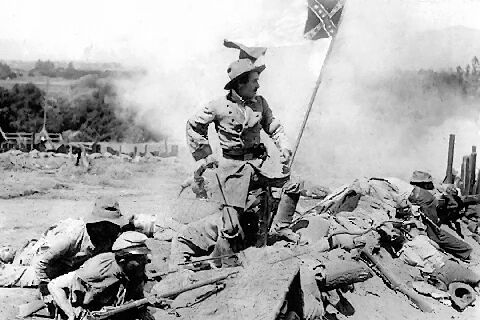
When you go into the movie with knowledge of its reputation, you sit there waiting for the bad stuff to start. It doesn't come right away. At first, it's a Civil War re-enactment played straight with most of the racism relegated to subtext. For example, the movie never acknowledges the Southern attack on Fort Sumter that began the war and treats the conflict as this mysterious force that just came out of nowhere and disrupted everyone's lives. There is also one scene I remember where black onlookers cheered for a Southern victory (Hooray! We're still slaves!). Strangely enough, Abraham Lincoln is treated with a lot of reverence and the scene of his assassination is probably the most impressive moment in the film. Unfortunately, it's also the point at which the movie conjures up this bizarre alternate history of the Reconstruction era where blacks took over the legislature and began to punish the defeated South. A lot of problems here, the biggest being that the movie doesn't believe this history is "alternate."
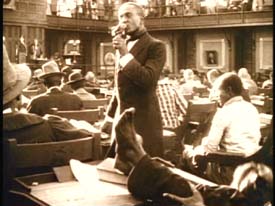
The class had been dead silent through the movie up until this point. I remember when the first gasps came. It was a scene during the election where white people were intimidated into not voting while black officials stuffed the ballot box (A century later, conservatives are still afraid of this). The new black legislators recline in their chairs and put their feet up while guzzling liquor and eating fried chicken. I am not kidding. As viewers, we're meant to be appalled at the lack of respect these men had for a system of government that had endorsed their slavery until just recently. The leader of this radical movement is a half-white/half-black man named Lynch. Not kidding about that either.
On one fateful day, the white hero is depressed about all the black people and sits alone on a tree stump. Suddenly, he sees two children pretending to be ghosts by wearing a white sheet. You can practically see the light bulb appear over his head. Sure enough, the Ku Klux Klan is born and The Birth of a Nation treats them like the goddamn Fellowship of the Ring. They ride across the land in epic scenery shots that were far beyond anything audiences had seen at the time. In the climactic sequence, distressed white people hide inside a shack while hordes of angry black men tear down the walls, a scene that would later become a staple in zombie movies. Contrary to popular belief, D.W. Griffith did not "invent" parallel editing with this sequence, but he did demonstrate how effective it could be in regard to building tension.
Speaking of tension, it hit a fever pitch during my classroom screening during one infamous scene. A young white girl is chased through the woods by a black man and when she gets cornered at the edge of a cliff, jumps to her death rather than risk miscegenation. The obnoxious intertitles tell us not to mourn because she chose death over being defiled. The man is hunted down by the KKK and put on trial. Cut to a horrifying image of a Klan mob restraining him with burning crosses in the background while the screen has a hellish red tint. A brief intertitle pops up. "Guilty." At this point, the class abruptly broke out into laughter. As if there was any doubt how that scene would end. The sheer cognitive dissonance of this sinister image of persecution being presented as an example of righteous justice was too much. The man is killed and the Klan drops his dead body at the front door of the statehouse cause you know, that's just what civilized people do.
Were we assholes for laughing? I don't know. But we had been sitting through this nonsense for two and a half hours and we needed some kind of release. The class continued to laugh at the rest of the film's racist moments because what else can you do at that point? The final scene, of a translucent (and obviously white) Jesus giving an approving smile to everything that has just happened, was the jaw-dropping cherry on top of this shit sundae. We had all expected something pretty bad, but wow. Needless to say, the conversations as we left the classroom were memorable.
The movie was controversial from the start but still a sensation with audiences. President Woodrow Wilson even screened it in the White House. It was used as a recruiting tool for the KKK and is said to have been the inspiration for many spontaneous acts of violence against black citizens. Makes Natural Born Killers look pretty harmless by comparison. D.W. Griffith was bewildered by the accusations of racism (I know, I know) and tried to make amends with another three hour epic, Intolerance, about the struggles of oppressed people through the ages. The Academy Awards wouldn't exist for another 14 years and I'm sure current members are grateful for that, given that an honorary Oscar was given to Al Jolson for his blackface routine in The Jazz Singer during that first round of awards in 1929. Ten years later, the Best Picture Oscar went to Gone With The Wind, a less outwardly offensive film than Birth of a Nation but still infused with that victimized plantation mentality.
Film critics still tie themselves in knots trying to reconcile their feelings about this movie. Never has the difference between a "influential" film and a "good" film been so glaringly apparent. Griffith's innovative techniques and the overall grandiosity of the movie ensured it a permanent place in American film history, a curse on our otherwise impressive contributions to cinema that we brought upon ourselves. As repulsive as it is, I still think anyone seriously interested in film, history and the intersection of the two should watch it. Most of the time, movies about America's sordid racial past depict a conflict between good white people and bad white people in an effort to make us feel better. By showing us the kind of mentality that was mainstream 100 years ago, this movie is actually far more educational.
When I started my life as a film buff back in high school, I sought out as many classics as I could. Most of us start with the ones that get name-dropped the most when it comes to the history of film - Citizen Kane, Casablanca, The Godfather, Seven Samurai, etc. Another name I had heard quite often was The Birth of a Nation, although I avoided it because of both its massive length (nearly 3.5 hours) and its reputation as a horribly racist movie. Did I really want to spend that much time on something so pernicious? Not really. During my second year at NYU, the choice was made for me.
The silent film course was one of my favorites. I discovered all sorts of brilliant films from that era. We even had a professional musician come in and play the piano accompaniment to the experimental Russian classic Man With A Movie Camera. It left me with a love of silent cinema that continues to this day...and it's a strong love indeed if it could survive a screening of The Birth of A Nation. Most of the students in the class were also seeing it for the first time - perhaps they had avoided it for the same reasons. Movie classes at NYU typically ran 4 hours in order to accommodate a movie screening and a lengthy discussion afterwards, but Birth took up almost the entire class just to watch. The experience was far more memorable than if I had simply watched it alone.
When you go into the movie with knowledge of its reputation, you sit there waiting for the bad stuff to start. It doesn't come right away. At first, it's a Civil War re-enactment played straight with most of the racism relegated to subtext. For example, the movie never acknowledges the Southern attack on Fort Sumter that began the war and treats the conflict as this mysterious force that just came out of nowhere and disrupted everyone's lives. There is also one scene I remember where black onlookers cheered for a Southern victory (Hooray! We're still slaves!). Strangely enough, Abraham Lincoln is treated with a lot of reverence and the scene of his assassination is probably the most impressive moment in the film. Unfortunately, it's also the point at which the movie conjures up this bizarre alternate history of the Reconstruction era where blacks took over the legislature and began to punish the defeated South. A lot of problems here, the biggest being that the movie doesn't believe this history is "alternate."
The class had been dead silent through the movie up until this point. I remember when the first gasps came. It was a scene during the election where white people were intimidated into not voting while black officials stuffed the ballot box (A century later, conservatives are still afraid of this). The new black legislators recline in their chairs and put their feet up while guzzling liquor and eating fried chicken. I am not kidding. As viewers, we're meant to be appalled at the lack of respect these men had for a system of government that had endorsed their slavery until just recently. The leader of this radical movement is a half-white/half-black man named Lynch. Not kidding about that either.
On one fateful day, the white hero is depressed about all the black people and sits alone on a tree stump. Suddenly, he sees two children pretending to be ghosts by wearing a white sheet. You can practically see the light bulb appear over his head. Sure enough, the Ku Klux Klan is born and The Birth of a Nation treats them like the goddamn Fellowship of the Ring. They ride across the land in epic scenery shots that were far beyond anything audiences had seen at the time. In the climactic sequence, distressed white people hide inside a shack while hordes of angry black men tear down the walls, a scene that would later become a staple in zombie movies. Contrary to popular belief, D.W. Griffith did not "invent" parallel editing with this sequence, but he did demonstrate how effective it could be in regard to building tension.
Speaking of tension, it hit a fever pitch during my classroom screening during one infamous scene. A young white girl is chased through the woods by a black man and when she gets cornered at the edge of a cliff, jumps to her death rather than risk miscegenation. The obnoxious intertitles tell us not to mourn because she chose death over being defiled. The man is hunted down by the KKK and put on trial. Cut to a horrifying image of a Klan mob restraining him with burning crosses in the background while the screen has a hellish red tint. A brief intertitle pops up. "Guilty." At this point, the class abruptly broke out into laughter. As if there was any doubt how that scene would end. The sheer cognitive dissonance of this sinister image of persecution being presented as an example of righteous justice was too much. The man is killed and the Klan drops his dead body at the front door of the statehouse cause you know, that's just what civilized people do.
Were we assholes for laughing? I don't know. But we had been sitting through this nonsense for two and a half hours and we needed some kind of release. The class continued to laugh at the rest of the film's racist moments because what else can you do at that point? The final scene, of a translucent (and obviously white) Jesus giving an approving smile to everything that has just happened, was the jaw-dropping cherry on top of this shit sundae. We had all expected something pretty bad, but wow. Needless to say, the conversations as we left the classroom were memorable.
The movie was controversial from the start but still a sensation with audiences. President Woodrow Wilson even screened it in the White House. It was used as a recruiting tool for the KKK and is said to have been the inspiration for many spontaneous acts of violence against black citizens. Makes Natural Born Killers look pretty harmless by comparison. D.W. Griffith was bewildered by the accusations of racism (I know, I know) and tried to make amends with another three hour epic, Intolerance, about the struggles of oppressed people through the ages. The Academy Awards wouldn't exist for another 14 years and I'm sure current members are grateful for that, given that an honorary Oscar was given to Al Jolson for his blackface routine in The Jazz Singer during that first round of awards in 1929. Ten years later, the Best Picture Oscar went to Gone With The Wind, a less outwardly offensive film than Birth of a Nation but still infused with that victimized plantation mentality.
Film critics still tie themselves in knots trying to reconcile their feelings about this movie. Never has the difference between a "influential" film and a "good" film been so glaringly apparent. Griffith's innovative techniques and the overall grandiosity of the movie ensured it a permanent place in American film history, a curse on our otherwise impressive contributions to cinema that we brought upon ourselves. As repulsive as it is, I still think anyone seriously interested in film, history and the intersection of the two should watch it. Most of the time, movies about America's sordid racial past depict a conflict between good white people and bad white people in an effort to make us feel better. By showing us the kind of mentality that was mainstream 100 years ago, this movie is actually far more educational.
Monday, January 12, 2015
Top Ten Films of 2014
I can't tell if this was a great year for movies or if it just felt like one because I was able to see so much. Given that I spend most days looking after two toddlers at home, I'm pleasantly surprised at how easily I was able to keep track of the past year's notable films. I wrote more about this a while back, but streaming services like Itunes, Netflix and Vimeo (that's where you find the really under the radar stuff) have made theatrical releases less and less essential for getting a movie to the masses. I hope that the movie theater experience doesn't ever disappear, but the convenience of these alternatives is impossible to resist for someone in my position. With that in mind, it's time for my ten once again.
10. Interstellar
Christopher Nolan is one of very few directors who has had enough commercial success that studios will go along with any film he wants to make and he makes sure to use that privilege. This three-hour science-fiction epic is the most ambitious blockbuster in years and treated audiences to some truly jaw-dropping images of the cosmos. Like Gravity did last year, Nolan uses digital effects judiciously and the galactic vistas of this film never look fake and when paired with Hans Zimmer's majestic Philip Glass-esque score, these scenes offer a breathtaking experience in the theater. As with a lot of the director's work, Interstellar engages the brain as well as the eyes. Not just any movie can mine tearjerking drama from Einstein's theory of relativity. This is Nolan's most personal and heartfelt work and even the flaws (the dialogue and characterization can get pretty spotty) seem to add to that feeling of seeing an artist known primarily for grim superhero dramas suddenly start wearing his heart on his sleeve.
9. The Tale of the Princess Kaguya
Studio Ghibili's Isao Takahata has never been as well-known internationally as his co-founder, Hayao Miyazaki. It could be that his films are a little less accessible - they're typically slow-paced and often very sad. Yet with his first film in over a decade, Takahata has again proven himself to be a tremendous artist, bringing an ancient Japanese fairy tale to life with a gorgeous charcoal/watercolor aesthetic while also deconstructing the harmful attitudes often found within these tales. When an older couple finds a mysterious baby girl inside a bamboo stalk, they believe she is destined for greatness. However, having to leave a simple life in a village for a "noble" life as a princess leaves her desperately unhappy. There is nothing romantic about royalty here, only the heartbreak that comes from being forced to conform to culturally accepted notions about the role you're supposedly meant to play. There are rumors that Studio Ghibli's days are numbered. This beautiful, innovative, intelligent and moving film is reason to desperately hope that is not the case.
8. The Sacrament
A gripping, devastating and heart-stopping tale of a mysterious cult that's heavily influenced by real-life events (although still technically fictional). A journalist, along with his cameraman, tracks down his sister at a commune in the jungle called Eden Parish. Director Ti West specializes in slow-burning tension and he spends the entire first half making the viewer wonder if Eden Parish, unlike the cults that obviously inspired it, just might be a great place after all. When the mysterious leader who goes by "Father" (Gene Jones, in an Oscar-worthy performance) shows up for a taped interview in front of his followers, you both fear and admire him at the same time. But when the ugly truth finally comes out, your worst fears are realized and the film turns into a terrifying roller-coaster. The other films on the list have more innovative qualities than this genre piece, but none of them dragged me to the edge of my seat in the same way.
7. X-Men: Days of Future Past
Many people are getting sick of superhero films, even those of us who grew up with comic books, but I'll always be in the mood for a movie of any genre that's as satisfying as Days of Future Past. Let's count off everything Bryan Singer accomplished with this one. Adapting a legendary, influential comic book story for modern audiences while maintaining its 1970s setting. Creating a terrific link between Singer's past X-Men films and the newer series that began with the underrated X-Men: First Class. Most importantly of all, using the time travel plotline to completely undo the events of the horrendous X-Men 3. Comic books do this kind of thing all the time, it's called a "ret-con" and more often than not, they're not particularly popular with fans. I don't anticipate too many complaints about this one. Days of Future Past took a series that had gone way off the rails, totally rescued it and made me psyched for the next movie. If anyone still has any doubts about how cool this movie is, check out the already famous "Time in a Bottle" scene with Quicksilver on YouTube. You're welcome.
6. Birdman
It's hard to believe that such a surreal, weird movie is one of the front-runners for Best Picture, but then again, Hollywood is a sucker for stories about showbiz and director/co-writer Alejandro Gonzales-Innaritu has delivered a vivid portrait of an artist's fragile ego. One minute, washed up actor Riggan Thompson (Michael Keaton) is getting a pep talk from the superhero he once played about his risky Broadway debut, the next minute that same deep voice is ripping him a new one. As has been noted many times by now, Michael Keaton once played a superhero himself. The movie has a few casting gags like this, including Edward Norton playing a notoriously difficult method actor and a few Mulholland Drive references around the Naomi Watts character. The camerawork is also a star - about 20 minutes in, I realized I hadn't noticed any cuts and sure enough, most of the movie is designed to look like one single take. With that wacky percussion score thundering in the background most of the time, Birdman was a truly unique movie experience. Innaritu has primarily specialized in bleak dramas like Babel and 21 Grams, so his apparent gift for dark comedy is definitely a surprise, but a welcome one.
5. Selma
This was always going to be an important film - after all, it's the first theatrically released movie where Dr. Martin Luther King Jr. is played by an actor and not archived footage - but I can't imagine the cast and crew expected it would emerge at a time when the persistence of America's systemic racism has become so overwhelmingly clear. Ava DuVernay's dramatization of the protest march from Selma to Montgomery walks a thin line between being inspirational and deeply discouraging when you realize that the 1960s atrocities depicted in this film haven't gone away. Racially motivated bombings? Still happening. Voter suppression? Having a major comeback thanks to the Supreme Court. Police attacks on unarmed, nonviolent demonstrators? Do I even have to ask? Needless to say, it's an opportune time to revisit this history and Selma places a welcome emphasis on the work involved to make change happen as characters discuss using politics, the media and the legal system in fascinating detail. For all his grand oratory, the real Dr. King is said to have been an introvert and what I really liked about David Oyelowo's performance was that he captured a careful, thoughtful side of the man while still killing it when it's time to give a big speech. Selma steps into a few well-worn Oscar bait cliches and it's already gotten a lot of flack for portraying President Lyndon Johnson as a dithering crank who had to be dragged kicking and screaming before he signed the Voting Rights Act, but as a cinematic interpretation, it raises the stakes of this moment in history in a way that only movies can. This is the right film at the right time.
4. The Internet's Own Boy
By the age of 25, computer genius Aaron Swartz had already invented the Creative Commons License and co-founded the site Reddit, two major moments in the short history of the internet. What happened that ultimately led to his self-inflicted death in 2013? This gripping and emotionally intense documentary chronicles his burgeoning activism and the tragic consequences that came as a result. A tireless advocate for freedom of information, Swartz hacked into the MIT database and uploaded a massive amount of academic journals to the internet at large, believing that the results of college research belong to everyone, not just students who have paid to browse the collection. He was arrested and in the long run-up to his trial, prosecutors made no secret of their attempt to make an example of him to discourage other potential hackers with less benign intentions. Terrified by the possibility of 50 years in prison and a $1 million fine for what was a victimless crime, Swartz was ultimately pushed to the brink and beyond. The film nicely summarizes the complicated issues at hand, even though it's never a secret that the filmmakers side with their subject, but what stays with you is the tide of emotion that builds throughout. For many of the people interviewed, the wounds have not healed and you can't help but question a government that would cause this much pain and anguish over something that was, in the grand scheme of things, a trivial offense. In keeping with what Swartz stood for, the entire film can be watched for free at the Internet Archive.
3. The Babadook
2014 was a fantastic, perhaps even transformative year for independent horror and this Australian masterpiece was the best of the lot. If the Academy Awards weren't so biased against horror, Essie Davis would be a front-runner for Best Actress as a struggling mother still coping with the sudden death of her husband while trying to raise an extremely difficult child. Things begin to go very bad when the family starts to encounter a monster with a very goofy name who is first introduced to us during an insanely creepy sequence of pop-up book art. The Babadook is highly creative with its scares, including a bit where the monster (who looks like a Victorian-era Freddy Krueger) is seamlessly inserted into an old Georges Melies silent film. Director Jennifer Kent evokes the early work of Roman Polanski by focusing intently on the heroine's troubled mental state, giving the film a brilliant ambiguity. In this case, the non-supernatural interpretation of the film's events is far scarier.
2. Virunga
The best documentaries tell stories that are just as exciting and powerful as fiction and this one has a magnificent story to tell. The region in the Congo known as Virunga is both a national park and a UNESCO World Heritage Site, which is supposed to grant it international protection. Despite that, the park has spent years under siege by Soco International, a British oil company dead set on pillaging the oil reserves within Virunga's borders. Several segments of the film showcase some undercover journalism and several of the oil company employees are caught on tape expressing contempt for the people on Congo and planning to take advantage of the region's unrest by inciting militant anti-government groups to siege the park, which is the last refuge for wild mountain gorillas. The behavior of Soco showcases some of the worst of humanity, but the park's rangers more than make up for it. Many come from violent upbringings but have found purpose protecting the gorillas and are ready to die protecting them. With its powerful story, beautiful nature footage and haunting music, Virunga is an amazingly powerful documentary. It also happens to have the most jaw-dropping pre-credits text you're ever likely to see.
1. Boyhood
I don't feel especially creative putting this one at the top, given that it's shown up on almost every critic's list (even critics who don't normally agree with one another), but every so often you come across a movie that's such a huge accomplishment that all you can do is just bow down. Filmed intermittently for 12 years, Richard Linklater's brilliant movie invites us to watch star Ellar Coltrane go from age 6 to 18 right before our eyes. The effect is amazing and draws us deep into its gentle story which always feels small-scale and intimate despite its nearly three-hour length. Mason (Coltrane) goes through the ups and down of adolescence and sometimes struggles with his relationship to both his divorced parents. His mother (Patricia Arquette) exhausts herself trying to make ends meet and has lousy taste in men, and his father (Ethan Hawke) is well-meaning but can't always be counted on. The subtle performances of the actors and Linklater's ear for dialogue lend a lot of authenticity and while it is clearly a personal film for the director, its success indicates that many in the audience have found it personal as well. A beautiful, innovative movie that will likely be ripped off a few times but never truly duplicated.
Honorable Mentions: Life Itself, Snowpiercer, The Imitation Game, Captain America: The Winter Soldier, Enemy
10. Interstellar
Christopher Nolan is one of very few directors who has had enough commercial success that studios will go along with any film he wants to make and he makes sure to use that privilege. This three-hour science-fiction epic is the most ambitious blockbuster in years and treated audiences to some truly jaw-dropping images of the cosmos. Like Gravity did last year, Nolan uses digital effects judiciously and the galactic vistas of this film never look fake and when paired with Hans Zimmer's majestic Philip Glass-esque score, these scenes offer a breathtaking experience in the theater. As with a lot of the director's work, Interstellar engages the brain as well as the eyes. Not just any movie can mine tearjerking drama from Einstein's theory of relativity. This is Nolan's most personal and heartfelt work and even the flaws (the dialogue and characterization can get pretty spotty) seem to add to that feeling of seeing an artist known primarily for grim superhero dramas suddenly start wearing his heart on his sleeve.
9. The Tale of the Princess Kaguya
Studio Ghibili's Isao Takahata has never been as well-known internationally as his co-founder, Hayao Miyazaki. It could be that his films are a little less accessible - they're typically slow-paced and often very sad. Yet with his first film in over a decade, Takahata has again proven himself to be a tremendous artist, bringing an ancient Japanese fairy tale to life with a gorgeous charcoal/watercolor aesthetic while also deconstructing the harmful attitudes often found within these tales. When an older couple finds a mysterious baby girl inside a bamboo stalk, they believe she is destined for greatness. However, having to leave a simple life in a village for a "noble" life as a princess leaves her desperately unhappy. There is nothing romantic about royalty here, only the heartbreak that comes from being forced to conform to culturally accepted notions about the role you're supposedly meant to play. There are rumors that Studio Ghibli's days are numbered. This beautiful, innovative, intelligent and moving film is reason to desperately hope that is not the case.
8. The Sacrament
A gripping, devastating and heart-stopping tale of a mysterious cult that's heavily influenced by real-life events (although still technically fictional). A journalist, along with his cameraman, tracks down his sister at a commune in the jungle called Eden Parish. Director Ti West specializes in slow-burning tension and he spends the entire first half making the viewer wonder if Eden Parish, unlike the cults that obviously inspired it, just might be a great place after all. When the mysterious leader who goes by "Father" (Gene Jones, in an Oscar-worthy performance) shows up for a taped interview in front of his followers, you both fear and admire him at the same time. But when the ugly truth finally comes out, your worst fears are realized and the film turns into a terrifying roller-coaster. The other films on the list have more innovative qualities than this genre piece, but none of them dragged me to the edge of my seat in the same way.
7. X-Men: Days of Future Past
Many people are getting sick of superhero films, even those of us who grew up with comic books, but I'll always be in the mood for a movie of any genre that's as satisfying as Days of Future Past. Let's count off everything Bryan Singer accomplished with this one. Adapting a legendary, influential comic book story for modern audiences while maintaining its 1970s setting. Creating a terrific link between Singer's past X-Men films and the newer series that began with the underrated X-Men: First Class. Most importantly of all, using the time travel plotline to completely undo the events of the horrendous X-Men 3. Comic books do this kind of thing all the time, it's called a "ret-con" and more often than not, they're not particularly popular with fans. I don't anticipate too many complaints about this one. Days of Future Past took a series that had gone way off the rails, totally rescued it and made me psyched for the next movie. If anyone still has any doubts about how cool this movie is, check out the already famous "Time in a Bottle" scene with Quicksilver on YouTube. You're welcome.
6. Birdman
It's hard to believe that such a surreal, weird movie is one of the front-runners for Best Picture, but then again, Hollywood is a sucker for stories about showbiz and director/co-writer Alejandro Gonzales-Innaritu has delivered a vivid portrait of an artist's fragile ego. One minute, washed up actor Riggan Thompson (Michael Keaton) is getting a pep talk from the superhero he once played about his risky Broadway debut, the next minute that same deep voice is ripping him a new one. As has been noted many times by now, Michael Keaton once played a superhero himself. The movie has a few casting gags like this, including Edward Norton playing a notoriously difficult method actor and a few Mulholland Drive references around the Naomi Watts character. The camerawork is also a star - about 20 minutes in, I realized I hadn't noticed any cuts and sure enough, most of the movie is designed to look like one single take. With that wacky percussion score thundering in the background most of the time, Birdman was a truly unique movie experience. Innaritu has primarily specialized in bleak dramas like Babel and 21 Grams, so his apparent gift for dark comedy is definitely a surprise, but a welcome one.
5. Selma
This was always going to be an important film - after all, it's the first theatrically released movie where Dr. Martin Luther King Jr. is played by an actor and not archived footage - but I can't imagine the cast and crew expected it would emerge at a time when the persistence of America's systemic racism has become so overwhelmingly clear. Ava DuVernay's dramatization of the protest march from Selma to Montgomery walks a thin line between being inspirational and deeply discouraging when you realize that the 1960s atrocities depicted in this film haven't gone away. Racially motivated bombings? Still happening. Voter suppression? Having a major comeback thanks to the Supreme Court. Police attacks on unarmed, nonviolent demonstrators? Do I even have to ask? Needless to say, it's an opportune time to revisit this history and Selma places a welcome emphasis on the work involved to make change happen as characters discuss using politics, the media and the legal system in fascinating detail. For all his grand oratory, the real Dr. King is said to have been an introvert and what I really liked about David Oyelowo's performance was that he captured a careful, thoughtful side of the man while still killing it when it's time to give a big speech. Selma steps into a few well-worn Oscar bait cliches and it's already gotten a lot of flack for portraying President Lyndon Johnson as a dithering crank who had to be dragged kicking and screaming before he signed the Voting Rights Act, but as a cinematic interpretation, it raises the stakes of this moment in history in a way that only movies can. This is the right film at the right time.
4. The Internet's Own Boy
By the age of 25, computer genius Aaron Swartz had already invented the Creative Commons License and co-founded the site Reddit, two major moments in the short history of the internet. What happened that ultimately led to his self-inflicted death in 2013? This gripping and emotionally intense documentary chronicles his burgeoning activism and the tragic consequences that came as a result. A tireless advocate for freedom of information, Swartz hacked into the MIT database and uploaded a massive amount of academic journals to the internet at large, believing that the results of college research belong to everyone, not just students who have paid to browse the collection. He was arrested and in the long run-up to his trial, prosecutors made no secret of their attempt to make an example of him to discourage other potential hackers with less benign intentions. Terrified by the possibility of 50 years in prison and a $1 million fine for what was a victimless crime, Swartz was ultimately pushed to the brink and beyond. The film nicely summarizes the complicated issues at hand, even though it's never a secret that the filmmakers side with their subject, but what stays with you is the tide of emotion that builds throughout. For many of the people interviewed, the wounds have not healed and you can't help but question a government that would cause this much pain and anguish over something that was, in the grand scheme of things, a trivial offense. In keeping with what Swartz stood for, the entire film can be watched for free at the Internet Archive.
3. The Babadook
2014 was a fantastic, perhaps even transformative year for independent horror and this Australian masterpiece was the best of the lot. If the Academy Awards weren't so biased against horror, Essie Davis would be a front-runner for Best Actress as a struggling mother still coping with the sudden death of her husband while trying to raise an extremely difficult child. Things begin to go very bad when the family starts to encounter a monster with a very goofy name who is first introduced to us during an insanely creepy sequence of pop-up book art. The Babadook is highly creative with its scares, including a bit where the monster (who looks like a Victorian-era Freddy Krueger) is seamlessly inserted into an old Georges Melies silent film. Director Jennifer Kent evokes the early work of Roman Polanski by focusing intently on the heroine's troubled mental state, giving the film a brilliant ambiguity. In this case, the non-supernatural interpretation of the film's events is far scarier.
2. Virunga
The best documentaries tell stories that are just as exciting and powerful as fiction and this one has a magnificent story to tell. The region in the Congo known as Virunga is both a national park and a UNESCO World Heritage Site, which is supposed to grant it international protection. Despite that, the park has spent years under siege by Soco International, a British oil company dead set on pillaging the oil reserves within Virunga's borders. Several segments of the film showcase some undercover journalism and several of the oil company employees are caught on tape expressing contempt for the people on Congo and planning to take advantage of the region's unrest by inciting militant anti-government groups to siege the park, which is the last refuge for wild mountain gorillas. The behavior of Soco showcases some of the worst of humanity, but the park's rangers more than make up for it. Many come from violent upbringings but have found purpose protecting the gorillas and are ready to die protecting them. With its powerful story, beautiful nature footage and haunting music, Virunga is an amazingly powerful documentary. It also happens to have the most jaw-dropping pre-credits text you're ever likely to see.
1. Boyhood
I don't feel especially creative putting this one at the top, given that it's shown up on almost every critic's list (even critics who don't normally agree with one another), but every so often you come across a movie that's such a huge accomplishment that all you can do is just bow down. Filmed intermittently for 12 years, Richard Linklater's brilliant movie invites us to watch star Ellar Coltrane go from age 6 to 18 right before our eyes. The effect is amazing and draws us deep into its gentle story which always feels small-scale and intimate despite its nearly three-hour length. Mason (Coltrane) goes through the ups and down of adolescence and sometimes struggles with his relationship to both his divorced parents. His mother (Patricia Arquette) exhausts herself trying to make ends meet and has lousy taste in men, and his father (Ethan Hawke) is well-meaning but can't always be counted on. The subtle performances of the actors and Linklater's ear for dialogue lend a lot of authenticity and while it is clearly a personal film for the director, its success indicates that many in the audience have found it personal as well. A beautiful, innovative movie that will likely be ripped off a few times but never truly duplicated.
Honorable Mentions: Life Itself, Snowpiercer, The Imitation Game, Captain America: The Winter Soldier, Enemy
Friday, October 31, 2014
Steaming Video and a New Wave of Horror
If you're a regular user of Netflix streaming, you've probably noticed which genre is by far the most visible. There are hundreds upon hundreds of horror films available to watch, the vast majority of which have been released in the last several years. There's a huge new wave of independent horror that has injected new life into the genre - horror's been vibrant since the turn of the century, but the mid '00s were stymied by an overdose of the torture subgenre. Ebbs and flows are typical for this genre, but what's unique about this current wave is that it's almost completely playing out on video streaming services rather than theaters.
It started with the first Paranormal Activity, easily the most influential horror film of the last 10 years. The runaway hit was evidence that you could make a popular and successful horror film with very little money. While it regrettably spawned an onslaught of unimaginative rip-offs aping its "found footage" format, its true contribution to the genre may be the inspiration it gave to aspiring filmmakers all over the world. The resulting boom coincided nicely with the rise of Netflix's movie streaming option and other digital services like Itunes or Amazon. Suddenly, it didn't really matter if you couldn't get a nationwide theatrical release for your movie. Most horror films these days are just having a brief run in big cities before making a beeline for streaming.
The timing works out pretty well because mainstream studio horror is an embarrassment right now. The Saw series is finally over and the Paranormal Activity sequels are basically out of gas, leaving Hollywood, in its escalating desperation for franchises, to produce a whole movie about the doll from the first 10 minutes of The Conjuring. The movies that aren't direct sequels might as well be, since the exact same demonic possession movie gets made every year. One of the most scathing reviews I've read recently was of Ouija, which takes a scene from countless other ghost stories and extends it into a whole feature. The critic wrote that "if that board was telling the truth, it would say 'Wait until Netflix.'" Ouch.
The big studios just don't get horror anymore. You don't market it the same way as superhero movies or young-adult book adaptations. In terms of its cultural role, horror has a lot in common with heavy metal - aside from a few years in the 80s, it's never been truly mainstream. Sure, horror movies always make money, but no other genre has as large a contingent of the general populace saying "I can't watch those movies." This leads to a closer relationship between the creators and the audience, which makes horror ideal for the streaming format and for the creative freedom you can find in independent film. For big fans, horror has a versatility to it - sometimes we want to have a good laugh at the tropes and cliches of classic films, but other times we want something new and terrifying to come in and blow our minds. Thanks to Netflix and other services, there are plenty of choices for everyone. It's a godsend to someone like me, who loves movies but has family responsibilities that keep me from running off every time I get psyched for a movie. It's easier than ever before to keep up on horror movies and movies in general despite living in a small town in Connecticut.
With so much choice, the question becomes: How do I pick out the good films from the tidal wave of movies? Well, it's been my experience that the star ratings won't steer you wrong. If fellow horror fans haven given a movie 1 star, it's probably abysmal because we're known for tolerating a lot of shit for the sake of a good scare. A movie with a 2.5 or 3 star rating is likely very polarizing and controversial and may still be worth checking out. Anything over 4 stars is probably a safe bet.
I'll also give you a list of personal recommendations. I like watching a lot of horror in October and here are some gems I found on Netflix.
The Conspiracy - An incredibly gripping story about two guys who are making a small-scale documentary about a local conspiracy nut (played beautifully by Alan Peterson) who suddenly disappears, leaving them wondering if maybe he was on to something after all.
The Pact - A near-perfect ghost story from up and coming director Nicholas McCarthy. Doesn't break any new ground but there's a lot more thought put into the overall story than is typical for movies like this. McCarthy's got a real talent for generating tension that pins you to the screen like a magnet. His follow-up, At The Devil's Door, is more ambitious but a little less coherent. That one is on Itunes right now.
Pontypool - A weird, cerebral Canadian movie about a small crew broadcasting a radio show from a basement while some kind of contagion breaks out. The real twist is that the virus is somehow spread through the English language, leaving the characters nervous that if they say the wrong thing, they'll be infected too. It's very surreal and interesting and has a lot of highbrow cinephile fans who normally don't bother with horror.
Satan's Little Helper - A ridiculously dark comedy about a kid with a few screws loose who unintentionally helps a masked serial killer who uses the spooky trappings of Halloween to cover up his crimes. It's got a classic 80s-horror vibe and the villain's mask is just awesome.
The Sacrament - A devastating tale of a strange cult in the jungle that is inspired heavily by the infamous Jonestown commune. This one works so well because the first half of the movie establishes the dynamics of the cult so well, making you hope against your own good sense that maybe this place is okay after all. Spoiler alert - it's not, and that's when the movie grabs you by the throat and won't let go. Gene Jones deserves a Supporting Actor Oscar for his simultaneously charismatic and intimidating performance as "Father," the cult leader.
You can go watch any of these right now if you've got Netflix. Enjoy the brave new world and Happy Halloween!
Tuesday, October 14, 2014
Sailor Moon
If you were a young man when this classic anime debuted in the United States, it was the show you weren't supposed to like. That wouldn't have been a problem if it weren't so good. Watching it for the first time on some lazy afternoon after school turned into a habit, a dark secret I had to keep from my classmates. Ironically, it had a lot in common with another show that was big at the time and could be watched without embarrassment - Mighty Morphin' Power Rangers. Both had a "monster of the day" approach to individual episodes and both had lengthy transformation scenes that were shown every time. But in Sailor Moon, the heroes were all women, so men were forbidden to enjoy it. If you did, you were gay. In the fascist dystopia of middle school in the 1990s, where conformity was strictly enforced by the constant threat of public shame, being called gay was the ultimate defeat. However, the few times when I did let it slip that I knew something about the show, I was surprised how familiar other dudes were with it. I think this covert male fandom spread well beyond my house and yet I'm still a bit nervous about it. This is one of the few blog entries I don't feel comfortable sharing on Facebook...make of that what you will. I've gone back to it recently because of the release of a remake, Sailor Moon Crystal. I might have watched that, if not for the news that uncut versions of the original show were now available for streaming. Given the choice between old and new, I totally wanted to take a walk down memory lane. They've been coming out with two new ones every week and I've been following it faithfully.
If you've never watched the show, here's a rundown. Middle-schooler Usagi Tsukino meets a talking cat named Luna and is given the power to transform into the superhero Sailor Moon and defend the Earth from evil monsters from the "Dark Kingdom." Eventually, four other girls join her - feisty, bullying Rei (Sailor Mars), rough and tumble Makoto (Sailor Jupiter), glamorous Mina (Sailor Venus) and sweet, brilliant Ami (Sailor Mercury). I had a dorky crush on Sailor Mercury back in those days, even if she had the lamest powers (shooting bubbles? really?). Eventually, they would meet other girls to round out the Solar System, but my most vivid memories are of the first story arc, where the girls have to fight the minions of Queen Beryl. Beryl preferred to give orders rather than get her hands dirty, so most of the time the Sailor Guardians faced off against her four generals - whiny, incompetent Jadeite, suave, calculating Nephrite, vain, vindictive Zoisite and experienced tactician Kunzite. In most episodes, a mysterious male hero named Tuxedo Mask would show up to bail the girls out of a jam so they could finish off the monsters with their signature techniques.
Like other shows transported to American television in the 90s, Sailor Moon was heavily censored and altered by the US distributors. Names were Americanized and a GI-Joe-esque "Sailor Says" segment was added to the end of each episode to tell kids to eat their vegetables or whatever. Zoisite, the villain who wears a long blonde ponytail and disappears in a cloud of rose petals, was changed to a woman because of a visibly loving relationship he had with Kunzite. Having a gay romance in a children's show was ridiculously progressive for the time period and I guess the guys behind the dub didn't think American kids were ready for it. Although, now that I think of it, if Zoisite did identify as a woman, perhaps everyone treating her as such was the more progressive way to go! Just kidding, I highly doubt that was the rationale. In any case, the lack of prominent breasts on an anime "woman" should have been a dead giveaway.
The storyline that really grabbed me was the unexpected tragic love story between the villainous Nephrite and Usagi's friend Naru. On one level, it's all kinds of skeevy - she's in middle school and he's a grown-ass man - but I would challenge anyone not to be moved when he dies heroically to protect her and she lets out an agonized cry of pain. The dub couldn't reduce that moment's power and from then on, the show adopted a much tighter continuity between episodes and went from just a curiosity to something I eagerly awaited every day. It all leads up to an emotionally wrenching climax where four of the Sailor Guardians are killed in battle, leaving Sailor Moon left to face Queen Beryl on her own. The American distributors were clearly shocked by the intensity of the episodes. They cut so much content from them that the season finale went from being two episodes to one. Even with the dialogue altered and the darkest moments omitted, the power of those episodes was unmistakable and it was easy to intuit what was really going on. When she finally defeats Beryl, Sailor Moon is able to restore everyone to life on Earth although they can no longer remember each other and their adventures...until the next threat to Earth arrives, at least.
It's clear to me now that this has aged a LOT better than Power Rangers. Obviously it can't compare to more revered anime like Death Note or Paranoia Agent or Monster, but for a kid's show it's quite enthralling. I may write a follow-up to this one in a few months when I've seen more of the episodes. At some point, the series is sure to go beyond what I saw as a kid and into the later episodes which I am totally unfamiliar with. Consider me excited.
If you've never watched the show, here's a rundown. Middle-schooler Usagi Tsukino meets a talking cat named Luna and is given the power to transform into the superhero Sailor Moon and defend the Earth from evil monsters from the "Dark Kingdom." Eventually, four other girls join her - feisty, bullying Rei (Sailor Mars), rough and tumble Makoto (Sailor Jupiter), glamorous Mina (Sailor Venus) and sweet, brilliant Ami (Sailor Mercury). I had a dorky crush on Sailor Mercury back in those days, even if she had the lamest powers (shooting bubbles? really?). Eventually, they would meet other girls to round out the Solar System, but my most vivid memories are of the first story arc, where the girls have to fight the minions of Queen Beryl. Beryl preferred to give orders rather than get her hands dirty, so most of the time the Sailor Guardians faced off against her four generals - whiny, incompetent Jadeite, suave, calculating Nephrite, vain, vindictive Zoisite and experienced tactician Kunzite. In most episodes, a mysterious male hero named Tuxedo Mask would show up to bail the girls out of a jam so they could finish off the monsters with their signature techniques.
Like other shows transported to American television in the 90s, Sailor Moon was heavily censored and altered by the US distributors. Names were Americanized and a GI-Joe-esque "Sailor Says" segment was added to the end of each episode to tell kids to eat their vegetables or whatever. Zoisite, the villain who wears a long blonde ponytail and disappears in a cloud of rose petals, was changed to a woman because of a visibly loving relationship he had with Kunzite. Having a gay romance in a children's show was ridiculously progressive for the time period and I guess the guys behind the dub didn't think American kids were ready for it. Although, now that I think of it, if Zoisite did identify as a woman, perhaps everyone treating her as such was the more progressive way to go! Just kidding, I highly doubt that was the rationale. In any case, the lack of prominent breasts on an anime "woman" should have been a dead giveaway.
The storyline that really grabbed me was the unexpected tragic love story between the villainous Nephrite and Usagi's friend Naru. On one level, it's all kinds of skeevy - she's in middle school and he's a grown-ass man - but I would challenge anyone not to be moved when he dies heroically to protect her and she lets out an agonized cry of pain. The dub couldn't reduce that moment's power and from then on, the show adopted a much tighter continuity between episodes and went from just a curiosity to something I eagerly awaited every day. It all leads up to an emotionally wrenching climax where four of the Sailor Guardians are killed in battle, leaving Sailor Moon left to face Queen Beryl on her own. The American distributors were clearly shocked by the intensity of the episodes. They cut so much content from them that the season finale went from being two episodes to one. Even with the dialogue altered and the darkest moments omitted, the power of those episodes was unmistakable and it was easy to intuit what was really going on. When she finally defeats Beryl, Sailor Moon is able to restore everyone to life on Earth although they can no longer remember each other and their adventures...until the next threat to Earth arrives, at least.
It's clear to me now that this has aged a LOT better than Power Rangers. Obviously it can't compare to more revered anime like Death Note or Paranoia Agent or Monster, but for a kid's show it's quite enthralling. I may write a follow-up to this one in a few months when I've seen more of the episodes. At some point, the series is sure to go beyond what I saw as a kid and into the later episodes which I am totally unfamiliar with. Consider me excited.
Friday, October 3, 2014
The World Outside
Every time I saw the Provazik Enterprises building from the outside, I was glad I only worked part-time. I would walk out to my car, turn around and become dismayed that I worked in that rusty abomination that was constantly pumping black smoke into the air. That parking lot wouldn't win any beauty contests either; there were no yellow lines to differentiate the spaces and large patches of grass had made their way through much of the cracked pavement.
On this particular day, I cast my usual rueful look at the Provazik building and saw something altogether different. Huge buildings began to rise out of the ground, as if the Earth was giving birth to them. These huge structures were coming up on all sides of the parking lot and after squinting, you could see the metal frames that were pushing each out from the underground. These new buildings were sleek and modern looking, unlike the eyesore where I had just spent several hours. I was still standing next to my car, but now the road had been completely cut off by these newborn buildings. The small crowd of us in the parking lot wandered towards the new entrance to see what was going on.
I was taken aback by the new entry hall. It was a wide circle with a huge bay window directly across from the doorway where I stood. All around, there were escalators, elevators and even a monorail to get people to the different buildings in the complex. It was fascinating to see, but at the moment I still wanted to get home. I wandered for a while and eventually found myself in a dimly lit, claustrophobic room where rows of people were scrunched over in front of computers hard at work. This looked more like the old Provazik building and was now a stark contrast to the breathtaking room I had just left.
A robot that couldn't have been more than four feet tall was supervising the activity. He made his way over to me and spoke in a deep, digital voice that sent chills down my spine.
"You are not working."
"I'm done working for today," I said back. "I'm just wondering how to get home now that these buildings have blocked the road."
"There is no world outside Provazik," the robot said immediately.
I needed a few moments to comprehend what the creature had just said. "What?"
"There is no world outside Provazik," the robot repeated, sounding even harsher.
I didn't feel like arguing. It was just too strange. Instead, I backed slowly out the small room and back into the entry hall. Wandering around the circle, I eventually found a map of the property, updated to include the phalanx of new buildings that had appeared only a few minutes earlier. While it did not support the robot's bizarre claim that there was no world outside the area, it did confirm that there was no exit. I grabbed my cellphone, thinking I could call my family and have them get the police to do something about this.
After a few rings, I heard a message that the number I was trying to reach had been disconnected. That was impossible, I thought. I called that number multiple times each day and now all of a sudden it doesn't work? It began to sink in that I might really be trapped here. Panic spread through me and I rushed back towards the parking lot. At least there I was outdoors. Surely there had to be some alleyway, some fence to climb, some way to get out of Provazik.
Instead, when I rushed through the door, I was someplace completely different. Behind me, the complex was gone. I was surrounded by grass up to my waist. The buildings here were crumbling and deserted. It looked as if humanity had been gone for centuries and the Earth was beginning to take back the land. I found myself drawn towards a large concrete staircase that ascended a green hill. Another person followed closely behind, no doubt someone else trying to get away from Provazik.
About halfway up the large white staircase, I turned around and was treated to a lovely view. Green hills and forest opened up before me. For the first time since those buildings rose out of the ground, I felt myself relax a little.
"Well, I don't know where exactly we are," I said out loud, "but at least we're out of there."
My companion said nothing and smiled at me. It wasn't a friendly smile, but a malicious grin that made me uneasy once again. Too late, I realized what would happen. The beautiful green panorama melted away as if it had turned to water and I was back in that dark room with the little robot standing in front of me.
"There is no world outside Provazik," it said once again. "Not anymore."
I rushed out of the room and back into that entrance hallway. I no longer found it enchanting, especially with the increased amount of people wandering the circle. I searched frantically for an exit until my phone vibrated. I yanked it out of my pocket, desperately hoping that it was someone I knew. It was the robot.
"Why do you not cooperate?" it asked me.
"I don't want to stay here," I replied. "I want to do other things besides work. I want to see the world, I want to travel."
"You can earn travel," the robot said.
"What does that mean?"
"You work hard enough and you can earn travel. You will be accompanied by agents to the place you want to visit. After you see the sights, you will return."
Something wasn't right about this and I knew what it was.
"You just said there was no world outside Provazik," I said, with a faint sense of joy that I had outwitted the robot. "Now I can travel? You're a lying sack of shit! You're a fuckin' liar!"
That was only the beginning of the torrent of obscenity I sent through the phone to that little creature. Employees, if they could still even be called that, wandered past and gave me strange looks. Finally, I hung up the phone and resumed my futile search for an exit.
After what felt like an eternity of searching, I saw a woman who I recognized. I believed she was a co-worker, but my memories had been growing cloudier the longer I remained in Provazik. She and a small group of friends were ducking through a small exit against one of the walls. I rushed over and caught a glimpse of a beautiful stream just outside the door. A guard yanked my arm and I found myself unable to move. However, the woman heard the commotion and recognized me. She indicated to her friends that she would only be a moment.
"You have to reject all the choices," she said. "They're going to make you offers, make you think you have a choice. But they're all the same. You have to reject all the choices!"
With that, she and the others went out the door and down a small ramp. The door shut and then faded, as if it had never been there at all. The guard dragged me into another room. It was like a classroom, but with desks that looked comically large since they were intended for adults. At least this one had decent lighting. There was a massive TV-screen in front of the desks, presumably to deliver some kind of education. I didn't want to sit at any of the desks; I was afraid they would never let me stand up again. Another robot ambled around the room and handed me a pamphlet.
I opened it up and saw a list of options. These were the choices she had warned me about. They sounded great on paper and the charming illustrations didn't hurt, but upon close analysis it was clear that none of them would get me out of Provazik.
But if you reject all the choices, what was left to do? The answer suddenly came to me. I picked up a chair.
"You're going to have to kill me!" I shouted to the robots. "You'll have to kill me or I'll destroy this place!"
For some reason, I decided to sing Iron Maiden's "The Trooper" aloud...perhaps to become even more disruptive.
"You take my life, but I'll take yours too!" The chair hit the huge television with a glass crunch.
"You fire your musket, but I'll run you through!" The cracks widened after another hit.
And so it went, until the television was barely recognizable. The room around me seemed to blur and moments later, I woke up in bed. This wasn't another trick; I recognized my bedroom. For a moment, I was still convinced the experience had been real.
"I did it," I said quietly. "I'm out."
I went back to sleep and dreamed of other things.
On this particular day, I cast my usual rueful look at the Provazik building and saw something altogether different. Huge buildings began to rise out of the ground, as if the Earth was giving birth to them. These huge structures were coming up on all sides of the parking lot and after squinting, you could see the metal frames that were pushing each out from the underground. These new buildings were sleek and modern looking, unlike the eyesore where I had just spent several hours. I was still standing next to my car, but now the road had been completely cut off by these newborn buildings. The small crowd of us in the parking lot wandered towards the new entrance to see what was going on.
I was taken aback by the new entry hall. It was a wide circle with a huge bay window directly across from the doorway where I stood. All around, there were escalators, elevators and even a monorail to get people to the different buildings in the complex. It was fascinating to see, but at the moment I still wanted to get home. I wandered for a while and eventually found myself in a dimly lit, claustrophobic room where rows of people were scrunched over in front of computers hard at work. This looked more like the old Provazik building and was now a stark contrast to the breathtaking room I had just left.
A robot that couldn't have been more than four feet tall was supervising the activity. He made his way over to me and spoke in a deep, digital voice that sent chills down my spine.
"You are not working."
"I'm done working for today," I said back. "I'm just wondering how to get home now that these buildings have blocked the road."
"There is no world outside Provazik," the robot said immediately.
I needed a few moments to comprehend what the creature had just said. "What?"
"There is no world outside Provazik," the robot repeated, sounding even harsher.
I didn't feel like arguing. It was just too strange. Instead, I backed slowly out the small room and back into the entry hall. Wandering around the circle, I eventually found a map of the property, updated to include the phalanx of new buildings that had appeared only a few minutes earlier. While it did not support the robot's bizarre claim that there was no world outside the area, it did confirm that there was no exit. I grabbed my cellphone, thinking I could call my family and have them get the police to do something about this.
After a few rings, I heard a message that the number I was trying to reach had been disconnected. That was impossible, I thought. I called that number multiple times each day and now all of a sudden it doesn't work? It began to sink in that I might really be trapped here. Panic spread through me and I rushed back towards the parking lot. At least there I was outdoors. Surely there had to be some alleyway, some fence to climb, some way to get out of Provazik.
Instead, when I rushed through the door, I was someplace completely different. Behind me, the complex was gone. I was surrounded by grass up to my waist. The buildings here were crumbling and deserted. It looked as if humanity had been gone for centuries and the Earth was beginning to take back the land. I found myself drawn towards a large concrete staircase that ascended a green hill. Another person followed closely behind, no doubt someone else trying to get away from Provazik.
About halfway up the large white staircase, I turned around and was treated to a lovely view. Green hills and forest opened up before me. For the first time since those buildings rose out of the ground, I felt myself relax a little.
"Well, I don't know where exactly we are," I said out loud, "but at least we're out of there."
My companion said nothing and smiled at me. It wasn't a friendly smile, but a malicious grin that made me uneasy once again. Too late, I realized what would happen. The beautiful green panorama melted away as if it had turned to water and I was back in that dark room with the little robot standing in front of me.
"There is no world outside Provazik," it said once again. "Not anymore."
I rushed out of the room and back into that entrance hallway. I no longer found it enchanting, especially with the increased amount of people wandering the circle. I searched frantically for an exit until my phone vibrated. I yanked it out of my pocket, desperately hoping that it was someone I knew. It was the robot.
"Why do you not cooperate?" it asked me.
"I don't want to stay here," I replied. "I want to do other things besides work. I want to see the world, I want to travel."
"You can earn travel," the robot said.
"What does that mean?"
"You work hard enough and you can earn travel. You will be accompanied by agents to the place you want to visit. After you see the sights, you will return."
Something wasn't right about this and I knew what it was.
"You just said there was no world outside Provazik," I said, with a faint sense of joy that I had outwitted the robot. "Now I can travel? You're a lying sack of shit! You're a fuckin' liar!"
That was only the beginning of the torrent of obscenity I sent through the phone to that little creature. Employees, if they could still even be called that, wandered past and gave me strange looks. Finally, I hung up the phone and resumed my futile search for an exit.
After what felt like an eternity of searching, I saw a woman who I recognized. I believed she was a co-worker, but my memories had been growing cloudier the longer I remained in Provazik. She and a small group of friends were ducking through a small exit against one of the walls. I rushed over and caught a glimpse of a beautiful stream just outside the door. A guard yanked my arm and I found myself unable to move. However, the woman heard the commotion and recognized me. She indicated to her friends that she would only be a moment.
"You have to reject all the choices," she said. "They're going to make you offers, make you think you have a choice. But they're all the same. You have to reject all the choices!"
With that, she and the others went out the door and down a small ramp. The door shut and then faded, as if it had never been there at all. The guard dragged me into another room. It was like a classroom, but with desks that looked comically large since they were intended for adults. At least this one had decent lighting. There was a massive TV-screen in front of the desks, presumably to deliver some kind of education. I didn't want to sit at any of the desks; I was afraid they would never let me stand up again. Another robot ambled around the room and handed me a pamphlet.
I opened it up and saw a list of options. These were the choices she had warned me about. They sounded great on paper and the charming illustrations didn't hurt, but upon close analysis it was clear that none of them would get me out of Provazik.
But if you reject all the choices, what was left to do? The answer suddenly came to me. I picked up a chair.
"You're going to have to kill me!" I shouted to the robots. "You'll have to kill me or I'll destroy this place!"
For some reason, I decided to sing Iron Maiden's "The Trooper" aloud...perhaps to become even more disruptive.
"You take my life, but I'll take yours too!" The chair hit the huge television with a glass crunch.
"You fire your musket, but I'll run you through!" The cracks widened after another hit.
And so it went, until the television was barely recognizable. The room around me seemed to blur and moments later, I woke up in bed. This wasn't another trick; I recognized my bedroom. For a moment, I was still convinced the experience had been real.
"I did it," I said quietly. "I'm out."
I went back to sleep and dreamed of other things.
Subscribe to:
Posts (Atom)