Depression is one of those subjects people prefer to keep under the rug. It’s intimidating subject matter, both for those with or without experience with it. But every so often, something happens that makes everyone take notice. By now, you’re surely aware of the death of Robin Williams. For people my age, it’s nigh impossible to imagine our childhood without him. More upsetting still is that the death appears to have been a suicide. If an Oscar-winning actor and comedian who made a fortune off his talent and was beloved all over the world can still be taken down by depression, things don’t look so good for the rest of us.
And yes, I am included in the “us” category. People who know my work probably aren’t surprised to find out I have depression. It tends to show up a lot in my body of work. Eddie Humphrey is the most obvious one, but Beth, Drew Stephenson, Cade Mistral and Stoic all dealt with it. Stoic reaching a breaking point and sealing himself inside a cave for centuries to escape all the hurt from the outside world was quite a personal sequence. Everyone’s experience with it is different – when it’s bad for me, I get in these moods where everything pisses me off and I just want to be left alone…except not really, because then it’s just me and all the thoughts about how I suck, I can’t do anything right and I’ll never have any real kind of success.
I’ve dealt with depression for almost 20 years. For a lot of those years, people pointed me towards anti-depressants as a possible source of relief. I resisted for a long time. I never looked down on other people who used them, that’s not the kind of thing I do and I believe people need to make their own choices based on their own circumstances, but for me it was a no-sell. Why? I had all sorts of reasons.
The corporate culture of anti-depressants bothered me, and still does. Believe it or not, it used to be illegal to have commercials for those drugs on television. Something got passed during the George W. Bush administration that changed that and suddenly they were all over the place. That created a strange association in my mind…I felt like the world was telling me that if I was dismayed about the direction the country was going in, it meant something was wrong with me and I needed to be put on meds. I would think to myself, “Fuck that! Bush is a terrible president and depression is the only natural response to what he’s doing!” There was also the side-effects, which can be nasty if you’re not careful. Anti-depressants have a reputation of halting creativity in people and that frightened me. Writing stories has always brought some solace and I felt if I lost that, it would compromise any other benefits I got from the stuff.
But after a lot of talking and a lot of thinking, I realized there was a much deeper fear driving all of this. I saw anti-depressants as a threat to my very identity. I felt that taking them would fully acknowledge depression as a purely medical problem, and not a cause-and-effect result of experiences like my sister’s death, years of being picked on in school, witnessing 9/11 firsthand in New York City, etc. I needed that cause-and-effect line of thinking to make sense of my life. If I was going to be depressed no matter what, then those experiences were essentially meaningless…and I need them to have meaning or else life just seems totally pointless and cruel.
I think of it differently now. It’s like the difference between alcoholism and addiction. Alcohol is a man-made substance, there’s no gene for alcoholism, how could there be? But there is a gene for addiction and addiction is the disease. A lot of times alcohol is the problem, but it could be any number of things – cocaine, heroin, gambling, coffee, cutting yourself, World of Warcraft. Similarly, the capacity for depression is what I was born with…and life threw more than enough at me to feed it. I might have struggled without those incidents, but it wouldn’t have been the same.
Because here’s the thing, and this is the most important part of all this, my life’s been on an upward curve ever since college. I am a husband and father now. I have a nice little house to call my own. I’ve gotten the chance to finish a number of stories that were sitting in my head for years. I have a movie collection that beautifully reflects my passion for film. I’ve gotten to see amazing sights like the rugged Castle Tintagel in England, the impossibly blue water of Crater Lake, the incomparable landscape of New Zealand, with many years in my life left to see more. Yeah, there are still struggles. My kids interrupt my sleep on a routine basis, America’s in really tough shape, we haven’t yet been able to turn our games into something that can support us financially. But if I am still plagued by moods where I’m incapable of appreciating what I have, the problem is still not solved.
If there’s a lesson to be learned from what happened to Robin Williams, it’s that you can’t beat depression just by living well. The guy accomplished so much but still struggled. Left unchecked, depression is a monster without empathy who absolutely will not stop until you are dead.
So a few months ago, I finally said enough was enough and started taking the pills. It was hard for me, I worried about being a hypocrite. I was afraid of the side-effects, although I am still writing. At first, it didn’t even work. I had to increase my dosage because the depression had simply adjusted to it. I still don’t know if it will be enough. But I can’t do nothing, and neither can you if you have similar struggles. It’s not cowardly or anything like that, it’s simply the will to survive. No matter what happens, you have to try your best to hold onto that. RIP, Robin Williams.
Tuesday, August 12, 2014
Wednesday, July 23, 2014
Four Types of Movie Watchers
I've wanted to do something like this for a while. Ever since I became a serious movie watcher some 15 years ago, I've been pretty fascinated about the different expectations and standards people have for the medium. For anyone who doesn't know my background, I lived and breathed movies for my high school years before majoring in Cinema Studies at New York University. I wanted to be a film critic, but I couldn't afford to keep living in the city after graduation and even in an environment like that, the jobs are slim. I did write movie reviews for my hometown paper for a number of years but eventually moved on to other pursuits. I still watch movies constantly, however, and perhaps one day I'll find a major use for this expertise. So long story short, I've had extensive experience with all of these "types" and I'm not talking out of my bum. With that established, let's get started.
Casual Viewer
For these people, movies just aren't a significant part of life. They've seen plenty, although they would have no clue how many if you asked them. They probably are in a movie theater less than five times a year, for major blockbusters or romantic comedies, depending on taste. Perhaps a book they really liked was adapted into a film, they'll check that out. If they have children, they are actually fairly knowledgeable about the Disney and Pixar canon because it's an easy way to give the rugrats something to do. Learning about the history of movies is not something they have any interest in doing. Chances are they haven't seen most of the more famous classics (i.e. Citizen Kane, Casablanca, The Godfather, etc) unless one was shown to them in a classroom.
It will be very hard to write this paragraph without being condescending, but please know I'm trying my best. A defining trait of the casual viewer is a lack of expectations. They go to movies expecting a two-hour distraction and if they got that, then they're satisfied and it's time to go back to the real world. Every so often, this total lack of critical evaluation can be infuriating to anyone who has thought seriously about film. In particular, Michael Bay's Transformers movies have become notorious for drawing the battle lines between casual moviegoers and everyone else. You'll often hear them defended as "just a dumb action movie" or "a fun popcorn movie," which is a phrase the person saw in an article recently. Perhaps you'll be told to go watch some highbrow French film instead, as if there's no possibility for an intelligent action film. Therein lies the key issue, actually - understanding the difference between "silly" and "brainless." A silly movie can be a lot of fun, but a brainless movie just sucks. I'm not really comfortable calling anything "objectively" terrible, but those Transformers movies really tempt me.
Casual viewers hate the Oscars because... "Who cares about the Oscars? Nobody's ever heard of the movies that get awards!"
Fanboy/Fangirl
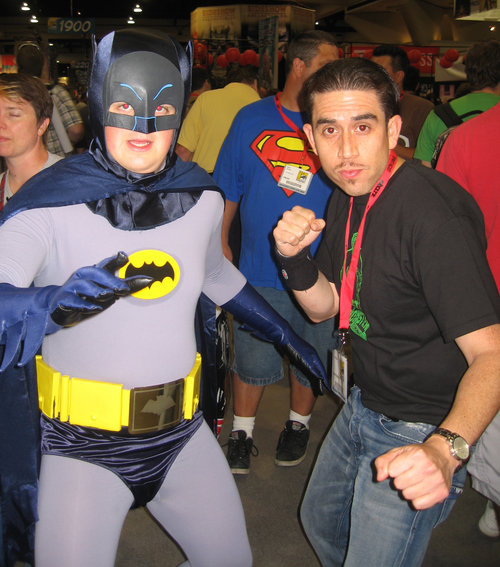
For fanboys (hopefully the inclusion of all genders is understood at this point), it's less about movies and more about geek-friendly genres of fiction like science-fiction, superheroes, fantasy, animation and horror. Most of them don't have much interest in the world of cinema outside these genres, but they are incredibly passionate about the movies within their realm. These are the costumed fans who will stand in line at Comic-Con for six hours to watch a two minute clip of the next Marvel movie. When it comes to the movies they love, they are tireless advocates. In particular, fanboys have been essential to the continued success of the horror genre.
However, there are dark sides to this level of fandom. They don't react kindly to innovation or experimentation when a movie adapts their treasured source material. They expect the movie adaptations to cater totally to them and resent attempts to appeal to a wider audience by altering the original stories. When this happens, they flood the internet with the level of vitriol you would expect from gun control debates on Facebook. Tread carefully before you start a conversation about George Lucas.
Fanboys hate the Oscars because...all their favorite genres routinely go ignored by the Academy. The only horror film to win Best Picture is The Silence of the Lambs, which people try to separate from horror by calling it a "psychological thriller." Please. A guy gets his a chunk of his face bitten off, it's a horror film. There you go, fanboys. Don't said I never did anything for ya.
Film Buff
A film buff will watch just about anything because they love movies. They seek a broad understanding of the medium, watching stuff from all genres and locations, and like to share their passion with others. When they see something great, they will sing its praises to their friends. When they see a fun bad movie (i.e. Plan 9 From Outer Space, Troll 2, The Room), they will make sure their friends get a chance to experience it. When they see a movie that's just plain bad, they will relish the chance to rip it apart. If you want a movie recommendation, find a film buff. If they know you well, they'll be able to cherry-pick their mental library for something you will like.
Passion and knowledge of film can impress other people, but it can also cost them friends if they don't keep their ego in check. Some film buffs take a fanboy attitude towards cinema as a whole, dismissing the opinions of others who haven't seen as many films as they have. A long movie-watching resume does give you a very informed opinion, but it doesn't take away the inherent subjectivity of the medium.
Film buffs hate the Oscars because...actually, they are the ones who are most likely to get at least some enjoyment out of it. Chances are, they like at least one of the movies that gets a statue. But they are also very familiar with all the films in each category, getting pissed off about their favored film losing the Cinematography Oscar while their friends are bewildered. It's a serious love/hate situation.
Cinephile
The cinephile is more interested in movies as art than as entertainment. Unlike the film buff, who seeks familiarity with all genres, the cinephile has no use for movies with overt commercial intentions. They have discerning taste and usually have a formal education in the history and language of film to back it up. I once heard a cinephile define "film buff" as "someone who dominates at Trivial Pursuit but has never seen a Victor Erice film." Directors like Erice, Eric Rohmer, Andrei Tarkovsky and Yasujiro Ozu are their bread and butter. They have a huge tolerance for boredom as long as the film they're watching is technically or thematically appealing to them. As you might have guessed by now, there is a noted correlation between cinephilia and hipsterism.
Like film buffs, a cinephile's worst enemy is his own ego. If they can keep that in check, cinephiles make outstanding professors and can get others to appreciate film in exciting new ways. If not, they run the risk of being utterly insufferable like the infamous commentator Armond White. In fact, most film critics are cinephiles (although the late Roger Ebert was definitely a film buff).
Cinephiles hate the Oscars because...they pretend not to care about the Oscars at all. But they do. However, the movies they love are almost always too obscure to get any nominations. Maybe in the Foreign Language category if they're lucky.
As for me, I'd identify myself as a film buff, but I do have a cinephile's education and a few of those tendencies (I have seen a film by Victor Erice, in fact). Not everyone will neatly fit into these categories, but I think articulating differences like this helps create more of a vocabulary that can be useful for discussing movies in general. I'd love to hear feedback about this one if anyone reads it. Am I on to something here or not even close? Which one are you?
Casual Viewer
For these people, movies just aren't a significant part of life. They've seen plenty, although they would have no clue how many if you asked them. They probably are in a movie theater less than five times a year, for major blockbusters or romantic comedies, depending on taste. Perhaps a book they really liked was adapted into a film, they'll check that out. If they have children, they are actually fairly knowledgeable about the Disney and Pixar canon because it's an easy way to give the rugrats something to do. Learning about the history of movies is not something they have any interest in doing. Chances are they haven't seen most of the more famous classics (i.e. Citizen Kane, Casablanca, The Godfather, etc) unless one was shown to them in a classroom.
It will be very hard to write this paragraph without being condescending, but please know I'm trying my best. A defining trait of the casual viewer is a lack of expectations. They go to movies expecting a two-hour distraction and if they got that, then they're satisfied and it's time to go back to the real world. Every so often, this total lack of critical evaluation can be infuriating to anyone who has thought seriously about film. In particular, Michael Bay's Transformers movies have become notorious for drawing the battle lines between casual moviegoers and everyone else. You'll often hear them defended as "just a dumb action movie" or "a fun popcorn movie," which is a phrase the person saw in an article recently. Perhaps you'll be told to go watch some highbrow French film instead, as if there's no possibility for an intelligent action film. Therein lies the key issue, actually - understanding the difference between "silly" and "brainless." A silly movie can be a lot of fun, but a brainless movie just sucks. I'm not really comfortable calling anything "objectively" terrible, but those Transformers movies really tempt me.
Casual viewers hate the Oscars because... "Who cares about the Oscars? Nobody's ever heard of the movies that get awards!"
Fanboy/Fangirl
For fanboys (hopefully the inclusion of all genders is understood at this point), it's less about movies and more about geek-friendly genres of fiction like science-fiction, superheroes, fantasy, animation and horror. Most of them don't have much interest in the world of cinema outside these genres, but they are incredibly passionate about the movies within their realm. These are the costumed fans who will stand in line at Comic-Con for six hours to watch a two minute clip of the next Marvel movie. When it comes to the movies they love, they are tireless advocates. In particular, fanboys have been essential to the continued success of the horror genre.
However, there are dark sides to this level of fandom. They don't react kindly to innovation or experimentation when a movie adapts their treasured source material. They expect the movie adaptations to cater totally to them and resent attempts to appeal to a wider audience by altering the original stories. When this happens, they flood the internet with the level of vitriol you would expect from gun control debates on Facebook. Tread carefully before you start a conversation about George Lucas.
Fanboys hate the Oscars because...all their favorite genres routinely go ignored by the Academy. The only horror film to win Best Picture is The Silence of the Lambs, which people try to separate from horror by calling it a "psychological thriller." Please. A guy gets his a chunk of his face bitten off, it's a horror film. There you go, fanboys. Don't said I never did anything for ya.
Film Buff
A film buff will watch just about anything because they love movies. They seek a broad understanding of the medium, watching stuff from all genres and locations, and like to share their passion with others. When they see something great, they will sing its praises to their friends. When they see a fun bad movie (i.e. Plan 9 From Outer Space, Troll 2, The Room), they will make sure their friends get a chance to experience it. When they see a movie that's just plain bad, they will relish the chance to rip it apart. If you want a movie recommendation, find a film buff. If they know you well, they'll be able to cherry-pick their mental library for something you will like.
Passion and knowledge of film can impress other people, but it can also cost them friends if they don't keep their ego in check. Some film buffs take a fanboy attitude towards cinema as a whole, dismissing the opinions of others who haven't seen as many films as they have. A long movie-watching resume does give you a very informed opinion, but it doesn't take away the inherent subjectivity of the medium.
Film buffs hate the Oscars because...actually, they are the ones who are most likely to get at least some enjoyment out of it. Chances are, they like at least one of the movies that gets a statue. But they are also very familiar with all the films in each category, getting pissed off about their favored film losing the Cinematography Oscar while their friends are bewildered. It's a serious love/hate situation.
Cinephile
The cinephile is more interested in movies as art than as entertainment. Unlike the film buff, who seeks familiarity with all genres, the cinephile has no use for movies with overt commercial intentions. They have discerning taste and usually have a formal education in the history and language of film to back it up. I once heard a cinephile define "film buff" as "someone who dominates at Trivial Pursuit but has never seen a Victor Erice film." Directors like Erice, Eric Rohmer, Andrei Tarkovsky and Yasujiro Ozu are their bread and butter. They have a huge tolerance for boredom as long as the film they're watching is technically or thematically appealing to them. As you might have guessed by now, there is a noted correlation between cinephilia and hipsterism.
Like film buffs, a cinephile's worst enemy is his own ego. If they can keep that in check, cinephiles make outstanding professors and can get others to appreciate film in exciting new ways. If not, they run the risk of being utterly insufferable like the infamous commentator Armond White. In fact, most film critics are cinephiles (although the late Roger Ebert was definitely a film buff).
Cinephiles hate the Oscars because...they pretend not to care about the Oscars at all. But they do. However, the movies they love are almost always too obscure to get any nominations. Maybe in the Foreign Language category if they're lucky.
As for me, I'd identify myself as a film buff, but I do have a cinephile's education and a few of those tendencies (I have seen a film by Victor Erice, in fact). Not everyone will neatly fit into these categories, but I think articulating differences like this helps create more of a vocabulary that can be useful for discussing movies in general. I'd love to hear feedback about this one if anyone reads it. Am I on to something here or not even close? Which one are you?
Sunday, July 13, 2014
Ten Great Movies for Swearing
I love swearing. I don't do it all that often on this blog, mostly because I try to keep a lighthearted, even-keeled tone here. It's not really a place for full-on rants. But when you are in the mood for a good rant, is there anything more satisfying than letting loose with some cuss words? "Bullshit" may be one of the most useful words in the English language - I can't think of any term more appropriate to describe so much of what we deal with in our daily lives in modern America. Even on a smaller scale, I don't know what I would do if I couldn't shout "God damn it!" when I hit my toe on some sharp children's toy that's been left in the middle of the floor.
It's an unfortunate reality that in a world full of starvation, war, injustice and other problems that actually harm people, there are still quite a few folks who get deeply offended by "naughty words." But I suppose that if they still weren't so scandalized, it wouldn't be as much fun to bust them out. The breaching of decorum associated with swearing is primarily what makes this glorious compilation of news anchors swearing on air so hilarious. With that as an appetizer, let's get into ten movies that use swear words to brilliant effect.
The Big Lebowski (Joel and Ethan Coen, 1998)
Jesus Quintana: You ready to be fucked, man? I see you rolled your way into the semis. Dios mio, man. Liam and me, we're gonna fuck you up.
The Dude: Yeah, well, you know, that's just, like, your opinion, man.
Jesus Quintana: Let me tell you something, pendejo. You pull any of your crazy shit with us, you flash a piece out on the lanes, I'll take it away from you, stick it up your ass and pull the fucking trigger 'til it goes "click."
The Dude: Jesus.
Jesus Quintana: You said it, man. Nobody fucks with the Jesus.
The Coen Brothers are Oscar-winning directors who have given film buffs everywhere many classics to obsess about, from Blood Simple to Fargo to Miller's Crossing to No Country For Old Men. But honestly, none of those movies are as much pure fun as The Big Lebowski, a movie that felt just as unambitious as its layabout hero. Critics had no clue what to make of it upon its initial release, but its fantastic cast and endless hilarity have earned it a huge following in the years since.
Casino (Martin Scorsese, 1995)
Nicky Santoro: Get this through your head, you Jew motherfucker, you. You only exist out here because of me! That's the only reason. Without me, you, personally, every fuckin' wise guy skell around'll take a piece of your fuckin' Jew ass. Then where you gonna go? You're fuckin' warned. Don't ever go over my fuckin' head again. You motherfucker, you!
There aren't many directors who have contributed as much profanity to the world of movies as Scorsese. From Raging Bull to The Wolf of Wall Street, he understands the visceral power of dropping f-bombs. When compared to some of his best work, Casino feels mostly like an unofficial sequel to the classic Goodfellas. Like most sequels, it's still a lot of fun but not quite as satisfying as its predecessor. However, when it comes to swearing, this movie is packed with glorious rants, most of them delivered by Joe Pesci's character.
Commando (Mark L. Lester, 1985)
[Cooke has a loaded gun]
Cooke: Fuck you, asshole.
[He pulls the trigger. It's out of bullets]
John Matrix: Fuck YOU, asshole.
The Film Encyclopedia's priceless description of Arnold Schwarzenegger reads, in part, "Curiously, Schwarzenegger's limited acting range, his deadpan expression and thick-accented delivery of American slang proved assets rather than liabilities in his rise to top popularity." If you want to see that dynamic in action, there are many choices but none greater than the sublimely ridiculous Commando, one of those treasures that you can't wait to show to someone who hasn't seen it so you can hear them howl with laughter for 90 minutes. I can't keep track of how many times I've watched this one and that's probably for the best.
Glengarry Glen Ross (James Foley, 1992)
Ricky Roma: You stupid fucking cunt. You, Williamson, I'm talking to you, shithead. You just cost me $6,000. Six thousand dollars, and one Cadillac. That's right. What are you going to do about it? What are you going to do about it, asshole? You're fucking shit. Where did you learn your trade, you stupid fucking cunt, you idiot? Who ever told you that you could work with men? Oh, I'm gonna have your job, shithead.
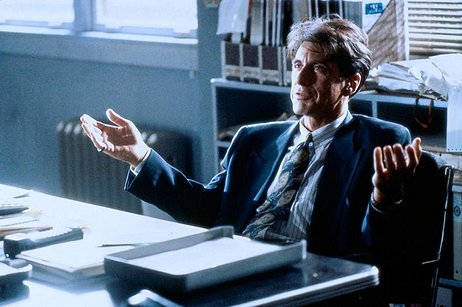
Glengarry Glen Ross is how the bloodthirsty nature of commercial real estate corrupts...oh, forget it. It's about swearing, okay? The reason anyone watches this is to see a cast of great actors hang around an office and read David Mamet's gloriously profane dialogue. Al Pacino gets most of the best lines, but Jack Lemmon has one meltdown near the end that just about steals the show. A foul-mouthed classic.
Gran Torino (Clint Eastwood, 2008)
[Walt Kowalski comes across thugs that are bothering a young girl while her friend stands by]
Thug: What the fuck you lookin' at, old man? Huh?
Walt Kowalski: What the hell are you spooks up to?
Thug: Spooks? You better get your ass on, honky, while I still let you. That's what you better do.
[Walt gets out of the truck and spits on the ground]
Walt: Ever notice once in a while you come across somebody you shouldn't have fucked with? That's me.
Thug: Are you fuckin' crazy, man? Get outta here.
Thug 2: Why don't you get outta here before I kick your old wrinkly white ass.
[Walt makes his finger into a gun and intimidates the thugs, then tells the girl to get into the truck. When they try and stop her, he pulls out a real gun.]
Thug: Whoa! Hey pops, come on now.
Walt: Shut your fuckin' face. You fuckin' don't listen, do ya?
Friend: Way to go, old man!
Walt: Shut up, pussy.
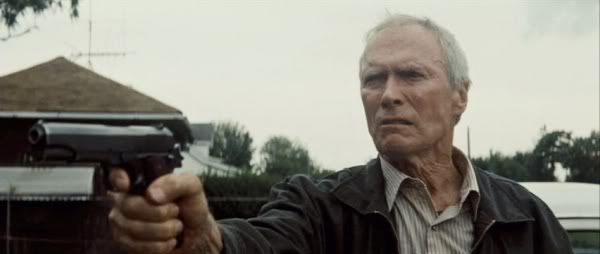
Clint Eastwood plays a grumpy old war veteran so politically incorrect he makes Archie Bunker look like a feminist twitter account. My friends and I were intrigued by the ads for this movie. We didn't know what to expect, but we certainly didn't anticipate the full-on laughing fits we had at watching Clint drive around his rough neighborhood with a permanent scowl. The second half of the movie is far more serious and dark, but the first half is a riot.
In The Loop (Armando Iannucci, 2009)
[Malcolm Tucker is on the phone while walking the streets of Washington, DC]
Malcolm: Fucking hung up, haven't you? You fucking...hoity-toity...fucking...
Tourist: Hey, buddy? Enough with the curse words, all right?
Malcolm: Kiss my sweaty balls, you fat fuck.
[he runs off]
Before he was writing priceless profane outbursts for Julia Louis-Dreyfus on HBO's Veep, Armando Iannucci directed this uproarious satire of Iraq War politics. It's exceptionally well-written, but the main reason to watch this one is Peter Capaldi as Malcolm Tucker, a British political strategist who spends all his scenes terrorizing the other characters with brilliantly off-color rants. The one drawback is that sometimes his heavy Scottish accent muddles what is being said. Turn on the subtitles for maximum enjoyment.
Jay and Silent Bob Strike Back (Kevin Smith, 2001)
Jay: Type this shit. "All you motherfuckers are gonna pay. YOU are the ones who are the ball-lickers! We're gonna fuck your mothers while you watch and cry like little bitches. Once we get to Hollywood and find those Miramax fucks who are making this movie, we're gonna make 'em eat our shit, then shit out our shit, than eat their shit which is in reality our shit that we made 'em eat. And all you little fucks are next. Love, Jay and Silent Bob."
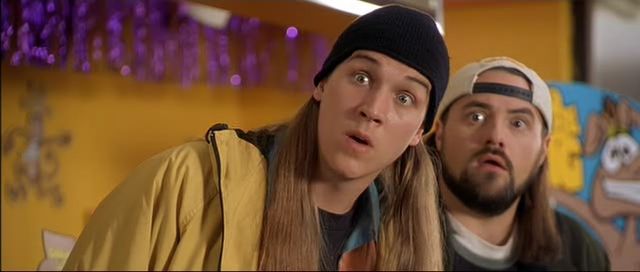
Any of Kevin Smith's movies could have been on this list (even the family-oriented Jersey Girl has some choice bits of profanity), but this one definitely has a place in my heart and is one of the most frequently used DVDs in my collection. The slapstick adventure has a lot of celebrity cameos but it's Jason Mewes, known only for this role, who carries the movie. The short-tempered, immature Jay appears in most of Smith's movies but he's never been funnier than here.
Nothing to Lose (Steve Oedekerk, 1997)
Terrence "T" Davidson: There's a spider on your head.
Nick Beam: Look, I'm sorry, I am not up on all this jive-talkin' home boy lingo. What the hell is that supposed to mean, there's a spider on my head?
T: It means...there's a spider...on your motherfuckin' HEAD, man!
Nick: Well, get it off! Get it off!
T: I ain't touchin' that SHIT!
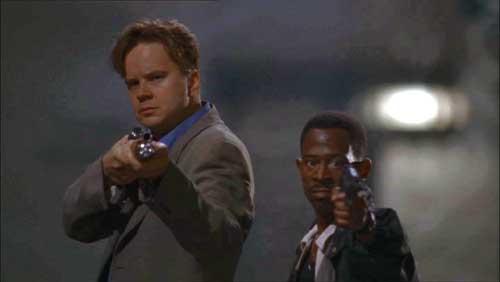
The "white guy meets black guy" comedy was ubiquitous during the 1980s and 90s, but the old cliche doesn't get much funnier than this underrated gem featuring Tim Robbins and Martin Lawrence. A favorite from my teenage years, the humor is often so random I wonder if most of the script was improvised. There are tons of laugh-out-loud hilarious moments in this movie, the best of which are the confrontations between the two protagonists and their evil counterparts (a pre-Scrubs John C. McGinley and a pre-Breaking Bad Giancarlo Esposito).
Pulp Fiction (Quentin Tarantino, 1994)
[Vincent and Jules are cleaning the inside of the car which is covered in blood]
Jules: Oh, man, I will never forgive your ass for this shit. This is some fucked-up repugnant shit.
Vincent: Jules, did you ever hear the philosophy that once a man admits that he's wrong that he is immediately forgiven for all wrongdoings? Have you ever heard that?
Jules: Get the fuck out my face with that shit! The motherfucker that said that shit never had to pick up itty-bitty pieces of skull on account of your dumb ass.
Vincent: I got a threshold, Jules. I got a threshold for the abuse that I will take. Now, right now, I'm a fuckin' race car, right, and you got me in the red. And I'm just sayin', I'm just sayin' that it's dangerous to have a race car in the red. That's all. I could blow.
Jules: Oh! Oh! You ready to blow? Well, I am a mushroom cloud layin' motherfucker, motherfucker!
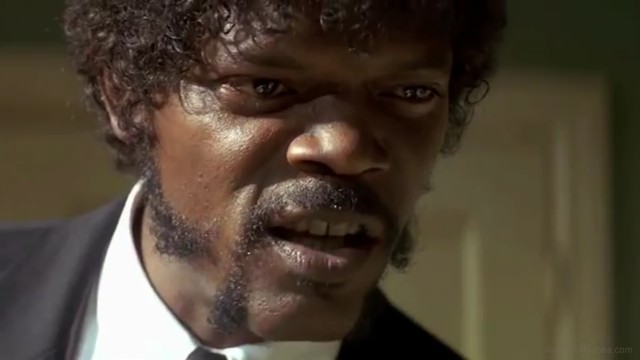
Pulp Fiction's dialogue is legendary for its overall cleverness, not just for swearing. Look in the "memorable quotes" section of its imdb page and you'll find basically the entire screenplay. For the purposes of this list, however, we recognize it for giving a career-defining role to Samuel L. Jackson and showing the world how adept he is with a certain 12-letter obscenity.
South Park: Bigger, Longer and Uncut (Trey Parker, 1999)
Eric Cartman: Don't call me fat, you fuckin' Jew!
Mr. Garrison: Eric! Did you just say the F word?!
Cartman: Jew?
Kyle Broflowski: No, he's talking about fuck! You can't say fuck in school, you fuckin' fat-ass!
Mr. Garrison: Kyle!
Cartman: Why the fuck not?!
Mr. Garrison: Eric!
Stan Marsh: Dude, you just said fuck again!
Mr. Garrison: Stanley!
Kenny McCormick: (muffled noise)
Mr. Garrison: Kenny!
Cartman: What's the big deal? It doesn't hurt anybody. Fuck fuckity fuck fuck fuck!
Mr. Garrison: How would you like to see the school counselor?
Cartman: How would YOU like to suck my balls?!
Mr. Garrison: WHAT did you say?!
Cartman: Oh, I'm sorry, I'm sorry. What I meant was...[picks up a bullhorn] How would you like to SUCK MY BALLS, Mr. Garrison?
[long pause]
Stan: Holy shit, dude.
The quality of the TV show over the years is wildly uneven, but the South Park movie is a flat-out masterpiece: a great musical, a hilarious comedy and a blistering satire about how America gets all worked up over non-issues like swearing while perpetrating violence all over the world. An uproar over swearing in a Canadian film escalates into a war between the US and Canada and on the eve of the battle, uptight busybody Sheila Broflowski tells the troops, "Remember what the MPAA says - Horrible deplorable violence is okay...as long as you don't say any naughty words!" And when you can cut off someone's head or destroy an entire city in a PG-13 movie but more than one "fuck" gets you an R, it's clear America lives by these words.
Happy swearing, everyone!
It's an unfortunate reality that in a world full of starvation, war, injustice and other problems that actually harm people, there are still quite a few folks who get deeply offended by "naughty words." But I suppose that if they still weren't so scandalized, it wouldn't be as much fun to bust them out. The breaching of decorum associated with swearing is primarily what makes this glorious compilation of news anchors swearing on air so hilarious. With that as an appetizer, let's get into ten movies that use swear words to brilliant effect.
The Big Lebowski (Joel and Ethan Coen, 1998)
Jesus Quintana: You ready to be fucked, man? I see you rolled your way into the semis. Dios mio, man. Liam and me, we're gonna fuck you up.
The Dude: Yeah, well, you know, that's just, like, your opinion, man.
Jesus Quintana: Let me tell you something, pendejo. You pull any of your crazy shit with us, you flash a piece out on the lanes, I'll take it away from you, stick it up your ass and pull the fucking trigger 'til it goes "click."
The Dude: Jesus.
Jesus Quintana: You said it, man. Nobody fucks with the Jesus.
The Coen Brothers are Oscar-winning directors who have given film buffs everywhere many classics to obsess about, from Blood Simple to Fargo to Miller's Crossing to No Country For Old Men. But honestly, none of those movies are as much pure fun as The Big Lebowski, a movie that felt just as unambitious as its layabout hero. Critics had no clue what to make of it upon its initial release, but its fantastic cast and endless hilarity have earned it a huge following in the years since.
Casino (Martin Scorsese, 1995)
Nicky Santoro: Get this through your head, you Jew motherfucker, you. You only exist out here because of me! That's the only reason. Without me, you, personally, every fuckin' wise guy skell around'll take a piece of your fuckin' Jew ass. Then where you gonna go? You're fuckin' warned. Don't ever go over my fuckin' head again. You motherfucker, you!
There aren't many directors who have contributed as much profanity to the world of movies as Scorsese. From Raging Bull to The Wolf of Wall Street, he understands the visceral power of dropping f-bombs. When compared to some of his best work, Casino feels mostly like an unofficial sequel to the classic Goodfellas. Like most sequels, it's still a lot of fun but not quite as satisfying as its predecessor. However, when it comes to swearing, this movie is packed with glorious rants, most of them delivered by Joe Pesci's character.
Commando (Mark L. Lester, 1985)
[Cooke has a loaded gun]
Cooke: Fuck you, asshole.
[He pulls the trigger. It's out of bullets]
John Matrix: Fuck YOU, asshole.
The Film Encyclopedia's priceless description of Arnold Schwarzenegger reads, in part, "Curiously, Schwarzenegger's limited acting range, his deadpan expression and thick-accented delivery of American slang proved assets rather than liabilities in his rise to top popularity." If you want to see that dynamic in action, there are many choices but none greater than the sublimely ridiculous Commando, one of those treasures that you can't wait to show to someone who hasn't seen it so you can hear them howl with laughter for 90 minutes. I can't keep track of how many times I've watched this one and that's probably for the best.
Glengarry Glen Ross (James Foley, 1992)
Ricky Roma: You stupid fucking cunt. You, Williamson, I'm talking to you, shithead. You just cost me $6,000. Six thousand dollars, and one Cadillac. That's right. What are you going to do about it? What are you going to do about it, asshole? You're fucking shit. Where did you learn your trade, you stupid fucking cunt, you idiot? Who ever told you that you could work with men? Oh, I'm gonna have your job, shithead.
Glengarry Glen Ross is how the bloodthirsty nature of commercial real estate corrupts...oh, forget it. It's about swearing, okay? The reason anyone watches this is to see a cast of great actors hang around an office and read David Mamet's gloriously profane dialogue. Al Pacino gets most of the best lines, but Jack Lemmon has one meltdown near the end that just about steals the show. A foul-mouthed classic.
Gran Torino (Clint Eastwood, 2008)
[Walt Kowalski comes across thugs that are bothering a young girl while her friend stands by]
Thug: What the fuck you lookin' at, old man? Huh?
Walt Kowalski: What the hell are you spooks up to?
Thug: Spooks? You better get your ass on, honky, while I still let you. That's what you better do.
[Walt gets out of the truck and spits on the ground]
Walt: Ever notice once in a while you come across somebody you shouldn't have fucked with? That's me.
Thug: Are you fuckin' crazy, man? Get outta here.
Thug 2: Why don't you get outta here before I kick your old wrinkly white ass.
[Walt makes his finger into a gun and intimidates the thugs, then tells the girl to get into the truck. When they try and stop her, he pulls out a real gun.]
Thug: Whoa! Hey pops, come on now.
Walt: Shut your fuckin' face. You fuckin' don't listen, do ya?
Friend: Way to go, old man!
Walt: Shut up, pussy.
Clint Eastwood plays a grumpy old war veteran so politically incorrect he makes Archie Bunker look like a feminist twitter account. My friends and I were intrigued by the ads for this movie. We didn't know what to expect, but we certainly didn't anticipate the full-on laughing fits we had at watching Clint drive around his rough neighborhood with a permanent scowl. The second half of the movie is far more serious and dark, but the first half is a riot.
In The Loop (Armando Iannucci, 2009)
[Malcolm Tucker is on the phone while walking the streets of Washington, DC]
Malcolm: Fucking hung up, haven't you? You fucking...hoity-toity...fucking...
Tourist: Hey, buddy? Enough with the curse words, all right?
Malcolm: Kiss my sweaty balls, you fat fuck.
[he runs off]
Before he was writing priceless profane outbursts for Julia Louis-Dreyfus on HBO's Veep, Armando Iannucci directed this uproarious satire of Iraq War politics. It's exceptionally well-written, but the main reason to watch this one is Peter Capaldi as Malcolm Tucker, a British political strategist who spends all his scenes terrorizing the other characters with brilliantly off-color rants. The one drawback is that sometimes his heavy Scottish accent muddles what is being said. Turn on the subtitles for maximum enjoyment.
Jay and Silent Bob Strike Back (Kevin Smith, 2001)
Jay: Type this shit. "All you motherfuckers are gonna pay. YOU are the ones who are the ball-lickers! We're gonna fuck your mothers while you watch and cry like little bitches. Once we get to Hollywood and find those Miramax fucks who are making this movie, we're gonna make 'em eat our shit, then shit out our shit, than eat their shit which is in reality our shit that we made 'em eat. And all you little fucks are next. Love, Jay and Silent Bob."
Any of Kevin Smith's movies could have been on this list (even the family-oriented Jersey Girl has some choice bits of profanity), but this one definitely has a place in my heart and is one of the most frequently used DVDs in my collection. The slapstick adventure has a lot of celebrity cameos but it's Jason Mewes, known only for this role, who carries the movie. The short-tempered, immature Jay appears in most of Smith's movies but he's never been funnier than here.
Nothing to Lose (Steve Oedekerk, 1997)
Terrence "T" Davidson: There's a spider on your head.
Nick Beam: Look, I'm sorry, I am not up on all this jive-talkin' home boy lingo. What the hell is that supposed to mean, there's a spider on my head?
T: It means...there's a spider...on your motherfuckin' HEAD, man!
Nick: Well, get it off! Get it off!
T: I ain't touchin' that SHIT!
The "white guy meets black guy" comedy was ubiquitous during the 1980s and 90s, but the old cliche doesn't get much funnier than this underrated gem featuring Tim Robbins and Martin Lawrence. A favorite from my teenage years, the humor is often so random I wonder if most of the script was improvised. There are tons of laugh-out-loud hilarious moments in this movie, the best of which are the confrontations between the two protagonists and their evil counterparts (a pre-Scrubs John C. McGinley and a pre-Breaking Bad Giancarlo Esposito).
Pulp Fiction (Quentin Tarantino, 1994)
[Vincent and Jules are cleaning the inside of the car which is covered in blood]
Jules: Oh, man, I will never forgive your ass for this shit. This is some fucked-up repugnant shit.
Vincent: Jules, did you ever hear the philosophy that once a man admits that he's wrong that he is immediately forgiven for all wrongdoings? Have you ever heard that?
Jules: Get the fuck out my face with that shit! The motherfucker that said that shit never had to pick up itty-bitty pieces of skull on account of your dumb ass.
Vincent: I got a threshold, Jules. I got a threshold for the abuse that I will take. Now, right now, I'm a fuckin' race car, right, and you got me in the red. And I'm just sayin', I'm just sayin' that it's dangerous to have a race car in the red. That's all. I could blow.
Jules: Oh! Oh! You ready to blow? Well, I am a mushroom cloud layin' motherfucker, motherfucker!
Pulp Fiction's dialogue is legendary for its overall cleverness, not just for swearing. Look in the "memorable quotes" section of its imdb page and you'll find basically the entire screenplay. For the purposes of this list, however, we recognize it for giving a career-defining role to Samuel L. Jackson and showing the world how adept he is with a certain 12-letter obscenity.
South Park: Bigger, Longer and Uncut (Trey Parker, 1999)
Eric Cartman: Don't call me fat, you fuckin' Jew!
Mr. Garrison: Eric! Did you just say the F word?!
Cartman: Jew?
Kyle Broflowski: No, he's talking about fuck! You can't say fuck in school, you fuckin' fat-ass!
Mr. Garrison: Kyle!
Cartman: Why the fuck not?!
Mr. Garrison: Eric!
Stan Marsh: Dude, you just said fuck again!
Mr. Garrison: Stanley!
Kenny McCormick: (muffled noise)
Mr. Garrison: Kenny!
Cartman: What's the big deal? It doesn't hurt anybody. Fuck fuckity fuck fuck fuck!
Mr. Garrison: How would you like to see the school counselor?
Cartman: How would YOU like to suck my balls?!
Mr. Garrison: WHAT did you say?!
Cartman: Oh, I'm sorry, I'm sorry. What I meant was...[picks up a bullhorn] How would you like to SUCK MY BALLS, Mr. Garrison?
[long pause]
Stan: Holy shit, dude.
The quality of the TV show over the years is wildly uneven, but the South Park movie is a flat-out masterpiece: a great musical, a hilarious comedy and a blistering satire about how America gets all worked up over non-issues like swearing while perpetrating violence all over the world. An uproar over swearing in a Canadian film escalates into a war between the US and Canada and on the eve of the battle, uptight busybody Sheila Broflowski tells the troops, "Remember what the MPAA says - Horrible deplorable violence is okay...as long as you don't say any naughty words!" And when you can cut off someone's head or destroy an entire city in a PG-13 movie but more than one "fuck" gets you an R, it's clear America lives by these words.
Happy swearing, everyone!
Friday, May 23, 2014
Labyrinthine Dreams on Steam!
Buy the game!
That link will take you right to our Steam page where you can check out screenshots and the spiffy new trailer that Degica made for us. It's been a long journey to get to this point...and even a long journey today, the damn thing didn't go live until 8 pm, but what a feeling.
I hope it's just the first of many more games from me and Mark. And don't worry, it won't be long until I'm back with more Tales From the Crypt, Spider-Man commentary and all the usual features of this blog. For now though, I'm in full on proud game developer mode. Check the game out and tell your friends!
Friday, May 16, 2014
Labyrinthine Dreams on Steam May 23!
It's been nine months since our successful Kickstarter last year...a lot longer than we originally expected. While it may have been protracted, particularly during a frustrating stretch of inactivity last autumn, the overall development has gone extremely well. We used our funds to hire three artists, a composer, and even voice actors to bring this story to life. The results have been incredibly satisfying to see and now all that's left is to get it ready for Steam.
Originally, we thought it would be a long time after the game's release before we had any shot at Steam. Perhaps we would never make it on there. That all changed when we were approached by Degica, the company that translates RPG Maker into English. They wanted to become our publisher and include us in a slate of RM games that have been coming out on Steam for the last two months or so. So now we've got the ideal platform, we just have to see what people think of the actual content.
There's not a whole lot more to say yet, especially when we've said a great deal already on our website. If you want to learn more about Labyrinthine Dreams, check these out.
Beth's Journey
Origins: A Visual Journey
One week from now, I'll be back here to celebrate the release. For now, mark those calendars!
Friday, May 2, 2014
With Great Budget Comes Too Much Responsibility
(Don't ignore your spoiler sense because it's going off right now)
It's hard to remember now that we're at the fifth Spider-Man movie in 12 years, but when the original Sam Raimi Spider-Man starring Tobey Maguire came out in 2002, superhero films were actually quite rare. Bryan Singer's first X-Men film had shown their potential a year before, but the runaway success of Spider-Man meant that they would be showing up at movie theaters for a long time. Marvel Comics took things to the next level by producing movies themselves, introducing a slate of films featuring various characters that would all eventually join The Avengers. It was the cinematic equivalent of an interconnected comic book universe and audiences have been eating it up. If you're making superhero movies right now, you're either Marvel or you're trying to be Marvel. Warner Bros is certainly going that route with the DC characters - a few years from now, Ben Affleck's Batman will team up with Henry Cavill's Superman from Man of Steel, with a Justice League movie planned for a few years after that.
That leaves Sony in a bit of a strange position. The whole reason this reboot even happened was that they could retain the rights to the character but what will they do without any other superheroes in their stable? The answer seems clear after watching The Amazing Spider-Man 2, which is stuffed with so many different aspects of the Spidey mythos that its massive two-and-a-half hour length just barely covers them all. In addition to the cast from last time, there are three new supervillains and an onslaught of various names familiar to those who know the comics. Lesser known characters like Felicia Hardy and Alistair Smythe have smaller roles which may or may not be developed in further sequels. The Ravencroft Institute, Marvel's kinder and gentler Arkham Asylum, appears in a few scenes, although the head psychologist Dr. Ashley Kafka has been inexplicably made into a male character with a stock Dr. Mengele-esque mania. J. Jonah Jameson, absent from the last film, appears here only in e-mail form and it's actually one of the movie's funniest bits. There were even plans for some scenes featuring Shailene Woodley as Mary Jane Watson, but those reportedly were cut from the final film.
Enough of the nerdy tidbits...the main plot is busy enough. Still haunted by the death of Captain George Stacy in the previous film, Peter Parker (Andrew Garfield) agonizes over whether or not it's responsible to be in a relationship with Gwen Stacy (Emma Stone) when his double life puts him in so much danger all the time. Meanwhile, his long lost friend Harry Osborn (Dane DeHaan) has returned from abroad. DeHaan, who played a similar character in the underrated Chronicle, is the best part of the movie. There's a chilling scene early on featuring him and his father Norman Osborn (Chris Cooper), who is dying from a mysterious illness that just happens to make him resemble a green-skinned goblin. The illness is hereditary, forcing Harry into increasingly desperate schemes which lead to his transformation into the Green Goblin. The reboot's greatest strength has been its casting and this is no exception. DeHaan gives a fantastic performance, although for the bulk of the movie, Spidey's main adversary is Electro (Jamie Foxx).
It was an unexpected casting announcement, but it mostly works. Foxx channels the inferiority complex that drove the character of Max Dillon, a nerdy engineer who gains the power to manipulate electricity after a bizarre accident. Unfortunately, once he transforms, the actor has a lot less to work with. The movie has gone with the blue-skinned Dr. Manhattan rip-off look from the Ultimate Spider-Man continuity...too bad, I would have enjoyed seeing Foxx in the classic yellow lightning-bolt mask. His battles with Spider-Man aren't the most satisfying unfortunately. There are a few neat shots here and there, but by and large the action moves just too quickly and is buried under the conspicuous CGI. I also really could have done without the bizarre nu-metal music that seems to represent Dillon's inner monologue (the whole soundtrack of this movie was surprisingly intrusive, even for a superhero film).
Meanwhile, Peter is also investigating the mystery left behind by his dead parents, which was briefly discussed in the last film. While it might seem like a burdensome subplot, it leads to most of the movie's most emotional moments. This is largely because of the acting from Campbell Scott as the stoic Richard Parker and Sally Field as Aunt May. In general, the human element of this film is stronger than its predecessor; I really liked how Spider-Man was constantly saving random pedestrians from the destruction wrought by his battles with supervillains. It was a nice contrast to Man of Steel and Superman's flagrant disregard for the tens of thousands of people who must have died during the final battle in Metropolis. During the climactic battle with Electro, director Mark Webb keeps cutting to a plane overhead that has been affected by all the electrical craziness going on. It's perplexing at first, but I was grateful that the movie was reminding its audience of all the ordinary lives in the balance. After all, those people are the reason a superhero does what he does.
And while we're on the subject of human moments, we should talk about Gwen Stacy. Ever since the fans knew she would have a major role in this series, we all wondered if the writers would do that storyline. Going into this movie, I still wasn't sure. But when I saw Emma Stone wearing that iconic green coat and purple skirt...and then the Green Goblin showed up...I felt that unique anxiety of knowing what's about to happen, like when Robb and Catelyn Stark went to a certain wedding to try and make amends with Walder Frey on Game of Thrones. Some of the details are different, but it's an absolutely wrenching moment that will really shock Spidey-newbs. Regardless of the movie's problems, any fan should check this out just to see this legendary storyline come to life.
With that in mind, it feels unusually crass when the script starts frantically setting up future sequels after Gwen's death. It illustrates the main issue with the movie, which has four different writers credited for the screenplay. It's not a story so much as a checklist. I guess when a movie has a huge nine-figure budget, the studio expects the tracks to be laid down for more content. Continuity is fun but in this case, it really got in the way. The film has such a hard time living in the moment that when a great moment like Gwen's death happens, it feels like the acting and direction working in spite of the script rather than because of it. At the beginning of the film, Spidey captures a Russian thug named Aleksei Sytsevich (a hilarious Paul Giamatti). At the very end, after two knock-down drag-out fights with Electro and the Green Goblin and Gwen's death, Sytsevich shows up again as The Rhino, a true B-list Spider-Man villain. You just want to shout "enough already!" as the movie heads towards yet another "final battle."
So what's next? Well, it's clear from the movie's ending scenes that the Rhino will eventually be part of the Sinister Six. The movie wisely kept Harry Osborn alive, so he is likely to lead the group of miscreants. Based on a few telltale shots in the laboratory scenes, it appears The Vulture and Doctor Octopus will be joining the team as well. Frankly, I'm more interested in what the series will do with Peter's personal story. With Gwen dead and Mary Jane still not introduced, it would be refreshing for the writers to explore one of his other romances. Will Felicia Hardy assume her Black Cat identity next time around? Will Electro find a way to return and menace Spidey further? There was no body and in soap operas and comics, if there's no body, they're not dead. Will we ever get to see someone play Mysterio? Man, I'd love that.
It's funny how I always have more fun speculating about what the next movie will be than I do actually watching them. I suppose when there are so many competing visions of the characters and the world, the most fun an old-school fan can have is just observing how each iteration sifts through the source material. Looking forward to more of that.
It's hard to remember now that we're at the fifth Spider-Man movie in 12 years, but when the original Sam Raimi Spider-Man starring Tobey Maguire came out in 2002, superhero films were actually quite rare. Bryan Singer's first X-Men film had shown their potential a year before, but the runaway success of Spider-Man meant that they would be showing up at movie theaters for a long time. Marvel Comics took things to the next level by producing movies themselves, introducing a slate of films featuring various characters that would all eventually join The Avengers. It was the cinematic equivalent of an interconnected comic book universe and audiences have been eating it up. If you're making superhero movies right now, you're either Marvel or you're trying to be Marvel. Warner Bros is certainly going that route with the DC characters - a few years from now, Ben Affleck's Batman will team up with Henry Cavill's Superman from Man of Steel, with a Justice League movie planned for a few years after that.
That leaves Sony in a bit of a strange position. The whole reason this reboot even happened was that they could retain the rights to the character but what will they do without any other superheroes in their stable? The answer seems clear after watching The Amazing Spider-Man 2, which is stuffed with so many different aspects of the Spidey mythos that its massive two-and-a-half hour length just barely covers them all. In addition to the cast from last time, there are three new supervillains and an onslaught of various names familiar to those who know the comics. Lesser known characters like Felicia Hardy and Alistair Smythe have smaller roles which may or may not be developed in further sequels. The Ravencroft Institute, Marvel's kinder and gentler Arkham Asylum, appears in a few scenes, although the head psychologist Dr. Ashley Kafka has been inexplicably made into a male character with a stock Dr. Mengele-esque mania. J. Jonah Jameson, absent from the last film, appears here only in e-mail form and it's actually one of the movie's funniest bits. There were even plans for some scenes featuring Shailene Woodley as Mary Jane Watson, but those reportedly were cut from the final film.
Enough of the nerdy tidbits...the main plot is busy enough. Still haunted by the death of Captain George Stacy in the previous film, Peter Parker (Andrew Garfield) agonizes over whether or not it's responsible to be in a relationship with Gwen Stacy (Emma Stone) when his double life puts him in so much danger all the time. Meanwhile, his long lost friend Harry Osborn (Dane DeHaan) has returned from abroad. DeHaan, who played a similar character in the underrated Chronicle, is the best part of the movie. There's a chilling scene early on featuring him and his father Norman Osborn (Chris Cooper), who is dying from a mysterious illness that just happens to make him resemble a green-skinned goblin. The illness is hereditary, forcing Harry into increasingly desperate schemes which lead to his transformation into the Green Goblin. The reboot's greatest strength has been its casting and this is no exception. DeHaan gives a fantastic performance, although for the bulk of the movie, Spidey's main adversary is Electro (Jamie Foxx).
It was an unexpected casting announcement, but it mostly works. Foxx channels the inferiority complex that drove the character of Max Dillon, a nerdy engineer who gains the power to manipulate electricity after a bizarre accident. Unfortunately, once he transforms, the actor has a lot less to work with. The movie has gone with the blue-skinned Dr. Manhattan rip-off look from the Ultimate Spider-Man continuity...too bad, I would have enjoyed seeing Foxx in the classic yellow lightning-bolt mask. His battles with Spider-Man aren't the most satisfying unfortunately. There are a few neat shots here and there, but by and large the action moves just too quickly and is buried under the conspicuous CGI. I also really could have done without the bizarre nu-metal music that seems to represent Dillon's inner monologue (the whole soundtrack of this movie was surprisingly intrusive, even for a superhero film).
Meanwhile, Peter is also investigating the mystery left behind by his dead parents, which was briefly discussed in the last film. While it might seem like a burdensome subplot, it leads to most of the movie's most emotional moments. This is largely because of the acting from Campbell Scott as the stoic Richard Parker and Sally Field as Aunt May. In general, the human element of this film is stronger than its predecessor; I really liked how Spider-Man was constantly saving random pedestrians from the destruction wrought by his battles with supervillains. It was a nice contrast to Man of Steel and Superman's flagrant disregard for the tens of thousands of people who must have died during the final battle in Metropolis. During the climactic battle with Electro, director Mark Webb keeps cutting to a plane overhead that has been affected by all the electrical craziness going on. It's perplexing at first, but I was grateful that the movie was reminding its audience of all the ordinary lives in the balance. After all, those people are the reason a superhero does what he does.
And while we're on the subject of human moments, we should talk about Gwen Stacy. Ever since the fans knew she would have a major role in this series, we all wondered if the writers would do that storyline. Going into this movie, I still wasn't sure. But when I saw Emma Stone wearing that iconic green coat and purple skirt...and then the Green Goblin showed up...I felt that unique anxiety of knowing what's about to happen, like when Robb and Catelyn Stark went to a certain wedding to try and make amends with Walder Frey on Game of Thrones. Some of the details are different, but it's an absolutely wrenching moment that will really shock Spidey-newbs. Regardless of the movie's problems, any fan should check this out just to see this legendary storyline come to life.
With that in mind, it feels unusually crass when the script starts frantically setting up future sequels after Gwen's death. It illustrates the main issue with the movie, which has four different writers credited for the screenplay. It's not a story so much as a checklist. I guess when a movie has a huge nine-figure budget, the studio expects the tracks to be laid down for more content. Continuity is fun but in this case, it really got in the way. The film has such a hard time living in the moment that when a great moment like Gwen's death happens, it feels like the acting and direction working in spite of the script rather than because of it. At the beginning of the film, Spidey captures a Russian thug named Aleksei Sytsevich (a hilarious Paul Giamatti). At the very end, after two knock-down drag-out fights with Electro and the Green Goblin and Gwen's death, Sytsevich shows up again as The Rhino, a true B-list Spider-Man villain. You just want to shout "enough already!" as the movie heads towards yet another "final battle."
So what's next? Well, it's clear from the movie's ending scenes that the Rhino will eventually be part of the Sinister Six. The movie wisely kept Harry Osborn alive, so he is likely to lead the group of miscreants. Based on a few telltale shots in the laboratory scenes, it appears The Vulture and Doctor Octopus will be joining the team as well. Frankly, I'm more interested in what the series will do with Peter's personal story. With Gwen dead and Mary Jane still not introduced, it would be refreshing for the writers to explore one of his other romances. Will Felicia Hardy assume her Black Cat identity next time around? Will Electro find a way to return and menace Spidey further? There was no body and in soap operas and comics, if there's no body, they're not dead. Will we ever get to see someone play Mysterio? Man, I'd love that.
It's funny how I always have more fun speculating about what the next movie will be than I do actually watching them. I suppose when there are so many competing visions of the characters and the world, the most fun an old-school fan can have is just observing how each iteration sifts through the source material. Looking forward to more of that.
Wednesday, March 12, 2014
Tales From the Crypt: Season Three, Part Two
Easel Kill Ya: Tim Roth plays a struggling artist who accidentally causes the death of his neighbor and is inspired to recreate the incident on his canvas. Egged on by a rich, creepy art collector (William Atherton), he begins to look for more…inspiration. The lead character is underdeveloped even by Tales from the Crypt standards, but this episode has a nice moody feel and an interesting theme of our human fascination with death and darkness. B
Undertaking Palor: At the time, this probably seemed like an average episode, but now it looks tremendously influential if you have followed the horror genre in recent years. A group of teenage horror fans sneaks into a morgue only to discover that the immensely creepy mortician (John Glover, the voice of The Riddler in Batman: The Animated Series) is involved in a twisted plot to increase business. An early scene of the man going about his work in surprising detail while opera plays in the background may have inspired the notoriously revolting short film Aftermath. Like “Television Terror” in Season 2, this episode also was an early and even more ambitious innovator of the found footage style, shifting between multiple cameras during the final scene. The characterization of the kids themselves places this episode squarely in the early 90s, dating the show in a way most other episodes don’t, but there’s still an engaging Stephen King-esque camaraderie among them. B+
Mournin’ Mess: Steven Weber plays a down on his luck journalist who, like many real-life journalists, works full-time but doesn’t make enough to pay his rent. Shortly after covering a routine story about a civic organization designed to provide proper burials for the homeless, he gets a tip that there is more to the cause than meets the eye. It’s mostly unremarkable up until the nightmarish ending, which features outstanding makeup and set direction while playing on primal fears. B-
Split Second: The next two episodes are the first that I’ve seen based on a comic I’ve already read. That number should increase thanks to the great collection of EC comics I got for Christmas. It’s interesting to have the additional insight into the adaptation and this one is quite good. A newly-married owner of a timber company (Brion James), totally oblivious to the antics of his predatory wife (Michelle Johnson), develops a bad habit of subjecting his employees to violent fits of jealousy. They’re not going to put up with it forever. Modern audiences may find the gender politics in this episode to be offensive, but then again, nobody of any gender ever really comes off well in Tales From The Crypt. Directed by Russell Mulcahy (Highlander), it faithfully hits all the beats of the original story while fleshing out the camaraderie between the loggers. The changes to the ending are revealing – the original comic ends right before the gory payoff would begin, encouraging readers to imagine it. The show, of course, delivers it in all its blood-soaked glory. B+
Deadline: Crypt MVP Walter Hill is back, so we know this episode will be in a different class. At this point, it’s not breaking new ground to tell the story of another alcoholic, desperate reporter, although it does make me grateful I got out of journalism. Hill gets a great performance out of Richard Jordan as the lead – he’s manic, self-centered and yet strangely sympathetic as the writer whose determination to find a sensational story ultimately corrupts him. The script actually softens the edges of the characters from the original comic, which makes the grim finale all the more tragic. A-
Spoiled: The series returns to the topic of infidelity yet again for this ridiculously campy episode, which fakes the audience out with a soap opera introduction but maintains the arch tone in its story of a neglected housewife (Faye Grant) who has an affair with the cable repairman (Anthony LaPaglia). Everyone loves to make fun of soap operas, but I’ve seen a few episodes of them and they aren’t nearly as over the top as the saucy repartee in this episode. Even the Cryptkeeper wouldn’t risk puns like these. If you’re twelve years old, you might find this hilarious, otherwise it gets old quick. The twist ending, however, is actually pretty funny. C
Yellow: In addition to horror and noir drama, EC also turned out a great deal of war stories during its run and one of the most famous was “Yellow,” a story about the conflict between a hardened general and his gentle son. This comic gets the deluxe treatment as a forty minute episode of the show with Robert Zemeckis directing. It doesn’t take its wartime setting quite as seriously as you might think, but perhaps they thought it would hard to do a traditional war story just after the Cryptkeeper used the phrase “ready, maim, fire!” What does lend this episode some serious weight, however, is the casting of screen legend Kirk Douglas. Aside from just giving an outstanding performance, his presence draws comparisons to Stanley Kubrick’s Paths of Glory, another tale of how pride gets people needlessly killed in times of war. His real life son, Eric Douglas (Michael must have been busy), plays the general’s son, who just doesn’t have the stomach for combat but was drafted anyway because that’s what happened in World War I. With Lance Henriksen and Dan Akroyd in supporting roles, the acting here is on a whole different level from what we’ve seen on the show. The adaptation is also very smart, expanding the story by dramatizing the incident that happened off-screen in the original comic. Most importantly, it does justice to the story’s shocking, unforgettable ending. Easily one of the show’s finest moments. A
That wraps up Season 3. I'd say Season 2 was marginally better, but good times were had by all. Onward we go!
Undertaking Palor: At the time, this probably seemed like an average episode, but now it looks tremendously influential if you have followed the horror genre in recent years. A group of teenage horror fans sneaks into a morgue only to discover that the immensely creepy mortician (John Glover, the voice of The Riddler in Batman: The Animated Series) is involved in a twisted plot to increase business. An early scene of the man going about his work in surprising detail while opera plays in the background may have inspired the notoriously revolting short film Aftermath. Like “Television Terror” in Season 2, this episode also was an early and even more ambitious innovator of the found footage style, shifting between multiple cameras during the final scene. The characterization of the kids themselves places this episode squarely in the early 90s, dating the show in a way most other episodes don’t, but there’s still an engaging Stephen King-esque camaraderie among them. B+
Mournin’ Mess: Steven Weber plays a down on his luck journalist who, like many real-life journalists, works full-time but doesn’t make enough to pay his rent. Shortly after covering a routine story about a civic organization designed to provide proper burials for the homeless, he gets a tip that there is more to the cause than meets the eye. It’s mostly unremarkable up until the nightmarish ending, which features outstanding makeup and set direction while playing on primal fears. B-
Split Second: The next two episodes are the first that I’ve seen based on a comic I’ve already read. That number should increase thanks to the great collection of EC comics I got for Christmas. It’s interesting to have the additional insight into the adaptation and this one is quite good. A newly-married owner of a timber company (Brion James), totally oblivious to the antics of his predatory wife (Michelle Johnson), develops a bad habit of subjecting his employees to violent fits of jealousy. They’re not going to put up with it forever. Modern audiences may find the gender politics in this episode to be offensive, but then again, nobody of any gender ever really comes off well in Tales From The Crypt. Directed by Russell Mulcahy (Highlander), it faithfully hits all the beats of the original story while fleshing out the camaraderie between the loggers. The changes to the ending are revealing – the original comic ends right before the gory payoff would begin, encouraging readers to imagine it. The show, of course, delivers it in all its blood-soaked glory. B+
Deadline: Crypt MVP Walter Hill is back, so we know this episode will be in a different class. At this point, it’s not breaking new ground to tell the story of another alcoholic, desperate reporter, although it does make me grateful I got out of journalism. Hill gets a great performance out of Richard Jordan as the lead – he’s manic, self-centered and yet strangely sympathetic as the writer whose determination to find a sensational story ultimately corrupts him. The script actually softens the edges of the characters from the original comic, which makes the grim finale all the more tragic. A-
Spoiled: The series returns to the topic of infidelity yet again for this ridiculously campy episode, which fakes the audience out with a soap opera introduction but maintains the arch tone in its story of a neglected housewife (Faye Grant) who has an affair with the cable repairman (Anthony LaPaglia). Everyone loves to make fun of soap operas, but I’ve seen a few episodes of them and they aren’t nearly as over the top as the saucy repartee in this episode. Even the Cryptkeeper wouldn’t risk puns like these. If you’re twelve years old, you might find this hilarious, otherwise it gets old quick. The twist ending, however, is actually pretty funny. C
Yellow: In addition to horror and noir drama, EC also turned out a great deal of war stories during its run and one of the most famous was “Yellow,” a story about the conflict between a hardened general and his gentle son. This comic gets the deluxe treatment as a forty minute episode of the show with Robert Zemeckis directing. It doesn’t take its wartime setting quite as seriously as you might think, but perhaps they thought it would hard to do a traditional war story just after the Cryptkeeper used the phrase “ready, maim, fire!” What does lend this episode some serious weight, however, is the casting of screen legend Kirk Douglas. Aside from just giving an outstanding performance, his presence draws comparisons to Stanley Kubrick’s Paths of Glory, another tale of how pride gets people needlessly killed in times of war. His real life son, Eric Douglas (Michael must have been busy), plays the general’s son, who just doesn’t have the stomach for combat but was drafted anyway because that’s what happened in World War I. With Lance Henriksen and Dan Akroyd in supporting roles, the acting here is on a whole different level from what we’ve seen on the show. The adaptation is also very smart, expanding the story by dramatizing the incident that happened off-screen in the original comic. Most importantly, it does justice to the story’s shocking, unforgettable ending. Easily one of the show’s finest moments. A
That wraps up Season 3. I'd say Season 2 was marginally better, but good times were had by all. Onward we go!
Saturday, March 1, 2014
Oscars 2014 Educated Guesses
Last year, I wrote this from the hospital. I had some intense dreams during that time, but one stood out. The night before the 2013 Academy Awards, I dreamed Christoph Waltz won Best Supporting Actor. However, I had already predicted Tommy Lee Jones and didn't think much of it. That evening, Waltz did indeed win. I'm not sure what was more memorable, that moment of realization when I remembered my dream...or the painful awkwardness when an old woman working at the hospital emptied the trash in our room while Seth MacFarlane sang loudly about boobs. Anyway, I stand by these predictions for the moment, but they are subject to change in the event of another random prophetic dream. With that established, let's get to it.
Best Animated Feature
The Croods
Despicable Me 2
Ernest and Celestine
Frozen
The Wind Rises
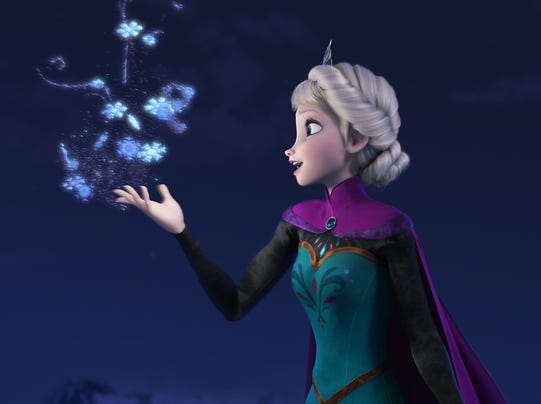
Who Will Win: The beautifully animated crowdpleaser Frozen is the clear front-runner here. The Croods is by-the-numbers stuff from Dreamworks, not as good as How To Train Your Dragon but not as bad as Shark Tale. Despicable Me 2 would win if the category were Most Ubiquitous In-Your-Face Marketing, but it's not. As for the hand-drawn features, Ernest and Celestine is an obscure Belgian film, the kind of oddity that's become standard in this category, but there's no way enough people saw it for a victory. The only one that poses a threat to Frozen is The Wind Rises, the supposedly final film from anime legend Hayao Miyazaki, who pulled off one of my all-time favorite upsets in 2002 when Spirited Away took home the gold. However, that film had a larger release and I don't see it happening for him this time. Frozen is the most successful Disney film in a long time and the song "Let It Go" has become huge in a way not seen since the days of Alan Menken (should be an easy win in the Original Song category).
My Choice: Miyazaki, not just for The Wind Rises but for his entire magnificent career. I'm not sure if it really is his last film, since he announced his retirement after both Princess Mononoke and Spirited Away and then thankfully kept at it, but he's getting old and I'm not sure anyone will be able to step into the void he will leave behind in the world of animation.
Best Documentary Feature
The Act of Killing
Cutie and the Boxer
Dirty Wars
The Square
20 Feet From Stardom
Who Will Win: Two of the contenders here are fighting for the prize, representing the battle of "serious" vs. "light-hearted" that has defined this category in the last few years. On Team Uplifting is Cutie and the Boxer, which is probably too eccentric to shore up votes, and 20 Feet From Stardom, a tribute to back-up singers that looks to have the best shot at the win. On Team Serious, Dirty Wars is worthy subject matter, but there's too much focus on the journalist Jeremy Scahill. If you're going to be onscreen all the time in a documentary like this, it helps to have a sense of humor like Morgan Spurlock or Michael Moore. In Scahill's case, it just looks like blatant self-aggrandizement and Dirty Wars often feels like it is more interested in him than in the war crimes that he's investigating. The Square, about the Egyptian revolution, had a tiny theatrical presence before Netflix picked it up and screened it exclusively on their site. It's an unprecedented situation as far as the Oscars go, so I'll be curious to see what impact that has, if any.
That leaves The Act of Killing, an unconventional but devastating look at the 1960s genocide in Indonesia, as the other film with a real chance to win. It's easily the most critically acclaimed of the bunch (if you haven't seen my list, I'm also a huge fan). However, it is not an easy watch - complex, challenging and sometimes even nauseating as the filmmakers reveal the extent to which propaganda and corruption have blinded the perpetrators to their own crimes. If the voters go with which movie made them feel the best as they left the theater, 20 Feet From Stardom will win handily.
My Choice: As usual, this category is just as notable for what didn't get nominated as what did. No Leviathan, no Stories We Tell, not even Blackfish, which was the documentary seen by the most people this year. But even if those films were all competing, I'd still be firmly behind The Act of Killing. People literally risked their lives to get that film made and it continues to haunt me months after seeing it.
Best Adapted Screenplay
Richard Linklater, Julie Delpy and Ethan Hawke for Before Midnight
Billy Ray for Captain Phillips
Steve Coogan and Jeff Pope for Philomena
John Ridley for Twelve Years A Slave
Terence Winter for The Wolf of Wall Street
Who Will Win: John Ridley, who adapted the memoirs of the real Solomon Northrup and has brought huge attention to a hugely important American story. The Best Picture race is unbearably close, so the voters will make sure Twelve Years A Slave goes home with something and this is it's best chance for a win.
My Choice: Twelve Years A Slave is an impressive film for many reasons, one of which is that it rarely feels like it was even written, more like it's just the past unfolding right before your eyes. However, the writing was clearly taken very seriously and I invite everyone to check out this excellent essay by Wesley Morris about what makes it so different from other films that have taken on this subject matter.
Best Original Screenplay
Eric Warren Singer and David O. Russell for American Hustle
Woody Allen for Blue Jasmine
Craig Borten and Melisa Wallack for Dallas Buyers Club
Spike Jonze for Her
Bob Nelson for Nebraska
Who Will Win: This is fairly close, but I can tell you who won't win - Woody Allen. The round of awards he received for Blue Jasmine, including a tribute at the Golden Globes, has thrust his revolting personal life back into the spotlight. Most of the time, the Academy Awards don't really care about that stuff as long as they like your work (see Exhibit B - Roman Polanski), but the collective wail of outrage if Allen won yet another Oscar would be enough to knock the Earth off its axis. Among the other contenders, the screenplays for American Hustle or Dallas Buyers Club could win, but this category tends to go a little highbrow and I think Spike Jonze is going to squeak ahead. The trailers for Her, about the romantic relationship between a man and his phone's artificial intelligence, were not flattering but the movie itself takes the gimmick premise seriously and has true speculative science-fiction virtues to offset its hipsterity (Is that a word? I'm gonna declare it a word).
My Choice: Bob Nelson. Nebraska's dark comedy masked some quietly powerful observations about modern America, specifically the despair felt by older people who know that their children won't do as well as they did...and yet it also made a case for the importance of figuring out what you really need, rather than what society says defines success.
Best Supporting Actress
Sally Hawkins in Blue Jasmine
Jennifer Lawrence in American Hustle
Lupita Nyong'o in Twelve Years A Slave
Julia Roberts in August: Osage County
June Squibb in Nebraska
Who Will Win: This is a close two-way competition between Jennifer Lawrence and Lupita Nyong'o. As anyone with an internet connection knows, Lawrence is a highly popular actress with a charming public persona. She just won Best Actress last year for Silver Linings Playbook, her previous collaboration with David O. Russell and Bradley Cooper. Two years in a row, Tom Hanks style? Seems like overkill. The victory would make a much bigger difference for Nyong'o, a newcomer who has gotten a lot of new fans thanks to endearing appearances on talk shows this Oscar season. Her scenes are some of the most wrenching in Twelve Years A Slave and I suspect she'll have a new golden accessory to show for it.
My Choice: You would have to be a real pill not to be happy for Nyong'o if she pulls it off, but I think my choice would be June Squibb. She had most of the funniest lines in Nebraska, including an epic scene where she defends her husband and son from toxic family members.
Best Supporting Actor
Barkhad Abdi in Captain Phillips
Bradley Cooper in American Hustle
Michael Fassbender in 12 Years A Slave
Jonah Hill in The Wolf of Wall Street
Jared Leto in Dallas Buyers Club
Who Will Win: Leto. Easiest call of the night. He's been a steamroller in the "playoff" awards, and it's the kind of showy, tear-jerking performance the Oscars love.
My Choice: Barkhad Abdi, the Somali-born actor who was working as a limo driver in Minnesota before he auditioned for Captain Phillips as was cast as pirate captain Abduwali Muse. How can anyone resist that story? But even without that, his sensitive performance was absolutely essential to the success of Captain Phillips. There's been a disturbing recent trend of movies re-creating American military operations with fetishistic attention to detail (e.g. Zero Dark Thirty, Lone Survivor) and with little thought to other perspectives. There are moments in Captain Phillips that lean dangerously close to that, but Abdi never lets you forget the humanity of the Somali pirates and the miserable global economy that drove them to these acts in the first place.
Best Actress
Amy Adams in American Hustle
Cate Blanchett in Blue Jasmine
Sandra Bullock in Gravity
Judi Dench in Philomena
Meryl Streep in August: Osage County
Who Will Win: Cate Blanchett has been cleaning up in the playoffs. Voters won't punish her for Woody Allen's conduct. If anyone upsets, it will probably be Amy Adams, who has racked up four nominations in eight years but has yet to win.
My Choice: This category seems lazy. It's like there are only a dozen actresses who are ever considered and the same names keep showing up every year. The fact that three-time winner and all-time nomination champ Meryl Streep, amazing as she is, is basically guaranteed a spot every year even for movies nobody likes is a little ridiculous. There are a LOT of under-appreciated actresses who did great work this year, the first one that comes to mind for me is Brie Larson in Short Term 12. Out of this group, I suppose I'm rooting for Adams just cause she's the only one here who hasn't already won.
Best Actor
Christian Bale in American Hustle
Bruce Dern in Nebraska
Leonardo DiCaprio in The Wolf of Wall Street
Chiwetel Ejiofor in Twelve Years A Slave
Matthew McConaughey in Dallas Buyers Club
Who Will Win: This is a formidable category and it looks like McConaughey will be the winner. It wasn't that long ago that he was known mostly for taking his shirt off in terrible romantic comedies. But he's branched out and given a series of impressive performances, including this portrayal of the late Ron Woodroof, a classic larger-than-life Texan with more than a little bigotry in his worldview who becomes an unlikely crusader for the rights of AIDS victims when he catches the illness himself. So far the "McConnaisance" has been well-rewarded on the awards circuit. However, the others have big pockets of support too. Ejiofor was an early front-runner and could be lifted by a rising tide of wins for Twelve Years A Slave. DiCaprio has been nominated many times without a win. His time will come, but I think he might be pretty old when it finally does. Speaking of old, the last time Bruce Dern was nominated was in 1978, when McConaughey was nine years old. His career is widely admired and if anyone upsets, it will likely be him...but an upset doesn't seem likely.
My Choice: In the fall of 2003, I spent a semester abroad in London. One night, my British cinema class went to a screening of Dirty Pretty Things, which featured an unknown actor named Chiwetel Ejiofor as an immigrant doctor who was working as a hotel clerk in the UK and trying to get home to his family. The movie was fantastic, Ejiofor blew everyone away and it was one of the great movie theater experiences of my life. Since then, I've rooted for him to find mainstream success but he's been ill-served by Hollywood and didn't have too many other memorable roles under his belt. When I first saw 12 Years A Slave, I thought "how could he possibly not win?" I guess McConaughey's Texan accent is just too charming. In all serious, McConaughey did give a great performance but I know who I'm rooting for.
Best Director
Alfonso Cuaron for Gravity
Steve McQueen for Twelve Years A Slave
Alexander Payne for Nebraska
David O. Russell for American Hustle
Martin Scorsese for The Wolf of Wall Street
Who Will Win: Last year, the whole controversy about Ben Affleck's exclusion turned this category into chaos. This year, we're back to normal. Alfonso Cuaron has won most of the preliminary directing awards, including the telltale Director's Guild of America trophy. More than the other movies represented here, Gravity is foremost a director's film. It was unbelievably ambitious and he handled it perfectly.
My Choice: Cuaron, alongside Guillermo Del Toro, Alejandro Gonzales-Inarritu and others, represents a new wave of visionary Mexican filmmakers who have yet to get the recognition they deserve. The verisimilitude he achieved in Gravity is just astounding - digital effects can often conjure up locations that look a little too perfect, too obviously removed from the world we know, but his depiction of outer space was never unconvincing.
Best Picture
American Hustle
Captain Phillips
Dallas Buyers Club
Gravity
Her
Nebraska
Philomena
Twelve Years A Slave
The Wolf of Wall Street
Who Will Win: It's been three years since the Academy changed the rules for this category, allowing for anywhere between five to ten movies each year depending on the amount of enthusiasm for individual films displayed in the convoluted preferential ballots. So far, there have been nine nominees each time for whatever reason. With that many, it's easy to pick off a few. The Wolf of Wall Street is too polarizing, although I think its reputation will rise in time. Dallas Buyers Club and Nebraska are both seen primarily as a showcase for actors. Her is way too strange to get a majority of the vote. Philomena was one of the last nominees to hit theaters and is just smaller-scale than most of the competition. Captain Phillips doesn't have many nominations outside of this, indicating a less than ideal amount of support among Academy members.
So that brings us down to the three heavy hitters and this is where it gets tough. American Hustle made a big wave when it first came out and has 10 nominations, including one in all four acting categories, which indicates massive support. However, I find it hard to believe it will win because it has absolutely no gravitas whatsoever. It's supposedly about the FBI Abscam scandal of the 1970s, but it doesn't have anything in particular to say about that incident...or anything else for that matter. It's been amusing to watch critics try to ascribe meaning to it ("It's about how we all con each other!" Uh yeah...sure) because they don't feel comfortable admitting that they just had a great time watching a team of top-notch actors chew the scenery with 70s clothes and hairstyles. And it is indeed a fun movie for that reason, but Best Picture? That's a bit much.
Normally, the Producers Guild award is a reliable oracle for this category but it's no help this year. For the first time in its history, there was a tie...between Twelve Years A Slave and Gravity. That's a nice indicator of just how excruciatingly close it will be this year. Twelve Years looks the most like a classic winner and while it is emotionally exhausting, I think most of the people who finished it will be moved enough to put it just over the top. However, there are a lot of reasons Gravity could win instead - it will likely dominate the technical awards (and all those people get a vote for Best Picture), the Academy has a tendency to pair the Best Picture and Director winners together, and it leaves you with a feeling of triumph as opposed to somber reflection. But in the end, it's still science-fiction (albeit not terribly fantastical) and the Oscars have long held a bias against this genre. So I think the outstanding craftsmanship, emotional impact and social importance of Twelve Years A Slave will give it a narrow victory...but honestly, I wish I could just pick both and say "one of these two." I know, that's cheating.
My Choice: My opinion of the nominees goes something like this: Gravity > Twelve Years A Slave > Nebraska > The Wolf of Wall Street > Philomena > Dallas Buyers Club > Captain Phillips > Her > American Hustle. However, I often don't see the Best Picture Oscar as that simple. The historical value given to a film by this award is nothing to take lightly, even if there are plenty of embarrassing past winners we could make fun of. With that in mind, I think a victory for Twelve Years A Slave is an important message to send, a rebuke to Gone With the Wind (Best Picture of 1939) and other older films that made life on a plantation look like one big family gathering. Honestly, Fruitvale Station would have been an even better choice and I actually liked that more than any of the nominees, so best of both worlds. Unfortunately, that won't happen and I probably shouldn't repeat my rant on that subject. I loved Gravity, but its technical innovations and epic suspense have already guaranteed it a place in film history. We'll see how it plays out tomorrow night, it's a 50-50 shot.
Best Animated Feature
The Croods
Despicable Me 2
Ernest and Celestine
Frozen
The Wind Rises
Who Will Win: The beautifully animated crowdpleaser Frozen is the clear front-runner here. The Croods is by-the-numbers stuff from Dreamworks, not as good as How To Train Your Dragon but not as bad as Shark Tale. Despicable Me 2 would win if the category were Most Ubiquitous In-Your-Face Marketing, but it's not. As for the hand-drawn features, Ernest and Celestine is an obscure Belgian film, the kind of oddity that's become standard in this category, but there's no way enough people saw it for a victory. The only one that poses a threat to Frozen is The Wind Rises, the supposedly final film from anime legend Hayao Miyazaki, who pulled off one of my all-time favorite upsets in 2002 when Spirited Away took home the gold. However, that film had a larger release and I don't see it happening for him this time. Frozen is the most successful Disney film in a long time and the song "Let It Go" has become huge in a way not seen since the days of Alan Menken (should be an easy win in the Original Song category).
My Choice: Miyazaki, not just for The Wind Rises but for his entire magnificent career. I'm not sure if it really is his last film, since he announced his retirement after both Princess Mononoke and Spirited Away and then thankfully kept at it, but he's getting old and I'm not sure anyone will be able to step into the void he will leave behind in the world of animation.
Best Documentary Feature
The Act of Killing
Cutie and the Boxer
Dirty Wars
The Square
20 Feet From Stardom
Who Will Win: Two of the contenders here are fighting for the prize, representing the battle of "serious" vs. "light-hearted" that has defined this category in the last few years. On Team Uplifting is Cutie and the Boxer, which is probably too eccentric to shore up votes, and 20 Feet From Stardom, a tribute to back-up singers that looks to have the best shot at the win. On Team Serious, Dirty Wars is worthy subject matter, but there's too much focus on the journalist Jeremy Scahill. If you're going to be onscreen all the time in a documentary like this, it helps to have a sense of humor like Morgan Spurlock or Michael Moore. In Scahill's case, it just looks like blatant self-aggrandizement and Dirty Wars often feels like it is more interested in him than in the war crimes that he's investigating. The Square, about the Egyptian revolution, had a tiny theatrical presence before Netflix picked it up and screened it exclusively on their site. It's an unprecedented situation as far as the Oscars go, so I'll be curious to see what impact that has, if any.
That leaves The Act of Killing, an unconventional but devastating look at the 1960s genocide in Indonesia, as the other film with a real chance to win. It's easily the most critically acclaimed of the bunch (if you haven't seen my list, I'm also a huge fan). However, it is not an easy watch - complex, challenging and sometimes even nauseating as the filmmakers reveal the extent to which propaganda and corruption have blinded the perpetrators to their own crimes. If the voters go with which movie made them feel the best as they left the theater, 20 Feet From Stardom will win handily.
My Choice: As usual, this category is just as notable for what didn't get nominated as what did. No Leviathan, no Stories We Tell, not even Blackfish, which was the documentary seen by the most people this year. But even if those films were all competing, I'd still be firmly behind The Act of Killing. People literally risked their lives to get that film made and it continues to haunt me months after seeing it.
Best Adapted Screenplay
Richard Linklater, Julie Delpy and Ethan Hawke for Before Midnight
Billy Ray for Captain Phillips
Steve Coogan and Jeff Pope for Philomena
John Ridley for Twelve Years A Slave
Terence Winter for The Wolf of Wall Street
Who Will Win: John Ridley, who adapted the memoirs of the real Solomon Northrup and has brought huge attention to a hugely important American story. The Best Picture race is unbearably close, so the voters will make sure Twelve Years A Slave goes home with something and this is it's best chance for a win.
My Choice: Twelve Years A Slave is an impressive film for many reasons, one of which is that it rarely feels like it was even written, more like it's just the past unfolding right before your eyes. However, the writing was clearly taken very seriously and I invite everyone to check out this excellent essay by Wesley Morris about what makes it so different from other films that have taken on this subject matter.
Best Original Screenplay
Eric Warren Singer and David O. Russell for American Hustle
Woody Allen for Blue Jasmine
Craig Borten and Melisa Wallack for Dallas Buyers Club
Spike Jonze for Her
Bob Nelson for Nebraska
Who Will Win: This is fairly close, but I can tell you who won't win - Woody Allen. The round of awards he received for Blue Jasmine, including a tribute at the Golden Globes, has thrust his revolting personal life back into the spotlight. Most of the time, the Academy Awards don't really care about that stuff as long as they like your work (see Exhibit B - Roman Polanski), but the collective wail of outrage if Allen won yet another Oscar would be enough to knock the Earth off its axis. Among the other contenders, the screenplays for American Hustle or Dallas Buyers Club could win, but this category tends to go a little highbrow and I think Spike Jonze is going to squeak ahead. The trailers for Her, about the romantic relationship between a man and his phone's artificial intelligence, were not flattering but the movie itself takes the gimmick premise seriously and has true speculative science-fiction virtues to offset its hipsterity (Is that a word? I'm gonna declare it a word).
My Choice: Bob Nelson. Nebraska's dark comedy masked some quietly powerful observations about modern America, specifically the despair felt by older people who know that their children won't do as well as they did...and yet it also made a case for the importance of figuring out what you really need, rather than what society says defines success.
Best Supporting Actress
Sally Hawkins in Blue Jasmine
Jennifer Lawrence in American Hustle
Lupita Nyong'o in Twelve Years A Slave
Julia Roberts in August: Osage County
June Squibb in Nebraska
Who Will Win: This is a close two-way competition between Jennifer Lawrence and Lupita Nyong'o. As anyone with an internet connection knows, Lawrence is a highly popular actress with a charming public persona. She just won Best Actress last year for Silver Linings Playbook, her previous collaboration with David O. Russell and Bradley Cooper. Two years in a row, Tom Hanks style? Seems like overkill. The victory would make a much bigger difference for Nyong'o, a newcomer who has gotten a lot of new fans thanks to endearing appearances on talk shows this Oscar season. Her scenes are some of the most wrenching in Twelve Years A Slave and I suspect she'll have a new golden accessory to show for it.
My Choice: You would have to be a real pill not to be happy for Nyong'o if she pulls it off, but I think my choice would be June Squibb. She had most of the funniest lines in Nebraska, including an epic scene where she defends her husband and son from toxic family members.
Best Supporting Actor
Barkhad Abdi in Captain Phillips
Bradley Cooper in American Hustle
Michael Fassbender in 12 Years A Slave
Jonah Hill in The Wolf of Wall Street
Jared Leto in Dallas Buyers Club
Who Will Win: Leto. Easiest call of the night. He's been a steamroller in the "playoff" awards, and it's the kind of showy, tear-jerking performance the Oscars love.
My Choice: Barkhad Abdi, the Somali-born actor who was working as a limo driver in Minnesota before he auditioned for Captain Phillips as was cast as pirate captain Abduwali Muse. How can anyone resist that story? But even without that, his sensitive performance was absolutely essential to the success of Captain Phillips. There's been a disturbing recent trend of movies re-creating American military operations with fetishistic attention to detail (e.g. Zero Dark Thirty, Lone Survivor) and with little thought to other perspectives. There are moments in Captain Phillips that lean dangerously close to that, but Abdi never lets you forget the humanity of the Somali pirates and the miserable global economy that drove them to these acts in the first place.
Best Actress
Amy Adams in American Hustle
Cate Blanchett in Blue Jasmine
Sandra Bullock in Gravity
Judi Dench in Philomena
Meryl Streep in August: Osage County
Who Will Win: Cate Blanchett has been cleaning up in the playoffs. Voters won't punish her for Woody Allen's conduct. If anyone upsets, it will probably be Amy Adams, who has racked up four nominations in eight years but has yet to win.
My Choice: This category seems lazy. It's like there are only a dozen actresses who are ever considered and the same names keep showing up every year. The fact that three-time winner and all-time nomination champ Meryl Streep, amazing as she is, is basically guaranteed a spot every year even for movies nobody likes is a little ridiculous. There are a LOT of under-appreciated actresses who did great work this year, the first one that comes to mind for me is Brie Larson in Short Term 12. Out of this group, I suppose I'm rooting for Adams just cause she's the only one here who hasn't already won.
Best Actor
Christian Bale in American Hustle
Bruce Dern in Nebraska
Leonardo DiCaprio in The Wolf of Wall Street
Chiwetel Ejiofor in Twelve Years A Slave
Matthew McConaughey in Dallas Buyers Club
Who Will Win: This is a formidable category and it looks like McConaughey will be the winner. It wasn't that long ago that he was known mostly for taking his shirt off in terrible romantic comedies. But he's branched out and given a series of impressive performances, including this portrayal of the late Ron Woodroof, a classic larger-than-life Texan with more than a little bigotry in his worldview who becomes an unlikely crusader for the rights of AIDS victims when he catches the illness himself. So far the "McConnaisance" has been well-rewarded on the awards circuit. However, the others have big pockets of support too. Ejiofor was an early front-runner and could be lifted by a rising tide of wins for Twelve Years A Slave. DiCaprio has been nominated many times without a win. His time will come, but I think he might be pretty old when it finally does. Speaking of old, the last time Bruce Dern was nominated was in 1978, when McConaughey was nine years old. His career is widely admired and if anyone upsets, it will likely be him...but an upset doesn't seem likely.
My Choice: In the fall of 2003, I spent a semester abroad in London. One night, my British cinema class went to a screening of Dirty Pretty Things, which featured an unknown actor named Chiwetel Ejiofor as an immigrant doctor who was working as a hotel clerk in the UK and trying to get home to his family. The movie was fantastic, Ejiofor blew everyone away and it was one of the great movie theater experiences of my life. Since then, I've rooted for him to find mainstream success but he's been ill-served by Hollywood and didn't have too many other memorable roles under his belt. When I first saw 12 Years A Slave, I thought "how could he possibly not win?" I guess McConaughey's Texan accent is just too charming. In all serious, McConaughey did give a great performance but I know who I'm rooting for.
Best Director
Alfonso Cuaron for Gravity
Steve McQueen for Twelve Years A Slave
Alexander Payne for Nebraska
David O. Russell for American Hustle
Martin Scorsese for The Wolf of Wall Street
Who Will Win: Last year, the whole controversy about Ben Affleck's exclusion turned this category into chaos. This year, we're back to normal. Alfonso Cuaron has won most of the preliminary directing awards, including the telltale Director's Guild of America trophy. More than the other movies represented here, Gravity is foremost a director's film. It was unbelievably ambitious and he handled it perfectly.
My Choice: Cuaron, alongside Guillermo Del Toro, Alejandro Gonzales-Inarritu and others, represents a new wave of visionary Mexican filmmakers who have yet to get the recognition they deserve. The verisimilitude he achieved in Gravity is just astounding - digital effects can often conjure up locations that look a little too perfect, too obviously removed from the world we know, but his depiction of outer space was never unconvincing.
Best Picture
American Hustle
Captain Phillips
Dallas Buyers Club
Gravity
Her
Nebraska
Philomena
Twelve Years A Slave
The Wolf of Wall Street
Who Will Win: It's been three years since the Academy changed the rules for this category, allowing for anywhere between five to ten movies each year depending on the amount of enthusiasm for individual films displayed in the convoluted preferential ballots. So far, there have been nine nominees each time for whatever reason. With that many, it's easy to pick off a few. The Wolf of Wall Street is too polarizing, although I think its reputation will rise in time. Dallas Buyers Club and Nebraska are both seen primarily as a showcase for actors. Her is way too strange to get a majority of the vote. Philomena was one of the last nominees to hit theaters and is just smaller-scale than most of the competition. Captain Phillips doesn't have many nominations outside of this, indicating a less than ideal amount of support among Academy members.
So that brings us down to the three heavy hitters and this is where it gets tough. American Hustle made a big wave when it first came out and has 10 nominations, including one in all four acting categories, which indicates massive support. However, I find it hard to believe it will win because it has absolutely no gravitas whatsoever. It's supposedly about the FBI Abscam scandal of the 1970s, but it doesn't have anything in particular to say about that incident...or anything else for that matter. It's been amusing to watch critics try to ascribe meaning to it ("It's about how we all con each other!" Uh yeah...sure) because they don't feel comfortable admitting that they just had a great time watching a team of top-notch actors chew the scenery with 70s clothes and hairstyles. And it is indeed a fun movie for that reason, but Best Picture? That's a bit much.
Normally, the Producers Guild award is a reliable oracle for this category but it's no help this year. For the first time in its history, there was a tie...between Twelve Years A Slave and Gravity. That's a nice indicator of just how excruciatingly close it will be this year. Twelve Years looks the most like a classic winner and while it is emotionally exhausting, I think most of the people who finished it will be moved enough to put it just over the top. However, there are a lot of reasons Gravity could win instead - it will likely dominate the technical awards (and all those people get a vote for Best Picture), the Academy has a tendency to pair the Best Picture and Director winners together, and it leaves you with a feeling of triumph as opposed to somber reflection. But in the end, it's still science-fiction (albeit not terribly fantastical) and the Oscars have long held a bias against this genre. So I think the outstanding craftsmanship, emotional impact and social importance of Twelve Years A Slave will give it a narrow victory...but honestly, I wish I could just pick both and say "one of these two." I know, that's cheating.
My Choice: My opinion of the nominees goes something like this: Gravity > Twelve Years A Slave > Nebraska > The Wolf of Wall Street > Philomena > Dallas Buyers Club > Captain Phillips > Her > American Hustle. However, I often don't see the Best Picture Oscar as that simple. The historical value given to a film by this award is nothing to take lightly, even if there are plenty of embarrassing past winners we could make fun of. With that in mind, I think a victory for Twelve Years A Slave is an important message to send, a rebuke to Gone With the Wind (Best Picture of 1939) and other older films that made life on a plantation look like one big family gathering. Honestly, Fruitvale Station would have been an even better choice and I actually liked that more than any of the nominees, so best of both worlds. Unfortunately, that won't happen and I probably shouldn't repeat my rant on that subject. I loved Gravity, but its technical innovations and epic suspense have already guaranteed it a place in film history. We'll see how it plays out tomorrow night, it's a 50-50 shot.
Monday, February 10, 2014
Tales From the Crypt: Season Three, Part One
Loved to Death: The season premiere tells the sleazy tale of a lonely creep screenwriter (Andrew McCarthy) who is obsessed with old-school Hollywood and fixated on his neighbor, a B-movie actress (Mariel Hemingway). When he acts like a moron and alienates her, his evil landlord gives him a love potion for his own twisted amusement. Naturally, things go wrong fast. On the surface, it’s very silly but this episode is saved by a rich subtext of how entertainment gives men ridiculous ideas about women and romance. B
Carrion Death: An episode starring Agent Dale Cooper himself, Kyle McLaughlin. He plays a notorious escaped convict who ends up handcuffed to a dead police officer. Now he has to drag a corpse through the searing desert if he wants to reach the Mexican border. The episode can’t resist some outrageous slapstick gore at the end and in general, this is a fun and well-paced tale. B+
The Trap: You can get a lot of money through life insurance, the problem is you have to die before they fork it over. In this episode directed by Michael J. Fox (who appears near the end), a bullying jerk (the great Bruce McGill) strong-arms his wife (Teri Garr) and his mortician brother (Bruno Kirby) into helping him fake his death so he can collect the funds. However, once his accomplices get a taste of life without him, they find it hard to go back to the status quo. Fox infuses the episode with black comedy and stages some laughably crass sequences on the way to the devilish ending. A-
Abra Cadaver: The lewd opening of this episode ensures it will never appear on basic cable. Two bickering brothers who are both doctors (Beau Bridges and Tony Goldwyn) disagree on whether or not brain activity continues after death. The brother who backs the theory takes some truly drastic measures to prove it, leading to a mind-bending storyline with a whopping triple-twist ending. It can be on the slow side, but the core concept is interesting to think about. B+
Top Billing: This tiresome showbiz farce shows that some of the weaknesses inherent in adapting these comics are still popping up. An obnoxious struggling actor (Jon Lovitz) goes to extreme lengths to get a part in Hamlet, but it’s not the role he thinks it is. The awesome final twist is classic EC comics, but seven pages of buildup is a lot easier to enjoy than 20 minutes. So far, I’ve seen that the success of Tales from the Crypt episodes are determined by how they deal with the expansion needed to accommodate the TV show format. In this case, having to tolerate Lovitz’s antics was asking a little too much. For some reason, this particular episode attracted a lot of recognizable stars to tiny roles – Oscar winner Louise Fletcher appears for about 30 seconds as an agent. C+
Dead Wait: Most of this show’s strong episodes have been pulpy fun, not truly scary. But when you bring in Tobe Hooper, director of the horror masterpiece The Texas Chainsaw Massacre, you’re gonna get scary. James Remar plays a thug who infiltrates a plantation to try and steal a rare black pearl from its owner (John Rhys-Davies). However, a voodoo priestess (Whoopi Goldberg, who hangs out with the Crypt Keeper in the episode’s outro) is onto him. This show’s violence is generally goofy, but Hooper has a knack for making it extra visceral. There’s one scene in particular that’s amazingly putrid. A fun cast and a pro at the helm make this a satisfying episode. A-
The Reluctant Vampire: The show takes an unusually light touch with this episode about a modern vampire who works a night watchman at a blood bank, while helping himself to some of the goods, naturally. However, the discrepancy has not gone unnoticed. It’s a silly episode, but the script does well with funny details and Malcolm McDowell’s funny, eccentric performance as Donald Longtooth make you root for him. Also fun is Michael Berryman, the distinctive-looking actor from The Hills Have Eyes, as a zealous vampire hunter. B+
Carrion Death: An episode starring Agent Dale Cooper himself, Kyle McLaughlin. He plays a notorious escaped convict who ends up handcuffed to a dead police officer. Now he has to drag a corpse through the searing desert if he wants to reach the Mexican border. The episode can’t resist some outrageous slapstick gore at the end and in general, this is a fun and well-paced tale. B+
The Trap: You can get a lot of money through life insurance, the problem is you have to die before they fork it over. In this episode directed by Michael J. Fox (who appears near the end), a bullying jerk (the great Bruce McGill) strong-arms his wife (Teri Garr) and his mortician brother (Bruno Kirby) into helping him fake his death so he can collect the funds. However, once his accomplices get a taste of life without him, they find it hard to go back to the status quo. Fox infuses the episode with black comedy and stages some laughably crass sequences on the way to the devilish ending. A-
Abra Cadaver: The lewd opening of this episode ensures it will never appear on basic cable. Two bickering brothers who are both doctors (Beau Bridges and Tony Goldwyn) disagree on whether or not brain activity continues after death. The brother who backs the theory takes some truly drastic measures to prove it, leading to a mind-bending storyline with a whopping triple-twist ending. It can be on the slow side, but the core concept is interesting to think about. B+
Top Billing: This tiresome showbiz farce shows that some of the weaknesses inherent in adapting these comics are still popping up. An obnoxious struggling actor (Jon Lovitz) goes to extreme lengths to get a part in Hamlet, but it’s not the role he thinks it is. The awesome final twist is classic EC comics, but seven pages of buildup is a lot easier to enjoy than 20 minutes. So far, I’ve seen that the success of Tales from the Crypt episodes are determined by how they deal with the expansion needed to accommodate the TV show format. In this case, having to tolerate Lovitz’s antics was asking a little too much. For some reason, this particular episode attracted a lot of recognizable stars to tiny roles – Oscar winner Louise Fletcher appears for about 30 seconds as an agent. C+
Dead Wait: Most of this show’s strong episodes have been pulpy fun, not truly scary. But when you bring in Tobe Hooper, director of the horror masterpiece The Texas Chainsaw Massacre, you’re gonna get scary. James Remar plays a thug who infiltrates a plantation to try and steal a rare black pearl from its owner (John Rhys-Davies). However, a voodoo priestess (Whoopi Goldberg, who hangs out with the Crypt Keeper in the episode’s outro) is onto him. This show’s violence is generally goofy, but Hooper has a knack for making it extra visceral. There’s one scene in particular that’s amazingly putrid. A fun cast and a pro at the helm make this a satisfying episode. A-
The Reluctant Vampire: The show takes an unusually light touch with this episode about a modern vampire who works a night watchman at a blood bank, while helping himself to some of the goods, naturally. However, the discrepancy has not gone unnoticed. It’s a silly episode, but the script does well with funny details and Malcolm McDowell’s funny, eccentric performance as Donald Longtooth make you root for him. Also fun is Michael Berryman, the distinctive-looking actor from The Hills Have Eyes, as a zealous vampire hunter. B+
Wednesday, January 29, 2014
Top Ten Films of 2013
For a while, I didn't think I was going to have one of these this year. With the twins born in February, the lifestyle around here is obviously a LOT different. These lists were always on the late side just because it's harder to get to see smaller movies in Connecticut (for the record, I am pissed that I still can't see Miyazaki's The Wind Rises for another month...I'm pretty confident that would have landed on here somewhere, for now let's just assume it tied with one of the movies currently on the list). I watched a lot of films on Netflix during late nights up with babies, but actually getting to the theater was tougher. It's a small price to pay, obviously, for having two cute little men crawling around the house. And yet movies are an important part of my identity, and falling far behind made me feel a bit like I was losing part of myself.
Typically, I recover from my geographical disadvantage with Operation Drink From Fire Hose, the annual December-January binge where I'm watching movies constantly. However, this year it was derailed early on by the wave of ear infections, pinkeye and flu that invaded our house around Christmas. As tough as it was, it didn't last forever, and by January things were mostly back to normal. So I decided not to give up on this tradition and had quite a rally when it came to movie watching. The convenience of Netflix, as well as that ever-shortening window between a film's theatrical release and its DVD release, made things easier...although there's still a handful of films I wish I'd made it to. Still, I ended things with a list I was very happy with. It helped that 2013 was a good year.
Family comes first...but the reason the word "first" even appears in that phrase is because there's other things out there to focus on sometimes. So the next time someone tells you that your interests fade away once you have children, tell them to stop watching Judd Apatow movies and grow a pair. With that out of the way, here's ten movies I really liked.
10. The Lords of Salem
It's not a Rob list without horror, right? There were a few horror films I could have thrown up here, but none were more visually striking than the latest movie from former metal singer Rob Zombie. Back in 2005, he stunned genre fans with The Devils Rejects, an alternately hilarious and horrifying allegory of post-9/11 America that, among other things, had a final scene that used all of "Free Bird." Since then, he regrettably got bogged down with unnecessary remakes of the first two Halloween films, but The Lords of Salem is one formidable comeback. A radio DJ (played by Zombie's wife, Sheri Moon) is sent a sample song from a mysterious new doom metal band, a melody which seems to have bizarre effect on her life. Zombie gets to have some fun with that old cliche about metal being "the devil's music" and also shows just how well he understands the visual language of horror. No cats jumping into the frame or ghosts in medicine cabinet mirrors here, just top notch ambience and imagery so intense I'm not sure I would recommend this one to people without some experience with the genre.
9. Elysium
So here's a movie I really liked that nobody else seemed to care about one way or the other. The second feature from Neill Blomkamp (District 9) envisions a future in which all the rich folks live on a pristine satellite in space while everyone else lives on the ruined Earth below. When a factory worker named Max (Matt Damon) gets radiation poisoning, his only hope is to get to Elysium, where they have machines that can cure any ailment in seconds. The subtext of all this isn't very far under the surface, which often gets a movie like this criticism for being too "blunt" or "in your face." Honestly, I prefer movies that don't sugarcoat things and the whole scenario is a great metaphor for how too many powerful people in America view health care - as a luxury that you only get if you can pay for it, like a big-screen TV that also just happens to keep you alive. Of course, the movie's not just one long sermon about compassion for the least of us. Blomkamp is already a master when it comes to judicious use of digital effects and staging action scenes. It may not be the revelation that District 9 was, but it's still miles ahead of most action films that come out these days.
8. Twelve Years A Slave
Here's why you should never read the comments. While perusing an article about Steve McQueen's slavery epic, I saw someone ask why there were "so many movies about slavery" and urging for a reduction in "negative Black movies." A reaction like that only illustrates the cultural importance of this film. Not only that, there really haven't been all that many films that depict slavery in America, even less once you filter out patronizing bullshit like Gone With The Wind, where all the slaves are just delighted to be trapped on the plantation. There's some exploitation stuff like Django Unchained or Mandingo, and I think the bluntness of exploitation can be well-suited to this subject, but this movie is a whole different kind of experience. The great and (until now) unappreciated actor Chiwetel Ejiofor plays Solomon Northrup, a free black man who is abducted and sold into slavery in the South for a dozen years. It's a beautifully made, chilling portrait of dehumanization occasionally punctuated by the brutal violence that was a fact of life during this era. Based on the real-life Northrup's memoirs, Twelve Years a Slave is a film that feels like a journey, one that will prompt a great deal of reflection when it finally ends. It's a film to be reckoned with - hard to like, but easy to appreciate.
7. Drug War
The story of Drug War is familiar stuff - cops, crime lords, undercover operations - but you rarely see it executed this well. Directed by Hong Kong filmmaker Johnnie To, this remarkably taut adventure is devoid of sentimentality or filler. Louis Koo is superb as Timmy Choi, a scheming, self-serving dealer who hopes to avoid the death penalty by teaming up with Zhang Lei (Honglei Sun), the tough cop (and brilliant mimic) who busted him. The entire film is a master class in building tension up until the no-holds-barred finale. This was the first time To was allowed to shoot on mainland China, and he conjures up a memorable atmosphere, alternately sterilized and grimy. I'm not sure the Chinese government will be in a hurry to let him do it again.
6. Blackfish
A devastating documentary about the tragedy that can come from treating nature too recklessly, similar to the stories of Steve Irwin and "Grizzly Man" Timothy Treadwell. But instead of an individual, the subject is Sea World and its cavalier pattern of abducting wild killer whales and training them to do tricks in front of massive crowds. Director Gabriela Cowperthwaite set out to investigate the shocking death of veteran trainer Dawn Brancheau at the hands of an orca named Tilikum. What she found was that given the whale's violent history in captivity, the incident shouldn't have been all that shocking. What is shocking, however, is the appalling behavior by the Sea World executives, whether it's the CEO blaming Brancheau for her own violent death or instructing tour guides to tell flat-out lies to tourists about killer whale life expectancy in order to mask the reality of the creatures dying young while imprisoned. Several former Sea World employees share powerful anecdotes and the cumulative effect of their stories has already left quite a welt on Sea World, judging from their unhinged gloating on Twitter after Blackfish failed to grab an Oscar nomination for Best Documentary. With or without awards, this is a powerful film that goes beyond the ethics of Sea World and makes us question our own human arrogance for thinking we can bend the natural world to our will.
5. Short Term 12
Destin Cretton's first feature takes viewers inside a group foster home, a setting rarely seen in the movies, and it's one of the most convincing and compassionate portraits of troubled young people I've ever seen. In its compact 90 minutes, it gives a glimpse into the lives of teens who have suffered and waiting around while the system decides just what to do with them. Keith Stanfield and Kaitlyn Dever are standouts among the younger actors, but the film's core narrative focuses on the not-much-older supervisors, specifically Brie Larson as Grace, who is forced to examine her own demons after meeting a young girl with a similar life story. It's a tough story to pull off, but the film's blend of hope and melancholy contributes to a genuinely moving experience.
4. John Dies At The End
Two aimless friends discover an alternate dimension that is quietly threatening the human race and have to rely on a mysterious drug called "soy sauce" that can send users across dimensions but also across time. It only gets weirder from there in this sublime horror-comedy from Don Coscarelli, who gifted the world with the one-of-a-kind masterpiece Bubba Ho-Tep ten years ago. Filled with absurd twists, gloriously off-the-wall humor and one very heroic dog, it's an unpredictable joy to watch. The film critic Dana Stevens coined the phrase "artisinal horror," referring to low-budget horror films like this one that refuse to play by any of the genre's rules. I'm not sure if that's the phrase I would use, but she's on to something. Part of the fun of this movie is the gradual realization of just how out there it is, although it doesn't compromise the entertainment value in the slightest.
3. Gravity
How does one define the "movie of the year?" I've thought about this a lot lately and came up with an informal method of evaluating a movie's box office success, critical AND audience response, and impact on day-to-day pop culture. With that in mind, the title would seem to go to Gravity and it's a bandwagon I don't mind jumping on. The movie is a tremendous technical achievement and a vivid story of survival filled with breathtaking suspense. George Clooney shows up for a while to do his smooth-talking-George-Clooney routine, but for the most part it's up to Sandra Bullock as the stranded novice astronaut to carry things along and she makes it look easy. Director Alfonso Cuaron had to invent new technology to make this film possible and the results are so striking that I still have to remind myself that this was not actually shot in outer space. Cuaron's movies are always great demonstrations of what movies as an art form are capable of, with this one's 17-minute opening tracking shot as just one example. It's not perfect, in fact I was surprised by how clumsily the lead character's tragic backstory was handled, but a viscerally thrilling movie experience like Gravity can get away with a lot.
2. Fruitvale Station
The story of Oscar Grant, whose outrageous death at the hands of trigger-happy police officers was captured on video for the whole world to see, has been adapted into a small masterpiece that only needs empathy to drive home just how cruel modern America can be if you're a young black man in the wrong place at the wrong time. With a premise like this, the ending is a foregone conclusion, but the bulk of the movie is simply the last 24 hours of Oscar Grant's life. Grant, played to perfection by the outstanding Michael B. Jordan, is genuinely kind but also troubled, trying to get his act together but prone to fits of pride or anger. In short, he's like a lot of us trying to make sense of the screwed up world we live in. The more time you spend with Grant, the more devastating that foregone conclusion becomes. In a depressing development, the movie was completely shut out by the Oscars, with some commentators looking at the pile of nominations for Twelve Years A Slave and concluding that Hollywood can only focus on one black movie at a time. I suspect that this is part of it, the other part being the notoriously short memories of Academy members. The ceremony is supposed to honor a year's worth of film but nothing released before October hardly ever gets nominated. If they had any brains, you would be seeing about five or six nominations for this July release, including Best Actor for Jordan and Best Supporting Actress for Melonie Diaz, who broke my heart as Grant's girlfriend and mother of his child. The fact that incidents like this keep appearing in the news means that this film's importance will only grow over time. For each of those events, a story like this could be told.
1. The Act of Killing
In the end credits for Joshua Oppenheimer's amazing documentary, dozens of crew members and even a co-director are listed as "Anonymous." These are the Indonesian crew members who didn't feel safe attaching their actual names to The Act of Killing, which deals with mass killings in that country during the 1960s, an atrocity barely known to the outside world. After a failed coup by Communist forces, the country's leaders retaliated by wiping out hundreds of thousands of supposed "Communists," i.e. union leaders, public intellectuals and ethnic Chinese. Fifty years later, many of the perpetrators have gone unpunished and still enjoy protection from the state and are something akin to celebrities. Their cavalier attitudes about the slaughter bring the concept of "cognitive dissonance" to a whole new level and things get even stranger when the director invites them to recreate the genocide as a film that they would have total creative control over. Borrowing tropes from their favorite musicals and crime films, they stage increasingly surreal interpretations of the event. However, revisiting the past brings reflection, and to at least one of the killers, the beginnings of true remorse and shame. It's a bizarre experience to watch, but the human drama becomes positively overwhelming by the unforgettable conclusion. This is a truly dangerous film, but also one that has the potential to change lives and really do good in the world. It has a nomination for Best Documentary, but an Oscar doesn't feel like enough. A movie like this deserves a Nobel Prize.
Happy 2014, everyone. Back to babies!
Typically, I recover from my geographical disadvantage with Operation Drink From Fire Hose, the annual December-January binge where I'm watching movies constantly. However, this year it was derailed early on by the wave of ear infections, pinkeye and flu that invaded our house around Christmas. As tough as it was, it didn't last forever, and by January things were mostly back to normal. So I decided not to give up on this tradition and had quite a rally when it came to movie watching. The convenience of Netflix, as well as that ever-shortening window between a film's theatrical release and its DVD release, made things easier...although there's still a handful of films I wish I'd made it to. Still, I ended things with a list I was very happy with. It helped that 2013 was a good year.
Family comes first...but the reason the word "first" even appears in that phrase is because there's other things out there to focus on sometimes. So the next time someone tells you that your interests fade away once you have children, tell them to stop watching Judd Apatow movies and grow a pair. With that out of the way, here's ten movies I really liked.
10. The Lords of Salem
It's not a Rob list without horror, right? There were a few horror films I could have thrown up here, but none were more visually striking than the latest movie from former metal singer Rob Zombie. Back in 2005, he stunned genre fans with The Devils Rejects, an alternately hilarious and horrifying allegory of post-9/11 America that, among other things, had a final scene that used all of "Free Bird." Since then, he regrettably got bogged down with unnecessary remakes of the first two Halloween films, but The Lords of Salem is one formidable comeback. A radio DJ (played by Zombie's wife, Sheri Moon) is sent a sample song from a mysterious new doom metal band, a melody which seems to have bizarre effect on her life. Zombie gets to have some fun with that old cliche about metal being "the devil's music" and also shows just how well he understands the visual language of horror. No cats jumping into the frame or ghosts in medicine cabinet mirrors here, just top notch ambience and imagery so intense I'm not sure I would recommend this one to people without some experience with the genre.
9. Elysium
So here's a movie I really liked that nobody else seemed to care about one way or the other. The second feature from Neill Blomkamp (District 9) envisions a future in which all the rich folks live on a pristine satellite in space while everyone else lives on the ruined Earth below. When a factory worker named Max (Matt Damon) gets radiation poisoning, his only hope is to get to Elysium, where they have machines that can cure any ailment in seconds. The subtext of all this isn't very far under the surface, which often gets a movie like this criticism for being too "blunt" or "in your face." Honestly, I prefer movies that don't sugarcoat things and the whole scenario is a great metaphor for how too many powerful people in America view health care - as a luxury that you only get if you can pay for it, like a big-screen TV that also just happens to keep you alive. Of course, the movie's not just one long sermon about compassion for the least of us. Blomkamp is already a master when it comes to judicious use of digital effects and staging action scenes. It may not be the revelation that District 9 was, but it's still miles ahead of most action films that come out these days.
8. Twelve Years A Slave
Here's why you should never read the comments. While perusing an article about Steve McQueen's slavery epic, I saw someone ask why there were "so many movies about slavery" and urging for a reduction in "negative Black movies." A reaction like that only illustrates the cultural importance of this film. Not only that, there really haven't been all that many films that depict slavery in America, even less once you filter out patronizing bullshit like Gone With The Wind, where all the slaves are just delighted to be trapped on the plantation. There's some exploitation stuff like Django Unchained or Mandingo, and I think the bluntness of exploitation can be well-suited to this subject, but this movie is a whole different kind of experience. The great and (until now) unappreciated actor Chiwetel Ejiofor plays Solomon Northrup, a free black man who is abducted and sold into slavery in the South for a dozen years. It's a beautifully made, chilling portrait of dehumanization occasionally punctuated by the brutal violence that was a fact of life during this era. Based on the real-life Northrup's memoirs, Twelve Years a Slave is a film that feels like a journey, one that will prompt a great deal of reflection when it finally ends. It's a film to be reckoned with - hard to like, but easy to appreciate.
7. Drug War
The story of Drug War is familiar stuff - cops, crime lords, undercover operations - but you rarely see it executed this well. Directed by Hong Kong filmmaker Johnnie To, this remarkably taut adventure is devoid of sentimentality or filler. Louis Koo is superb as Timmy Choi, a scheming, self-serving dealer who hopes to avoid the death penalty by teaming up with Zhang Lei (Honglei Sun), the tough cop (and brilliant mimic) who busted him. The entire film is a master class in building tension up until the no-holds-barred finale. This was the first time To was allowed to shoot on mainland China, and he conjures up a memorable atmosphere, alternately sterilized and grimy. I'm not sure the Chinese government will be in a hurry to let him do it again.
6. Blackfish
A devastating documentary about the tragedy that can come from treating nature too recklessly, similar to the stories of Steve Irwin and "Grizzly Man" Timothy Treadwell. But instead of an individual, the subject is Sea World and its cavalier pattern of abducting wild killer whales and training them to do tricks in front of massive crowds. Director Gabriela Cowperthwaite set out to investigate the shocking death of veteran trainer Dawn Brancheau at the hands of an orca named Tilikum. What she found was that given the whale's violent history in captivity, the incident shouldn't have been all that shocking. What is shocking, however, is the appalling behavior by the Sea World executives, whether it's the CEO blaming Brancheau for her own violent death or instructing tour guides to tell flat-out lies to tourists about killer whale life expectancy in order to mask the reality of the creatures dying young while imprisoned. Several former Sea World employees share powerful anecdotes and the cumulative effect of their stories has already left quite a welt on Sea World, judging from their unhinged gloating on Twitter after Blackfish failed to grab an Oscar nomination for Best Documentary. With or without awards, this is a powerful film that goes beyond the ethics of Sea World and makes us question our own human arrogance for thinking we can bend the natural world to our will.
5. Short Term 12
Destin Cretton's first feature takes viewers inside a group foster home, a setting rarely seen in the movies, and it's one of the most convincing and compassionate portraits of troubled young people I've ever seen. In its compact 90 minutes, it gives a glimpse into the lives of teens who have suffered and waiting around while the system decides just what to do with them. Keith Stanfield and Kaitlyn Dever are standouts among the younger actors, but the film's core narrative focuses on the not-much-older supervisors, specifically Brie Larson as Grace, who is forced to examine her own demons after meeting a young girl with a similar life story. It's a tough story to pull off, but the film's blend of hope and melancholy contributes to a genuinely moving experience.
4. John Dies At The End
Two aimless friends discover an alternate dimension that is quietly threatening the human race and have to rely on a mysterious drug called "soy sauce" that can send users across dimensions but also across time. It only gets weirder from there in this sublime horror-comedy from Don Coscarelli, who gifted the world with the one-of-a-kind masterpiece Bubba Ho-Tep ten years ago. Filled with absurd twists, gloriously off-the-wall humor and one very heroic dog, it's an unpredictable joy to watch. The film critic Dana Stevens coined the phrase "artisinal horror," referring to low-budget horror films like this one that refuse to play by any of the genre's rules. I'm not sure if that's the phrase I would use, but she's on to something. Part of the fun of this movie is the gradual realization of just how out there it is, although it doesn't compromise the entertainment value in the slightest.
3. Gravity
How does one define the "movie of the year?" I've thought about this a lot lately and came up with an informal method of evaluating a movie's box office success, critical AND audience response, and impact on day-to-day pop culture. With that in mind, the title would seem to go to Gravity and it's a bandwagon I don't mind jumping on. The movie is a tremendous technical achievement and a vivid story of survival filled with breathtaking suspense. George Clooney shows up for a while to do his smooth-talking-George-Clooney routine, but for the most part it's up to Sandra Bullock as the stranded novice astronaut to carry things along and she makes it look easy. Director Alfonso Cuaron had to invent new technology to make this film possible and the results are so striking that I still have to remind myself that this was not actually shot in outer space. Cuaron's movies are always great demonstrations of what movies as an art form are capable of, with this one's 17-minute opening tracking shot as just one example. It's not perfect, in fact I was surprised by how clumsily the lead character's tragic backstory was handled, but a viscerally thrilling movie experience like Gravity can get away with a lot.
2. Fruitvale Station
The story of Oscar Grant, whose outrageous death at the hands of trigger-happy police officers was captured on video for the whole world to see, has been adapted into a small masterpiece that only needs empathy to drive home just how cruel modern America can be if you're a young black man in the wrong place at the wrong time. With a premise like this, the ending is a foregone conclusion, but the bulk of the movie is simply the last 24 hours of Oscar Grant's life. Grant, played to perfection by the outstanding Michael B. Jordan, is genuinely kind but also troubled, trying to get his act together but prone to fits of pride or anger. In short, he's like a lot of us trying to make sense of the screwed up world we live in. The more time you spend with Grant, the more devastating that foregone conclusion becomes. In a depressing development, the movie was completely shut out by the Oscars, with some commentators looking at the pile of nominations for Twelve Years A Slave and concluding that Hollywood can only focus on one black movie at a time. I suspect that this is part of it, the other part being the notoriously short memories of Academy members. The ceremony is supposed to honor a year's worth of film but nothing released before October hardly ever gets nominated. If they had any brains, you would be seeing about five or six nominations for this July release, including Best Actor for Jordan and Best Supporting Actress for Melonie Diaz, who broke my heart as Grant's girlfriend and mother of his child. The fact that incidents like this keep appearing in the news means that this film's importance will only grow over time. For each of those events, a story like this could be told.
1. The Act of Killing
In the end credits for Joshua Oppenheimer's amazing documentary, dozens of crew members and even a co-director are listed as "Anonymous." These are the Indonesian crew members who didn't feel safe attaching their actual names to The Act of Killing, which deals with mass killings in that country during the 1960s, an atrocity barely known to the outside world. After a failed coup by Communist forces, the country's leaders retaliated by wiping out hundreds of thousands of supposed "Communists," i.e. union leaders, public intellectuals and ethnic Chinese. Fifty years later, many of the perpetrators have gone unpunished and still enjoy protection from the state and are something akin to celebrities. Their cavalier attitudes about the slaughter bring the concept of "cognitive dissonance" to a whole new level and things get even stranger when the director invites them to recreate the genocide as a film that they would have total creative control over. Borrowing tropes from their favorite musicals and crime films, they stage increasingly surreal interpretations of the event. However, revisiting the past brings reflection, and to at least one of the killers, the beginnings of true remorse and shame. It's a bizarre experience to watch, but the human drama becomes positively overwhelming by the unforgettable conclusion. This is a truly dangerous film, but also one that has the potential to change lives and really do good in the world. It has a nomination for Best Documentary, but an Oscar doesn't feel like enough. A movie like this deserves a Nobel Prize.
Happy 2014, everyone. Back to babies!
Subscribe to:
Posts (Atom)