Wednesday, October 23, 2013

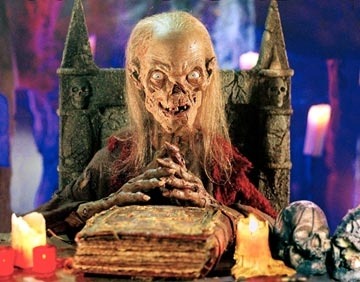
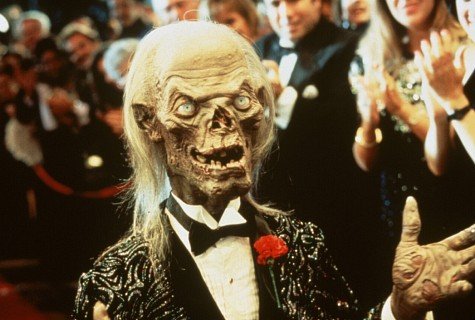
Tales From the Crypt: Season Two, Part One

Dead Right: While mostly known for more traditional horror, the EC comics often told stories that dialed down the supernatural elements in favor of familiar human cruelty. In this episode, Demi Moore plays a greedy, bitchy secretary who meets a highly accurate fortune teller. She’s given a prophecy that she will become rich if she marries a lonely slob (Jeffrey Tambor in grotesque fat makeup), but the way this unfolds is highly unexpected. This episode has a lot of clever visual touches, but what makes it work is the acting. Moore is highly committed to her anti-heroine – she was a major star at this time, so it’s impressive that she was willing to play such a miserable human being. Meanwhile, Tambor gives a joke character some humanity that gives the final twist a touch of tragedy that usually gets buried by this show’s love of irony. A

The Switch: You’ll never guess who’s in the director’s chair this time. Give up? It’s none other than Arnold Schwarzenegger, who upstages the Crypt Keeper in this episode’s intro. A rich naïve old man (William Hickey) falls for a young woman (Kelly Preston) and seeks out a mad scientist who can make him young again. Schwarzenegger does well with the story’s escalating absurdity right up until an ending that’s pure EC Comics. I’m not sure how good he is with actors, however, both Hickey and Preston give very awkward performances. B+

Cutting Cards: Walter Hill’s back to direct an instant classic episode about two gamblers (Lance Henriksen and Kevin Tighe) who have an epic pissing match you have to see to believe. You might think a game of Russian Roulette would settle things, but what comes next (“Chop Poker”) is even more gruesome. Full of masterful suspense and plenty of macho banter from the two leads, this is probably the best episode I’ve yet seen. The thirty minutes feel like three. A

Till Death: A scumbag developer (D.W. Moffett) needs money to finance a dream land deal, so he turns to a voodoo priestess (Will Smith’s TV mom Janet Hubert) to try and snag a rich bride. But the idiot doesn’t listen to her and gives his target an overdose of the love potion, which leads to all sorts of mayhem. This episode boasts some phenomenal makeup effects, but the first half is somewhat dull and the “gold digger” thing already feels old. B

Three’s A Crowd: Another tale of human frailty. A working class sad sack (Gavan O’Herlihy) competes with his rich friend (Paul Lieber) for the affections of his wife (Ruth de Sosa). Lieber plays his character as such an alpha-male dipshit that you’re practically rooting for him to get killed, but there’s a lot more to this episode than that. In the end, it’s a deeply sad story of insecurity. It’s a bit manipulative for my tastes, but the episode is helped by a vulnerable performance from O’Herlihy and some great direction from David Burton Morris. The lighting in particular is noticeably excellent. B+

The Thing From the Grave: Most of the classic images from the old EC Comics involve the undead – beautifully illustrated panels of corpses covered with maggots as flesh falls off their bones. This seminal moment in horror history is translated beautifully in this episode, as a murdered man (Kyle Secor) comes back from the dead to protect his love (Teri Hatcher) from a psychotic boyfriend (Miguel Ferrer). The veteran character actor owns this episode as the villain, making it all the more fun when this abusive prick gets what he deserves. This one also has one of the more amusing opening bits – the Crypt Keeper is caught looking at a corpse porn magazine. A

There's a lot of Season 2 left to go, but things have already gotten much better. The best ones here channel the vibe of the comics in a way that would do any fan proud. I'm quite excited to get further into it!

Wednesday, October 16, 2013

Tales From The Crypt - Introduction and Season One

Despite all my years as a huge horror film buff, I somehow never got around to seeing Tales from the Crypt, the iconic HBO anthology starring an animatronic corpse who cracks himself up with his own ridiculous puns. My sudden interest in checking it out came after I read a fantastic book about the legendary 1950s horror comics called "The Horror! The Horror! Comic Books the Government Didn't Want You to Read!" That title is anything but hyperbole, by the way, but we'll get to that in a minute.

I knew a bit about the 1950s horror comics beforehand - I had seen some of them and had been impressed by how frighteningly brilliant they still are. The book made a compelling case that society needed this kind of grim entertainment to process the horrors of World War II, something not allowed by the stifling entertainment that typically defines this decade. The surrealistic gore and dark twist endings weren't all they had to offer, either. Many took on issues of the day, including racial discrimination in an era when it was not politically correct to do so. The comics were hugely popular and eventually attracted the attention of the usual suspects who can be counted on to spoil the fun for the general public. Since video games wouldn't be invented for a long time, the so-called "moral guardians" decided that horror comics were single-handedly turning children into murderous delinquents and the issue even led to Congressional hearings.

Eventually, the criticism became so intense that the comics industry adopted a system of self-censorship. Every issue could be evaluated and if deemed acceptable, would receive approval from the Comics Code Authority. When it first began, the rules were so strict that you couldn't even have the word "horror" on the cover. Of course, you didn't have to get the seal but most retailers were unwilling to put comics on the shelves unless approved. It's a bit like how the MPAA can use the NC-17 rating to banish independent films from the majority of movie theaters if there's too much gay sex in them. This ultimately destroyed the horror comics...they were gone, but definitely not forgotten.

By the time Tales From the Crypt, which adapts a comic for each episode, premiered in 1989, everything had changed. The groundbreaking intensity of 1970s horror films, followed by the gore-crazy 1980s, had demolished many of the taboos of the past. The comics were reborn with all the violence, swearing and nudity that's still a hallmark of HBO, but instead of being ostracized it was welcomed with open arms and lasted for seven seasons. Major movie stars and directors couldn't join in the fun fast enough. The Cryptkeeper began showing his ugly face all over the place, including a few movie spin-offs and a Saturday morning cartoon version where he introduced stories that actually had happy endings. A more detailed look at the story of those comics can be found in a fantastic hour-long documentary on the Season 1 DVD. But let's talk about the episodes! I gave up using letter grades for reviews a while ago, but I'm going to bring it back for now just because there's so many episodes to discuss and it could get hard to make comparisons eventually.

The Man Who Was Death: The pilot was directed by Walter Hill, the distinctive filmmaker behind cult classics like The Warriors and Streets of Fire. His sensibility meshes well with the story of Niles Talbot (Bill Sadler), an executioner who enjoys throwing the switch far too much. When his state unexpectedly abolishes the death penalty, he finds himself out of a job and decides to hunt down and electrocute acquitted murder suspects in his spare time. It’s fairly predictable, especially the final twist, but the story really couldn’t end any other way. Sadler is entertaining in the lead role and there’s a nice satirical point here – Talbot is just doing his job when pulling the switch on behalf of the state, but killing people in the exact same fashion outside of work makes him an outlaw. A-

And All Through the House: Directed by Robert Zemeckis (Who Framed Roger Rabbit?), this is a morbidly funny tale of a scheming wife (Mary Ellen Trainor) who murders her husband on Christmas Eve and plans to indulge in his money with her new boyfriend, who inexplicably refers to himself as “The Dick Monster.” She gets her comeuppance when the house is invaded by an axe-murdering lunatic dressed as Santa (character actor Larry Drake). Zemeckis stages the mayhem very well and the ending evokes classic horror films by not showing the money shot and leaving it to your imagination, where it’s sure to be much more gruesome. It’s ridiculous, but that comes with the territory when you’re dealing with evil Santas. One thing’s for sure, it’s a lot better than Silent Night, Deadly Night. B

Dig That Cat…He’s Real Gone: The first great episode comes courtesy of Lethal Weapon director Richard Donner, who employs a lot of flashy editing tricks reminiscent of comic book panels. A homeless man (Joe Pantoliano) undergoes a mad scientist’s experiment to give him a cat’s nine lives and becomes a sideshow sensation as “Ulrich the Undying.” It’s a hilarious episode with great twists and a dim view of human nature that’s consistent with the comics that inspired this series. As a bonus, there’s also an incisive NRA joke that’s even more satisfying now than it was in the late 1980s. A

Only Sin Deep: A weak episode about a vain prostitute (Lea Thompson) who sells her beauty to the local pawn shop owner/sorcerer for a small fortune. After she uses the money to insinuate herself into the 1 percent, she suddenly begins to age rapidly. It’s meant to be an indictment of the character’s greed, but the details of the deal sound so harmless (he only asks to make a plaster mold of her face) that even the most virtuous person would have agreed. It’s a lot more interesting when someone makes a devil’s bargain knowing full well what they are getting into, with Ariel in The Little Mermaid as just one example. Aside from that, the episode also suffers from clumsy dialogue, a weak ending and Thompson’s obnoxious New York accent. C-

Lover, Come Hack to Me: This ridiculously sleazy episode makes me glad I never watched this show growing up with my parents in the room. Directed by Tom Holland (Child’s Play), it’s the story of a sad little heiress (Amanda Plummer) and her obnoxious gold-digging spouse (Stephen Shellen, a rare male example of this trope) who get lost in a storm on their wedding night and find shelter in a creepy abandoned mansion. While there, he finds out more than money runs in her family. The ending is satisfyingly gruesome, but the rest of the episode drags like crazy. It illustrates the potential problems of adapting those 50s comics – many of the stories were only about 4 or 5 pages, which means you’ve got to be creative while stretching them to a half-hour of television. Didn’t work so well here. C+

Collection Completed: The golden years aren’t so great for a retired workaholic (M. Emmet Walsh) and his crazy-cat-lady wife (Audra Lindley). Slowly driven insane by a series of petty domestic slights, he adopts a twisted new hobby. Walsh is great as the miserable old bastard and director Mary Lambert (Pet Sematary) captures the necessary buildup that was missing from the previous episode. It’s a great example of the pitch black humor that seems to be an early strength of the series. A

Only six episodes for Season 1...they were just testing the waters. There are a lot more in Season 2, so we'll see if things become more consistent. Then again, anthologies in general tend to be pretty hit and miss. If I don't get another one of these up before then, Happy Halloween!

Friday, September 6, 2013

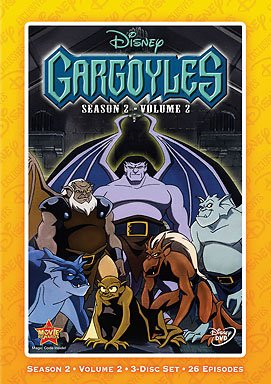
Gargoyles Season 2, Volume 2 Finally Available!

So this happened.

My previous posts about Gargoyles are the most popular in the history of this blog, but I wasn't sure the situation would ever be resolved. After eight years of fans waiting and pleading with Disney, they finally just put this baby out with no fanfare whatsoever. Perhaps this was the set that was originally going to be released last Christmas but didn't show up for whatever reason. I first heard the news on Facebook, of all places. For the last six months or so, the Gargoyles page (which previously had been mostly inactive) was offering links for fans to stream the episodes one at a time. It seemed out of the blue and I suspected something was going to happen with these DVD releases soon.

Technically, this doesn't complete the series, but it's close enough. After the mammoth second season, the show was changed to Gargoyles: The Goliath Chronicles and continued for another short season. However, series creator Greg Wiseman only wrote the first episode and Season 3 is considered vastly inferior and outside of the canon. Plus, if I remember right, the epic three-parter that concludes Season 2 ends on a satisfying note.

So what are we waiting for? Here's the link on Amazon. The price is steep, even after being reduced by Amazon, but I guess Disney wants to be sure they turn some kind of profit on this since that's the reason they dragged their feet for so long. If you remember the show, you know it's worth it. Mine's already on the way.

Wednesday, September 4, 2013

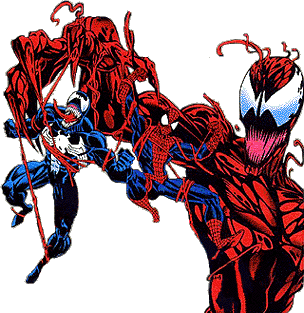
Maximum Carnage - 20 Years Later

In the summer of 1993, the various Spider-Man comic titles teamed up for a huge fourteen-part crossover featuring the massively popular villains Venom and Carnage. As a kid, I dragged my mom to comic shops all over the place to make sure I had every installment. Today, "Maximum Carnage" is remembered more for the popular beat-em-up video game it inspired and those who recall the actual comics tend to derisively refer to it as "Maximum Garbage" and present it as a brainless poster child for the excess of 1990s comics. I'd argue The Clone Saga is a much better example of the latter (plenty about that here), but I still have a bit of soft spot for "Maximum Carnage." When it first came out, my younger self thought it was the most epic and awesome thing I'd seen in comic books. My reaction to it is much more complex as an adult - there's a lot to criticize but there's also more meat to this story than it's usually given credit for. You can call it many things, but "brainless" isn't one of them.

Setting the scene for this storyline requires a ridiculous amount of explanation, but I'll try to be as concise as I can. Everything really starts with Venom, the name Eddie Brock took for himself after bonding with the sentient costume briefly worn by Spider-Man. Brock was clearly unstable, but not necessarily a danger to the public in the way that other supervillains are. He didn't want to take over the world, he just had one goal - kill Spider-Man. What made him especially dangerous was that he knew Spidey's secret identity, although he kept to himself since he didn't want other villains taking him out first. At one point, the living costume breaks Eddie Brock out of prison but leaves behind its child. This creature joined with Brock's cellmate, the certifiable Cletus Kasady, and Carnage was born. This was a vicious serial killer with the ultimate weapon and Spider-Man and Venom decided to put aside their differences and deal with him. Not long after Carnage's defeat, the two of them reconciled and Brock went to San Francisco to start over.

"Maximum Carnage" starts immediately after the death of Harry Osborn, the second Green Goblin and Peter Parker's longtime friend. It was also during the storyline where his parents, presumed dead for 20 years, suddenly reappeared. They would later be revealed as robots, but let's not get into that. It's a stressful time for the Parkers and Mary Jane manages to persuade her husband to take a break from the Spidey activities. He begins this vacation on the same day Carnage breaks out of the asylum - typical Parker luck. Perhaps he could have kept his promise if more traditional villains were on the loose, the ones who were more prone to petty theft than murder, but Carnage was far too dangerous for him not to intervene. Worse still, he begins assembling a team of other murderous villains to join him in his bloody rampage through New York. They include Shriek, a drug addict and former groupie (probably with Kiss, judging from her makeup) who can fire blasts of sound energy, Spider-Man's evil doppelganger from the "Infinity War" event, Demogoblin, the physical manifestation of a demon who had once possessed The Hobgoblin, and Carrion, a failed genetic experiment with a decaying touch. They take on a grotesque "family" relationship that's clearly meant to draw comparisons to Charles Manson.

After hearing of Carnage's return, Venom heads back to New York and stupidly takes on Carnage's posse by himself. Barely able to escape with his life, he is forced to turn to Spider-Man for help. The question of just how to deal with Carnage's gang, and the New Yorkers who are beginning to riot as the city destabilizes, forms the backbone of the story. "Maximum Carnage" is ultimately about the conflict between classic "truth and justice" heroes like Spider-Man and the new, more popular violent antiheroes represented by Venom. During an introduction for the collected saga, writer J.M. DeMatteis comments that "I'd had my fill of the pyschos and mass murderers running through the pages of half the comic books on the stands, and those were the heroes." The storyline becomes a lot more interesting with this in mind - it pushes back against the increasing popularity of lethal enforcers like The Punisher in the same way that DC's more polished "Kingdom Come" story would a few years later.

Spider-Man and Venom gather a large team of heroes to help their effort, but they just can't see eye to eye. "You're too soft, too weak!" Venom snarls at one point. "You'll never be like us!" Spider-Man quips, "Best news I've heard all day." The heroes split into two groups to try and deal with the crisis in their own ways. On Team Venom is the vampire Michael Morbius, a former enemy of Spider-Man, Spidey's ex-girlfriend The Black Cat, and Marvel's Spawn rip-off Nightwatch. The vigilante Cloak fights alongside Venom for a while, but is so distraught over the death of his partner Dagger at Shriek's hands that he grieves on his own for a long time before eventually switching to Team Spider-Man. Spidey's allies include his longtime friend Firestar, the cyborg Deathlok, the mystical martial artist Iron Fist, and Captain America himself. It's a stretch to believe that he didn't bring the rest of the Avengers with him, but I guess the writers knew Carnage wouldn't last long against the likes of Thor and The Hulk.

The ethical conflict also plays out among Spider-Man's loved ones. His father, Richard Parker, was left with a dim view of humanity after his experiences during the Cold War and would certainly be sympathetic to Venom's methods. Meanwhile, saintly old Aunt May knows that Spider-Man's compassionate approach is the right one. Mary Jane, incredibly stressed and conflicted, drifts back and forth but ultimately sides with Aunt May.

So we've established that "Maximum Carnage" is surprisingly rich in its themes, but that doesn't make it perfect. It's frequently compromised by an inconsistent tone that resulted from four different writers working on the various parts. This is especially problematic when you're dealing with material as dark as mass murder and urban chaos. You can definitely tell this was made during the early 1990s, a time of relative peace and prosperity. In today's world, a story like this would be told with drop dead seriousness. As an example of how wildly the writing varies, I'll show two excerpts. The first is from DeMatteis and depicts a turning point in the saga. Click here and then here.

You have to admit...that's an awesome moment. On the other side of the spectrum is the writing from Terry Kavanagh, whose writing I knew was awful even as a 10-year-old. I had to scan this one myself, for some reason the internet's not in a hurry to share this moment. Check it out here.

So Carnage, the working class nutcase who didn't even finish middle school because he was too busy killing people, suddenly sounds like Dr. Doom. "Your pathetic arrogance, fools, will be your very downfall!" Jeez, with lines like that, it's no wonder people made fun of me for reading these comics. That groaner is a good example of the major issue with this story - some of the writers are just not taking it seriously and going on autopilot with the usual trading of punches and lame quips even though the subject matter demands more.

The ending of the story, which really stretches the suspension of disbelief, gets a lot of ridicule from Spidey-fans. First, Dagger uses her light-based powers to reconstitute herself in the depths of Cloak's huge cape. Her attempts to reach out to Shriek, who nearly killed her, inspire the others. They run off and grab a crackpot device that's described as a "biofeedback machine designed to amplify the brain's calming alpha waves." The contraption causes most of the villains to pass out, but Carnage uses the confusion to fake his own death. When most of the other heroes have gone home, he emerges one last time to confront Spider-Man and Venom. As they both battle Carnage, they have their final philosophical debate. Finally, Venom defeats Carnage by grabbing him and then throwing himself into a generator. Both survive the resulting explosion and Carnage is placed in the custody of The Avengers while Venom skulks off and begins his long trek back to San Francisco.

As for the final verdict on the dueling schools of crime-fighting thought, the story seems to arrive at something of a compromise. Venom's final act shows that even deeply flawed "heroes" are still capable of real selfless acts, but it's also clear that his rival's philosophy has left an impression. "I find myself haunted by Spider-Man's words," he admits, wondering if the insane Carnage is "an object of hatred...or pity?"

It's easy to see why this story still has so many detractors. During an era when Venom and Carnage were grievously overexposed, "Maximum Carnage" was their most famous appearance. The 14-part length can be exhausting, especially when you get the sense the story could have been told in half the time. It's also a little odd that the writers come out so strongly against the dark violence of that era's comics when they take so much time to depict Carnage's rampage. Then again, would the uplifting conclusion be effective if the readers hadn't been dragged through darkness for so long? Tough question. In the end, I think its detailed commentary on the creative trends of the time it was made in will continue to interest those who explore the history of superhero comics.

Tuesday, August 20, 2013

Roar

The late Heath Ledger is known primarily for playing the sullen cowboy Ennis in Brokeback Mountain and his anarchist take on The Joker in The Dark Knight. The former got him an Oscar nomination while the latter earned him a posthumous win, a first for an actor playing a comic book character, but Ledger was just that good. He got his start in 1997 with the lead role in the short-lived television series Roar that hooked me one summer before it abruptly vanished.

Roar followed in the footsteps of popular fantasy shows like Hercules and Xena, using 4th century Ireland as its locale. The major struggle was between the Celtic tribes and the invading Roman empire, although this show was far closer to fantasy than history. It treated both Celtic and Christian mythology as absolutely true, leading to all sorts of oddball plots. The unique setting pulled my teenage self in, especially when the last three episodes shown on Fox considerably raised the dramatic stakes. The next week, it was gone, replaced by Ally McBeal. I watched that for a while just because I didn't want to give up the ritual of watching at that time, but it obviously wasn't the same. This was during an era where Fox became notorious for canceling shows prematurely (with Joss Whedon's Firefly being a more infamous example). The complete series came out on DVD shortly after Ledger's Oscar nomination for Brokeback and, to my great surprise and delight, included five episodes that never aired!

Ledger plays Conor, whose family is killed by the Romans and reluctantly takes up the fight against them. His partners include Fergus (John Saint Ryan), a middle-aged badass with an epic Fu Manchu mustache, former Roman slave Catlin (Vera Farmiga, who has since become a very successful actress), Fergus's estranged daughter and Druid apprentice Molly (Melissa George), and token black guy Tully (Alonso Greer). I don't use that phrase lightly - Tully contributes nothing to the overall storyline. The writers seemed to realize this towards the end of the series since he's absent from the last three episodes. The villains are pretty far from what you expect on a show like this. I don't really know what to make of Lisa Zane as Diana, the self-appointed "Queen" of the invading Roman force. She takes a pragmatic approach to her villainy, which I like, but there's never a moment where she becomes intimidating. Her adviser, Longinus (Sebastian Roche), is the Roman centurion who finished off Christ on the cross with a mercy kill and has been cursed with immortality as a result. In the fascinating "Red Boot" episode, one of the show's best, he coerces a Roman historian to paint him in a positive light, assuming correctly that he will eventually be granted Sainthood.

It was fun to rediscover this show, but it was quickly clear that it doesn't hold up to the high standards people have come to expect in today's era of television. The tone is surprisingly inconsistent - sometimes deadly serious, other times campy and whimsical. Ledger and Ryan are the only actors who even bother with the Irish accent. The show was filmed in the Queensland region of Australia, which is very pretty but looks nothing like Ireland. The show often manages to be compelling in spite of all this - my favorite episode is still "The Eternal," the last one that aired on Fox, which features a full-tilt performance by Ledger during its epic ending.

As for the previously unseen episodes, it's mostly a mixed bag. The last episode, "Sweet Brigit," is just bizarre...not to mention unnecessary, since the penultimate episode, "The Cage," is a far better finale. Gripping, full of twists and surprisingly hilarious, "The Cage" offers an awesome ending to the Longinus storyline plus an out-of-nowhere musical number (really). Even though I was let down as a kid when it left the airwaves, I'm not sure where it would have gone in a second season after these episodes. I was surprised at the amount of closure I got from this DVD set, unlike the woefully unfinished Pirates of Dark Water. Of course, it must also be said that returning to Ledger's debut drives home just what a skilled actor the world lost when he died so abruptly. He was only 17 when this was filmed, but the talent was already there and at moments, it's almost blinding. Rest in peace.

The Nostalgia Series is done for now, but I have some more stuff coming up - another Spider-Man thing (don't worry, it will just be a one-off) and then a brand new series I'm pretty excited about. Keep reading!

Saturday, July 27, 2013

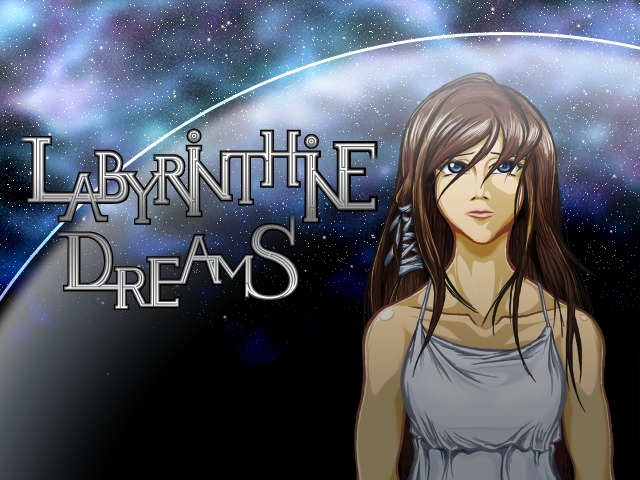
The Labyrinthine Dreams Kickstarter is on!


If you click this link and help us out with a donation, you'll have my eternal gratitude!

Nerve-wracking stuff, this crowdfunding business. We've put a dream of ours in the hands of the masses. But if it works out, Mark (ArtBane) and I will be able to work towards a major milestone in our personal and professional lives. The short version of this is that we're seeking $6,000 to enhance our puzzle game Labyrinthine Dreams. Most of the funds would go towards hiring a couple of professional artists, with other portions meant for expected business and marketing costs. If we're able to secure the money and get this work done, we'd have a real commercial game that had a chance in the competitive independent game market.

Regular readers of this blog know that I've got a long history with RPG Maker. Our six-year collaboration on Master of the Wind was how Mark and I made a name for ourselves in the RPG Maker Community, who bestowed a highly generous amount of acclaim and awards on us that remains humbling. Since then, we haven't been quite as focused. I took some time to write my novel The World Beyond and later, we began to work on our detective game X-Noir. We had some thoughts of a commercial future for X-Noir, but now that we're about two-thirds done with it, it seems that will not be its destiny. It's a little too odd, too tough to refine into something with a feasible commercial future. We needed something that would be ambitious and unique without being too sprawling and difficult to polish. Enter Labyrinthine Dreams.

We had seen a few of our friends successfully put together games that were fairly short, but highly focused in their story, gameplay and art style. Meanwhile, we had spent 2005 to 2011 on one of the longest completed RPG Maker games ever released. X-Noir was meant to be on a smaller scale, but the highly detailed nature of the game's story has turned into a fairly big undertaking itself. This time, the game would be designed so that players could complete it in about an hour and there would be one consistent gameplay mechanic throughout - mazes. With this project, Mark had a chance to tackle an idea he'd been holding on to for a while - a game set inside a dream. He had briefly worked on a previous game with this concept called Vacant before we determined that I'd be back in the writer's seat.

It was interesting timing to be sure - I had just returned from the hospital after the birth of my sons. Vacant had been dark and sinister, but I wasn't necessarily feeling dark and sinister. My mood was something like exhausted triumph. The year that led up to the birth was packed with drama, adversity and confrontations, but my wife and I had gotten past them all and now we had two cute little guys. I could go into more detail, but one of the Kickstarter rewards is an audio commentary so I should probably save it until then. But in general, I wanted to distill my experience into a story that was vague enough so others could relate to it. I'd say there's two main themes of Labyrinthine Dreams - one is an old-fashioned arc of perseverance and redemption, the other is a critical look at the toll that our cultural obsession with productivity and profit takes on quality of life.

We've got a full playable version of the game now that gives a good sense of the story and gameplay, but as with all our projects, it's art that we need some help on. There's a four-minute video on the Kickstarter page that gives a few more details. I hope you'll decide to help out, either by donating or by spreading the word. Thanks!

Tuesday, May 14, 2013

The Pirates of Dark Water

Right from the first frame, this cartoon is still striking. The colorful backgrounds, swashbuckling music and totally unique character designs draw you in immediately. Created by David Kirschner, The Pirates of Dark Water is a well-written and highly polished cartoon that enthralled me as a kid. Unfortunately, the high production values that made it such a joy to watch were also its undoing, as it was canceled after two short seasons with its overarching storyline not even close to completed. Twenty years have passed since then and unless some Kickstarter project comes along, those of us who remember it will never know how it ended. Needless to say, that made revisiting the series on DVD somewhat bittersweet, although I still had a great time.

The series takes place on the alien world of Mer, which as its name suggests, is mostly ocean. The planet's ecosystem is threatened by a mysterious substance called "Dark Water" that destroys everything in its path. The only solution appears to be the Thirteen Treasures of Rule - mysterious artifacts that make the toxic substance dissipate upon contact. Ren, prince of the fallen kingdom of Octopon, has a brief meeting with his long-lost father and receives a magical compass that will lead him to the treasures. Voiced by George Newbern, Ren is very compassionate but sometimes hopelessly naive, and it's clear that he needs a crew with some street-smarts. His allies are the cranky pirate Ioz (Hector Elizondo), bartender turned powerful ecomancer Tula (Jodi Benson, who played Ariel in The Little Mermaid) and gluttonous "monkey bird" Niddler (legendary voice actor Frank Welker). The crew is relentlessly pursued by the feared pirate Bloth (a great performance by Brock Peters) and his two lieutenants, Konk (Tim Curry) and Mantus (Peter "Optimus Prime" Cullen).

It's quite a formidable cast and the actors really get some juicy material. One of the most memorable elements of the show is its collection of unique swear words. The one most people remember is "Noy Jitat!" which seems to be the equivalent of "God damn it" and even has an adjective form ("Jitaten"). Another one that comes up all the time is "Chungo Lungo," which is used so often and in so many different contexts I can only assume it's their equivalent of the F-bomb. Other ones that pop up regularly are "kreld-eaters," "skut pongo," and "Naja Dog." The characters drop these at least a dozen times per episode, making them real potty-mouths by the standards of their own world, but no kid was ever going to get grounded for running around shouting "Noy Jitat," just weird looks.

One of the great things about 80s and 90s cartoons was that a lot of them opened with huge multi-part story arcs to establish the premise. The first five episodes of Pirates of Dark Water are one of the finest examples of this - they are epic and powerful, with perfect pacing and outstanding animation. The rest of the series never quite matched up, but that's not a complaint. The show simply went from "great" to "good." Some of the more familiar cartoon tropes began to set in (there's even a Freaky Friday body-switch episode) and it obviously doesn't help that the series ends abruptly after 21 episodes with only 8 of the 13 treasures recovered. A terrible episode called "The Little Leviathan," in which Ren befriends a googly-eyed pink sea serpent, is an embarrassment. Thankfully, that's the only episode that deserves harsh criticism, and the rest of the show is consistently entertaining.

Unlike some other stuff that has been featured in this series, this cartoon doesn't address real-world issues head on...or so I thought. I had an epiphany during one episode that showed some dark water seeping out of a crack on the ocean floor. It looked strikingly similar to footage from the 2010 BP spill and I said out loud, "Oh my God, the dark water is oil." (Perhaps I should have busted out a "Noy Jitat.") This is obviously a lot more subtle than something like Captain Planet and as a kid it went completely over my head, even though this show debuted only two years after the infamous Exxon Valdez spill in Alaska. As an adult, I really enjoyed that subtext and it helps preserve that same sense of seriousness I enjoyed as a youngster. What can I say? I like my cartoons with a bit of bite.

So what's next for Nostalgia Series? Well, if those chungo lungos at Disney ever release the rest of Gargoyles, we'll do that. But until then, I think the next installment will be our first live-action entry, the short-lived Heath Ledger show Roar.

I also want to do another more in-depth series soon, like I did for Iron Maiden and Satoshi Kon's films. Any ideas?

Sunday, April 7, 2013

Samson and Sally

I know I keep teasing The Pirates of Dark Water, and that one is in progress, but in the meantime I suddenly remembered another major piece of my childhood. I hadn't thought about this tiny little Danish animated film in years, but when my wife was singing "Baby Beluga" to my newborn son Andrew recently, all of a sudden images from it flooded back. The movie actually has nothing to do with that song, but I think my parents bought it for me because I was listening to the song all the time and would probably enjoy a cartoon featuring whales.

Samson and Sally, sometimes given the subtitle "The Song of the Whales," was released in the United States on VHS back in 1990 but has become more obscure over the years and has still not seen any sort of digital release. However, I was able to find the entire film on YouTube and watch it for the first time in about 20 years. Even though I hadn't seen for ages, I had watched it a lot of times back when I was kid, so the entirety of it was instantly familiar. The movie is a coming-of-age story featuring an albino sperm whale named Samson, who becomes best friends with Sally after her pod is slaughtered by whalers. In fact, a lot of whales die in this movie...including in one sequence that's almost a shot-for-shot underwater remake of the legendary scene in Bambi. A lot of children's films from this era were pretty grim, including Disney films like Oliver and Company and the entire filmography of Don Bluth (especially The Land Before Time, which I must have watched 500 times growing up). Something about the 1980s had a lot of animators feeling hopeless about humanity and the world and there's a stark sense of futility that hangs over the second half of Samson and Sally.

Eventually, Samson embarks on a quest to find none other than Moby Dick, who is a mythic figure to the whale community. To find the great white whale, he navigates through numerous man-made hazards like oil spills and barrels of radioactive waste. The environmental message in this film is not subtle - the first oil spill sequence is absolutely harrowing as the whale pod makes a mad dash underneath the sludge, hoping that they can hold their breath long enough to make it. Just after that, the camera pans up and we see just how huge the spill actually is. When Samson finally finds Moby Dick, the movie turns downright dystopian. The ancient whale, now so feeble he can't even catch his own food, lives in a sunken New York City. You gotta give the writers credit for showcasing the potential consequences of global warming decades before that term was so common. It's obvious that Moby Dick isn't going to be any help, so a disillusioned Samson has to return to Sally and the rest of his pod and then just get by as best he can. The ending is sort of happy, although there's not much hope in it. On this most recent viewing, it left me with a powerful feeling of melancholy.

It's becoming very clear that the one thing that unites everything featured in this series so far is melancholy. Even that ridiculous Felix the Cat movie had a bit of a dark edge. As a kid, I learned unusually early that the world was a harsh and unfair place. When the entertainment I watched didn't reflect that, it didn't stick with me very much. But when it did, I never forgot it. It felt like someone was showing me the world as it actually was. The movies and shows I latched on to helped me deal with loss that was too overwhelming to address directly at the age I was at. Now that I've sought these stories out again, they are having a much different effect. They help me see the overarching narrative of my life a little more clearly, which is something I really was hoping for when I learned I would be a father.

I just can't understand when people complain about children's shows or movies being "too dark." Obviously it would be a stupid idea to show a kid something like Martyrs or Cannibal Holocaust, but insisting that children only consume entertainment that is completely vapid and saccharine strikes me as profoundly stupid. For a kid who was dealing with overwhelming darkness and too shy to reach out for help, this stuff was there for me. I felt heard. Would you take those healing experiences away from me just for the sake of your squeaky-clean delusions?

Sunday, February 24, 2013

Oscars 2013 Educated Guesses

A note on this year's predictions - I am a new father as of three days ago and will be watching tonight's ceremony from a hospital room. I had a draft of this mostly done but it still needed to be finished. I decided to go without pictures this time and I also omitted the writing categories this year. I hope you still find it enjoyable and I expect next year will be more typical.

Best Animated Feature
Brave
Frankenweenie
ParaNorman
The Pirates: Band of Misfits
Wreck-It Ralph


Who Will Win: We've got a whopping three stop-motion animated films competing this year, but I think the trophy will go to one of the CGI films - Brave or Wreck-It Ralph. Brave was widely considered average by Pixar's famously high standards but it's been doing well in some of these pre-Oscar competitions. Ralph was more acclaimed and took home a boatload of Annie Awards. It's close but I think Ralph is gonna wreck it in the end.

My Choice: I thought Wreck-It Ralph was a fantastic movie and I would be delighted to see it win. Still, I've got a soft spot for ParaNorman, an underdog nominee about underdogs.

Best Supporting Actress
Amy Adams in The Master
Sally Field in Lincoln
Anne Hathaway in Les Miserables
Helen Hunt in The Sessions
Jacki Weaver in Silver Linings Playbook

Who Will Win: This one was over around the time people starting seeing Les Miserables. Specifically, the scene where Hathaway, covered in grime and tears as doomed mother Fantine, belts out "I Dreamed a Dream" while the camera sits still for the entire shot. When that song ended, so did the suspense for this category. She's gotten a lot of hate on the internet for obnoxious acceptance speeches, but that kind of petty stuff rarely has any impact on the actual vote.

My Choice: It's not a huge or showy role, but Jacki Weaver did great work as one of the only relatively stable characters in Silver Lining's cast of eccentrics.

Best Supporting Actor
Alan Arkin in Argo
Robert De Niro in Silver Linings Playbook
Philip Seymour Hoffman in The Master
Tommy Lee Jones in Lincoln
Christoph Waltz in Django Unchained

Who Will Win: Not a slam dunk, but I'm predicting Jones will take it for his hilarious, blistering performance as the anti-slavery Congressman Thaddeus Stevens. His closest competition is Robert De Niro, whose role in SLP is one of the meatiest he's had in many years. It's been decades since a film has gotten a nomination in all four acting categories and I figure it will win at least one...but I think that one is Best Actress.

My Choice: Jones, De Niro, Waltz...I'm good with all of them. All five of these men have won in the past so there's nothing particularly high-stakes about this year's outcome.

Best Actress
Jessica Chastain in Zero Dark Thirty
Jennifer Lawrence in Silver Linings Playbook
Emmanuelle Riva in Amour
Quevenzhane Wallis in Beasts of the Southern Wild
Naomi Watts in The Impossible

Who Will Win: A highly competitive category. Lawrence has done best in the playoffs, followed closely by Chastain. However, I think Lawrence's biggest competition is not her but Riva, a veteran French actress who may pull a Marion Cotillard and take this trophy out of nowhere. She's 86 years old and has had a remarkable career...but I can also see a scenario where nine-year old Quevenzhane Wallis wins for her already legendary performance. Watts is probably the least likely, just because The Impossible came under heavy criticism for turning the story of the tragic South Asian tsunami into a story about how a bunch of white people had their vacation ruined. I'm going with Lawrence based on her wins leading up to this, but I'm far from certain.

My Choice: Naomi Watts is one of my favorite actresses and I really hope one day she pulls this off. She should have won for Mulholland Drive back in 2001, but I know she'll show up here again soon, hopefully for a stronger film.

Best Actor
Bradley Cooper in Silver Linings Playbook
Daniel Day-Lewis in Lincoln
Hugh Jackman in Les Miserables
Joaquin Phoenix in The Master
Denzel Washington in Flight

Who Will Win: By contrast, this one is NOT competitive. Daniel-Day Lewis is about to become the first man to win Best Actor three times. The rest of them might as well just stay home.

My Choice: Anyone who has seen Lincoln knows that Day-Lewis has hit the level cap when it comes to acting. Still, I kind of want Jackman to win. He really held that movie together and some of those high notes...damn.

Best Director
Michael Haneke for Amour
Ang Lee for Life of Pi
David O. Russell for Silver Linings Playbook
Steven Spielberg for Lincoln
Benh Zeitlin for Beasts of the Southern Wild

Who Will Win: This is usually one of the easier categories to predict. This year, it's been so unpredictable that it's had serious ramifications for the Best Picture race (more on that in a bit). It started when Ben Affleck and Kathryn Bigelow, the directors of two of the most discussed films of the year, were left out. Bigelow's case is understandable - her Zero Dark Thirty has gotten excoriated repeatedly for its implication that torture contributed to the location and assassination of Osama Bin Laden. Although it sounds more like a writing problem rather than a directing one and screenwriter Mark Boal is a nominee. Perhaps Bigelow's win for The Hurt Locker three years ago is still too fresh. Affleck's case with Argo was more of a surprise and has been taken as mean-spirited by most of Hollywood, with people asking how long the poor guy was gonna be punished for the era where he was married to Jennifer Lopez and acted in a string of terrible films. But he's become an awesome director and the industry has rallied around him. He even got the Director's Guild of America award, which is often an oracle for this category but won't be this time for obvious reasons.

The irony is that I'm not sure Affleck would have even won had he been nominated. But he would have at least had that acknowledgement of his work and the lack of that acknowledgement is what's driving the backlash. With him out of the running, I would say Spielberg has the best chance (would be his third), but I could also see scenarios where Lee or Haneke upset. Russell's film isn't heavy enough and Zeitlin's nomination is a vote of confidence in his future work. So my tentative prediction is Spielberg but watch this one closely cause it will be suspenseful right up until the end.

My Choice: This category has been such a blindside I heaven't really given much thought to who I actually want to win. How about Zeitlin? That movie really did have a unique vision...and it was his first feature!

Best Picture
Amour
Argo
Beasts of the Southern Wild
Django Unchained
Les Miserables
Life of Pi
Lincoln
Silver Linings Playbook
Zero Dark Thirty


Who Will Win: Let's knock off the outliers. Zero Dark Thirty, briefly a front-runner, has been totally sunk by the ongoing controversy. Amour's premise (old people dying slowly for two hours) alienates too many potential viewers - it will have to settle for the consolation prize of an easy win in the Foreign Language film category. Life of Pi seems to be viewed as mostly a technical achivement, with its support mostly confined to those categories. A movie as provocative and badass as Django Unchained has no chance. Beasts of the Southern Wild has done well to get this far but it won't go the final distance.

Now for the stronger contenders. Les Miserables has its fans but also some pretty ardent detractors, making it too polarizing for the Academy's preferential ballots to work in its favor. Silver Linings Playbook is clearly popular among the Academy members but it's also at least kind of a comedy and those almost never win Best Picture. So it comes down to the final two. Lincoln was the front-runner for a while and still leads in terms of nominations. Under normal circumstances, I'd call it a shoo-in...but those are not the circumstances we're seeing this year. Argo director Ben Affleck's lack of a nomination was so scandalous that the movie has swept the guild awards of the last several weeks. Those awards, much more so than the Golden Globes (although Argo won that too), are a good indicator of how the Oscars will go. It also doesn't hurt that the film casts its Hollywood characters in a highly positive light. Argo's looking good for the win, which would make it the first film since Driving Miss Daisy in 1989 to win the top prize without even a nomination for Best Director. Lincoln may come back, but it doesn't seem likely.

My Choice: I really enjoyed Argo, but I thought Django was a spectacular movie and very relevant to the times we live in. I would love to see it win, but it's just too edgy.

That's that. The ceremony starts in a few hours!
Tuesday, February 19, 2013

Felix the Cat (1989)

Well, this goes to show that digging up past fascinations doesn't always work out. I found a lot to appreciate about Casshan and was ultimately blown away by Teknoman, so I felt good tracking down this animated film that utterly enchanted me one night when I was about 7 or 8 years old. But...it's actually quite atrocious.

I'm not talking about the ancient Felix the Cat cartoons, those are an essential part of animation's early history (his first appearance on screen in Feline Follies was almost a decade before Steamboat Willie introduced Mickey Mouse). This feature-length film was a 1980s effort to revive the character for a new generation of youngsters growing up in the Disney Renaissance of that era. That comparison is not very kind to this particular film - it's no Beauty and the Beast. The freewheeling storyline places Felix in an adventure ripped right out of Star Wars - he gets a magical transmission from a princess in distress, who is in the clutches of a half-man half-machine villain.

One problem early on is that Felix just won't shut up. Despite his origins in silent cinema, any time he's on screen he's squawking away in that chirpy voice of his. Puns and pop-cultural references abound - in one bit, he tells the skull of a dead miner that it needs a Big Mac. Living creatures have no awareness of their privilege. But his constant jabbering is just one example of how the movie is just so busy, like they're afraid any pauses will lose the attention of the little kids. You still see this attitude today, especially in the Dreamworks animated films. But there may be something to this approach since I distinctly remember being thrilled by this when I saw it as a kid.

I think it was the very storytelling I now regard as messy or incoherent that made it so appealing. In its own bonkers way, it's very imaginative and colorful. It was something I might have imagined as a kid. The suggestion that a movie made by a studio full of professionals probably should be more competent than what an eight-year-old can dream up was not something I considered. Speaking of that, I miss playing pretend. That was really fun.

Academy Award predictions will be coming very soon (ceremony is this weekend). I have The Pirates of Dark Water on deck for the next installment of the Nostalgia Series. Hope to see you then!