Monday, March 21, 2011

Clone Saga Revisited, Part Four

This is it, folks. Abandon hope, all ye who enter here.

So far, I've looked back at the Clone Saga and found a story that was definitely problematic but not beyond help. Take away a few of the lamer characters (Traveller, go die in a fire kthxbai) and refrain from dragging it out for so long and you've got a story that could work. There were compelling parts of this saga, which is probably why it feels so frustrating when it totally unravels. But hey, it's still probably better than the Spider-Man musical!

In all seriousness, this fourth volume of Marvel's new "Complete Clone Saga" collections offers the answer to why this storyline is so maligned. It's got a handful of the most infamous storylines of the era; the ones that made loyal fans like me want to throw our comics out the window. Despite my huge disappointment in the obnoxious plot twists, I stuck around for another year or so hoping things would get better. They didn't. Ironically, the Clone Saga finally ended shortly after that. However, given what came after (the "One More Day" story seems destined to be even MORE reviled than the Clone Saga), it was probably good I got out when I did.

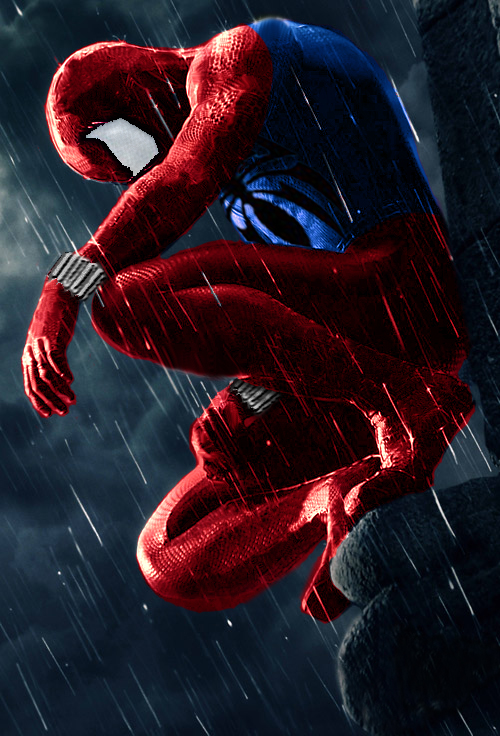
The end of Volume Three left us with Ben Reilly offering to take Peter Parker's place in prison so that he could be with his wife while also hunting down the murderer who had framed both of them. For some reason, Peter also starts wearing the Scarlet Spider costume. I guess variety is the spice of life or whatever. The first story is "Lives Unlived," in which Peter encounters the clone of Gwen Stacy from the original 70s Clone Saga that laid the foundation for all this craziness. She's living with a clone of Professor Miles Warren (aka The Jackal). It may be worth noting that the name "Stacy" is misspelled towards the end of the story, a bit of a surprise considering how important Gwen is to the mythology. It may be an indicator of the level of care that went into some of these stories. Anyhow, she thinks her name is "Gwen Miles" and doesn't even know she's a clone. Well, she finds out and is pretty sad. Moving on.

Then we have the two part "Crossfire" storyline...and wow. I'm in awe at just how terrible this story is. It should come as no surprise at this point that Judas Traveller has a prominent role. In his ongoing cliche quest to understand the nature of good and evil, he creates a series of illusions to mess with Peter Parker, even claiming that he could restore Aunt May's soul. Then he supposedly takes Parker one day into the future, where NYC has been leveled...supposedly by Peter Parker himself. Right. Anyhow, everything goes wrong because Traveller shouldn't have been playing with alternate realities or whatever...as one character notes, "the space-time continuum is a delicate thing." Whatever. Traveller is stopped, Peter goes back to the present, nobody gives a shit. The single redeeming scene in this mess is a bit where Mary Jane reveals that a doctor has detected an "anomaly" in her unborn baby. The doctor's not sure why, but the couple knows that it's probably because of Peter Parker's radioactive blood. It's heavy, and manages to touch on real fears of aspiring parents despite the fantastical setting. Would have made a good story on its own, but we all clearly needed to be reminded of the delicacy of the space-time continuum. Sheesh, save it for friggin' Star Trek.

Next up we have "Return of the Green Goblin." The twist this time is that the new goblin isn't a villian, but a Daily Bugle intern named Phil Urich who stumbled upon one of Norman Osborn's secret labs. As you might expect, adapting the look of a notorious supervillain gets him a fair share of negative attention and he gets blamed for a string of murders involving homeless people. Spidey investigates and finds out the real culprit is a guy named Firefist, who has been killing poor people out of some warped belief that they contaminate society as a whole. He was never seen again after this story. Maybe he found a better way to pursue his goals of screwing over the poor, like being elected to Congress. As for the new Green Goblin, he starred in a very short-lived series spearheaded by veteran Spider-Man writer Tom DeFalco that wasn't half bad.

Now we move on to "The Trial of Peter Parker," a four-part saga ending with the revelation that nobody wanted. Ben Reilly, posing as Parker, faces the jury while Spider-Man hunts the real murderer - Kaine. Part One is mostly just a slugfest between the two of them while opening statements are given in the courtroom. But Judas Traveller shows up in Part Two, so we know we've hopped the train to Suckville. The second part regurgitates a plot we've all seen on Saturday morning television countless times - the hero is put on "trial" by his adversaries. Carnage is the prosecutor and Kaine must now defend Spider-Man. So after a few pages of talking, everyone fights and Traveller undoes everything and returns us to our regularly scheduled fight between Spider-Man and Kaine. Total waste of time.

During Part Three, Kaine reveals his true identity. He was the Jackal's first attempt to clone Peter Parker, but the process went awry and he developed extreme versions of the original's powers. Jackal tossed him away as a failed experiment, but he lived on and understandably got very moody and depressed. So now we understand the ease with which he could frame Peter Parker. Spidey's had enough of slugging it out with Kaine and threatens to unmask himself in front of the jury as a last ditch effort to save Ben from the electric chair. Kaine really admires Parker and doesn't want to see him screw up his life, so he reluctantly confesses to the murders and is arrested. Part Four starts with what looks like a happy ending - Peter is exonerated and he and Ben have become true friends. Ben gets to start a new life for himself. Would be great if it ended here, right? Sadly, no.

Seward Trainer, a friend of Ben Reilly's who is a geneticist, wants to do some tests on Mary Jane's unborn child. During this process, the bombshell is dropped. The man everyone knows as Peter Parker is the clone...and Ben Reilly is the original. In other words, the protagonist readers have known since the 1970s (following the first Clone Saga) was a clone. That's mind-blowing, amirite?!?! I guess, but the reaction of the fans was not "OH COOL!" and I don't really get how Marvel could have expected that. No, the reaction was more like "What, really? (pause) That sucks!" So how does Parker take this news? Well, he goes berserk and accuses Reilly of trying to steal his life. They have a stupid fight and when Mary Jane tries to intervene, she takes one of Peter's blows and goes flying into a wall. Already brutal, and given that she was also pregnant...well, it was pretty upsetting. Peter feels instantly remorseful and runs off.

So believe it or not, the next story is even worse. Get ready for "Maximum Clonage," and yes, that was the real title. This six-part saga is preceded in the collection by an issue of New Warriors where the titular team of superheroes fight a clone of Spider-Man, but it's not Ben Reilly. So as "Maximum Clonage" starts, the New Warriors mistake the Scarlet Spider for this creature and they fight. The true culprit was "Spider-Cide," the shape-shifting clone from "The Mark of Kaine" storyline. He's helping The Jackal execute his nefarious plan - to kill the entire human race with a deadly virus and replace them all with clones that The Jackal will rule over. Yes, I'm serious.

So Peter Parker is acting like a total idiot during this story. Because he's a clone, he's somehow convinced that he has to go live in a hole alone somewhere or something, so he just abandons Mary Jane and winds up hanging out with The Jackal. Ben Reilly, who is also coping with the revelation that he has spent the last five years of his life thinking he was a clone, tries to talk some sense into Peter but Jackal won't have it. Reilly and Kaine wind up fighting an army of mindless Spider-Man clones.

Meanwhile, Spider-Cide betrays The Jackal and almost kills him. However, it is Kaine who intervenes on the Jackal's behalf and dies heroically. Diminishing this whole incident is the fact that Kaine hated the Jackal and his change of heart isn't really explained very well - "You gave me life" is all we get.

By the time we get to the last chapter of this saga, everything has gone nuts. The writers have apparently just given up trying to keep these issues consistent with one another and there's literally a different artist at work every five pages or so. Jackal attemps to deploy his deadly virus, but is now attacked by the Gwen Stacy clone. During the scuffle, Gwen nearly falls to her death. That reminds everyone of the original Gwen's death, which was what caused Professor Warren to snap and become The Jackal in the first place. He attemps to save her, but falls to his death after shouting a cryptic warning. His plan is foiled, Peter returns to Mary Jane and now he and Ben must decide who will wear the Spider-Man webs.

This whole story was just a total fail. In addition to Parker's bizarre behavior and the overall goofiness of the plotline, there's a lot of little things that are lame. As one example, in part four of this story Kaine promises Reilly he has renounced his murderous ways and will not kill the attacking clones. In part five, he asks Reilly "why should you care if they die? They're only clones!" as he beats the hell out of them. And though it has been well-established that Spider-Cide has power similar to that of T-1000 and is thus virtually indestructable, he dies from falling off a buliding. "Maximum Clonage" is FULL of stuff like that and provokes a lot of very justified nerd rage.

Jeez, so what the hell happened? Well, I think it's clear that this whole "replace the hero" gimmick of the 1990s started with the Death of Superman saga, which is far more well-received than this. Marvel was jealous of its success and decided to do something similar, but why did The Death of Superman succeed where the Clone Saga failed?

Death of Superman has a very clear three-act structure.

1. Superman dies.
2. Four "Supermen" compete to take his place, with some claiming to be the real one.
3. The real Superman returns and all is well.

The "Knightfall" Batman story has almost an identical structure.

1. Bane breaks Batman's back.
2. Azrael takes over as the new Batman.
3. Bruce Wayne returns and defeats Azrael, who has gone off the deep end. All is well.

I guess the Clone Saga could have worked within this framework.

1. Peter Parker's clone returns.
2. The clone is revealed to be the real thing. He takes over as Spider-Man.
3. It turns out Peter Parker was the real one all along. All is well.

But since this saga concluded, some of the creators have spoken publicly about how the editorial board at Marvel actually wanted Ben Reilly to permanently become the new Spider-Man. Some of the editors were worried that having Peter Parker as a married father made him too "old" for the readers and that the parade of tragedies in his life had made him too dark and gloomy. With that in mind, we start to understand why Peter was behaving like such a jackass in these clone stories. The writers were trying to manipulate the readers into going along with their scheme to install Ben as the new Spidey...for good.

Didn't quite work out like yet. But in the next part of this series, we'll see them give it their best shot.

P.S. Also, I have another series that will start within the new couple of months or so. It will be more...complimentary...than this has been. More later.

Wednesday, March 2, 2011

Oscar Years that live in Infamy


I cover them faithfully every year, but I have a love/hate relationship with the Oscars. Every movie buff does. The voters have made some truly boneheaded decisions over the years, but that in turn makes it more thrilling when a movie you like gets some Academy love. In the days after this year's victory by The King's Speech, there is already much talk about how the Academy has once again picked a "square" choice over a more hip, contemporary film like The Social Network.

It's much too early to say definitively whether or not this year's outcome will still inspire grumbling for years for come...but it does present an opportunity to revisit some infamous Oscar results over the ceremony's long history. The examples I choose will be (with one exception) focused on Best Picture. If we start getting into the acting categories, we'll be here forever.

1941
Winner: How Green Was My Valley
Defeated: Citizen Kane

Our first one is a biggie. Citizen Kane eventually developed a reputation as the single greatest film ever made, while How Green Was My Valley was an old-school weepie about poverty and emotional turmoil in Wales that is basically unknown outside Movie Buff land. Kane made the voters think and was WAY ahead of its time, but this one made them cry. History has shown that tears usually get the edge. There were some other external factors in this case - it was not a well-hidden secret that the driven, flawed protagonist of Citizen Kane was inspired by the publishing giant William Randolph Hearst. Hearst used his considerable resources to wage war against Orson Welles and his movie and that certainly had an effect on the Academy's vote...call him the Harvey Weinstein of his day. Still, Kane has been holding on to the "best movie ever" label for decades, so things worked out pretty well in the end.

1952
Winner: The Greatest Show on Earth
Defeated: High Noon

High Noon is usually considered the greatest Western of all time. It is a damn good one, but my choice would be The Man Who Shot Liberty Valance. The Academy opted to award The Greatest Show on Earth instead. Were they intimidated by the title? DeMille's movie had a massive budget for the time, and he was able to showcase a lot of real-life circus hijinks. As a movie, however, it's brutally long and riddled with cliches. I recently took an online quiz that challenged me to name all the Best Picture winners off the top of my head. This was one of the only ones I couldn't remember and was unable to complete the challenge. That's not exactly timeless. Unlike science-fiction, horror or animation, Westerns usually get a lot of love at the Oscars, making this outcome all the more surprising.

1968
Winner: Oliver!
Defeated: The Lion in Winter

When the title of a movie has an exclamation point as part of its official title, things will go downhill fast. Just trust me on that. Okay, so this one is not all that "infamous," but it's one of the few Best Picture screw-ups that really bug me. The Lion is Winter is just awesome. Based on a play, it has all the elements of great theater - superb acting, brilliant dialogue, endless twists and turns. It's sometimes surprisingly hilarious, but can turn on a dime and get really intense as well. So what won that year? A goofy musical version of the Charles Dickens story. Come on now. It's not an awful movie, (with the exception of The English Patient, very few Best Picture winners are really bad. The weaker ones are usually just underwhelming) but I suspect anyone who watches both will see that the difference between them is apparent.

One more note on The English Patient - my least favorite winner will not be showing up here, mostly because 1996 was a weak year in general and there wasn't much else that deserved a shot at the top prize. But I still can't stand it...I sympathize greatly with Elaine from "Seinfeld."

Martin Scorsese's entire career, but especially 1980.

I can't think of any other director who has inspired as much Oscar frustration as good old Marty. It started in 1976 with Taxi Driver, but that loss can be easily forgiven. He was still the new kid, and the movie had some truly amazing competition for Best Picture that year - All the President's Men, Network and eventual-winner Rocky.

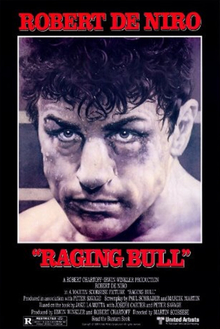
The Oscars of 1980 still have the reputation as the single most infuriating in history. Scorsese's superb Raging Bull was defeated in both the Picture and Director races by a somewhat formulaic "dark heart of suburbia" drama called Ordinary People. That movie was fine, but Raging Bull was visionary. The Academy will never live that one down.

Ten years later, there was another debacle that I actually think is even more obnoxious than 1980. Scorsese's Goodfellas, another film that is now regarded as an all-time classic, lost the 1990 Best Picture and Director Oscars to Kevin Costner and Dances with Wolves. Ugh. Dances with Wolves has its moments, but it's way too long and frequently insufferable with its hit-you-over-the-head-with-a-frying-pan approach to its subject matter. I tend to like movies with strong messages, but this movie is just over the top. When the evil white men intrude on the Native American utopia at the end, even going as far as to shoot the dog for no fucking reason other than to be assholes, we know things have gone off the rails. I'm all for movies that highlight how badly the Native Americans got screwed over, but stuff like this is one step forward, two steps back. Should have been Goodfellas.

Around the turn of the century, people realized that Marty wasn't getting any younger and still had no Oscar. He began to show up a lot more at the annual ceremony. Gangs of New York from 2002 was not his strongest effort, but for a while it looked like he would finally seal the deal this time. That year, Best Director went to Roman Polanski for The Pianist, who couldn't accept in person since he had fled America in the late 70s after date-raping a teenager in Jack Nicholson's hot tub. Polanski did make some great movies before that incident and maybe people felt he was overdue as well, but it has to suck to lose to a pedo. In 2004, we had The Aviator, but that ultimately fell victim to the "tears > thought" trope and lost to Clint Eastwood's tragic Million Dollar Baby.

Scorsese did finally claim his Oscar in 2006 for The Departed. The movie was not the groundbreaking achievement that some of his earlier films were, but it was a strong gangster film that deserved the honor. Still, at that point all people could talk about was how he should have won earlier. Something tells me Christopher Nolan is heading down the same path, but more on that later.

1989
Winner: Driving Miss Daisy
Not Even Nominated: Do The Right Thing

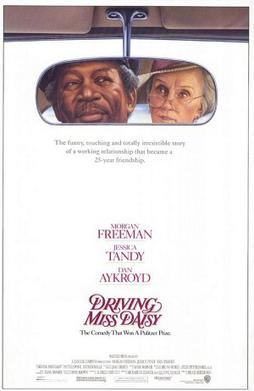
Probably the best example of the Academy's unfortunate retrograde tendencies. Spike Lee's Do The Right Thing was a scathing and innovative look at race relations that featured complex characters and no easy answers. It didn't even make the final five nominees that year. When presented with such a bold new vision of racial dialogue in America, the Oscar voters went with a movie about a black guy who chauffeured a rich old white lady. Dear God, here come the angry essays. Was this 1989 or 1889? Morgan Freeman is always great, but come on. In the end, it was a well-meaning movie...but way out of touch. As for Lee, his later movies lost some focus and he was cursed by an "angry black man" reptuation. A lot of that anger probably stems from this. The fact that it also beat Oliver Stone's Born on the Fourth of July is more than a little frustrating too.


1994
Winner: Forrest Gump
Defeated: Pulp Fiction

It's become a pop-culture touchstone and a testament to the benefits of "not going full retard," but should Forrest Gump have won Best Picture? Probably not. I feel kind of guilty about this...it's the kind of harmless, charming movie that makes you feel like a jerk for criticizing it. Still, 1994 was a damn good year for movies and the fact that the Academy chose this is a bit puzzling when you consider that it was up against The Shawshank Redemption and Pulp Fiction. Shawshank's fate was no surprise - that movie had a long road to travel before it became as beloved as it is today. Pulp Fiction, however, was an instant classic that went on to inspire a whole generation of movie fans. This was the ultimate example of the "head vs. heart" battle that so frequently defines the Academy Awards.

1997
Winner: Titanic
Defeated: L.A. Confidential, Good Will Hunting

The year that the Academy membership was swayed by massive box office success and the screams of teenage girls. Saw a few clips of Titanic on TV recently...it has not aged well. It was a generation's Gone With The Wind, but that movie is still impressive and this is just...a little embarrassing. James Cameron's uber-cheesy dialogue is just out of control. Still, it sailed past some excellent movies to pick up an astounding 11 Oscars. One of the only ones it didn't win was Best Actress for Kate Winslet (she could be a topic here as well...it took her a long time to get one and she was great even in this). Honestly, what impresses me most is how well Leonardo DiCaprio redefined himself after this movie. In 1997, just about every teenage boy on the planet had to listen to our female peers go on about his good looks for an eternity. Some of those girls claimed to have sat through this 12 times..and it's three and a half hours! That's 42 hours! DiCaprio must have realized that an entire generation of young men hated him, so he wisely vanished for a while before returning with a slew of amazing performances in movies like Blood Diamond, The Aviator and Inception. Robert Pattinson, take notes.

1998
Winner: Shakespeare in Love
Defeated: Saving Private Ryan

Yeah, two years in a row. I have to confess that this one did not particularly make me angry, but it was truly shocking. Shakespeare in Love was a charming, smart little movie...but the idea that it could upset a massive war epic like Saving Private Ryan sounded laughable until it happened. Nothing in the ceremony indicated this outcome, either. Spielberg even won Best Director in one of the few instances where the two top categories did not line up. I remember I was watching the show and had just taken a sip of my drink as Harrison Ford opened the envelope. "Here comes Private Ryan," I thought. Didn't happen. I literally spat out my drink. How often do you get to really do that? Still one of the craziest upsets in Oscar history.


2001
Winner: A Beautiful Mind
Defeated: The Lord of the Rings: The Fellowship of the Ring

This one is personal because it made me really mad. This movie was fine and Russell Crowe is an awesome actor, but I felt it was very unremarkable. But them darn kids today don't realize what a complete and utter joke the fantasy genre was in Hollywood until Peter Jackson came along with the Lord of the Rings trilogy. Before that, we had what? Tom Cruise riding a unicorn in Legend? Arnold Schwarzenegger punching camels in Conan the Barbarian? Jackson and his crew of Kiwi genuises saved an entire genre, which is not something you see every year. Meanwhile, A Beautiful Mind was the same "oh noes i haz a handicap" tale that had won many times before (and after). My first time seeing Fellowship in theaters is one of my greatest movie memories, and I didn't take the loss very well. The Academy overcompensated in a big way two years later by giving Return of the King just about every award they had...but I felt the first one was the greatest of the trilogy.

2005
Winner: Crash
Defeated: Brokeback Mountain

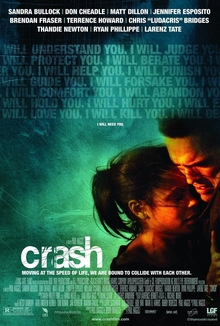
You want to piss off a crowded room of people? Bring up Crash. It's the kind of polarizing movie that probably couldn't win these days, now that the Academy's new preferential ballots favor movies with near-universal acclaim. Some people loved the heightened drama and caustic dialogue, while others felt they were being talked down to by its unsubtle racial commentary. It's victory over the gay romance Brokeback Mountain was seen as the stuffy Academy being more willing to talk about race than homophobia.

Brokeback has deservedly become a milestone in the gay rights movement, but I remember feeling conflicted about it at the time. It had some great acting (especially by the late Heath Ledger), a devastating ending and beautiful music...but it was also too long, full of stilted dialgoue and so drop-dead serious that it sometimes gave way to untintentional humor. I admired what it stood for more than I actually liked the movie. But don't worry, I'm still liberal. Crash's upset victory seemed shocking, but maybe it shouldn't have been.

2008
Winner: Slumdog Millionaire
Not Even Nominated: The Dark Knight

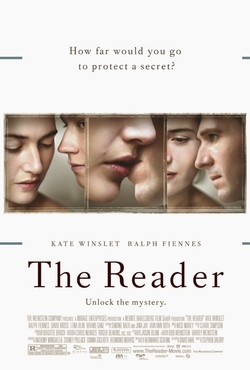
An Oscar scandal so devastating it changed the format of the entire awards. Let's be fair - I thought Slumdog Millionaire was an awesome movie. The problem here was the lack of a Best Picture nomination for The Dark Knight. Beloved by both critics and audiences, everyone seemed sure that the movie would score a win for superhero fans everywhere by competing for the top honor. If it had been nominated and lost to Slumdog, I could have accepted that. But it didn't even get that far. What did get nominated? The Reader, a particularly annoying example of what my college friend Grant once called "HMJ" (Holocaust Movie Jockage). The Reader was a confused, oppressively downbeat movie with questionable subtext that inspired all sorts of Holocaust-wank on the internet. How the hell did this get to the final five and not The Dark Knight? Moviegoers everywhere called bullshit and next thing you know...there's ten nominees for Best Picture.

Two years later, it seems evident that having ten nominees doesn't do much to help movies like The Dark Knight or District 9 or Inception actually WIN Best Picture. Still, it's nice to see them get a little more recognition.

Goodbye for now, Oscars. See you next year.

Saturday, February 19, 2011

Oscars 2011 Educated Guesses


Best Animated Feature
How To Train Your Dragon
The Illusionist
Toy Story 3


Who Will Win: It's not even close. As we learned last year with Up, doing double duty as a Best Picture nominee gives you a pretty big advantage in this category...and a win here is essentially a consolation price for Toy Story 3 since it's unlikely it will take the top prize. That's not to say the other two movies aren't good. How To Train Your Dragon is a solid movie and somewhere Rapunzel is seething that a small French cartoon like The Illusionist pushed her out of this race. Still, neither of them have what it takes to defeat another Pixar masterpiece. I'm told next year's Pixar film is Cars 2, so that may bode well for other films (One of the studio's only losses was the first Cars). For now though, another Oscar for Pixar.

My Choice: Toy Story 3. If you've seen it, you know that this choice needs no explanation.


Best Original Screenplay
Mike Leigh for Another Year
Scott Silver, Paul Tamasy, Eric Johnson and Keith Dorrington for The Fighter
Christopher Nolan for Inception
Lisa Cholodenko and Stuart Blumberg for The Kids Are All Right
David Siedler for The King's Speech

Who Will Win: I'm going with Christopher Nolan. It may sound like wishful thinking, but hear me out. With Nolan shut out of Best Director, this is really the only chance to reward him and the film (aside from an easy win in Best Visual Effects). The movie has a contingent of supporters within the Academy or it would not be a Best Picture nominee, and Nolan has already won this same honor at the 2011 Writer's Guild Awards. There's always a strong chance that The King's Speech could nab this one as part of an overall sweep, but this category doesn't always fall in line with the others.

My Choice: Nolan.


Best Adapted Screenplay
Danny Boyle and Simon Beaufoy for 127 Hours
Aaron Sorkin for The Social Network
Michael Arndt, John Lasseter, Andrew Stanton and Lee Unkrich for Toy Story 3
Joel and Ethan Coen for True Grit
Debra Granik and Anne Rosellini for Winter's Bone

Who Will Win: Aaron Sorkin's zinger-filled script for The Social Network has already earned him several prizes in the pre-Oscar competitions. I doubt the movie is leaving the Kodak Theater without at least one major award, and this is the best chance for a win.

My Choice: Very strong category. I find myself leaning towards the Coens, mostly for how unique the dialogue was in True Grit - intentionally archaic and stilted, but also quite funny.


Best Supporting Actress
Amy Adams in The Fighter
Helena Bonham Carter in The King's Speech
Melissa Leo in The Fighter
Hailee Steinfeld in True Grit
Jacki Weaver in Animal Kingdom

Who Will Win: This category is famous for upsets, and I think one may be brewing. Melissa Leo has swept most of the pre-Oscar awards (or "playoffs," as I like to call them), but she has been helped by the confusion about whether the teenage Hailee Steinfeld should be in a leading or supporting category. Anyone who has watched True Grit knows that it is a leading role, but studios tend to push for supporting nominations for younger stars for whatever reason. Now that we have a direct matchup of the two, I think Steinfeld's going to take the prize in a photo finish.

My Choice: Steinfeld certainly deserves it for her ability to deliver the tongue-twister lines that the Coens wrote for her. I also wouldn't mind a win for Amy Adams, who did great work but has been overshadowed by Leo throughout this whole season.


Best Supporting Actor
Christian Bale in The Fighter
John Hawkes in Winter's Bone
Jeremy Renner in The Town
Mark Ruffalo in The Kids Are All Right
Geoffrey Rush in The King's Speech

Who Will Win: Bale's been the man to beat for this Oscars cycle, and I suspect his streak will continue. None of these other performances are as no-holds-barred crazy as he was in The Fighter. Still, he's not invincible. Rush's work in The King's Speech is highly regarded, and I could see him claiming the statue as well. For now, I'll stick with Bale. I'm hoping that Kayne West or someone else will interrupt his acceptance speech so he'll have a chance to show off that infamous temper...but people are usually pretty well-behaved at the Oscars.

My Choice: A duel between Bale and Rush is a win-win for me. Both of them were superb.


Best Actress
Annette Bening in The Kids Are All Right
Nicole Kidman in Rabbit Hole
Jennifer Lawrence in Winter's Bone
Natalie Portman in Black Swan
Michelle Williams in Blue Valentine

Who Will Win: Poor Annette Bening. She is a great actress and everyone seems to agree that she deserves an Oscar someday, but she always winds up playing second fiddle to someone else. This year it's Natalie Portman. You think Bale's performance was crazy? Watch out, cause Portman's revelatory work in Black Swan should propel her right to the top.

My Choice: Jennifer Lawrence.


Best Actor
Javier Bardem in Biutiful
Jeff Bridges in True Grit
Jesse Eisenberg in The Social Network
Colin Firth in The King's Speech
James Franco in 127 Hours

Who Will Win: Firth, and commandingly so. None of these other actors, skilled as they are, have achieved the same momentum as Firth's stuttering King George VI. If I had to guess second place, I would go with Franco. The problem there is that Franco is also hosting this year's show, which makes for a really awkward dynamic that probably works against him in the end. Firth will reign.

My Choice: Firth, Franco, Eisenberg...I'd be happy with any of them.


Best Director
Darren Aronofsky for Black Swan
Joel and Ethan Coen for True Grit
David Fincher for The Social Network
Tom Hooper for The King's Speech
David O. Russell for The Fighter

Who Will Win: This is a brutally close race between Tom Hooper and David Fincher. Fincher is the respected veteran whose excellent work is probably reason why a movie about Facebook turned out to be so striking. Hooper is a newcomer who has impressed Hollywood by guiding The King's Speech with a steady hand. The reason I'm going with Hooper is because he has the Director's Guild of America award, which almost always coincides with the winner of this category. Still, once in a great while it turns out differently and this could be one of those times. Hooper is my tentative prediction, but it could go either way.

My Choice: Aronofsky or Fincher.


Best Picture
127 Hours
Black Swan
The Fighter
Inception
The Kids Are All Right
The King's Speech
The Social Network
Toy Story 3
True Grit
Winter's Bone


Who Will Win: Let's start narrowing it down. 127 Hours is too visceral, Black Swan is too sleazy, Inception is too cool (sad, isn't it?), The Kids Are All Right is too divisive, Toy Story 3 is too animated (that's even sadder), and Winter's Bone is too obscure. The remaining four have the most nominations, but we can eliminate two more. True Grit is very well made, but not especially serious or sincere. Best Picture winners need to have a certain stature, and the movie is too playful for that. The Fighter is closer, but that seems to be viewed as more of a showcase for great acting than a great film on its own.

So it comes down to a battle between The King's Speech and The Social Network. Unlike last year's Avatar vs. The Hurt Locker duel, where the polarizing Avatar was hurt by the Academy's preferential ballots, both of this year's top contenders have enjoyed near universal acclaim. It's a "head vs. heart" battle similar to the Forrest Gump/Pulp Fiction battle of 1994 (Gump won). Will it be the detached, witty and cynical film or the classy, uplifting one? The Social Network was a steamroller in the early award competitions, but as more people saw The King's Speech, it began to dominate the later guild awards. Social Network is often compared to Citizen Kane, given that they are both semi-truthful tales of brilliant, ambitious, but deeply flawed men. But back in 1941...Citizen Kane lost Best Picture to How Green Was My Valley. So maybe it is destined to have a rich legacy...but The King's Speech is probably going to win Best Picture.

My Choice: Toy Story 3. The decade-old Animated Feature category and the advent of ten nominees in this category were steps forward in recognizing the achievements of this genre, but the Academy membership as a whole still seems extremely reluctant to place these films on the same plateau as their live-action counterparts. Maybe someday.

I'm out. The winners will be revealed on February 27.

Wednesday, February 9, 2011

Clone Saga Revisited, Part Three

With the third volume in this new "Complete Clone Saga Epic" series, I've started to realize that Marvel is not kidding around when they say "complete." Every Spidey comic published during that era seems ripe for inclusion in these volumes regardless of whether or not it dealt with the core plotline. I certainly appreciate the throughness of this approach, but it works against them this time.

But where were we at the end of Volume 2? The original 1970s Clone Saga mastermind, The Jackal, had just returned and planted seeds of doubt about just who is the real Spider-Man - Peter Parker or Ben Reilly? We start this time with "Players and Pawns," a two-part tale featuring more of Jackal's shenanigans. There's also a third Peter Parker who emerges suddenly. Is he the real one? Spoiler alert - no. Jackal's smugness and puns get old quick, but at least this story is short. The most notable thing that happens is that Aunt May finally comes out of her coma.

But anyone who reads this volume is in for a serious endurance test before we get to see the emotional ramifcations of Aunt May's return. Specifically, it's time to wade through the five-part "Planet of the Symbiotes" storyline. This story was published outside the four main Spidey-titles in a series of "super special" one-shots. Special...this story is special the same way that Forrest Gump was special. Venom and Carnage were quite overexposed during the 1990s. I still think the over-the-top "Maximum Carnage" storyline is a guilty pleasure, but this story is one of the most absolutely godawful Spider-Man tales I've ever read. And keep in mind we're in the middle of the Clone Saga when we say this, so that carries some weight.

I'm not even going to try and summarize the sheer stupidity that passes for a plot in this comic abortion, but I will point out a fairly amusing mistake. At one point in this story, Eddie Brock and the two Spideys are chilling with Mary Jane as they hide out from the invading symbiotes (seriously, don't ask) and good old MJ is very cordial with her husband's duplicate. Nothing wrong with that on its own, except Mary Jane's first meeting with Reilly happens later on in this same volume and she's not exactly in the best mood at the time. So not only is the story terrible, it's not even placed in the right spot. Like I said, I do appreciate that Marvel wants to include all the stories where the clone appears, but honestly nobody would have cried foul if this one was missing.

So if you made it through that, you get rewarded with "The Gift," the story originally printed in Amazing Spider-Man #400. The "gift" of the title is the week that Aunt May gets to spend with Peter Parker before her death. Yep, this was the story when she bowed out of the Spidey universe (at least for a few years...let's not go there). It made sense. She had been in poor health since the early 1960s and it was probably time to send the old girl out with dignity.

That's exactly what J.M. DeMatteis did in this exemplary story. There's no action whatsoever and it relies totally on characters and dialogue to make its impact. As a pre-teen when this came out, it was easily the most emotional thing I had ever read...and it still holds it own when you read it as an adult. Once May has peacefully passed, this story ends with a big shock. There were a lot of "shocks" in the Clone Saga that felt as revelatory as Tuesday coming after Monday, but this was a big one. Just as May's funeral is over, the police show up and arrest Peter Parker. The charge? Murder.

The two-part "Aftershocks" story comes after this, and this stuff is decent enough. The only drawback is seeing that lame-o Judas Traveller show up again and do nothing but blow a few things up and then go on his merry way. The final storyline included in Volume 3 is "The Mark of Kaine." Remember him? Well, he was impossible to forget during this Clone business. We were told that this story would answer our questions about the mysterious figure, but it ultimately didn't answer much. The first half focused on Kaine's prophetic visions of Mary Jane's death, which he hopes to prevent by kidnapping her and hiding her underground. Naturally, neither of the Spider-Men are too happy with this. Parker breaks out of jail (assisted by Traveller...just go away already!) and even the moody third Parker joins in. In the second half, the story goes off the rails as the third Parker is revealed to be some genetic abomination who can shapeshift in the style of T-1000. Yeah, it's really weird...and some of the art is just ghastly. In the final part, Kaine picks fights with a bunch of Spidey's enemies...*yawn* The best part of this story is the scene where Reilly unselfishly decides to switch places with Peter and remain in jail so that he can be with Mary Jane while hunting the real murderer. It's pretty epic.

That does it for now. Next time, we get into the really bad Clone Saga stuff. At least we're done with Venom for a while.

Tuesday, January 25, 2011

Oscar and Social Network are now friends


There will be plenty of time for in-depth discussion later. For now, these are just initial impressions. Here are this year's ten nominees for Best Picture.

127 Hours
Black Swan
The Fighter
Inception
The Kids Are All Right
The King's Speech
The Social Network
Toy Story 3
True Grit
Winter's Bone


Ten contenders instead of five again yields nice results for movies that otherwise would have been denied this sort of recognition. Inception's inclusion is a nice continuing apology to Christopher Nolan for leaving out The Dark Knight back in 2008...after all, that whole incident is the reason the rules changed, so it's fitting. This is a pretty respectable group. The only one that kinda pisses me off is The Kids Are All Right. There's good acting in it, but also some really lame plot twists that turned a movie that seemed unpredictable into something extremely predictable. Hard to explain more without spoiling, but it's a stretch to even call it "all right," let alone worthy of the top Oscar.

Still, the real question is....can anything beat The Social Network? Facebook's origin story has been such a behemoth in the pre-Oscar playoffs that these other movies might as well be Friendster or Myspace. I'd say only two of its fellow nominees have any chance. First is The King's Speech, which has the most total nominations and that never hurts. It's a lot more of a crowdpleaser than it looks on first glance, and I could see a scenario where it pulls a Shakespeare in Love over the next month or so and manages an upset. The other major player is The Fighter, which is already poised to lay waste to the acting categories. Start your uninspired boxing puns now. It's a "contender!" It could "TKO" the competition! Etc etc so on and so forth.

Let's take a quick look at Animated Feature since I know a lot of people who read this are interested in that. Here are those nominees.

How to Train Your Dragon
The Illusionist
Toy Story 3


Hey, we got to find out the two movies who get to lose to Toy Story 3! In terms of quality, How to Train Your Dragon is a worthy opponent...but it's still going to get blown away. The Illusionist is a bit of a surprise...sorry, Rapunzel. I'm a big Sylvain Chomet fan, so I'd love to see it. It just has to open somewhere within 100 miles of me first. Hopefully soon.

You know the drill. More detailed predictions closer to the event.

All nominees here.

Sunday, January 16, 2011

Top Ten Films of 2010

I thought about doing a "Best Films of the Decade" (2000-2010), but that seemed way too difficult. You might think "Oh, just take the No.1 film from each of your previous lists and put them together!" Well, not that simple. These lists are very much a moment in time...sometimes years and further viewings change how you feel about a movie. For example, Crash was my top film of 2005, but now it doesn't seem to hold the same power it had on that first viewing. Conversely, I had V For Vendetta at No. 7 on the list for 2006, but I've come to like that one more with each subsequent viewing and it's hard to imagine that I wound up going with The Queen for that year's top film instead - though I still like that one a lot.

Point is, the lists are a snapshot of how I feel about the year in film shortly after it has ended. But I can't see the future, so it's all I have to work with. This year didn't start out very well...and aside from two amazing movies that you'll see, the summer was shockingly weak. Still, mix in some satisfying offerings from Fall/Winter and a few "outside the box" picks that I always like to highlight, and I think the year was decent enough. Without further ado....


10. Machete
Yes, I'm serious. I have movies on here that are emotionally moving, amazingly written and superbly acted...but this movie deserves a spot because of the huge amount of pure fun I had watching it. Robert Rodriguez's salute to 1970s trash casts the one-of-a-kind Danny Trejo as the title character and the result is a non-stop barrage of laughs and excitement. Even more amusing is how Rodriguez takes the shrill, petulant nonsense that passes for America's national dialogue on immigration and goes hog wild with it. Perhaps funnier than the film itself was watching a few pundits blow their stacks at what they saw as a sincere call for the violent overthrow of the White Man. Oh, those poor white men. They're always in such danger. This is a movie where the title character uses someone's intestine as a rope. It's not serious. But it is great.


9. The Girl With the Dragon Tattoo
I could feel justified putting this whole trilogy on the list (the other two are The Girl Who Played With Fire and The Girl Who Kicked the Hornet's Nest), but this first installment was the strongest. Adapted from the enormously successful books by the late Stieg Larsson, these Swedish films were shot simultaneously and released in that country in 2009, before crossing the Atlantic in 2010. They managed to find a far bigger audience than is typical for subtitled films, but it's not hard to see why. These are solid, satisfying old-fashioned mysteries, a vintage tradition despite the large role cutting-edge technology plays in the storyline. Fine performances all around, but towering above all is the amazing Noomi Rapace as volatile genius Lisbeth Salander. As with any foreign film that enjoys even a little success, a Hollywood remake is on the way. It will be quite hard to top the original.


8. The King's Speech
This movie exceeded my expectations, which I know is an odd thing to say about such a classic piece of Oscar bait. What really impressed me about The King's Speech was how it took a concept that seemed prohibitively highbrow and turned it into a universally appealing story that gets audiences applauding as the end credits roll. It's hard to imagine Colin Firth won't be walking out of the Kodak Theater with a gold statue for his work as the stuttering King George VI, who must overcome his handicap in order to comfort the people of England as the Nazi threat looms over them. Rounding out the cast are Helena Bonham Carter as Queen Elizabeth (the current queen's mom) and Geoffrey Rush as the king's crafty speech therapist. The climactic speech could just as easily be a championship game in a sports movie. This is a nice, rousing little movie - true "feel good" entertainment.


7. Best Worst Movie
Some movies are so exquisitely bad, they cross the line twice to become brilliant entertainment. This documentary chronicles the production and unique reception of Troll 2, a film with a cult following of bad movie connoisseurs who can't get enough of its glorious ineptitude. The child star of the film has now grown up and is behind the camera, and he manages to reunite most of the cast and crew of the original "masterpiece." The movie has a surprising range of emotions, perhaps best symbolized by the difference between the affable dentist George Hardy, who played one of the lead roles and loves the attention, and the proud Italian director Claudio Fergasso, who truly thought the film was a challenging work of art and doesn't hide his bitterness about how it was ultimately received. The mix of humor and pathos makes the documentary more than just an advertisment for Troll 2; it's a well-rounded examination of the strange new kind of fame that has emerged with the advent of the internet. Suggested double feature - this and the similarly-themed Winnebago Man.


6. Kick-Ass
Opinions will vary, but I contend that Matthew Vaughn's adaptation of Mark Millar's comic book actually improved on the source material. The film takes the comic's great premise and adds some much-needed additional characterization and emotional resonance. The title character is a bored teen who decides to put on a costume and try to emulate his favorite comic book heroes, only to find that he isn't the only one. A solid acting ensemble anchors the story - Nicholas Cage proves he still can act while the young Chloe Grace-Moretz steals the show as "Hit Girl." All the while, Vaughn deconstructs superhero cliches to powerful effect, only to reconstruct them for an epic finale. Alternately hilarious and disturbing, Kick-Ass is a much needed dose of adrenaline into a genre that's getting tired.


5. Winter's Bone
An uncomfortably convincing tale of life in a barren community ravaged by poverty and meth addiction. Ree (Jennifer Lawrence, giving one hell of a performance), a teenager taking care of her two younger siblings, must navigate her harsh surroundings to try and save the family home. The result is a visceral, chilling look at a community deep in the Ozark Mountains, far removed from anything resembling civilized society. The bleak cinematography gives the whole film a haunting aura that's not easy to shake once the credits roll.


4. The Social Network
In the hands of screenwriter Aaron Sorkin and director David Fincher, Facebook's origin story proves to be a uniquely gripping drama. In addition to tracking the website's evolution from innovative idea to billion-dollar global phenomenon, the movie also gives a profound look at the growing sense of alienation among young people, which has risen in contrast to our increasing ability to communicate with each other through social media. The mascot of this idea is the film's version of Facebook founder Mark Zuckerberg, played by Jesse Eisenberg as an insufferably brilliant antihero. Like all movies about current events, it should be taken with a grain of salt, but as a film...it's a home run.


3. Black Swan
Darren Aronofsky's lurid melodrama is showing up on a lot of Top Ten lists this year, but my reasons are quite personal. The anime filmmaker Satoshi Kon, one of my all-time favorite directors, died suddenly this year and with this film, Aronofsky may have established himself as a live-action heir. The director once reproduced a scene from Kon's Perfect Blue shot-for-shot in Requiem for a Dream, and his latest film owes a great debt to that late 90s anime masterpiece. That familiar Kon theme of the melding of life and art is on full display in the story of perfectionist ballet dancer Nina (a revelatory perfromance from Natalie Portman...never knew she had this in her) and her deteriorating mental state as the pressure of an upcoming "Swan Lake" perfromance eats away at her. The movie is gruesome, suspenseful and sleazy...but under the circumstances I found it strangely comforting.


2. Inception
A huge summer blockbuster that isn't afraid to make you think a little bit. We need more of these. Inception has already become so omnipresent in pop culture that it's easy to forget the thrill brought on by the first viewing. Director Christopher Nolan turns in another knockout as a motley crew of scoundrels navigate the complex, rapidly changing landscape of dreams. Nolan puts together a bizarre logic and rules that doesn't always hold up to detailed examination, but it does make for a mind-blowing cinematic experience. As for that ending...I won't spoil it here, but focusing exhaustively on yes-or-no questions is irrelevant. It's about what the character is feeling. Besides, ambiguity doesn't bite.


1. Toy Story 3
Toy Story topped this list in 1995. In 1999, Toy Story 2 came in at No. 5. Eleven years later, the third film in this perfect trilogy lands at the top again...has to be a first for the third film in any series. I didn't expect this when I first started hearing about it, but it was futile to resist this hugely entertaining and emotionally overwhelming movie. The geniuses at Pixar have crafted a tale about the inevtiable end of childhood, a concept which touches primal feelings inside anyone who resents the assertion that we have to stop playing with toys someday (These days, my toys are just more expensive). Woody and Buzz are back, and by now the whole cast is so comfortable in their roles that the whole thing feels effortless despite the considerable work that has gone into this film. From the elaborate jailbreak scene to the shockingly grim encounter the toys have near the movie's end, this film is a high point for a studio that has made a career out of high points.

Honorable Mentions: Fair Game, The Town

Happy 2011, everyone!

Wednesday, December 8, 2010

Clone Saga Revisited, Part Two

Well...I sure let this one fall by the wayside. Sorry about that. Here is the six-month old first part of this series if you are interested. Basically, as the new "Complete Clone Saga Epic" collections come out, I'm going to give the story another look and explore what it was about this plotline that ultimately pushed me away from Spidey comics. Unfortunately, it doesn't seem like there has been much improvement since. From what I know of this "Brand New Day" business, I didn't know how good I had it back in the 90s. I do wonder why Marvel has chosen to reintroduce this much-maligned story to the public now...is Ben Reilly set for some sort of return to the mythos? Time will tell.

This second collection starts out with "Back to the Edge," focusing on a still moody Peter Parker/Spider-Man as he struggles to deal with Aunt May's deteriorating health and the sudden return of his clone. Meanwhile, Mary Jane heads back to Pennsylvania to see her estranged family members. Her plotline is actually a lot stronger; Spider-Man's encounters with Puma and Nocturne feel aimless. It picks up a little towards the end as Spidey meets up with his old pal Daredevil (another character who was going through some weird crap in the 90s). They team up to fight two avian-themed villains, the Owl and the Vulture. B-B-B bird bird bird, bird was the word. Sorry.

Anyway, you might remember the Vulture as the senior citizen with a feathered suit that allowed him to fly and who could give Spider-Man a good fight despite his advanced years. At this point, however, he had just undergone a process to make him young again (way to undo the most interesting part of the character, Marvel). Anyway, Vulture infects Spider-Man with a deadly virus that has no antidote. Uh-oh.

Now it's time to go back to Ben Reilly/Scarlet Spider for the "Web of Life" storyline. I mentioned last time that I was fond of "The Exile Returns," the first solo clone story, but this one is somewhat weaker. The most interesting part was the connection between the Scarlet Spider and Betty Brant, who was looking for an interview with the new Spider-person in town. Unfortunately, this element is jettisoned almost immediately...perhaps to give more attention to the story's major antagonist - Kaine.

If you've been following the Clone Saga through these new collections, then you already got a full explanation for the beef between Reilly and Kaine in "The Lost Years." Back when these issues were first coming out, however, this was all very mysterious indeed. You could tell Marvel wanted Kaine to be the next Venom-esque antihero, but the fandom wasn't really sold. In fact, a lot of people hated the guy. I thought he was okay in small doses. At the end of this story, Kaine fights and kills The Grim Hunter (Kraven's son who had only just been introduced recently) and Reilly basically watches the whole thing. The story also introduced his geneticist pal Seward Trainer, who would be important later on.

What of Spider-Man? He begins to succumb to his illness in "Web of Death," and receives help from a most unlikely source - Doctor Octopus. Except for the very end, this story is damn good, even awesome. J.M. Dematteis and Tom DeFalco turn in excellent writing here. As Doc Ock observes that the Vulture may have succeeded where he always failed, he realizes just how much he respects Spider-Man as an opponent. "I've always looked upon you as the last decent man," he thinks, and is clearly faced with a "Who am I without my enemy?" complex. It's pretty brilliant.

Dr. Octopus decides that he doesn't really want to see Spidey gone for good, and puts his considerable scientific knowledge to use to develop a cure. He is successful, though not before Parker flatlines for a few minutes and has a ghostly vision of his own ascent to the afterlife (a very subtle hint about the Clone Saga's future is dropped here, it's quite sneaky). Still, Spidey recovers and gets more good news - Mary Jane is pregnant. Knowing that he is going to live and will soon be a father, he finally shakes off his depression and joyously bounces across rooftops. For fans who had waded through months of oppressive doom and gloom, this was a godsend.

What of Doc Ock? He turned himself into the police, saying that he wanted Spider-Man to be rested and refreshed for their next battle. Spidey's bafflement as Ock marches off with the cops is priceless. Sadly, this story would have a miserable ending. Kaine shows up again, defeats Dr. Octopus easily and then snaps his neck. That's right - one of Spider-Man's all time greatest foes, a guy with a thirty-plus year record at that point, is killed off by this newcomer. It sucked hard. Marvel ultimately realized their mistake and years later, Ock was resurrected by mystical ninjas (I am NOT making that up).

The collection also features the "Funeral for an Octopus" mini-series, which I could never convince my parents to get me since I was spending so much money on other comics during this Clone business. Ock's death brings a bunch of his supervillain buddies together and they cause trouble. That's about it. It's pretty lighthearted and fun, actually. After that is a standalone story where both Spideys deal with terrorists who have taken over the World Trade Center. Yeah, that's right. This was kind of dull in the 90s. Now...it's unnerving.

The final story in this second collection is "Smoke and Mirrors," which features the return of The Jackal, the mastermind of the original 1970s Clone Saga and Ben's creator. Given that clones were in again, it made sense for him to come back. The change in his characterization is notable. In his original incarnation, the Jackal was just a mean, nasty adversary. Now he is king of puns and cringe-inducing pop culture references. You could tell for a long time that Spidey's creators wanted a villain who was similar to The Joker. They tried with Carnage...who certainly had the requisite insanity, but he was something of a simpleton without Joker's mad genius. The Jackal has the genius, but is a bit too over the top in his ambitions to get the same appeal. Joker didn't really want to take over the world, he just wanted to do crazy stuff. He was brilliant at that, though. Can't blame Marvel for trying, but you can't top The Joker. Won't happen.

"Smoke and Mirrors" isn't really a good note for this collection to go out on. It's very contrived and a little tedious, and it first introduces the suggestion that maybe Ben is the real one and Peter is the clone. You can understand the writers wanting to add some mystery...but I remember reading that as a kid and being like "Really? They're going to do this?" It's one of those plotlines that feels natural but at the same time...I don't know if anyone really wanted it. That's it for now - there will be plenty more unwanted revelations ahead, that's for sure.

Wednesday, September 29, 2010

Remembering Satoshi Kon - Conclusion

"Part of me thinks I should retire or die peacefully now. It would be better for my reputation." - Satoshi Kon, 2008

It was a joke when he first said it, but unfortunately it became prophecy.

Paprika, the director's final film, is charmingly familiar to those who have followed his work. Once again, we have reality and fantasy colliding, a heroine with a split personality, and a thundering score from Susumu Hirasawa. It was originally a novel by Yasutaka Tsutsui, a writer who Kon cites as one of his heroes. As fate would have it, when Tsutsui saw Millennium Actress, he was so impressed that he decided Kon was the director who could bring the story to the screen. It shouldn't come as a surprise that the nonsensical, rapidly changing landscape of dreams was perfect fodder for this particular director.

The title character is a cheery, resourceful woman who participates in the dreams of others to help with their mental issues. She is the alter ego of the tightly-wound Dr. Atsuko Chiba, and the technology is possible thanks to the DC Mini, a scientific breakthrough conceived by the childlike, morbidly obese Dr. Tokita. The technology is not yet widely known, but those who participated in its creation have differing views. For Dr. Chiba, it represents a potential breakthrough in the realm of psychotherapy. For the sinister Chairman Inui, it is an invasion of the last truly private element of human life.

Not long after the movie's virtuoso opening sequence, the technology is stolen and proves to be much more powerful than any of the characters could have foreseen. Dreams begin to merge with reality, and well...things get really weird.

Really weird. The insane finale to this film will make you think someone slipped a hallucinogen into your most recent meal. The entire movie is a showcase for one incredible image after another. I don't have enough superlatives for the quality of the animation here, it has to be seen to be believed. If there's anything lacking about Paprika, it's that while it is a very satisfying experience to watch, it doesn't provide the emotional undercurrent that Kon's other work has. Still, after the bleakness of Paranoia Agent, he clearly was shooting for something more light-hearted (though no less complex!)

Unfortunately, that brings us to the end of this little journey. Kon's sudden death means that Paprika would be the last piece of genius we would get to enjoy from this one of a kind talent. Apparently, he was planning to continue with the themes he explored here. His next film was intended to be called The Dream Machine, and the director described it as a "road movie with robots." The very last scene of Paprika features grizzled cop Konakawa going to see a film called Dreaming Kids. The name may have been altered, but I'm guessing that was a clue to what we were meant to see next. I'm not aware of how far along the movie was, but even if they were to finish it, it won't be the same without Kon to oversee it. Can't help but envy Konakawa now.

If it's not clear enough after all this, I found all of this man's work to be brilliant and truly inspiring. I can't have been the only one. I wonder how many in the business have seen Kon's movies and walked away with the same inspiration. The idea of implanting dreams into others, the focus of Christopher Nolan's Inception, is a little similar to Paprika. I also remember noticing how Hayao Miyazaki animated his heroine, Sophie, in Howl's Moving Castle. Sophie fluidly morphed from young to old to young with gray hair, like the many personas of Chiyoko Fujiawara in Millennium Actress.

If you want at least one concrete example, there's this:On the left is Perfect Blue, on the right is Darren Aronofsky's Requiem for a Dream. The director revealed that he indeed sought Kon's permission to copy the "bathtub scream" scene shot for shot. You know what they say about imitation and flattery.

The prospect of no future Kon films or anime shows is a sad one. I suppose I can only hope that Kon's quote holds true, that his untimely death brings about at least a little more attention to his work...and that one day, he will be widely respected by animation enthusiasts as one of the greats.

Wednesday, September 22, 2010

Remembering Satoshi Kon, Part 4

There's a large chunk of the anime audience that more or less ignores the theatrical films and focuses on the television shows. When Satoshi Kon followed up his three films with a 13-episode series, Paranoia Agent, I suspected it would bring much more attention to the director. I also remember thinking, "These people don't know what they're in for." I didn't really know what I was in for, either.

After the classy Millennium Actress and the lighthearted Tokyo Godfathers, it took the first episode of the show to remind me just how dark and intense the director could be. Like all of the man's work, Paranoia Agent is truly excellent. With six-plus hours of content to work with, Kon and his crew weren't afraid to get really ambitious, in both form and content. It's the sharpest example of his social commentary, and the animation is worthy of a feature film. You won't find any of that cost-cutting laziness that made every Dragon Ball Z story arc about 15 episodes longer than it needed to be.

Tokyo residents are being attacked by a mysterious young phantom known as Shonen Bat, who wields a baseball bat and chases down his victims on roller skates. Two investigators, who have a Mulder/Scully-esque relationship pitting realism against possibility, struggle to connect the various incidents and their stange connection to Maromi, a garish pink dog who stars in the latest cartoon hit. Eventually, the public takes notice of the media attention and sympathy given to Shonen Bat's victims and starts to envy them.

The series takes on an anthology format, using individual episodes to focus on one character at a time. The mystery of Shonen Bat is more or less the only element tying these tales together. Kon and his crew use this to try out all sorts of ideas, with mixed results. "Happy Family Planning," about three suicide-obsessed outcasts (including a little girl!) who meet on the internet to plan their demise, is a small masterpiece on its own. This is the blackest of black comedy, with a brilliant final twist that seems simple but may not be. Kon has never been simple, after all. On the other hand, "The Holy Warrior" is a parody of corny fantasy anime that winds up being almost as dull. Not every episode works, but the majority of them do. "Double Lips" is an interesting remix of the Perfect Blue story, and an incompetent animator's road trip in "Mellow Maromi" appears to be in real time.

The overall message of the show relies heavily on metaphor and can be quite confusing. In fact, the final scene of the last episode features a narrator actually advising the viewer to watch it again...which definitely helps. My sense is that Kon feels that most people in contemporary society are no longer equipped to deal with the suffering that is an inescapable part of life. They would rather cultivate a sense of victimhood, or escape reality altogether via insipid obsessions with cute characters. It's no surprise that Maromi winds up being the origin of the Shonen Bat phenomenon - he represents all that Kon finds obnoxious and unfortunate about his home country.

It's all very abstract, but the last few episodes really tug on the heartstrings. In one truly epic confrontation, the frail, sickly Misae Ikari renders Shonen Bat powerless simply by facing her darkest moments and openly talking about them. The final revelations revolve around the shy Tsukiko, who was responsible for the death of her puppy, Maromi, when she accidentally dropped his leash near a busy road. Unable to cope with her mistake, she invented Shonen Bat as someone she could pin the blame on when she had to explain the incident to her father. In the gut-wrenching finale (animal lovers beware, I speak from experience), she faces her failure and apologizes to the broken, bloodied little dog. This halts the epidemic in Tokyo, but nobody else learns anything. It's back to business as usual.

There's a lot of stuff out there that's weird and confusing. But not everyone can deliver that type of entertainment while also providing a fulfilling emotional experience. Kon did it, time and time again, and that's one of the major talents that made him great.

Next, we bring this series to its sad conclusion with Kon's final film, Paprika.